
FINANCE
S&P 500 Bars SpaceX Until 2027, Delaying $14B in Passive Inflows
S&P Dow Jones rejected SpaceX fast-track rules June 4, pushing S&P 500 eligibility to mid-2027 and delaying an estimated $14B in passive inflows to index funds.

SpaceX’s planned June 12 IPO at a target valuation of $1.75 trillion will be the largest capital markets listing in history, but the $14 billion wave of passive-fund buying that makes S&P 500 membership worth pursuing won’t arrive for at least a year. S&P Dow Jones Indices confirmed June 4 that it won’t shorten its 12-month seasoning period or waive its profitability and float requirements for newly listed companies, regardless of size.
That puts SpaceX, formally known as Space Exploration Technologies Corp., blocked from the world’s most closely tracked equity benchmark until June 2027 at the earliest, and only then if four consecutive profitable quarters materialize in a company that posted a $4.94 billion net loss last year.
S&P’s Three-Part Lock
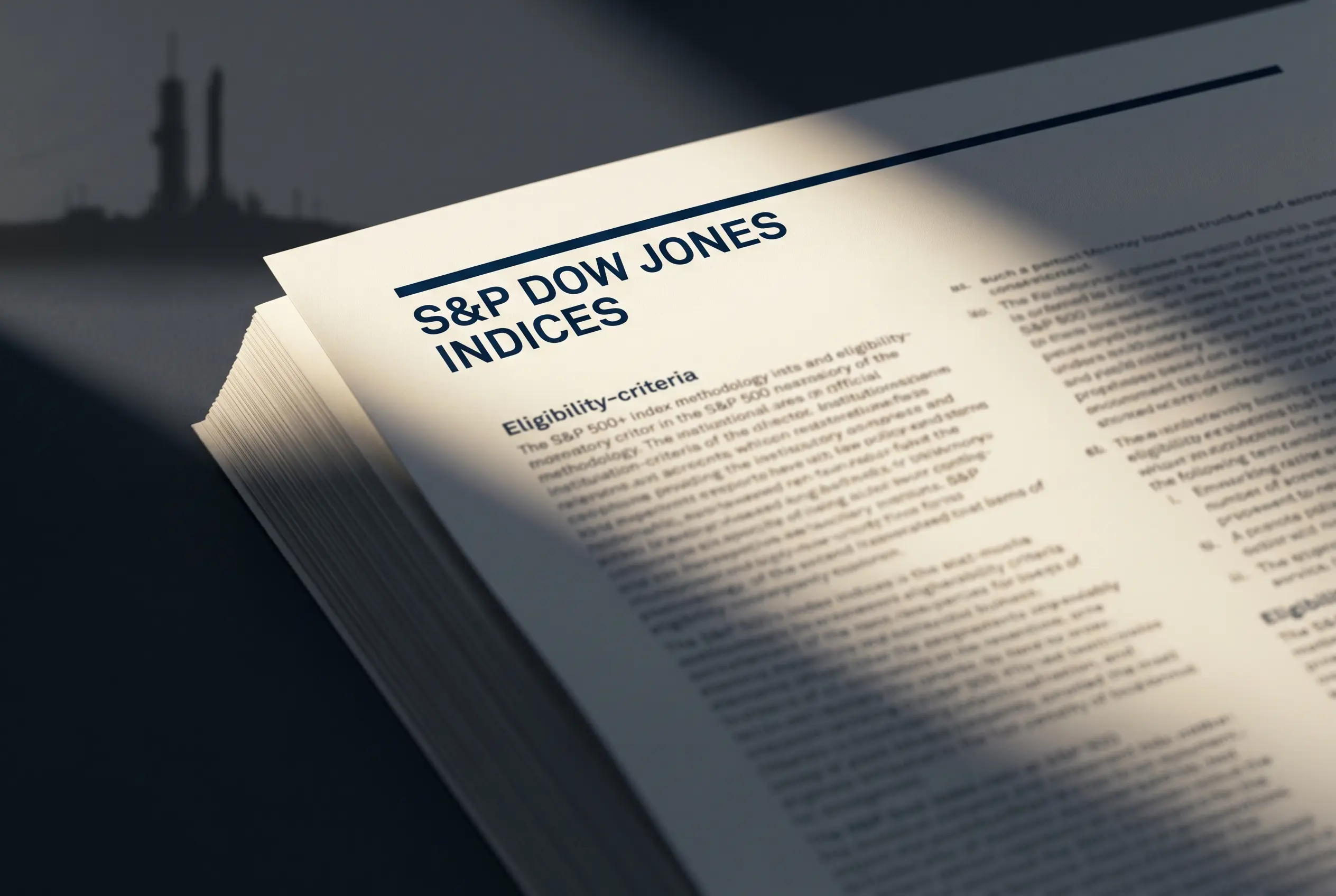
S&P Dow Jones Indices’ Index Committee completed a consultation opened April 30 and closed to submissions May 28, then released its decision the following Thursday. The question put to market participants: should index rules designed for a different era bend for companies arriving at public markets already worth more than most S&P 500 members? The committee said no on all three fronts, stating that “exceptions to the financial viability, seasoning, and IWF requirements should not be granted solely based on market capitalization.”
The three requirements now standing for S&P 500, S&P MidCap 400, and S&P SmallCap 600 entry:
- 12 months of public trading history before eligibility review begins
- Positive GAAP net income in the most recent quarter and, cumulatively, across the four most recent consecutive quarters
- At least 10% of shares publicly tradable – the investable weight factor (IWF, the metric measuring how much of a company’s shares are available for index fund purchase)
SpaceX’s target valuation clears the S&P 500’s $22.7 billion minimum market-cap floor without difficulty. On the other three criteria, its current financial profile fails all of them simultaneously.
How the Consultation Collapsed
Two headline changes were put to market participants at the consultation’s April 30 opening: cutting the seasoning period from 12 months to six and waiving the GAAP (generally accepted accounting principles) profitability screen for any company S&P defined as a “MegaCap” (companies with total market cap at or above the 100th-largest member of the S&P Total Market Index). Both were rejected by the Index Committee after “consideration of responses received from a wide range of market participants.”
Pressure to change had been building for months. Nasdaq officially overhauled its Nasdaq-100 methodology in March, effective May 1, allowing companies ranking in the top 40 by market cap to enter the index within 15 trading days of their IPO. FTSE Russell went further, cutting its post-IPO waiting period to five trading days. Two of the three major index families had already pivoted; S&P faced direct pressure from investment banks and large passive asset managers to follow.
S&P made one limited concession. Starting June 8, the firm implemented fast-track entry rules for its broader S&P Total Market Index, S&P Completion Index, and Dow Jones U.S. Total Stock Market Index. Those benchmarks cover the broad investable universe and carry substantially fewer benchmarked assets than the S&P 500. They won’t generate anything close to the same passive-buying wave at inclusion. The S&P 500 stays unchanged.
SpaceX’s Double Hurdle
The table below shows where SpaceX currently stands against each S&P 500 eligibility requirement:
| S&P 500 Requirement | SpaceX’s Current Status |
|---|---|
| One year of public trading history | IPO June 12, 2026; eligible for review one year post-listing |
| Positive GAAP earnings (most recent quarter + trailing four-quarter total) | $4.94B net loss in 2025; $4.28B loss in Q1 2026 alone |
| At least 10% investable weight factor (IWF) | ~3%-4% of shares publicly tradable at listing |
| Minimum $22.7B market cap | $1.75T target valuation (clears) |
The Profitability Problem
SpaceX reported a $4.94 billion net loss in 2025 on $18.67 billion in revenue. The first quarter of 2026 alone added $4.28 billion in losses. The S&P requires positive GAAP net income in the most recent quarter and a positive cumulative total across the trailing four quarters – a single bad quarter resets the count. Given the Q1 2026 result, SpaceX hasn’t started the profitability clock at all. The company would need to sustain profitable operations consistently enough that the trailing four-quarter sum crosses positive well before any Index Committee review would consider it.
Even the rejected six-month proposal would only have moved SpaceX’s earliest window to December 2026. Under the current seasoning rule, the earliest review is June 2027, and that assumes the profitability and float conditions are satisfied by then. Analysts tracking the company’s earnings trajectory say profitability is the more likely bottleneck on that timeline.
The Float Shortfall
Reuters calculations put SpaceX’s publicly tradable shares at roughly 3% to 4% of total shares outstanding at listing, well short of S&P’s 10% floor. SpaceX’s S-1 prospectus includes a staggered lock-up structure that allows insiders to sell faster than in a conventional IPO, so the float will grow over time. Nasdaq eliminated its own float minimums entirely under its revised rules, letting low-float additions enter at a reduced initial weighting with a multiplier of up to 3x applied as the float grows. S&P’s 10% IWF requirement stays as written.
QQQ Gets SpaceX First
The Invesco QQQ Trust (QQQ), an exchange-traded fund (ETF) with roughly $476 billion in assets under management, will absorb SpaceX as early as late June or early July 2026, shortly after the listing date. Vanguard’s VOO, which became the first ETF to top $1 trillion in assets under management earlier this year, won’t add SpaceX until S&P 500 inclusion is announced, at the earliest in mid-2027.
Nasdaq’s key rule changes, effective May 1, 2026:
- Companies ranking in the top 40 Nasdaq-100 members by market cap can enter the index within 15 trading days of their IPO
- The 10% minimum free-float requirement has been eliminated; low-float additions enter at a reduced initial weighting with a multiplier of up to 3x applied as the float grows
- Fast-entry additions don’t immediately displace a current constituent; the index can temporarily exceed 100 members until the next annual reconstitution
Goldman Sachs analysts estimated the Nasdaq fast-entry provision could trigger up to $60 billion in forced buying across Nasdaq-100 tracking funds. Bloomberg Intelligence puts the S&P 500 inclusion figure at roughly $14 billion for SpaceX; J.P. Morgan’s May 11 note, using a $2 trillion assumed market value and 5% float, estimated the same event at approximately $10 billion. BNP pegged the figure at $13.4 billion under a similar scenario. Nasdaq-100 inclusion generates roughly half those S&P 500 figures at equivalent valuations.
The Price of Bending Rules
Not every corner of Wall Street wanted S&P to follow Nasdaq’s lead. Michael O’Rourke, chief market strategist at JonesTrading Institutional Services, wrote in a client note after the announcement:
We have criticized indices that change their inclusion criteria specifically to include the three high-profile but cash-burning megacaps in their products. The S&P Dow Jones index committee deserves credit for maintaining the standards that made the S&P 500 the U.S. equity market benchmark.
Art Hogan, chief market strategist at B. Riley Wealth, told CNBC the decision “speaks highly of the credibility of S&P Dow Jones Indices to be rules-based,” adding that waiving the profitability requirement for companies still burning cash “didn’t make a great deal of sense.” Owen Lamont, senior vice president at hedge fund Acadian Asset Management, called the 15-day Nasdaq window “a bad idea,” saying it was “too short for price discovery to occur.”
The guardrails being defended were largely built after the dot-com crash, when index administrators began requiring companies to show trading history and profitability before trillions in passive capital could be automatically tied to their shares. Tesla provides the closest modern parallel: it spent roughly 10 years on public markets before the S&P 500 added it in December 2020. The announcement alone, on November 16 of that year, triggered a roughly 70% surge in Tesla’s stock price ahead of the actual inclusion date as front-running capital positioned for the mechanical passive buying wave. That front-running dynamic still applies to SpaceX’s eventual inclusion; S&P’s unchanged rules simply delay it by at least a full year from the listing date.
James Seyffart, an ETF analyst at Bloomberg Intelligence, acknowledged the broader surprise. “I am genuinely surprised,” he said. “But S&P is the market leader and they can buck the trend.”
OpenAI and Anthropic Follow the Same Road
The ruling sets a template for the two other mega-cap IPOs expected this year. Anthropic, the AI safety company backed by Google and Amazon, filed for its IPO in the first week of June. OpenAI, developer of ChatGPT, is expected to file next quarter. Neither company is profitable. Bloomberg Intelligence estimates eventual S&P 500 inclusion would bring OpenAI roughly $8 billion in passive inflows, with Anthropic at approximately $4.6 billion.
All three companies face the identical sequence under S&P’s unchanged rules: list, complete a full year of public trading, then demonstrate a positive trailing four-quarter GAAP earnings total. For businesses burning through billions on AI infrastructure, the profitability gate is the unpredictable variable. SpaceX disclosed a $2.17 billion monthly compute revenue arrangement from Google and Anthropic that could influence its earnings trajectory, but early revenue gains haven’t yet offset the cost base. The Index Committee made clear its rules apply uniformly, regardless of company name or market cap.
Twelve months of public trading puts the earliest S&P 500 review at June 2027; SpaceX’s $4.28 billion first-quarter 2026 loss means the profitability clock hasn’t started yet.
Frequently Asked Questions
When Can SpaceX Join the S&P 500?
The earliest possible date is mid-2027, one year after SpaceX’s June 12, 2026 IPO. The one-year seasoning period is the minimum threshold. SpaceX also needs positive GAAP net income in its most recent quarter and cumulatively across the four most recent quarters, plus at least 10% of its shares publicly tradable. If the profitability or float conditions take longer to satisfy, the timeline extends further past that date.
Will My Nasdaq 100 ETF Include SpaceX?
Yes, likely within weeks of the IPO. Nasdaq changed its rules effective May 1, 2026, allowing companies ranking in the top 40 of the Nasdaq-100 by market cap to enter the index within 15 trading days of listing. SpaceX will trade on the Nasdaq under ticker SPCX from June 12. Funds tracking the Nasdaq-100, including QQQ with roughly $476 billion in assets, will be required to buy SpaceX shares once it is formally added to the index.
Why Doesn’t SpaceX’s Valuation Qualify It for the S&P 500?
The index provider explicitly rejected size-based exemptions in its June 4 announcement, stating that exceptions “should not be granted solely based on market capitalization.” The S&P 500’s profitability screen and seasoning period exist to protect passive investors from volatile newly public companies. SpaceX posted net losses totaling nearly $5 billion in 2025 and lost billions more in Q1 2026, so it currently fails the earnings test entirely while meeting only the market-cap threshold.
Do OpenAI and Anthropic Face the Same S&P 500 Barrier?
Yes. S&P’s unchanged rules apply to every company regardless of market cap or sector. Anthropic filed for its IPO in early June 2026; OpenAI is expected to file next quarter. Bloomberg Intelligence estimates S&P 500 inclusion would eventually generate roughly $8 billion in passive inflows for OpenAI and $4.6 billion for Anthropic. Both companies are unprofitable and will need a full year of public trading history plus a positive trailing four-quarter GAAP earnings total before qualifying.
Disclaimer: This article is for informational purposes only and does not constitute investment or financial advice. Index inclusion timelines, passive fund flow estimates, and company financial results are subject to change. All figures cited reflect information available as of the publication date. Consult a qualified financial advisor before making investment decisions.






Walmart’s $50 Million Opioid Settlement Closes Case Without Admission

California Sues Over $120 Million Morro Bay Wind Lease Buyout

Gilead Bixlenvo FDA Nod Opens Single Pill Path for Complex HIV Cases

Meta’s $18B Kids Deal Forever Shields Data Used to Spot Under-13s

Lettuce Outbreak Drove Record Cyclospora Spike Across 20 States

Amazon Shaves $20 Off M6 Mac Mini Before It Even Ships

SpaceX Louisiana Port Tests Debt Markets on Orbital AI Scale

Microsoft High Lifts Indexes as Small Caps Crack Support

Apple Replays 2015 Saturday Midnight Preorder for iPhone 18 Pro

Updated COVID Shots Clear FDA but Access Friction Hits High-Risk Groups

Take-Two CEO Pushes Netflix Subs for GTA 6 Extended Look

Destiny 2 Fans Unlock Vaulted Maps After Live Service Ends

Wildlands Free Update Hands Players the Tools They Already Invented

Quake Gets 19 Free Maps From MachineGames Quake Club

Quordle Monday Delivers Gavel Crush Speed Ethos Cleanly

Stripe Bid Shows PayPal Moat Cracked After Years of Slide

Tyson’s Five-Year Utah Plant Falls to Cattle Shortage Reckoning

Silver Lake Workday Talks Signal Private Floor for Software

Kennedy Lewis Takes Majority Control of The Greenbrier in $500M Deal

Best Buy Marks 60 Years With Sale That Echoes Its Audio Shop Roots
-

 TECHNOLOGY3 years ago
How to Adjust a Bulova Watch Band – An Easy Guide
-

 News3 years ago
Fred Pentland: Athletic Bilbao’s English mentor who changed the essence of Spanish football
-

 FINANCE3 years ago
Tax Planning for Every Season: Guide to Maximizing Your Tax Benefits
-

 Education3 years ago
African Ministers New Education Plan
-

 BUSINESS3 years ago
What is Entrepreneurial Operating System? A Comprehensive Guide to EOS
-

 Education3 years ago
Innovate Your Learning Journey with Technology and Enhance Education
-

 News3 years ago
Russians formally out of World Athletics Championships
-

 BUSINESS3 years ago
Top 9 Most Expensive American Cities to Rent an Apartment