
News
Amazon Shaves $20 Off M6 Mac Mini Before It Even Ships
Amazon cuts the new M6 Mac mini to $879.99 and $1,069.99 before September 22 launch as AI demand reshapes pricing and early inventory fights.

Amazon cut the brand-new M6 Mac mini to $879.99 for the 16GB/256GB model and $1,069.99 for the 16GB/512GB version on August 28, three days after Apple opened pre-orders and nearly a month before the September 22 launch.
The $20 and $30 savings also hit the M5 Pro 24GB/512GB configuration at $1,669.99. These are the first cash discounts on machines Apple still sells at full $899 and $1,099 list prices everywhere else.
That timing is unusual. Retailers normally wait until inventory builds and the next refresh nears before shaving list on a brand-new Mac mini. Here the first cuts arrived while units were still weeks from any customer desk.
The Cuts Land Before Anyone Has a Unit
Pre-orders began August 25 on apple.com and authorized resellers. Amazon matched Apple’s prices at first, then shaved the two most popular M6 configs and the entry M5 Pro during its Labor Day sale push.
MacRumors, 9to5Mac and AppleInsider all flagged the drops the same day. Other retailers and Apple itself remain at MSRP. Delivery still begins September 22 for everyone.
| Configuration | Apple Price | Amazon Pre-Order | Savings |
|---|---|---|---|
| M6 16GB/256GB | $899 | $879.99 | $19-20 |
| M6 16GB/512GB | $1,099 | $1,069.99 | $29-30 |
| M6 24GB/512GB | $1,299 | $1,299 | $0 |
| M5 Pro 24GB/512GB | $1,699 | $1,669.99 | $29-30 |
The numbers are modest. In a market where memory costs have exploded, even a twenty-dollar haircut this early stands out.
Amazon left the 24GB M6 untouched at full list. The pattern points to volume: the two entry M6 configs and the entry M5 Pro are the SKUs most likely to move in bulk once boxes ship. Holding margin on the mid-tier M6 while discounting the ends of the lineup is a classic channel move when allocation is finite and launch traffic is still ahead.
Nobody receiving an order confirmation can power the machine on yet. The discount is pure pre-order leverage, not clearance.
Memory Flood and AI Agents Pushed the Base to $899
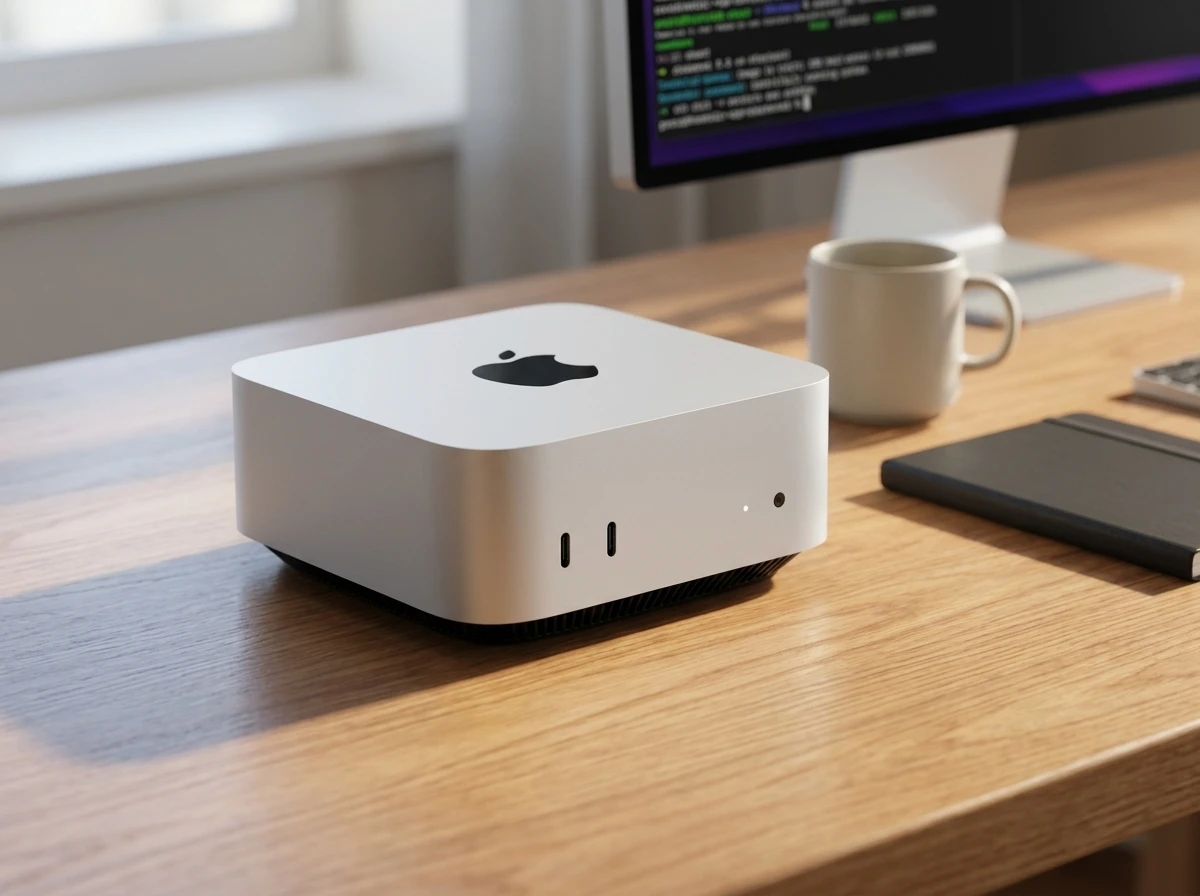
The M4 Mac mini launched in late 2024 at $599 with 16GB and 256GB. By May 2026 Apple pulled the cheapest config and set the floor at $799. A broader June price action held that level. The M6 debuted at $899 for the same 16GB/256GB starting point.
Tim Cook told analysts the company faced a “100-year flood on the memory pricing” driven by AI data-center demand for DRAM and HBM. At the same time, Cook said Mac mini and Mac Studio demand from people running local AI agents exceeded forecasts, leaving supply tight for months.
Apple’s own framing in the August 25 announcement centers the machine on “always-on agentic computing.” The price hike and the early Amazon discounts both flow from that same pressure.
Mac mini has always been our most versatile Mac. Whether it’s being used as a home computer, powering a professional studio, or as an always-on agentic device, it’s the little Mac that can do it all.
Johny Srouji, Apple chief hardware officer, Apple newsroom
The climb from $599 to $899 in under two years is the sharpest base-price move the mini line has seen in recent cycles. Memory cost and agent demand explain both ends of the story: Apple raised the floor to protect margin and allocate scarce DRAM, while Amazon is willing to give back a sliver of that floor early to secure orders before launch week congestion.
Local AI workloads are memory-hungry by design. Keeping a model resident and responsive around the clock favors unified memory capacity and bandwidth over raw peak CPU scores alone. That is why the same 16GB starting point now costs more, and why buyers still treat a twenty-dollar pre-order cut as worth grabbing.
What the M6 Chip Delivers
Apple’s claims against the prior 10-core M4 model (tested with 32GB and 2TB) are concrete:
- Up to 40 percent faster CPU performance
- Up to up to 4x faster AI performance
- Up to 2x faster graphics
- Up to 2x faster storage
The M6 itself carries a 12-core CPU (two more than M4) and 12-core GPU. Every GPU core now includes a Neural Accelerator, a first for the base Mac mini. A dual 16-core Neural Engine doubles prior Neural Engine throughput. Unified memory starts at 16GB and tops out at 32GB, with bandwidth of 153GB/s on 16GB configs and 170GB/s on 24GB or 32GB models.
Specific Apple benchmarks include up to 4.8x faster LLM prompt processing in LM Studio versus M4 and up to 2x ray-traced gaming in Cyberpunk 2077. The M5 Pro steps up to an 18-core CPU, 20-core GPU, 64GB memory ceiling and 307GB/s bandwidth with Thunderbolt 5.
| Feature | M6 | M5 Pro |
|---|---|---|
| CPU cores | 12 | 18 |
| GPU cores | 12 | 20 |
| Memory ceiling | 32GB | 64GB |
| Memory bandwidth | 153 to 170GB/s | 307GB/s |
| Thunderbolt | Thunderbolt 4 | Thunderbolt 5 |
Neural Accelerators on every GPU core matter for the agent use case Apple is selling. Inference work that once leaned mainly on the Neural Engine can now spread across the GPU array as well. The dual 16-core Neural Engine still handles the classic on-device ML path, so the chip is pushing both routes at once.
The 4.8x LM Studio prompt-processing jump versus M4 is the figure local-model users will quote first. Faster prompt processing shortens the wait before a response starts streaming, which is the difference between a desk-side agent that feels instant and one that feels like a remote API with lag.
Buyers who need more than 32GB of unified memory or the extra Thunderbolt 5 lanes have a clean step up in the M5 Pro. Everyone else gets the agent-focused gains inside the base M6 envelope.
Connectivity Built for Desk-Side Agents
Both new minis keep the 5-by-5-by-2-inch aluminum enclosure. Weight is 1.5 pounds for M6 and 1.6 for M5 Pro. Front panel stays two USB-C (USB 3) ports plus a high-impedance headphone jack. Rear I/O is where the changes sit.
The M6 gets three Thunderbolt 4 ports and 2.5Gb Ethernet (10Gb optional). M5 Pro swaps in three Thunderbolt 5 ports. Both add Wi-Fi 7, Bluetooth 6 and Thread via Apple’s N1 chip. HDMI remains. New genlock support over USB-C helps sync with cameras including iPhone 17 Pro.
Display support now reaches three external screens, including combinations such as two 4K at 165Hz plus a third. That higher-refresh path is already drawing attention from multi-monitor users who want the multi-display refresh past 144Hz the new silicon enables.
Thread and Wi-Fi 7 on the N1 chip extend the mini’s role past a pure compute brick. An always-on agent that also talks to home and studio devices over modern wireless standards fits the same small chassis that once served mainly as a silent desktop CPU.
Genlock over USB-C is a quieter addition with clear studio value. Locking frame timing to an iPhone 17 Pro or other camera reduces the glue gear needed for simple multi-camera desks. Three-display support at elevated refresh rates then lets that same mini drive a full edit or monitoring layout without a separate tower.
None of the port changes require a larger box. The 5-by-5 footprint and sub-two-pound weight stay intact, so the machine still tucks under a monitor arm or on a shallow shelf where an agent box is meant to live.
Who Feels the Early Twenty Dollars
Students and educators still see Apple’s own education pricing starts at $799 for the M6 base, a cleaner path than the Amazon shave for those who qualify. Trade-in credit on older Macs can stack higher at Apple itself.
For everyone else the Amazon cut is the only cash discount available right now. Local-AI users on X have already framed the mini as a private “24-hour AI staff” under the desk or a quieter alternative to a cloud VPS for running open models. Several posts note people ordering the M6 specifically for on-device LLMs the moment pre-orders opened.
Creators who need the M5 Pro’s extra cores and Thunderbolt 5 bandwidth get the same $30 relief. Anyone sitting on a recent M4 mini has less urgency; Apple’s own numbers show the biggest gains versus older M1/M2 hardware.
- Education buyers: Apple’s $799 path still beats the Amazon pre-order price when eligibility applies.
- Local-AI experimenters: the base M6 discount lowers the entry cost for a private always-on model host.
- Creators on M5 Pro: the same $30 cut applies where Thunderbolt 5 and higher core counts matter.
- Recent M4 owners: smaller relative upgrade, so less pressure to jump at the first $20 shave.
Stacking trade-in at Apple can outweigh Amazon’s cash cut for anyone with a mid-cycle Mac to return. The two channels are solving different problems: Apple is protecting the full-price narrative and education lane, while Amazon is buying early order volume on the SKUs it expects to turn fastest.
- November 2024: M4 Mac mini launches at $599 with 16GB/256GB
- May 2026: Apple removes $599 config; base rises to $799 amid AI demand and memory pressure
- June 2026: Broader Mac price adjustments hold the new floor
- August 25 2026: M6 and M5 Pro announced; base $899; pre-orders open
- August 28 2026: Amazon posts first $20-30 pre-order discounts
- September 22 2026: Official availability begins
Previous generations rarely saw retailer cash discounts this close to announcement. Deep cuts on the M4 arrived months later once inventory piled up and the next refresh loomed. The reverse timing here tracks the same forces that emptied M4 shelves earlier this year.
Labor Day Timing and Channel Reality
Amazon’s broader Labor Day event already featured AirPods, AirTag 2 and Watch deals. Adding the unreleased mini fits a pattern of using early inventory allocation to lock in buyers before Apple Store and Best Buy traffic peaks closer to launch.
Apple still controls the narrative on its own site and in stores. Authorized resellers can shave list only when they choose to. The fact that the first cuts appeared on the two highest-volume M6 configs suggests Amazon is prioritizing volume over margin on a product expected to move fast once units arrive.
Labor Day is a natural basket moment. Shoppers already browsing headphone and Watch markdowns see the mini beside them and can add a pre-order without a second trip. That bundling effect costs Amazon little in absolute margin on a $20 to $30 cut and pulls forward demand that might otherwise wait for September store traffic.
Authorized resellers watching the same allocation math may match later, or they may hold list and compete on delivery certainty and setup services instead. For the next three weeks the only live cash discount remains the one Amazon posted on August 28.
Why the Discount Arrived Before Stock
Earlier mini generations taught buyers to wait. Deep M4 cuts showed up only after shelves filled and the next chip was already on the horizon. This cycle flipped that script within three days of pre-order open.
The driver is the same pair of pressures Cook described: memory cost and agent-led demand that already ran M4 and Studio supply short for months. Apple raised the M6 floor to $899. Amazon answered by giving a slice of that floor back immediately on the configs most people will actually buy.
Early discounting under tight supply looks contradictory until the channel goal is clear. Amazon is not clearing excess. It is converting pre-order intent into paid orders while Apple Store and big-box attention is still elsewhere, then relying on September deliveries to fulfill.
If Apple fills the channel quickly after September 22, the $20 to $30 gap may hold or even shrink as other retailers stay at list. If allocation stays tight, the same scarcity that emptied prior shelves could push the live Amazon price the other way once real units are in carts. For now the only data point is the one already live.
What Buyers Should Weigh Before September
Education pricing at $799 remains the stronger cash deal for anyone who qualifies, and Apple trade-in credit can widen that gap further. Everyone outside those lanes is choosing between Amazon’s modest pre-order cut and full list everywhere else.
The M6’s agent pitch, Neural Accelerators on every GPU core, and 4.8x LM Studio prompt figure give local-model buyers a concrete reason to move now rather than hold an older mini. Creators who need 64GB ceilings or Thunderbolt 5 still look at the M5 Pro, where the same $30 Amazon relief applies.
Display and wireless upgrades matter most to multi-monitor and studio desks. Three screens with 165Hz paths, Wi-Fi 7, Thread, and USB-C genlock turn the same small enclosure into a denser hub than prior minis offered at the base tier.
The practical question is simple. Twenty or thirty dollars will not decide a multi-year machine for most people, yet it is the only list-price break available before anyone can plug a unit in. Whether that break survives first-week sell-through is the open variable the September 22 launch will answer.
Whether the $20 holds through September or widens once stock lands will depend on how quickly Apple fills the channel. For now the earliest discount on the most AI-focused Mac mini yet is already live, three weeks and change before anyone can plug one in.


Walmart’s $50 Million Opioid Settlement Closes Case Without Admission

California Sues Over $120 Million Morro Bay Wind Lease Buyout

Gilead Bixlenvo FDA Nod Opens Single Pill Path for Complex HIV Cases

Meta’s $18B Kids Deal Forever Shields Data Used to Spot Under-13s

Lettuce Outbreak Drove Record Cyclospora Spike Across 20 States

Amazon Shaves $20 Off M6 Mac Mini Before It Even Ships

SpaceX Louisiana Port Tests Debt Markets on Orbital AI Scale

Microsoft High Lifts Indexes as Small Caps Crack Support

Apple Replays 2015 Saturday Midnight Preorder for iPhone 18 Pro

Updated COVID Shots Clear FDA but Access Friction Hits High-Risk Groups

Take-Two CEO Pushes Netflix Subs for GTA 6 Extended Look

Halo Campaign Evolved Skulls Meet Death Barriers That Kill the Hunt

Wildlands Free Update Hands Players the Tools They Already Invented

Destiny 2 Fans Unlock Vaulted Maps After Live Service Ends

Quake Gets 19 Free Maps From MachineGames Quake Club

Quordle Monday Delivers Gavel Crush Speed Ethos Cleanly

Stripe Bid Shows PayPal Moat Cracked After Years of Slide

Tyson’s Five-Year Utah Plant Falls to Cattle Shortage Reckoning

Silver Lake Workday Talks Signal Private Floor for Software

Kennedy Lewis Takes Majority Control of The Greenbrier in $500M Deal
-

 TECHNOLOGY3 years ago
How to Adjust a Bulova Watch Band – An Easy Guide
-

 News3 years ago
Fred Pentland: Athletic Bilbao’s English mentor who changed the essence of Spanish football
-

 FINANCE3 years ago
Tax Planning for Every Season: Guide to Maximizing Your Tax Benefits
-

 Education3 years ago
African Ministers New Education Plan
-
 BUSINESS3 years ago
What is Entrepreneurial Operating System? A Comprehensive Guide to EOS
-

 Education3 years ago
Innovate Your Learning Journey with Technology and Enhance Education
-

 News3 years ago
Russians formally out of World Athletics Championships
-

 BUSINESS3 years ago
Top 9 Most Expensive American Cities to Rent an Apartment