
News
EU Orders Google to Open Gemini’s Android Access to ChatGPT, Claude
The EU has ordered Google to give ChatGPT, Claude and other AI rivals the same Android access Gemini enjoys, with deadlines running to 2028.

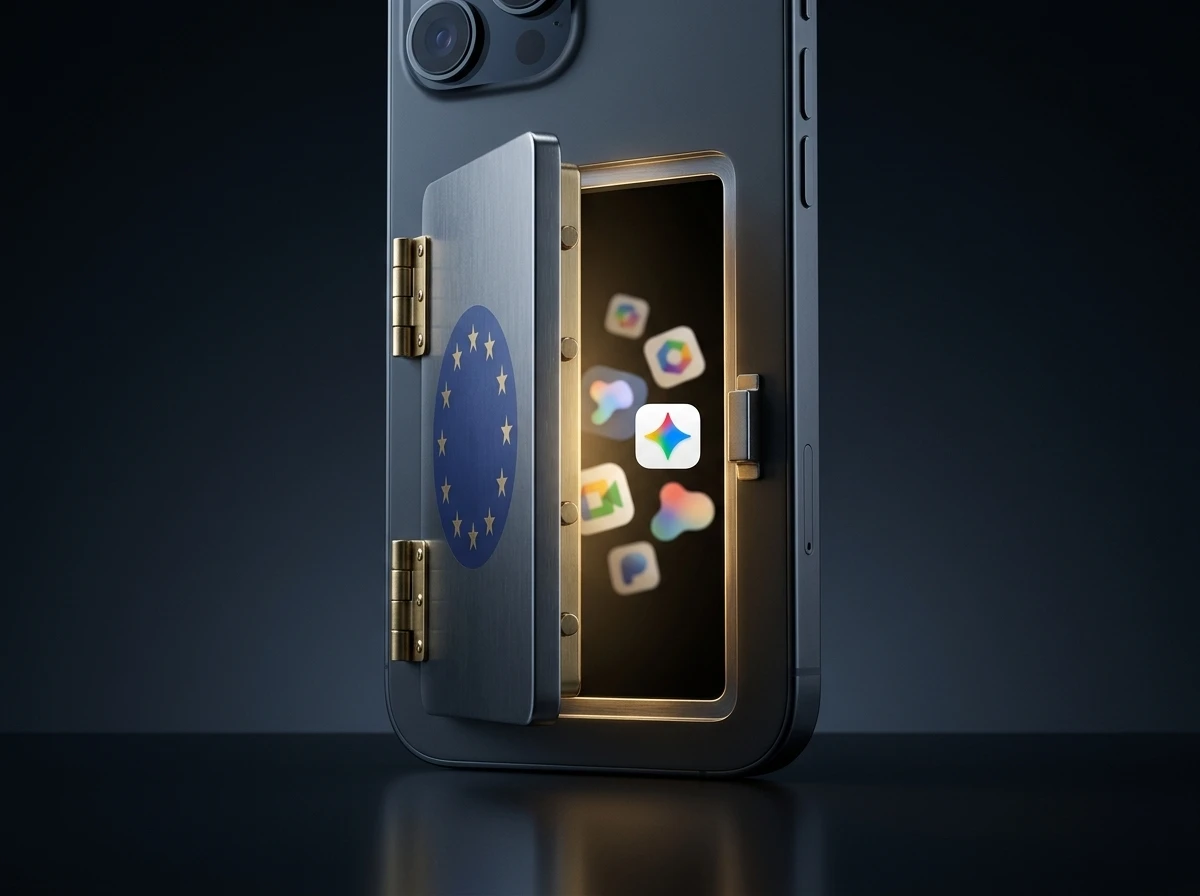
The European Commission, the EU’s executive arm, ordered Google on Thursday to give rival AI assistants, including ChatGPT and Claude, the same deep access to Android that its own Gemini already has. Regulators gave the company until August 2027 to open 11 system-level features, with a tougher deadline of August 2028 for the hardest piece: letting more than one assistant listen for its own wake word at the same time.
The order lands months after Google folded Gemini into Android without waiting for Brussels to sign off, a bet that let it keep full access to those same features the entire time regulators were reviewing them. Apple asked first. Its Siri AI still will not exist in the European Union when iOS 27 ships.
Google Must Open 11 Android Features to Rivals
Thursday’s action produced two separate binding decisions under the Digital Markets Act (DMA), the 2022 law that forces the largest online gatekeepers to open core services to competitors. The first, issued under Article 6(7) of the DMA, is meant to ensure competitors’ AI services can compete with Gemini by getting equal access to features on Android devices.
The decision covers 11 features sorted into four categories: how a user summons an assistant, what context it can see, what actions it can take across apps, and what hardware or software resources it can draw on, including Google’s own on-device AI models.
Android runs on roughly 60% of mobile phones used across the EU, by the Commission’s own count, which makes the operating system the main door any AI assistant needs to reach European users.
| Decision | Legal Basis | Compliance Deadline | Who Gains Access |
|---|---|---|---|
| Android AI interoperability | Article 6(7), case DMA.100220 | Most features by Aug 1, 2027 (Android 18); shared wake words by Aug 1, 2028 (Android 19) | Rival AI assistants such as ChatGPT and Claude |
| Search data sharing | Article 6(11), case DMA.100209 | Begins January 2027 | Rival search engines and AI chatbots with search features, including OpenAI |
Neither decision carries a fine on its own. They are technical instructions on what compliance looks like, with penalties reserved for whatever comes after Google misses a deadline.
A Legal Deadline Google Could Not Delay
The two decisions close six months of specification proceedings the Commission opened on January 27, 2026, one case for each structural advantage regulators had flagged in how Google runs Android and Search.
Google could not buy more time in court first. A European Court ruling on July 8 shut off the option of a pre-emptive injunction, so a designated gatekeeper must comply with a specification decision while any appeal against it runs separately, not instead of it.
Ignoring the order carries its own price later. The Commission can fine Google up to 10% of its global annual turnover for non-compliance, on top of separate DMA cases already open against how it runs Search and the Play Store.
Google’s central objection, that deeper access creates new security risk, is a familiar argument in platform fights. Researchers have mapped the same rhetorical pattern across other disputes, from encryption fights to app store cases, where dominant platforms frame security as a reason to stay closed.
Apple Asked Permission. Google Shipped First.
Apple tried a different route months earlier. It proposed a Trusted System Agent that would let outside assistants reach the same device capabilities as Siri AI, while warning that full DMA-style access would hand any AI system nearly unlimited reach into a user’s phone.
Brussels said no. The Commission found Apple unable to develop interoperability solutions that meet essential EU privacy and security standards, and turned down the company’s request for a blanket exemption instead. Siri AI will not launch in the bloc when iOS 27 arrives.
Google chose not to ask first. It folded Gemini into Android as a system feature, then negotiated compliance after the fact, an approach that let European users keep full Gemini access through the entire review.
By the time Thursday’s orders arrived, Gemini had already moved from an optional download to what regulators describe as Android’s default AI experience, complete with a standing wake word, screen reading and the power to act inside other apps. Those are exactly the capabilities the Commission just ordered opened to rivals.
The strategy fits a pattern. Google has leaned on aggressive, ship-first positioning elsewhere in its AI business too, cutting Gemini’s prices earlier this year to compete on cost rather than wait out a slower rollout against rivals.
What Happens to ChatGPT and Claude on Android?
Once Google complies, EU users will be able to set a rival assistant as their default, wake it with a custom phrase, and let it act inside other apps the way Gemini already does. Search rivals, including OpenAI, separately get a right to anonymized Google Search data on regulated terms starting in January 2027.
Eligibility is not automatic. To receive shared search data, a company must run a genuine online search service in the EU, or qualify as a credible new entrant, and show at least 50,000 average monthly EU users over the prior year.
A search or AI company younger than two years can qualify a different way, by raising more than €50 million, though it still has to meet the other conditions. Once approved, data arrives at least seven days after a query and can keep flowing for up to five years.
Before any of it flows, Google has its own deadlines. It must publish beneficiary information and an application form by the end of August 2026, share template licenses and test samples by September, and lock in pricing by January 2027.
The Commission’s technical specification for Android interoperability breaks the mandate into four building blocks:
- Invocation – starting an interaction through the home button, a custom wake word or another access point, the way Gemini already answers to “Hey Google.”
- Context – reading data from apps, sensors or the screen so an assistant can understand and anticipate what a user needs.
- Actions on apps and the OS – completing tasks on a user’s behalf, including jobs that keep running in the background.
- Access to resources – guaranteeing enough hardware and software power, including Google’s on-device AI models, to actually finish those tasks.
On the Android side, the most sensitive capabilities, like reading a phone’s screen, sit behind a certification process. Google can still run an objective security check before granting access, and users must explicitly consent to every AI service they let onto their device.
OpenAI is a named beneficiary of the search data order, and it has spent this year racing to widen its own assistant’s reach, including a worldwide rollout of a live voice model built to compete with the kind of always-on assistant Gemini already is on Android.
Where Economists and Trade Groups Split
Not everyone reads the order the same way.
- Fiona Scott Morton, a Yale economist and senior fellow at the Brussels-based think tank Bruegel, wrote that the four access categories correctly capture what a rival assistant needs to compete with Gemini on equal footing.
- Dirk Auer, director of competition policy at the International Center for Law and Economics, said the likely result is fewer AI assistants for Europeans, not more.
- Kay Jebelli, vice president for Europe at the Chamber of Progress, said the Commission is “ignoring the known and well documented privacy risks” while pushing its own vision of the market.
The Information Technology and Innovation Foundation raised a similar flag in its own filing to Brussels, warning the measures risk reduced privacy and chilled innovation under a regime it argues already targets American firms.
The Chamber of Progress went further in its own published critique, warning the search data specification risks exposing user data to disproportionate security risks it says the Commission never fully addressed.
The concern is not abstract. AI assistants already gather enough personal context to anticipate a user’s next move, and security researchers have separately tracked how assistants learning to remember more about users also become bigger targets for attackers.
Compliance Now Runs Into 2028
Three separate tracks now run into 2028: search data access from January 2027, most Android features by August 2027, and shared wake-word detection by August 2028.
Google can still appeal. It just cannot pause compliance while it does. The same sequencing rule that closed off Apple’s own court challenge applies here too, so any appeal Google files runs alongside the deadlines instead of freezing them.
Regulators elsewhere are watching for a familiar reason. A binding EU standard has previously become the easiest path to global compliance, the way the DMA’s push for USB-C reshaped charging ports well beyond Europe. Whatever Google builds for Android to satisfy Brussels could end up shaping how rival AI assistants reach phones in other markets too.
Two years into the DMA, Google’s search market share across Europe near 90% still barely moved, a reminder that structural rules do not always shift market share as fast as regulators hope.
For now, nothing changes for Android users in Europe. Gemini keeps working exactly as it does today, and every rival assistant is still waiting on Android 18.


NFL Three-Strike Safety Fouls Now Pull Coaches and Clubs In

Browns Fans Tape Protest Signs to Jim Brown Statue Over Watson

Amazon Pixel 11 Deal Erases the $100 Hike for One More Day

Elden Ring on Switch 2 Turns Its Own Worst Label Into a Portable Win

Ternus Takes the Stage With Apple’s Foldable Debut

Ikea Xbox Yxstaby Turns Controller Thumbstick Into Home Furniture

Pokémon Center Turns Past Worlds Wins Into Bundles and a Pikachu Coin

NFL Scraps Pro Bowl Game to Restore Pure Player Honor

New Twitter.now Bets the Brand Musk Left Behind

Bella Mir’s Famous First Loss Meets the Accountant Who Won

Take-Two CEO Pushes Netflix Subs for GTA 6 Extended Look

Halo Campaign Evolved Skulls Meet Death Barriers That Kill the Hunt

Wildlands Free Update Hands Players the Tools They Already Invented

Quake Gets 19 Free Maps From MachineGames Quake Club

Destiny 2 Fans Unlock Vaulted Maps After Live Service Ends

Stripe Bid Shows PayPal Moat Cracked After Years of Slide

Quordle Monday Delivers Gavel Crush Speed Ethos Cleanly

Tyson’s Five-Year Utah Plant Falls to Cattle Shortage Reckoning

Silver Lake Workday Talks Signal Private Floor for Software

Kennedy Lewis Takes Majority Control of The Greenbrier in $500M Deal
-

 TECHNOLOGY3 years ago
How to Adjust a Bulova Watch Band – An Easy Guide
-

 News3 years ago
Fred Pentland: Athletic Bilbao’s English mentor who changed the essence of Spanish football
-

 FINANCE3 years ago
Tax Planning for Every Season: Guide to Maximizing Your Tax Benefits
-

 Education3 years ago
African Ministers New Education Plan
-

 BUSINESS3 years ago
What is Entrepreneurial Operating System? A Comprehensive Guide to EOS
-

 Education3 years ago
Innovate Your Learning Journey with Technology and Enhance Education
-

 News3 years ago
Russians formally out of World Athletics Championships
-

 BUSINESS3 years ago
Top 9 Most Expensive American Cities to Rent an Apartment