
Health
Cyclospora Outbreak Reshapes Grocery Habits as FDA Trust Splits
A CBS News/YouGov poll finds cyclospora fears cutting into produce buying nationwide, while confidence in the FDA’s response splits sharply along party lines.

Four in ten Americans say they are buying or eating less produce because of the cyclospora outbreak, according to a CBS News/YouGov poll released July 26. The nationally representative survey of 2,193 U.S. adults, conducted July 22 to 24 with a margin of error of plus or minus 2.7 points, also found confidence in the FDA’s handling of the outbreak splitting sharply by party.
The gap lands at an awkward moment. Case counts are still climbing, and Dr. Scott Gottlieb, who led the Food and Drug Administration (FDA, the federal agency that regulates food and drug safety) during the first Trump administration, told CBS’s Face the Nation on July 26 that the outbreak is not yet under control. That is not a partisan read. It is the assessment of a Republican-appointed former regulator, delivered the same week the poll shows Republicans expressing more confidence in the agency than Democrats do.
Four in Ten Americans Say They Are Buying Less Produce
The CBS News/YouGov poll found most Americans are following news of the outbreak at least somewhat closely, with attention levels rivaling how closely people are tracking the conflict with Iran. That level of engagement is translating into changed grocery habits for a large share of the country.
The pullback is not spread evenly. Some groups are moving faster than others.
- Women are somewhat more likely than men to say they are buying or eating less produce.
- Older adults are cutting back more than younger ones.
- Heavy news followers, people paying very close attention to outbreak coverage, are the most likely of all to have changed their shopping.
That last group matters. It suggests the behavior change is tracking media exposure as much as it tracks actual risk, since the confirmed contamination is tied to a narrow set of products rather than produce as a whole.
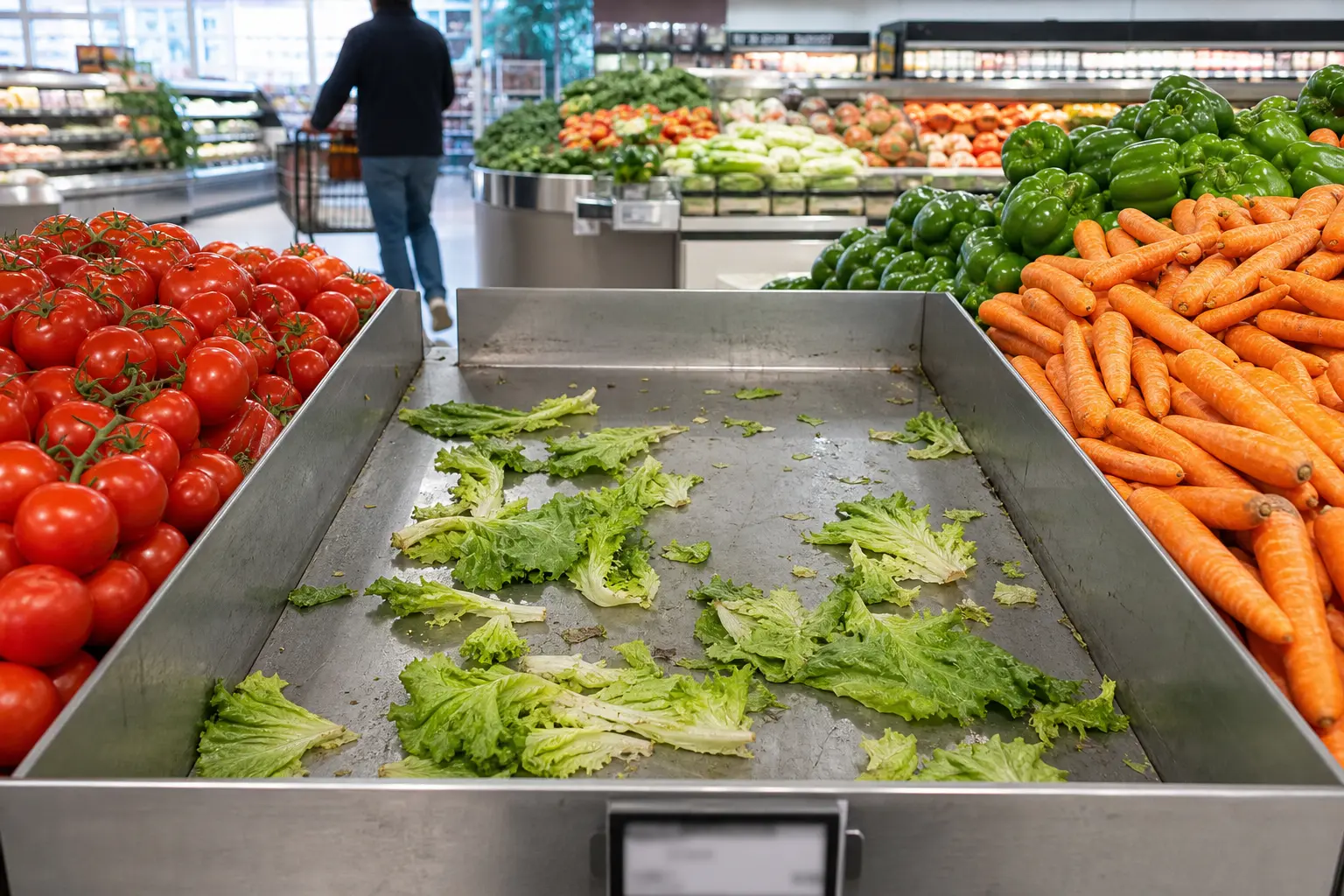
Trust in the FDA Splits Along Party Lines
Confidence in the FDA is mixed at best. Forty seven percent of Americans said they do not have much confidence in the agency’s ability to handle the outbreak, CBS News and YouGov found, even though a narrow majority express at least some confidence. Few respondents of any party said they have a lot of confidence in the FDA.
Republicans expressed more confidence than Democrats, the poll found, a split that tracks party identification more than it tracks the facts on the ground. The FDA’s own credibility has taken hits independent of politics. The agency has continued pointing to Taylor Farms lettuce as the traceback target even after one of its own positive test results was retracted, a detail that complicates any simple story about who should be believed.
A Record Outbreak by the Numbers
The scale of the outbreak helps explain why so many people are paying attention. The Centers for Disease Control and Prevention (CDC, the federal public health agency tracking the outbreak) has called this the largest cyclosporiasis outbreak in U.S. history, and the numbers back that up.
| Metric | Figure |
|---|---|
| Confirmed cases in the traceback cluster | More than 1,900 across nine states |
| Total cyclosporiasis cases reported nationwide since May 1 | More than 4,100 |
| Hospitalizations | At least 98 |
| Deaths reported | None |
| Taylor Farms’ share of the U.S. iceberg lettuce supply | Less than 1 percent |
The CDC’s investigation update ties the multistate cluster to iceberg lettuce from Taylor Farms de Mexico, and a separate health alert on domestically acquired cases shows the illness spreading well beyond that single traceback cluster. In Iowa, case counts have tripled in recent weeks alone.
Is the Cyclospora Outbreak Under Control?
No, according to the FDA’s own former leadership. Gottlieb said on Face the Nation on July 26 that the outbreak has not yet been brought under control, a notable admission from a former commissioner who served under a Republican president and would have little reason to embarrass his own party’s administration.
His comment lines up with a broader CBS News finding that federal food-safety programs have absorbed cuts under the current administration, a backdrop that helps explain why confidence in the agency is soft across the board rather than confined to one party.
- What we know: Taylor Farms de Mexico iceberg lettuce is the CDC’s traceback target, the case count keeps rising, and a former FDA commissioner says the response has not caught up to the outbreak.
- What remains unconfirmed: Whether the outbreak has peaked, and whether lettuce is the only contamination source, given the FDA’s retracted test result and continuing investigation.
The 2006 Spinach Scare Set a Different Pace
This is not the country’s first produce-linked outbreak to reshape shopping habits. In 2006, an E. coli outbreak traced to bagged spinach offers a useful comparison, and the numbers cut against assuming today’s reaction will follow the same path.
Retail spending on bagged spinach fell 20 percent after that outbreak, according to Economic Research Service data from the U.S. Department of Agriculture. But spending across all leafy greens fell just 1 percent, because consumers substituted other lettuces rather than abandoning the produce aisle. Fifteen months later, spinach sales in bags were still running 10 percent below where they would have been without the scare, and the episode ultimately cost the leafy green industry more than $350 million in lost sales through 2007.
That 2006 pattern was narrow: one product took the hit, and the surrounding category barely moved. The 2026 poll describes something broader, a self-reported pullback across produce generally rather than lettuce specifically, even though the confirmed contamination remains tied to a single supplier. Self-reported survey behavior is not the same as register data, but the gap between a one-percent supplier and a four-in-ten consumer reaction is hard to ignore.
Farmers Who Never Touched the Lettuce Feel It Anyway
The economic weight of that broader reaction falls on growers who had nothing to do with the outbreak. Once one leafy green becomes suspect, related items such as spinach, spring mix and other salad greens often get dragged down in consumer perception without any evidence against them, a dynamic long documented in food-safety economics.
Investigators have also widened the list of suspect crops well beyond lettuce. Parsley and cilantro have emerged as suspects in North Carolina, adding fresh herbs to a contamination map that started with a single lettuce supplier representing under 1 percent of national volume. The Food Industry Association’s own outbreak backgrounder notes the costs of an outbreak like this fall on consumers, retailers and the healthcare system alike, not just the implicated farm.
Grocers now face a version of the same problem regulators do: a consumer base that is responding to a category, not a specific product, while the actual public health investigation remains narrowly focused on tracing one supply chain.
Frequently Asked Questions
What is cyclospora and how does it spread?
Cyclospora cayetanensis is a microscopic parasite that causes cyclosporiasis, an intestinal illness usually spread when people eat fresh produce or drink water contaminated with feces containing the parasite. It does not spread easily from person to person the way many foodborne illnesses do, which is one reason investigators focus heavily on tracing specific crops and shipments.
What are the symptoms of cyclosporiasis?
Watery diarrhea is the hallmark symptom, often along with loss of appetite, weight loss, cramping, bloating, nausea and fatigue. Symptoms typically begin about a week after exposure and, without treatment, can last for weeks or even months with cycles of feeling better and then relapsing.
Is it still safe to buy lettuce and other produce?
Federal officials have not issued a blanket warning against produce generally; the traceback effort remains focused on specific Taylor Farms iceberg lettuce lots along with parsley and cilantro under investigation in North Carolina. Shoppers concerned about specific lots can check current recall notices rather than avoiding the produce aisle altogether.
How is cyclosporiasis treated?
The standard treatment is a combination antibiotic, trimethoprim and sulfamethoxazole, prescribed by a doctor. People with weakened immune systems or who are pregnant should seek medical care promptly if they develop symptoms, since the illness can run longer and hit harder in those groups.
Which states have the most confirmed cases?
The CDC’s traceback cluster spans nine states, including Illinois, Indiana, Kansas, Kentucky, Michigan, Ohio, Oklahoma, Pennsylvania and West Virginia, with Iowa reporting a tripling of cases in a separate surge tied to the broader national count.
Disclaimer: This article is for informational purposes only and is not medical advice; anyone experiencing symptoms of cyclosporiasis should consult a healthcare provider, and figures reflect data available as of publication in late July 2026.


A Stalled Volkswagen EV Triggered a Deadly Loop 202 Pileup

ChatGPT, Gemini and Claude Traded Praise as Billions Ride on It

New Jersey Bans Surveillance Pricing After a Union Push

SpaceX Stock Sits Just $15 From a Zero Value AI Verdict

ChatGPT Health Data Skips HIPAA as Telehealth Stocks Slide

Apple Wagers Years of Delay on Smart Glasses Privacy

FDA Recall Pulls Nearly 19 Million Eggs Over Salmonella

Ubisoft’s New Far Cry Game Rides on Tencent’s Billions

PlayStation Blackout Protest Could Hit the Wrong Targets

Taylor Farms Gave Trump Allies $2 Million Before Its Recall Call

Pokémon GO Developer Niantic Rebrands as Scopely Explore

Persona 4 Revival Hands All Anime Cutscenes to Studio MAPPA

Jaylen Brown Traded to 76ers for Paul George and Four Draft Picks

Doom Studio id Software Cuts Half Its Staff in Xbox Layoffs

Nintendo Switch Online Adds Four Classics and One Japan-Only Title

Jordan Henderson Hospitalized After Wrist Injury at the Azteca

Mexico’s World Cup Run Ends at Azteca as England Hold On 3-2

Meta’s Muse Image Lets Anyone Use Your Instagram Photos in AI

Louis Vuitton Beats Molly Tea in China, Triggers Cultural Backlash

Pink Bearista Cup Returns July 13 as Starbucks Pink Vibes Drops
-

 TECHNOLOGY3 years ago
How to Adjust a Bulova Watch Band – An Easy Guide
-

 News3 years ago
Fred Pentland: Athletic Bilbao’s English mentor who changed the essence of Spanish football
-

 FINANCE3 years ago
Tax Planning for Every Season: Guide to Maximizing Your Tax Benefits
-

 Education3 years ago
African Ministers New Education Plan
-

 BUSINESS3 years ago
What is Entrepreneurial Operating System? A Comprehensive Guide to EOS
-

 Education3 years ago
Innovate Your Learning Journey with Technology and Enhance Education
-

 News3 years ago
Russians formally out of World Athletics Championships
-

 BUSINESS3 years ago
Top 9 Most Expensive American Cities to Rent an Apartment