
Health
US Cyclospora Outbreak Hits Record as Sixth Cluster Stays Unsolved
A new 72-case cyclospora cluster has no known source, arriving as CDC and FDA face record caseloads with a workforce thinned by budget cuts.

Federal officials are chasing a sixth cyclospora cluster this year, 72 illnesses with no known source, inside the worst cyclosporiasis season on record. The Food and Drug Administration disclosed the cluster Wednesday, separate from a Taylor Farms lettuce outbreak that has sickened thousands across five states.
The scramble is playing out inside agencies that lost a quarter of their specialized outbreak staff to budget cuts before this season began. Some of the officials who warned it would come to this have since quit.
72 Cases, Zero Answers
The FDA added the new cluster to its active investigations list on July 22. It has not named a food product, a state, or a region. The Associated Press has asked the agency for more detail and has not gotten it.
The cluster is explicitly not part of the Taylor Farms iceberg lettuce outbreak, which the FDA and CDC have already traced and recalled. Officials have not said whether the two are connected in any way.
- What we know: The new cluster includes 72 illnesses reported as of July 22, and it is unrelated to the Taylor Farms recall already underway.
- What we know: The FDA has opened a traceback investigation and now lists six active cyclospora probes in total.
- What remains unconfirmed: Which food product, or products, caused the illnesses.
- What remains unconfirmed: Where the sick people live or ate.
- What remains unconfirmed: Whether this cluster shares any connection to the agency’s other open investigations.
Of those six, only the lettuce outbreak has a confirmed source. Two smaller clusters, sickening eight people and two people, are already listed as over. That leaves three, including this new one, open with nothing pinned down.
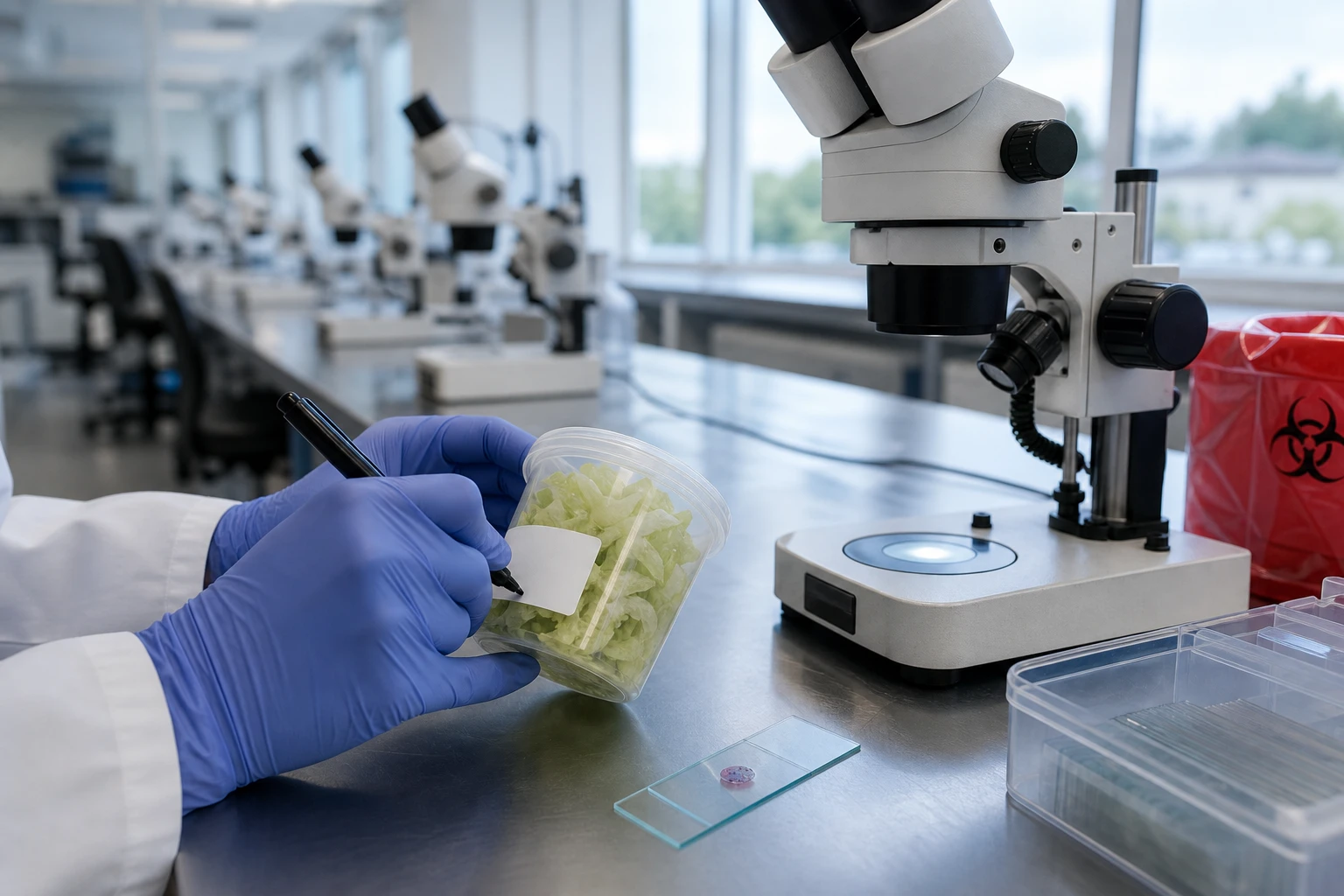
The Worst Cyclospora Season Ever Recorded
Cyclospora is a microscopic parasite that spreads through food touched by human waste, usually produce irrigated or washed with contaminated water. It causes watery, sometimes explosive diarrhea that can last for weeks if untreated.
The scale this year is unlike anything on the books. The CDC’s confirmed national count sat at 4,173 lab confirmed domestic cases across 41 states as of Wednesday, with another 7,400 cases awaiting confirmation, many from Michigan and Ohio. That is already far above the 249 cases reported nationally by this same time last year.
State tallies tell an even starker story. Michigan alone has logged 7,664 cases and 160 hospitalizations. Northwest Ohio has counted 2,380. Combined state figures tied to the lettuce cluster specifically have topped 11,000 confirmed or suspected illnesses, according to reporting cited by The Hill, a gap federal officials attribute partly to lab backlogs.
| Year | Reported Cases | Context |
|---|---|---|
| 2016 | 537 | Low point of the past decade, per CDC data |
| 2020 | 700+ | Single outbreak tied to bagged salad mix |
| 2023 | 4,463 | Prior modern high for a full season |
| 2025 | 1,180 | Full season total, 105 hospitalized, 37 states |
| 2026 (through July 22) | 4,173 confirmed, 7,400 pending | Already above 2025’s entire season, 41 states |
Some of that spike may reflect awareness rather than spread. Craig Hedberg, a food safety researcher at the University of Minnesota, has said publicity around the outbreak is pushing more people to get tested. “We’ll probably see a huge influx of new cases, and it doesn’t necessarily reflect that the actual outbreak is continuing to grow,” he said. CDC’s own surveillance page notes cases have been reported across 41 states since May 1, with the season running into late August.
A Parasite That Has Beaten Investigators Before
This is not new. Cyclospora has forced the same slow, frustrating chase for three decades, usually ending after the contaminated batch has already cleared store shelves.
- Mid-1990s: Raspberries imported from Guatemala fuel three straight spring outbreaks in the United States.
- Two years in: The FDA bans the raspberry imports and the U.S. outbreaks stop. Canada keeps importing and suffers a third bad season.
- 2013: A Texas centered investigation ties cilantro from Puebla, Mexico, to hundreds of illnesses spread across several states.
- Since 2013: Puebla cilantro turns up as a suspected or confirmed source almost every summer, pushing the FDA toward tighter import scrutiny of the region.
- 2018: Cyclospora shows up in domestically grown cilantro during a routine FDA sampling project, unconnected to any outbreak at the time, then again months later in a domestic salad mix tied to a real one.
- 2019: The FDA forms a dedicated Cyclospora Task Force to get ahead of the rising domestic detections.
- 2020: A bagged salad mix outbreak sickens more than 700 people.
- 2026: Taylor Farms recalls Mexican grown iceberg lettuce on July 17. Five days later, a 72-case cluster with no known source joins the list.
A peer reviewed review of these outbreaks found that by the time investigators pinned down a source, the outbreak itself was usually already over. Part of the problem is technical: cyclospora cannot be cultured like bacteria, and there is no whole genome sequencing tool for it the way there is for salmonella, so labs lean on patient interviews recalling meals from up to two weeks earlier. The FDA’s Cyclospora Prevention, Response and Research Action Plan was built specifically to close that gap.
Fewer Hands, a Record Caseload
The parasite has not changed. The government’s capacity to chase it has.
The response is being hampered by the loss of specialized staff and the loss of hands on deck needed to identify the source of the outbreaks.
That is Dr. Joel Barratt, who led the CDC lab responsible for identifying parasitic outbreaks nationwide. His 11 person team was cut to three by last September, and he resigned soon after, having already emailed CDC leadership warning what the cuts would cost. He has said the rising caseload itself is not surprising, since cases have climbed most summers for two decades. What is different, he said, is the country’s ability to respond.
Amesh Adalja, a senior scholar at the Johns Hopkins Center for Health Security, has made a similar case publicly, saying the CDC “probably has not been out front with this outbreak” and that “it’s really been driven by states like Michigan putting out information” because the agency is “poorly resourced” and moving in “slow response mode.” Separate reporting has estimated the CDC division most relevant to this response has lost roughly one-quarter of its staff to budget cuts, including specialists who would normally be pulled into an emergency like this one.
The trend those cuts hit was already climbing. Case counts climbed from 537 in 2016 to 4,463 by 2023, according to Consumer Reports’ review of CDC data, a decade long rise that argues for more surveillance capacity, not less.
Is the Outbreak Under Control?
Health Secretary Robert F. Kennedy Jr. says yes, and calls criticism of the agency cuts invalid. A former FDA commissioner and several food safety researchers describe a messier picture, pointing to a false positive border test on Taylor Farms lettuce and a fresh 72-case cluster the government cannot yet explain.
“We do have the outbreak under control,” Kennedy said this week, defending his agencies’ handling of a crisis that has now sickened more than 7,000 people in Michigan alone. He has called suggestions that staffing cuts slowed the investigation “invalid.”
The science underneath that claim has had its own stumble. The FDA tested Taylor Farms product at the U.S. Mexico border and got an initial positive result for cyclospora, which later turned out to be a false positive after quality control checks. The agency said its broader investigation and outbreak data still point to Taylor Farms shredded lettuce as the vehicle. Dr. Scott Gottlieb, a former FDA commissioner, has called the false positive result “a red herring” rather than evidence the agency got the source wrong.
Kyle Diamantas, the FDA’s acting commissioner, struck a more open ended tone on a briefing call. “I want to stress that our investigation continues, including into other potential sources and commodities for other clusters of illness,” he said. The agency’s own list of active cyclospora investigations, six as of this week, backs that up: one solved and recalled, two closed out small, and three still unresolved, including the newest one.
Food Safety Steps While the Search Continues
Health officials say a handful of basic habits still matter most while the source hunt drags on.
- Wash hands with soap and water after using the bathroom and before handling any food.
- Cook produce to at least 158 degrees Fahrenheit (70 Celsius), a temperature that kills the parasite outright.
- Do not count on rinsing alone. Cyclospora can cling to produce surfaces in ways plain water does not fully remove.
- Check any iceberg lettuce grown in central Mexico against the Taylor Farms recall notice before eating it, whether it came from a store shelf or a restaurant.
Anyone with diarrhea lasting more than a few days, especially if it is frequent or severe, should contact a healthcare provider rather than wait it out. The cyclosporiasis season runs through August 31, and the CDC has said case counts will likely keep climbing before it closes.
Frequently Asked Questions
What are the symptoms of cyclosporiasis?
Beyond frequent, sometimes explosive diarrhea, the CDC lists loss of appetite, weight loss, bloating, nausea, and fatigue as common symptoms, with low-grade fever and vomiting less common. Symptoms typically start about a week after exposure, though onset can range from two to fourteen days.
How is cyclosporiasis treated?
Doctors treat confirmed cases with a course of antibiotics. Without treatment, symptoms can drag on for weeks, which is why the CDC has urged clinicians to test for the parasite rather than assume a routine stomach bug.
Does washing produce remove cyclospora?
Not reliably. Health officials say washing alone may not remove the parasite because it can stick to produce surfaces, which is why cooking to at least 158 degrees Fahrenheit (70 Celsius) is the guidance that actually kills it.
What exactly is covered under the Taylor Farms recall?
The recall covers iceberg lettuce grown in central Mexico that was sold at retail stores and served in restaurants, plus other Taylor Farms products distributed to food service customers. It does not cover lettuce from other growing regions or other suppliers.
Can cyclosporiasis spread from person to person?
No. The CDC says the illness is not usually spread directly between people; it spreads through consuming food or water already contaminated with the parasite.
Disclaimer: This article is for general information only, cyclosporiasis is a medical condition, and anyone experiencing symptoms should consult a licensed healthcare provider; figures cited here reflect CDC and FDA data available as of publication and may change as the investigation continues.


Walmart’s $50 Million Opioid Settlement Closes Case Without Admission

California Sues Over $120 Million Morro Bay Wind Lease Buyout

Gilead Bixlenvo FDA Nod Opens Single Pill Path for Complex HIV Cases

Meta’s $18B Kids Deal Forever Shields Data Used to Spot Under-13s

Lettuce Outbreak Drove Record Cyclospora Spike Across 20 States

Amazon Shaves $20 Off M6 Mac Mini Before It Even Ships

SpaceX Louisiana Port Tests Debt Markets on Orbital AI Scale

Microsoft High Lifts Indexes as Small Caps Crack Support

Apple Replays 2015 Saturday Midnight Preorder for iPhone 18 Pro

Updated COVID Shots Clear FDA but Access Friction Hits High-Risk Groups

Take-Two CEO Pushes Netflix Subs for GTA 6 Extended Look

Quake Gets 19 Free Maps From MachineGames Quake Club

Destiny 2 Fans Unlock Vaulted Maps After Live Service Ends

Wildlands Free Update Hands Players the Tools They Already Invented

Quordle Monday Delivers Gavel Crush Speed Ethos Cleanly

Stripe Bid Shows PayPal Moat Cracked After Years of Slide

Tyson’s Five-Year Utah Plant Falls to Cattle Shortage Reckoning

Silver Lake Workday Talks Signal Private Floor for Software

Kennedy Lewis Takes Majority Control of The Greenbrier in $500M Deal

Best Buy Marks 60 Years With Sale That Echoes Its Audio Shop Roots
-

 TECHNOLOGY3 years ago
How to Adjust a Bulova Watch Band – An Easy Guide
-

 News3 years ago
Fred Pentland: Athletic Bilbao’s English mentor who changed the essence of Spanish football
-

 FINANCE3 years ago
Tax Planning for Every Season: Guide to Maximizing Your Tax Benefits
-

 Education3 years ago
African Ministers New Education Plan
-

 BUSINESS3 years ago
What is Entrepreneurial Operating System? A Comprehensive Guide to EOS
-

 Education3 years ago
Innovate Your Learning Journey with Technology and Enhance Education
-

 News3 years ago
Russians formally out of World Athletics Championships
-

 BUSINESS3 years ago
Top 9 Most Expensive American Cities to Rent an Apartment