
News
GoPro Mission 1 Pro Review: A $699 Bet on 8K Video Quality

GoPro’s Mission 1 Pro ships May 28 at $699, the steepest price tag any action camera has ever carried, and most of that premium goes into a 1-inch 50-megapixel sensor that captures 8K video at 60 frames per second. The chip is the largest ever fitted to an action cam, and the model lands $270 above the GoPro Hero 13 and roughly $260 above DJI’s Osmo Action 6, the rival that has been eating GoPro’s mid-market share for two product cycles.
The premium buys cinema-grade footage, super slow motion at 4K 240 frames per second, and battery life that nearly doubles GoPro’s own previous flagship. It also costs you weight, thickness, and the internal memory that DJI’s competitor ships standard.
The Bet on Sensor Size
For two product cycles, DJI has been steadily widening its lead in mid-market action cameras. The Osmo Action 6 official product page highlights a variable aperture lens, 50 gigabytes of internal storage, and pricing that undercuts every GoPro Hero by roughly $170. GoPro’s response is not a cheaper Hero. It is a bigger camera with a bigger sensor and a price that aims higher than anyone has gone in the action-cam category before.
The strategic logic is straightforward. GoPro is gambling that mountain bikers, motocross riders, surfers, drone pilots, and YouTube creators who care about footage quality will pay a meaningful premium to get cinema-grade image quality from a body small enough to mount on a helmet. The Hero line stays in the $400 zone for general consumers. The Mission line walks upmarket, chasing the slice of the market that buys mirrorless cameras to supplement an action rig.
It is a real bet. The volume that built GoPro into a category-defining brand came from $300 to $500 sweet-spot pricing. Pushing past $700, then $1,099 for the Creator Edition and $1,199 for the Ultimate Creator Edition with the new Fluid Pro stabilizer, takes GoPro into territory once owned by Sony, Panasonic, and the compact cinema cameras from Blackmagic Design.
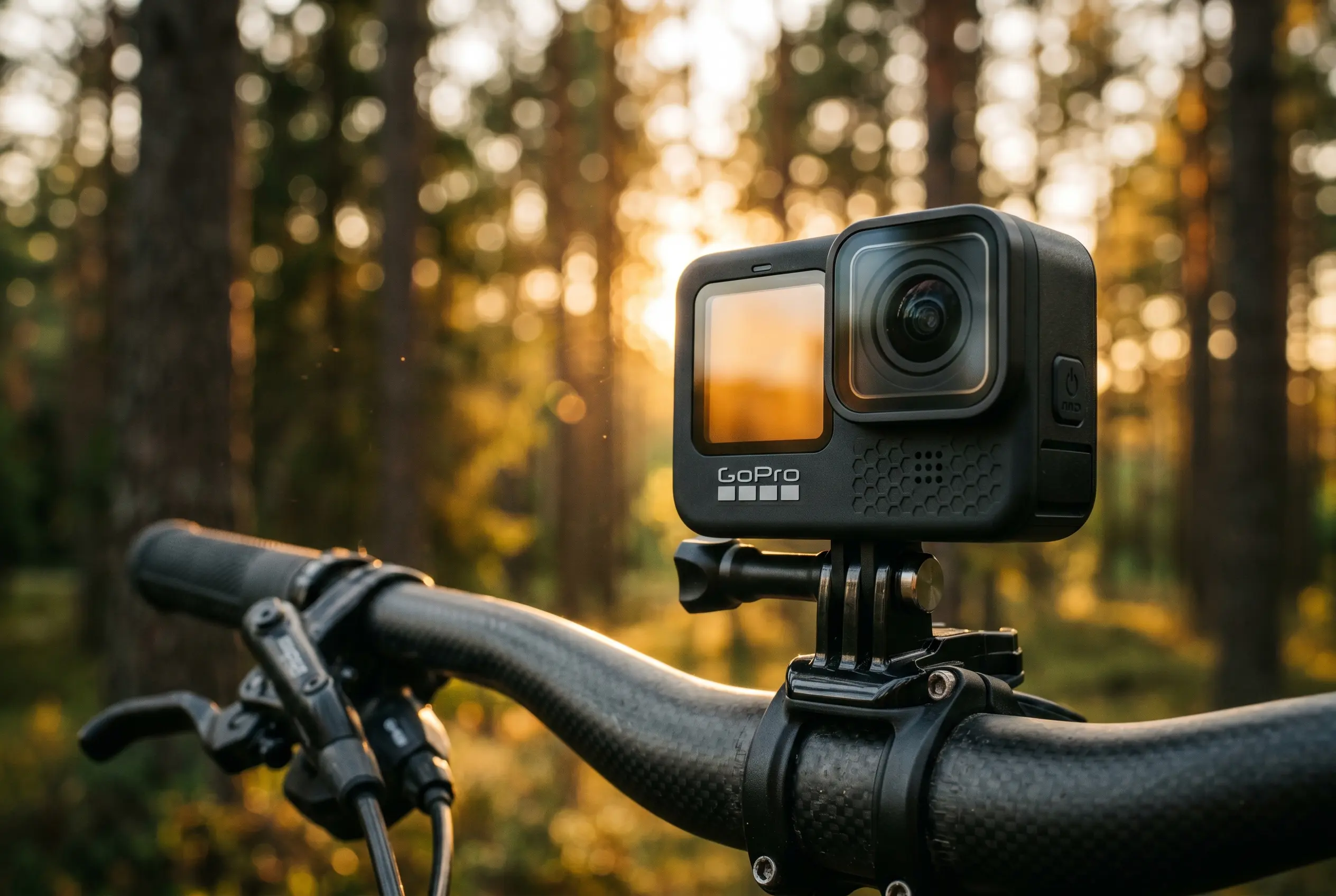
Inside the New 1-Inch Sensor
The Mission 1 Pro’s sensor is the spec the rest of the camera flows from. At 13.2 by 8.8 millimeters, it is larger and wider than the square 1/1.15-inch chip in DJI’s Action 6, with more area to gather light and resolve detail. The Mission 1 series technical overview walks through the hardware in full.
The headline numbers:
- 50 megapixels captured by the 1-inch sensor at native resolution
- 8K at 60 fps maximum video in 16:9, plus 4:3 open gate at 30 fps
- 4K at 240 fps for super slow motion, with 1080p at 960 fps for ultra slow-mo
- 240 Mbps data rate paired with 10-bit GP-Log2 color
The 50-megapixel count enables three things at once. It powers 8K capture, including 4:3 open gate at 7,680 by 5,760 pixels for vertical platforms like TikTok and Reels. It allows aggressive reframing of 4K shots in post, useful when you want to punch in on a subject’s face during edit. And it produces RAW stills at full resolution when the light cooperates.
The lens carries a 156-degree native field of view, wider than most action cams. Three view modes change the distortion profile: a Superview at 16 millimeters that is ultra wide and quite warped, a Wide view at 16 to 24 millimeters that softens distortion, and a Linear mode at 22 to 27 millimeters that eliminates warping entirely. The 4:3 open gate mode at up to 8K 30 fps beats every other action camera on the market and many entry-level mirrorless bodies as well.
Video Quality on the Trail
In bright daylight, the Mission 1 Pro produces cleaner, more cinematic footage than any action cam currently sold. The combination of the larger sensor, sharp lens, GP-Log2 10-bit color profile, and the high bitrate gives editors meaningful headroom in post. Highlights pull back without smearing. Shadow detail stays clean.
Low light is where the sensor size pays off most. Pointed at a forest at dusk, the Mission 1 Pro holds detail the Osmo Action 6 loses to noise, since the larger photosites tolerate higher ISO settings before grain takes over. It is not a low-light hero like a full-frame mirrorless, but among action cameras it sits in a new class. Subject tracking benefits from the resolution headroom, keeping a cyclist or skier locked in frame even when the system reframes a 4K crop out of an 8K master. Tracking does occasionally lose subjects in dim light.
For slow motion, 4K at 240 frames per second is the headline number. Combined with the 1080p super slow-mo, the Mission 1 Pro delivers frame rates only the most expensive cinema cameras can match. Stabilization holds up at these speeds, though GoPro’s HyperSmooth (the brand’s electronic image stabilization system, still the category benchmark) occasionally allows motion blur artifacts in very low light.
Battery Life and Heat Management
The Enduro 2 battery and new GP3 processor combine for the longest runtimes in any GoPro to date. At 4K 30 fps, the camera ran for over three hours in testing, almost double the 102 minutes the Hero 13 manages on the same setting. Even at the demanding 8K 60 mode, the battery lasted well over an hour before quitting.
Charging speeds match the endurance gains. PD 2.0 (Power Delivery 2.0, USB-C’s fast-charging standard) takes the cell from empty to full in roughly 60 minutes, against 100 minutes for the Hero 13. The Enduro 2 is also cross-compatible with the Hero 13’s older Enduro pack, so creators upgrading from the previous generation can pool batteries across both bodies.
Thermals were a chronic GoPro complaint for years. The Mission 1 Pro mostly puts that behind. The only modes with thermal caps are 8K 60 and 4K 240, where GoPro rates the stationary runtime at 35 minutes. In Engadget’s hands-on testing, the camera ran 46 minutes without airflow before any warning triggered, and a 70-minute bike ride at 8K 60 completed with no shutdown because moving air kept the body cool.
Waterproofing is rated to 66 feet without a housing, and a $59 protective case extends that to 196 feet for divers. The hydrophobic lens cover sheds water cleanly, and the body shrugged off bicycle crashes during testing without cosmetic damage.
For a camera designed for skiing, surfing, kayaking, and dive work, the new endurance numbers change which shoots stay practical on a single battery rather than a four-pack.
The Storage Gap and Other Tradeoffs
Internal storage is the headline omission. The Mission 1 Pro does not include any, which stings most against DJI: the Osmo Action 6 ships with 50 gigabytes of high-speed onboard memory at a price $273 lower than GoPro’s flagship. Every Mission 1 Pro shoot requires a microSD card, and the camera writes its high-bitrate streams fast enough to demand a high-rated card.
The compromises a buyer accepts:
- No internal storage; a high-rated microSD card is mandatory for the top bitrate
- A 31% weight gain over the Hero 13, felt mostly on helmet and cap mounts
- A body roughly three quarters of an inch thicker than the Hero 13
- A $270 price premium over the Hero 13 before any subscriber discount
- Subject tracking occasionally loses targets in dim light
- Low Light mode helps at night but leaves shadow areas grainy
How It Stacks Up Against DJI’s Osmo Action 6
DJI’s Osmo Action 6 has been the price-to-performance leader in action cameras for nearly a year, and the Mission 1 Pro does not displace it on value. It out-shoots the DJI on quality, often by a wide margin, but the gap costs money. The table below puts the two cameras and GoPro’s own Hero 13 side by side.
| Spec | GoPro Mission 1 Pro | DJI Osmo Action 6 | GoPro Hero 13 |
|---|---|---|---|
| Sensor | 1-inch, 50 MP | 1/1.15-inch, 38 MP | 1/1.9-inch |
| Max video | 8K at 60 fps | 8K at 30 fps | 5.3K at 60 fps |
| Slow motion | 4K 240 fps; 1080p 960 fps | 4K 120 fps | 5.3K 120 fps |
| Internal storage | None (microSD) | 50 GB onboard | None (microSD) |
| Battery life (4K 30) | Over 3 hours | Approx. 4 hours | 102 minutes |
| Weight | 0.46 lb (209 g) | 0.33 lb (149 g) | 0.35 lb (159 g) |
| Waterproof, no housing | 66 ft | 66 ft | 33 ft |
| Variable aperture | No | Yes (f/2.0 to f/4.0) | No |
| Starting price | $699 | $426 | $429 |
DJI brings two things GoPro does not. The first is the variable aperture lens, which lets the camera maintain cinematic motion blur in bright daylight without an ND filter (neutral density, the optical filter that cuts incoming light). The second is internal memory, so a creator who forgets a card can still record.
GoPro answers with the larger sensor, the higher frame rates, better stabilization, and a video result that is visibly cleaner in dim conditions. For a creator whose deliverable is YouTube vlogs, mountain bike B-roll, or anything that gets graded in DaVinci Resolve or Adobe Premiere, the Mission 1 Pro produces the better master. For a creator whose deliverable is straight-from-camera TikTok and Instagram clips, the savings on an Action 6 pay for plenty of accessories.
Who the Mission 1 Pro Is Built For
Three buyer profiles get clear value from the Mission 1 Pro shop listing. The first is the professional content creator whose footage runs on YouTube, broadcast, or streaming platforms, where 10-bit color, 8K resolution, and clean low-light footage justify the extra bag weight. The second is the existing GoPro user with a $60-per-year subscription, who pays $100 less on every model in the range and already owns compatible accessories and Enduro batteries. The third is the dive and underwater shooter, who needs the 196-foot housing rating combined with cinema-grade sensor quality, a combination no rival currently offers.
Everyone else should look hard at DJI. The Osmo Action 6 covers what most creators need, with onboard storage and a body 60 grams lighter. At $599, the standard Mission 1 (limited to 8K 30 and 4K 120) sits in an awkward middle ground that is harder to justify than either the Hero 13 below it or the Mission 1 Pro above it.
For mountain bikers, drone pilots, dive shooters, and YouTube creators chasing the best frames an action cam can produce, the Mission 1 Pro is the camera. For everyone else, the savings on a DJI Action 6 will pay for a lot of microSD cards.
Frequently Asked Questions
When Does the GoPro Mission 1 Pro Ship?
The Mission 1 Pro ships on May 28, 2026, after a pre-order window that opened in April per GoPro’s Mission 1 pre-order announcement. The Mission 1 Pro ILS, with a Micro Four Thirds interchangeable lens mount, arrives later in the year.
How Much Does the GoPro Mission 1 Pro Cost?
The Mission 1 Pro carries an MSRP of $699 in the United States. Active GoPro subscribers ($60 per year) get $100 off, bringing the price to $599. The Grip Edition with a photo grip is $779, the Creator Edition (Media Mod, Wireless Mic Complete Kit, Volta 2 Battery Grip, Magnetic Latch Mount, Carrying Case) is $1,099, and the Ultimate Creator Edition with the Fluid Pro stabilizer is $1,199.
What Is the Difference Between the Mission 1 and the Mission 1 Pro?
The Pro model shoots 8K at 60 fps and 4K at 240 fps. The standard Mission 1 caps at 8K 30 fps and 4K 120 fps. Both share the same 1-inch sensor, lens, body, and battery. The Pro costs $100 more.
Is the GoPro Mission 1 Pro Better Than the DJI Osmo Action 6?
The Mission 1 Pro delivers visibly better video quality, especially in low light, thanks to its larger sensor and the higher 8K 60 fps capability. The Osmo Action 6 wins on price (roughly $270 less), built-in storage, variable aperture, and lighter weight. The right answer depends on whether you value sensor quality more than price and convenience.
Does the GoPro Mission 1 Pro Have Internal Storage?
No. The Mission 1 Pro records exclusively to microSD cards. DJI’s competing camera, by contrast, includes substantial onboard high-speed memory at a lower price. GoPro recommends V30-rated cards or faster for the highest video modes.
How Long Is the Battery Life on the GoPro Mission 1 Pro?
The Enduro 2 battery lasts over three hours at 4K 30 fps and well over an hour at 8K 60 fps, roughly doubling the runtime of the Hero 13. It charges from empty to full in about 60 minutes via PD 2.0 fast charging.
Is the GoPro Mission 1 Pro Waterproof?
Yes, to 66 feet without any additional housing. The optional $59 protective case extends the waterproof rating to 196 feet for divers and serious underwater shooters.






Redmi Battery Monsters Win the Week as Samsung Trims S27 Cameras

Moto G Max India Bet Puts 7000mAh Battery Ahead of Specs

Take-Two CEO Pushes Netflix Subs for GTA 6 Extended Look

Google Bets Tensor G6 Efficiency Fixes Pixel’s Old Flaws

Grok Image 2.0 Adds Pro Edits While Scandals Linger

Caviar Leather iPhone 18 Pro Editions Kill Wireless Charging for Status

Quordle Monday Delivers Gavel Crush Speed Ethos Cleanly

Goldmund Telos 9800 Mono Amp Costs More Than Most Ferraris

Gemini Plan Dropped the Race and Made Running Stick

Cloudflare Kitesurf Cracks Chromium Moat for AI Agents

SpaceX Preps Starship Flight 13 to Fix Its Booster Failure

PS5 Adds a Weekly Wrap-Up Widget While Recently Played Stays Broken

Tears of the Kingdom Fans Trap Ganondorf in a Never-Ending Hamster Wheel

ZA/UM Lays Off 32 Staff as Zero Parades Wins Reviews, Not Players

EA’s New In-Game Ad Platform Skips the Games That Need It Most

Wall Street’s SpaceX and Merger Fee Boom Comes With a Catch

Pentagon Suspends CMMC Phase 2, Relieving Small Firms, Straining Assessors

Colorado’s New Law Makes Automakers Own Dead EV Batteries

Mortgage Rates Climb to 6.55%, the Highest Level in Nearly a Year

Perseid Meteor Shower Begins This Week Under a Rare Earthshine Moon
-

 TECHNOLOGY3 years ago
How to Adjust a Bulova Watch Band – An Easy Guide
-

 News3 years ago
Fred Pentland: Athletic Bilbao’s English mentor who changed the essence of Spanish football
-

 FINANCE3 years ago
Tax Planning for Every Season: Guide to Maximizing Your Tax Benefits
-

 Education3 years ago
African Ministers New Education Plan
-

 BUSINESS3 years ago
What is Entrepreneurial Operating System? A Comprehensive Guide to EOS
-

 Education3 years ago
Innovate Your Learning Journey with Technology and Enhance Education
-

 BUSINESS3 years ago
Top 9 Most Expensive American Cities to Rent an Apartment
-

 News3 years ago
Russians formally out of World Athletics Championships