
News
Lego’s New Smart Bricks Repeat a Bet It Has Made Before
Lego’s new Smart Play sets add batteries, chips and a microphone to Star Wars bricks, reviving a tech bet that ended Mindstorms after 24 years.

Lego’s newest Star Wars sets will not make a sound until their battery finishes charging. An 8-year-old boy plugged in his new Smart Brick overnight like a phone, then woke up early just to hear his Lego X-wing roar, according to his father’s account in the Wall Street Journal.
Lego calls the technology Smart Play, and it is the company’s biggest wager yet on electronics living inside its bricks. Lego has made that wager before, under different names, and most of those bets did not survive.
A Chip Smaller Than a Stud
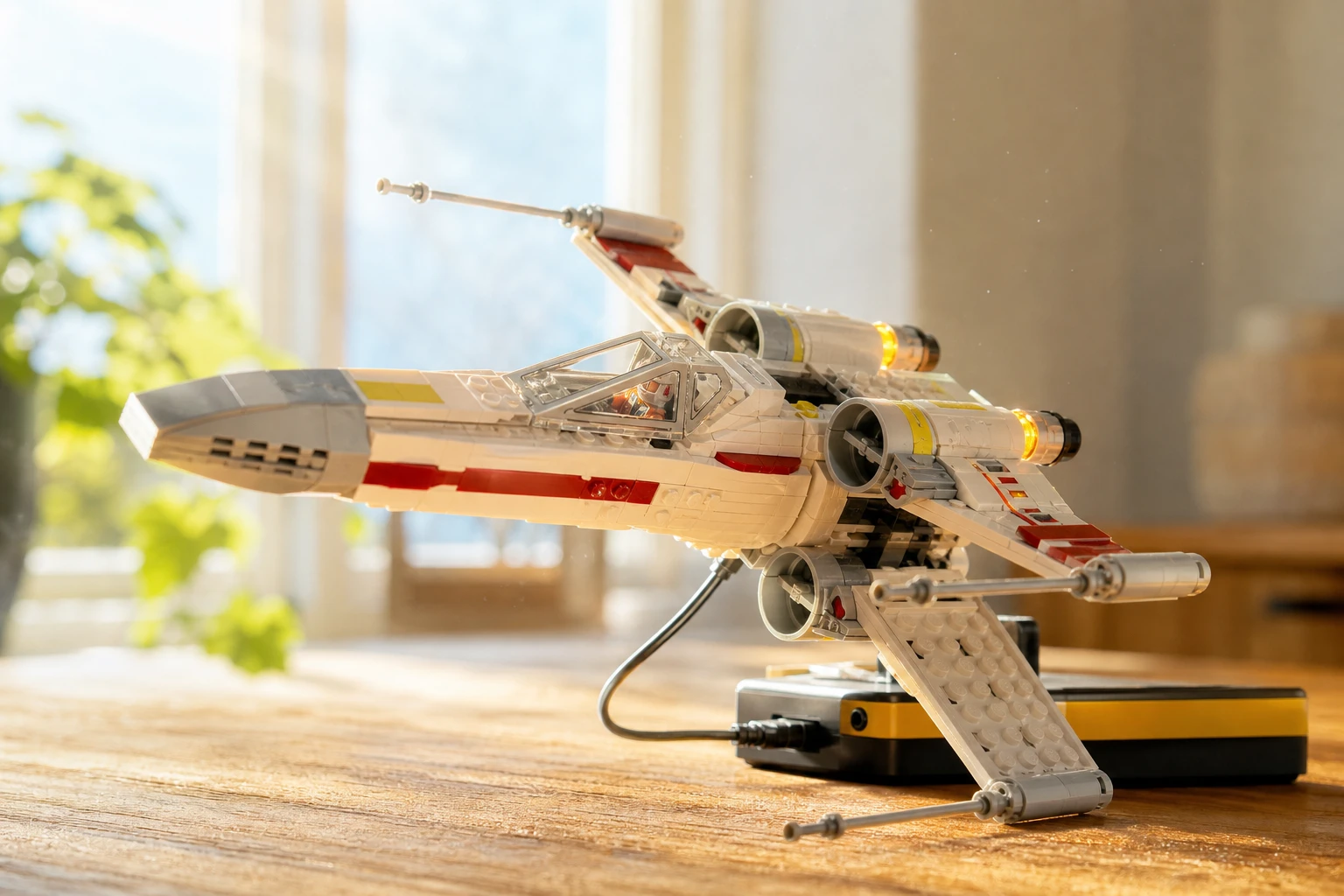
Lego unveiled the system in January at CES 2026, the Las Vegas electronics show, its first major push into embedded electronics since it wound down Lego Mindstorms. Three “All-In-One” Star Wars sets went on sale March 1: Darth Vader’s TIE Fighter, Luke’s Red Five X-Wing, and a Throne Room Duel and A-Wing set built around the final lightsaber battle from Return of the Jedi.
| Set | Price | Pieces | Recommended Age |
|---|---|---|---|
| Darth Vader’s TIE Fighter (75421) | $69.99 | 473 | 8+ |
| Luke’s Red Five X-Wing (75423) | $99.99 | 581 | 6+ |
| Throne Room Duel and A-Wing (75427) | $159.99 | 962 | 9+ |
Every set runs on the same part: a Lego Smart Brick built to the footprint of an ordinary piece, with a custom chip smaller than a single stud hidden inside. The official Star Wars announcement credits the platform with more than twenty patented world-firsts within its technology, developed by Lego’s Creative Play Lab.
Packed into that single brick:
- A custom ASIC chip running what Lego calls a Play Engine, smaller than a standard stud
- An accelerometer that reads motion, tilt and gesture
- Light, sound and color sensors that let the brick react to its surroundings
- A miniature onboard speaker driven by a built-in synthesiser, so sound effects are generated live rather than played from a recording
- Wireless charging hardware built into the brick itself
Smart Tags, small studless tiles placed on turrets or fuel stations, and Smart Minifigures that look identical to ordinary ones, talk to the brick through near-field magnetic signals rather than a screen. Five more compatible sets followed within weeks, revealed at Germany’s Nuremberg Toy Fair alongside C-3PO actor Anthony Daniels.
Mindstorms Walked This Road First
Lego wired batteries into its bricks once before, and the results took nearly a quarter century to play out. Lego Mindstorms began in September 1998 as a $199 robotics kit sold through electronics chains like Best Buy and CompUSA instead of toy aisles. Its entire production run, an estimated 60,000 to 100,000 units, sold out within three months.
- 1998: Lego launches the Mindstorms Robotics Invention System with its RCX brick, selling out its production run in three months.
- 2006: Mindstorms NXT replaces it, adding an onboard speaker and Bluetooth downloading from a computer.
- 2013: Mindstorms EV3 arrives running on Linux, built for classrooms and FIRST Lego League robotics teams.
- 2020: Robot Inventor, priced around $360, becomes the final Mindstorms set ever released.
- 2022: Lego discontinues Mindstorms after 24 years, guaranteeing app support only through the end of 2024.
- 2026: Lego launches Smart Play, its next attempt at wiring electronics into the brick.
Lego described the shutdown as a shift in resources, telling fans it was “redirecting our MINDSTORMS Robot Inventor team and their expertise into different areas of the business.” The company guaranteed app support for only two more years, the same limited runway it had already given Vidiyo, its earlier augmented-reality music toy line, according to Brick Fanatics’ reporting at the time.
Hobbyists had reverse-engineered the original RCX brick’s firmware within weeks of its 1998 launch, building their own programming languages once Lego moved on to newer hardware. That community kept old Mindstorms sets functional long after Lego stopped supporting them. Smart Play, aimed at six-year-olds rather than robotics club teenagers, will not have that same fallback if Lego ever walks away.
A Record Year Bankrolls a New Bet
Smart Play arrives while Lego does not need a hit. The company posted record double-digit growth in revenue and operating profit for 2025, with revenue up 12% to DKK 83.5 billion (about $13 billion) and net profit up 21% to DKK 16.7 billion (about $2.6 billion).
Consumer sales grew 16%, more than double the 7% growth Circana measured across the broader toy market that year. Lego ranks ahead of Mattel and Hasbro in global toy revenue, a gap that has only widened as the brand pulls in more adult buyers alongside kids.
The Smart Brick had nothing to do with those 2025 numbers. Lego’s record year closed in December, three months before the first Smart Play set reached shelves on March 1. CNBC described the Smart Brick as a “behind-the-scenes secret weapon” for 2026, arriving alongside new Pokemon, Lord of the Rings and Legend of Zelda sets in Lego’s lineup for the year.
A Microphone Comes Standard Now
The convenience comes with new upkeep. Battery life runs about 45 minutes per charge, and a full recharge takes roughly the same 45 minutes, according to Lego’s own product specifications.
Every All-In-One set also ships with a microphone built into the Smart Brick. It stays deactivated out of the box. Lego’s own listing says switching it on for any future feature would require both a firmware update and a parent’s permission, a detail easy to miss on a toy aimed at six-year-olds.
Getting a set running at all requires the Lego Smart Assist App, which handles setup, troubleshooting, volume control and software updates. That software layer is exactly what eventually undid Mindstorms: once Lego stops updating an app, the chips underneath keep existing, just without the features that justified the price.
Price adds its own friction. GamingBible’s reviewer, testing the X-wing set against Lego’s earlier non-electronic version of the same starfighter, stayed enthusiastic about the sound and light effects but still flagged the newer set as “massively overpriced for what it offers.” Lego also started small rather than global, launching Smart Play in only a handful of countries at first rather than everywhere at once.
Early Reviews Do Not Agree
GameRant’s reviewer came away uneasy, writing that the reveal left them “frowning over features and how this new layer of production can impact creativity.”
Variety’s reviewer landed somewhere else entirely, writing that the new brick system “enhances my enjoyment of playing with Lego sets” and finding nothing missing from the traditional building experience while assembling the Millennium Falcon and the Throne Room set.
The Brick Fan’s coverage from the CES reveal in January captured that same range in real time, quoting fan comments that ran from calling the system innovative to saying plainly that they wanted no part of it.
Lego Says This Time Is Different
Lego’s own fact sheet draws a careful line around the new technology. The company states that Smart Bricks, Smart Tags and Smart Minifigures are all built to work inside the existing LEGO System-in-Play, snapping onto ordinary bricks from any other set on the shelf.
That is a structural difference from Mindstorms, whose RCX brain ran on its own tethered software and needed its own community of hackers just to keep functioning once Lego moved past it. Lego’s stated goal for Smart Play is to keep the electronics quiet and secondary, present inside the System-in-Play rather than replacing it.
Christiansen is not promising a repeat of 2025. “What a mountain to climb,” he told CNBC, adding that he expects high-single-digit growth in 2026 rather than another double-digit jump.
Whatever happens to Smart Play, the ordinary studs underneath will still snap into every other Lego set on the shelf. That backward compatibility is the one insurance policy Mindstorms never had.
Frequently Asked Questions
Is Lego Smart Play compatible with regular Lego bricks?
Yes. Lego’s technical fact sheet for the system states that Smart Bricks, Smart Tags and Smart Minifigures are all built to fit the existing LEGO System-in-Play, so every piece combines with ordinary bricks from any other set a child already owns.
Which countries can buy Lego Smart Play sets right now?
Smart Play launched in only six markets: the United States, the United Kingdom, France, Germany, Poland and Australia, according to Jay’s Brick Blog’s reporting from the CES reveal. Lego has not announced a date for a wider global rollout.
Did Lego discontinue Mindstorms because of Smart Play?
No. Lego retired Mindstorms in 2022, four years before Smart Play existed, and redirected that team’s expertise elsewhere in the business. Smart Play is a separate, newer platform aimed at a much younger age range than Mindstorms’ robotics kits ever targeted.
What other Lego Smart Play sets are coming?
Lego revealed five more compatible sets at the Nuremberg Toy Fair alongside C-3PO actor Anthony Daniels: a Millennium Falcon, Luke’s Landspeeder, Yoda’s Hut and Jedi Training, an AT-ST Attack on Endor, and the Mos Eisley Cantina.
How long does the Lego Smart Brick’s battery last?
Lego lists battery life at about 45 minutes of play per charge, with a full recharge taking roughly the same amount of time, so the brick needs regular attention between building sessions rather than running indefinitely like a standard motorized piece.


Walmart’s $50 Million Opioid Settlement Closes Case Without Admission

California Sues Over $120 Million Morro Bay Wind Lease Buyout

Gilead Bixlenvo FDA Nod Opens Single Pill Path for Complex HIV Cases

Meta’s $18B Kids Deal Forever Shields Data Used to Spot Under-13s

Lettuce Outbreak Drove Record Cyclospora Spike Across 20 States

Amazon Shaves $20 Off M6 Mac Mini Before It Even Ships

SpaceX Louisiana Port Tests Debt Markets on Orbital AI Scale

Microsoft High Lifts Indexes as Small Caps Crack Support

Apple Replays 2015 Saturday Midnight Preorder for iPhone 18 Pro

Updated COVID Shots Clear FDA but Access Friction Hits High-Risk Groups

Take-Two CEO Pushes Netflix Subs for GTA 6 Extended Look

Destiny 2 Fans Unlock Vaulted Maps After Live Service Ends

Wildlands Free Update Hands Players the Tools They Already Invented

Quake Gets 19 Free Maps From MachineGames Quake Club

Quordle Monday Delivers Gavel Crush Speed Ethos Cleanly

Stripe Bid Shows PayPal Moat Cracked After Years of Slide

Tyson’s Five-Year Utah Plant Falls to Cattle Shortage Reckoning

Silver Lake Workday Talks Signal Private Floor for Software

Kennedy Lewis Takes Majority Control of The Greenbrier in $500M Deal

Best Buy Marks 60 Years With Sale That Echoes Its Audio Shop Roots
-

 TECHNOLOGY3 years ago
How to Adjust a Bulova Watch Band – An Easy Guide
-

 News3 years ago
Fred Pentland: Athletic Bilbao’s English mentor who changed the essence of Spanish football
-

 FINANCE3 years ago
Tax Planning for Every Season: Guide to Maximizing Your Tax Benefits
-

 Education3 years ago
African Ministers New Education Plan
-

 BUSINESS3 years ago
What is Entrepreneurial Operating System? A Comprehensive Guide to EOS
-

 Education3 years ago
Innovate Your Learning Journey with Technology and Enhance Education
-

 News3 years ago
Russians formally out of World Athletics Championships
-

 BUSINESS3 years ago
Top 9 Most Expensive American Cities to Rent an Apartment