
Health
Red Cross Rations Type O as Second National Blood Crisis Hits
With less than one day of O positive left, the Red Cross limits hospital distributions after donations hit a four-year summer low driven by heat and illness.

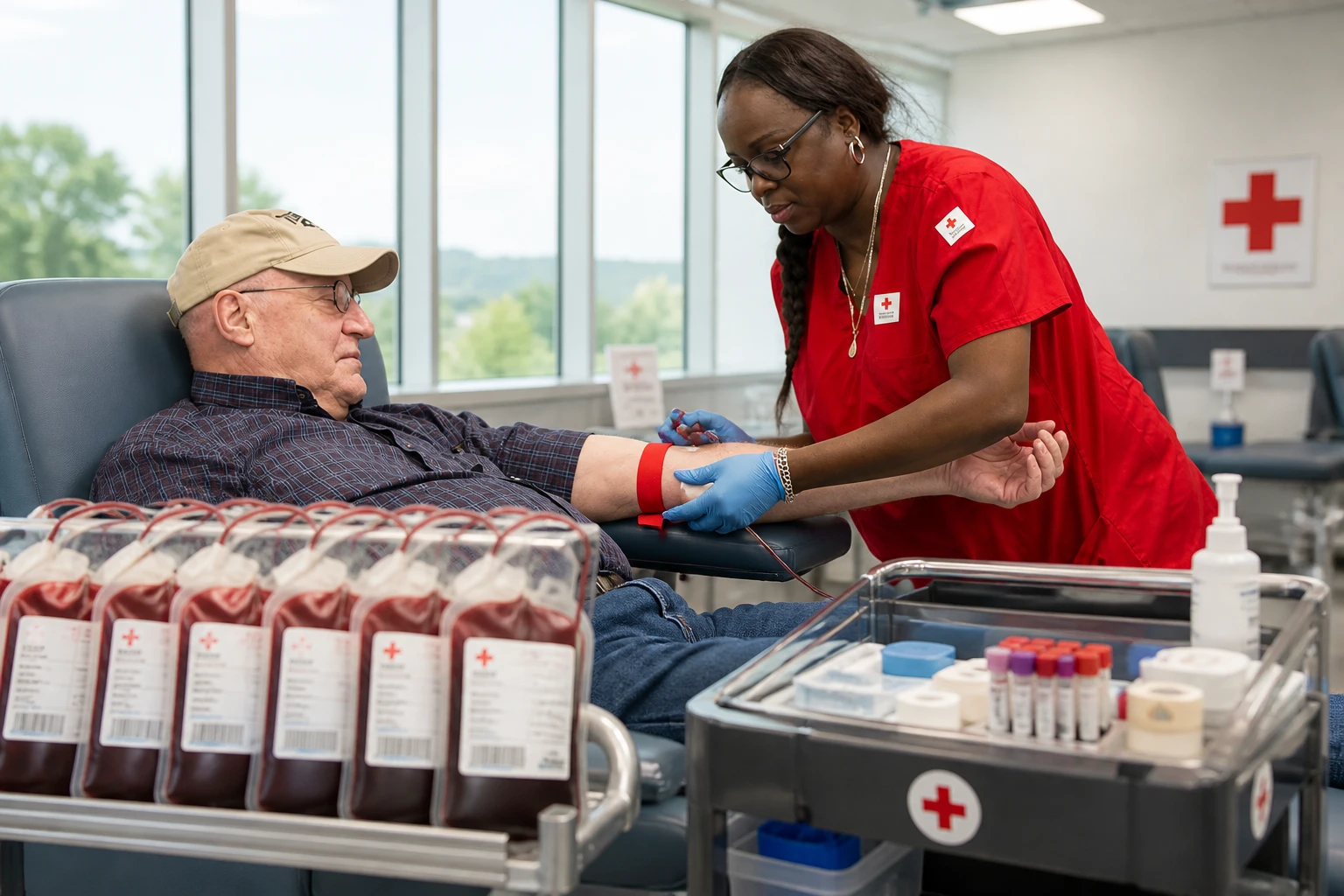
The American Red Cross holds less than a one-day national supply of type O positive blood and has begun limiting its distribution to hospitals. Donations fell to a four-year summer low, the organization said July 27, marking only the second-ever national blood supply crisis.
Patients may already wait for blood they need. Summer trauma demand is high while extreme heat, poor air quality and widespread foodborne illnesses keep donors away.
The Numbers Behind the Alert
Type O positive is the most commonly transfused blood type and can go to about 80 percent of patients. Type O overall accounts for roughly 60 percent of Red Cross distributions. O negative remains the universal option when there is no time to type a patient.
The Red Cross supplies about 40 percent of the nation’s blood. Only about 3 percent of age-eligible people donate each year.
- Every 2 seconds someone in the U.S. needs blood or platelets.
- Approximately 29,000 units of red blood cells are required daily.
- Nearly 5,000 units of platelets and 6,500 of plasma are needed each day.
- Red cells last up to 42 days; platelets just 5 days.
Those daily figures come from the Red Cross’s own 29,000 units of red blood cells needed daily accounting. A single car-crash victim can need as many as 100 units. Average red-cell transfusion runs about three units.
| Metric | Figure |
|---|---|
| Annual U.S. whole blood and red-cell collections | 13.6 million units |
| People who donate each year | 6.8 million |
| Share of population with group O blood | About 45 percent |
| Share who are O negative | 7 percent |
| Red Cross share of national supply | About 40 percent |
Supply dropped nearly 25 percent in June according to Red Cross updates circulating with the crisis declaration. Inventories of the most-needed types sat days from crisis levels in multiple regions earlier in July.
Why Turnout Collapsed This Summer
Hospital demand rises in summer with more trauma. Collections did not keep up. The Red Cross points to three overlapping drags on donors.
- Extreme heat that keeps people indoors and reduces walk-in and drive traffic.
- Poor air quality that adds health concerns for potential donors.
- Widespread foodborne illnesses that leave many temporarily ineligible or simply unwell.
Thousands still gave. It was not enough. Many blood collectors beyond the Red Cross reported critical shortages through the season. A joint call from AABB and blood centers in mid-July already described the national supply as lower than needed for routine and emergency care.
On X and local channels, regular donors and first-timers noted the daily collection target sits near 13,000 units just to stay even. Physicians amplified the 25 percent drop as one of the sharper shortfalls since the pandemic years. Public response has been steady but slow relative to the gap.
Hospitals Already Rationing Type O
To protect the most critical cases, the Red Cross is limiting type O shipments to individual hospitals. That forces triage. Life-threatening trauma, emergency surgery and patients who can receive only O get priority. Scheduled procedures that need blood may wait.
Chris Hrouda, president of Red Cross Biomedical Services, said patients may already feel the consequences. Some are forced to wait for the blood they need. After 2022 the organization and hospitals improved planning: hospitals now schedule about 65 percent of anticipated needs in advance. That helps predictability. It cannot create blood that was never donated.
When A, B and AB supplies are solid, hospitals can match patients more often and reserve O for true O patients and unknowns. Right now the O cushion is gone. Cancer patients on chemotherapy, sickle-cell patients who need regular transfusions, and elective surgery candidates sit downstream of that choice.
The Thin Volunteer Base That Carries Everything
Blood and platelets cannot be manufactured. They come only from volunteers. The entire system rests on a small recurring group plus occasional new donors.
| Group | Share or Count |
|---|---|
| Age-eligible Americans who donate yearly | About 3 percent |
| U.S. population with group O | 45 percent (higher in some communities) |
| O-negative individuals | 7 percent |
| AB individuals (universal plasma) | 4 percent |
Sickle-cell disease alone affects 90,000 to 100,000 people in the U.S., many of whom require repeated matched transfusions. More than 1.9 million new cancer diagnoses were projected in a recent year; many of those patients need blood during treatment. The math is unforgiving when the donor pool stays flat and seasonal shocks hit.
Power Red double-red-cell donations from eligible O, A-negative and B-negative donors stretch each visit, yet frequency is limited. The system has little slack.
Lessons From the 2022 Crisis That Did Not Fully Stick
January 2022 remains the only prior national blood crisis declaration. COVID-19, winter storms and staffing problems collided. The Red Cross and hospitals responded with tighter advance scheduling and better stewardship of O products.
- January 2022, First national crisis; COVID, storms and staffing cut collections while demand held.
- 2024, Emergency shortage declared; stopped short of full crisis label.
- July 2026, Second national crisis; summer trauma peak meets multi-factor donation drop.
The post-2022 tools improved resilience. They still cannot overcome a sustained shortfall in actual donations. Summer 2026 proved the residual vulnerability: climate and illness can erase the buffer faster than planning rebuilds it.
Three More Donors Per Drive Can Close the Gap
The Red Cross says just three additional donors at each blood drive this summer would end the crisis and stabilize supply. Eligible people, especially type O, are urged to act now.
Every donation has the potential to help save lives, and we urgently need everyone who is eligible to make an appointment to give blood as soon as possible.
Chris Hrouda said that in the July 27 release. Incentives are running: anyone who donates by July 31 receives a Fandango movie ticket worth up to $15. Donors in August receive a $20 Amazon gift card. Details sit on the Red Cross site.
Appointments can be made through the Blood Donor App, by calling 1-800-RED-CROSS (1-800-733-2767), or online. People can also book an appointment at RedCrossBlood.org or use the broader locator to find a local collection site through AABB, America’s Blood Centers or other collectors.
First-time and lapsed donors count. Keeping the appointment matters as much as making it. The rationing of type O will ease only when collections climb above the daily burn rate and stay there long enough to rebuild the one-day cushion into something safer.
Until then hospitals will keep choosing which patients receive blood today and which wait for tomorrow’s collection.


Shelby’s $42.9 million Daytona Coupe cashes the bet that beat Ferrari

AI forces Apple into third security drop in three weeks

Lamborghini banks 2027 revenue with sold-out Revuelto SV

Apple’s Labor Day Habit Locks iPhone 18 Pro September Dates

Frogwares Ships Sinking City 2 After Years of Air Raids

AirTag 2 Hits Near Lows Just as Travel Season Peaks

McLaren Pop Art F1 GTR Hits $34.6 Million and Resets the Tier

Spotify Playlist Notes Bring Back Liner Notes for Streaming

AirPods Max 2 hit $429 and finally close the value gap

Star Citizen private demo of Siege of Orison still wiped the devs

Guardians Rout Twins With Seven Homers, Leave Joe Ryan One Shy of Record

Rainout Gives Red Sox Two Shots at a Franchise-Record Win Streak

Caitlin Clark Skips the WNBA 3-Point Contest for a Third Straight Year

Double Fine Cuts 23 Jobs Weeks After Xbox Independence

John Hight Exits Wizards After Digital Reckoning Hits

Day-One Big Walk Lifts PS Plus August Beyond Recycled AAA

Curtis Mead’s Red Sox Debut Ends With Fractured Wrist

Red Sox Squander Hot Streak Chance in 4-3 Loss to Athletics

Moesch and Dressel Rewrite Night One at 2026 U.S. Nationals

Boutte’s Quiet Camp Takeover Forces Patriots Receiver Choices
-

 TECHNOLOGY3 years ago
How to Adjust a Bulova Watch Band – An Easy Guide
-

 News3 years ago
Fred Pentland: Athletic Bilbao’s English mentor who changed the essence of Spanish football
-

 FINANCE3 years ago
Tax Planning for Every Season: Guide to Maximizing Your Tax Benefits
-

 Education3 years ago
African Ministers New Education Plan
-

 BUSINESS3 years ago
What is Entrepreneurial Operating System? A Comprehensive Guide to EOS
-

 Education3 years ago
Innovate Your Learning Journey with Technology and Enhance Education
-

 News3 years ago
Russians formally out of World Athletics Championships
-

 BUSINESS3 years ago
Top 9 Most Expensive American Cities to Rent an Apartment