
FINANCE
Stocks Surge After Trump Cancels Iran Strikes, but Deal Remains Unsigned
Stock markets surge after Trump cancelled planned Iran strikes, with the S&P 500 up 1.75% and the Kospi jumping 8%. Iran has not confirmed a deal.

Stock markets have surged after US President Donald Trump said he cancelled planned strikes on Iran and suggested a peace deal could be signed as soon as this weekend. The reversal came hours after Trump had threatened on Truth Social to seize Kharg Island, the terminal that handles 90 percent of Iran’s crude exports. By the close in New York and the open in Asia, traders were reading it as the geopolitical risk premium coming out of oil and back into stocks.
The S&P 500 closed Thursday up 1.75% at 7,394.30, ending a three-day streak of losses in its biggest single-day gain since April. South Korea’s Kospi jumped more than 8% at Friday’s open, Japan’s Nikkei 225 rose as much as 4%, and Brent crude slipped below $90 a barrel. Iran has not signed the deal, and the Strait of Hormuz remains closed to most shipping. The rally is trading on a ceasefire that has yet to be inked and a waterway that has yet to reopen.
The Seesaw Day: Threats, Strikes Cancelled, Markets Pinned
Thursday began with escalation. In a morning Truth Social post, Trump warned the US would “be hitting Iran VERY HARD TONIGHT” and would “be taking Kharg Island” along with other “oil infrastructure points” to “assume total control of their Oil and Gas Markets.” US stock futures slid, Brent crude jumped toward $98 a barrel, and oil and gas stocks in Europe climbed on the assumption that energy infrastructure was about to come under US control.
By Thursday evening, the script had flipped. In a follow-up post, Trump said he had “cancelled the scheduled strikes and bombings against Iran this evening,” citing negotiations brought to “the highest level of Iranian leadership.” He told Fox News that taking Kharg had always been his preference but that he was not sure the US “has the stomach” for a protracted fight over the island. The full sequence of threats, walk-backs, and the evening reversal is laid out in Trump’s morning threat to seize Kharg Island and the response that followed.
We just made a great settlement of the war with Iran… subject to finalisation of documents.
Trump told reporters in the Oval Office of the White House on Thursday, per Al Jazeera. The US naval blockade of Iranian ports in the Gulf of Oman, he said, “will remain in full force and effect until this Transaction is finalized.”
The cancellation pulled the rug from under the morning’s oil and risk-off trade, and US equity desks moved into the close in buying mode. Stocks in oil and gas, the morning’s leader, gave back most of their intraday gain. By 4 p.m. in New York, the desks were trading a ceasefire, not a war.
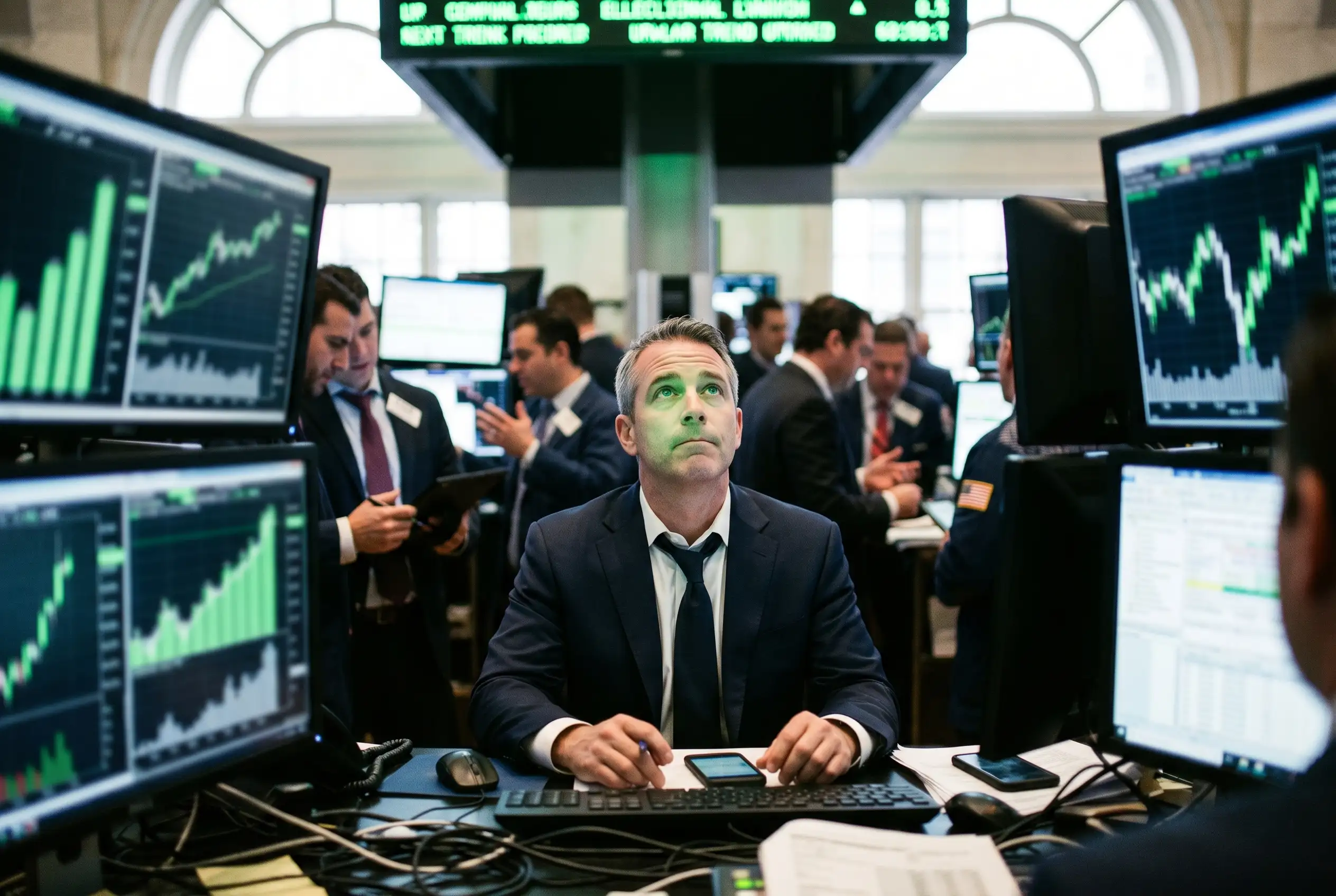
Wall Street Closes Sharply Higher, Ending a Three-Day Skid
The US session produced the S&P 500’s biggest single-day gain since April, ending a three-day streak of losses for the benchmark. Tech stocks led the move, reversing a Tuesday pullback that had shaved roughly $480 billion from the S&P 500’s market value. Oracle was the day’s biggest S&P 500 decliner, sliding 11% on news of an additional $20 billion capital raise. The full US session tape, including the closing prints and intraday leadership, sits in Thursday’s Wall Street closing prints on CNBC.
The session’s leadership came from the same mega-cap names that had sold off the previous day. European stocks closed higher too, with the pan-European Stoxx 600 finishing 0.6% higher after the European Central Bank raised its key rate by a quarter point.
Stocks in retail and housing also caught a bid as the bond market breathed easier. The 10-year Treasury yield slipped from above 4.55% to settle near 4.52% as traders marked down the odds of a Federal Reserve rate hike. Lower oil prices fed straight into rate-cut expectations at the margin.
- +1.75% S&P 500 close, 7,394.30
- +2.54% Nasdaq Composite close, 25,809.66
- +929.97 points / +1.86% Dow Jones close, 50,848.75
- Biggest one-day gain since April for the S&P 500, ending a three-day skid
Asia-Pacific Outpaces Wall Street as Friday Trade Opens
Asia-Pacific did the move one better on Friday. South Korea’s Kospi led the regional gains, with chipmakers Samsung Electronics and SK Hynix driving the index after a four-day slide. Japan’s Nikkei 225, Taiwan’s TAIEX, Australia’s S&P/ASX 200, and Hong Kong’s Hang Seng all traded higher. The pattern was the inverse of the prior week’s strikes-driven selloff, when Seoul’s small-cap Kosdaq had led the regional declines as Brent pushed toward $98.
That pullback is detailed in the prior Kospi rout on fresh US strikes. Friday’s reversal showed the same indexes that led the regional selloff now leading the bounce.
Friday’s move capped a week in which Asian markets had been pricing each new escalation step by step. The same indexes that led the regional declines on earlier sessions in the week led the bounce on Friday. The dispersion between the most exposed and the least exposed benchmarks narrowed sharply on the up day.
| Index | Friday move (intraday / close per source) |
|---|---|
| Kospi (South Korea) | more than 8% intraday (Nikkei Asia: 8.1% to 8,398.67 at noon) |
| Nikkei 225 (Japan) | as much as 4% |
| TAIEX (Taiwan) | about 2.4% |
| S&P/ASX 200 (Australia) | about 1.8% |
| Hang Seng (Hong Kong) | more than 1% |
Oil Slides Below $90, With Hormuz the Open Question
Oil moved the other way on the news. Brent crude fell about 1% to below $90 a barrel in early Asia trade on Friday, extending a Thursday slide that left the global benchmark just above $89.10 at the New York close. That Thursday print was down 4.75% on the day and at one of its lowest levels since the war began on 28 February. Background on the Strait of Hormuz crisis, including the four months of disruption that preceded Thursday’s move, sits in the public record on the waterway’s role in the war.
Crude is still well above the roughly $70 a barrel it traded at in the lead-up to the war, when Brent briefly touched $126 a barrel at its peak. The wartime high came in March 2026, the largest monthly increase in oil prices on record. Traders are not pricing peace yet, only a smaller risk premium on a single Thursday evening headline.
Iran Hasn’t Signed, Israel Isn’t at the Table
The rally is being priced against a backdrop Trump described in his own terms and Iran pushed back on in its own. The US president told reporters in the Oval Office that a deal could be signed as soon as this weekend, possibly in Europe, with Vice President JD Vance attending. Iran’s Foreign Ministry spokesman Esmaeil Baghaei, on state TV the same evening, said reports of a deal were “speculative” and that “nothing has been finalised,” per the live coverage of Iran’s response.
Baghaei said the US was making “excessive demands” and adding “new requests” to the negotiations, and that Iran would not “depart from its red lines.” The ministry had earlier said the memorandum of understanding with the US is “under consideration,” per Al Jazeera.
Israel is not at the table. Prime Minister Benjamin Netanyahu said he had spoken with Trump and “expressed his appreciation” for US demands that the final agreement include the removal of enriched uranium, the dismantling of Iran’s nuclear programme, limits to its missile production, and “the cessation of Iran’s support for its terrorist proxies in the region.” He did not say Israel had signed on to the emerging framework. Iran’s top negotiator, Mohammad Bagher Ghalibaf, wrote on X that “wrong strategies and impulsive decisions will reset the entire board for the worse, explode energy infrastructure and markets and create an endless quagmire that you will be stuck in for years,” per Al Jazeera and the BBC.
The Hormuz Test That Will Make or Break the Rally
Strip the deal text away, and the rally rests on one number: how much crude can move through the Strait of Hormuz once the ink is dry. Kharg Island, the target Trump had threatened to seize in the morning, processes 90% of Iran’s crude exports, and the strait itself is the artery through which Saudi Arabia, the UAE, Iraq, and Qatar ship the bulk of their barrels. In 2024, an estimated 84% of crude oil and condensate shipments through the strait were destined for Asian markets.
Fabien Yip, a market analyst at the online broker IG Group in Sydney, told Al Jazeera that the rally reflected a “meaningful easing of geopolitical risk,” and also anticipation of Friday’s SpaceX debut, “set to be the largest of its kind in history.” Yip said the Asian follow-through “looks less like a structural break in the bull market and more like a healthy reset after a rapid, near-straight-line advance, the kind of consolidation that can potentially extend a rally’s longevity.”
For the rally to be sustained, investors will want to not only see the actual deal being signed, but a complete reopening of the Strait of Hormuz. Only then will we see the gains extend.
Khoon Goh, head of Asia research for ANZ Bank, told Al Jazeera.
Tanker traffic through the strait has dropped to about zero since Iran’s military command declared its closure on June 10 in retaliation for the latest US strikes. Brent settled just above $89.10 in New York, down 4.75% on the day, one of the lowest levels since the conflict began on 28 February. The Kospi, which moved more than 8% on Friday while other major Asia-Pacific indexes rose between 1% and 4%, has been the most direct scoreboard of Hormuz pressure on regional equities. That pattern is captured in how the Hormuz threat has been pressing Asian indexes.
Context: The War Behind the Headline
The war Trump says he is settling is now well into its fourth month. The US and Israel launched coordinated airstrikes on Iran on 28 February 2026 under Operation Epic Fury, targeting military facilities, nuclear sites, and the country’s leadership, killing Supreme Leader Ali Khamenei. Iran retaliated with missile and drone attacks on Israeli cities, US bases in the Gulf, and US-allied Gulf states, and announced the closure of the strait in early March.
A temporary ceasefire on 8 April briefly reopened the strait, but Iran began charging tolls of more than $1 million per ship and the US Navy responded with its own blockade of Iranian ports. The 17 April Israel-Lebanon ceasefire brought another partial reopening, and traffic remains at a fraction of pre-war normal. Trump told reporters on Thursday the strait “has been open for months and you [reporters] didn’t know about it,” a claim the BBC noted without independent confirmation. The full closing prints and analyst quotes are laid out in the full Wall Street and Asia market report at Al Jazeera.
Frequently Asked Questions
What did Trump announce about Iran on Thursday?
Trump posted on Truth Social on Thursday that he had “cancelled the scheduled strikes and bombings against Iran this evening,” citing progress in negotiations brought to the “highest level of Iranian leadership.” He told reporters in the Oval Office a deal could be signed as soon as this weekend, possibly in Europe, and that Vice President JD Vance would attend. The morning’s escalation, including a threat to “take” Kharg Island, was reversed within hours.
How much did US stock indexes rise on the news?
The S&P 500 closed up 1.75% at 7,394.30, the Nasdaq Composite jumped 2.54% to 25,809.66, and the Dow Jones Industrial Average gained 929.97 points, or 1.86%, to 50,848.75. Treasury yields slipped, with the 10-year settling near 4.52%, as traders marked down the odds of a Federal Reserve rate hike.
How big was the Asian market move?
South Korea’s Kospi surged more than 8% in morning trade, the largest one-day move in percentage terms among major Asia-Pacific benchmarks that day. The index was up 8.1% to 8,398.67 at noon, with chipmakers Samsung Electronics and SK Hynix leading. Japan’s Nikkei 225 rose as much as 4%, with chip and auto names catching the bid. Hong Kong’s Hang Seng, Taiwan’s TAIEX, and Australia’s ASX 200 each added more than 1%.
Has Iran confirmed the deal?
Iran has not confirmed it. Foreign Ministry spokesman Esmail Baghaei said on Iranian state TV that reports of a deal were “speculative” and that “nothing has been finalised.” Baghaei said the US was making “excessive demands” and adding “new requests,” and that Iran would not “depart from its red lines.” Trump, asked in the Oval Office whether Iran’s Supreme Leader had agreed, said “I understand the answer is yes,” per the BBC.
Why does the Strait of Hormuz matter to the rally?
The strait, a 21-mile-wide channel between Iran and Oman, is the artery for Saudi Arabia, the UAE, Iraq, and Qatar, and in 2024 an estimated 84% of crude oil and condensate shipments through it were destined for Asian markets. Tanker traffic has been running at roughly a tenth of pre-war normal since early March, which is why a 4.75% drop in Brent on Thursday could matter more than the headline number suggests.
Disclaimer: The market data, analyst quotes, and geopolitical reporting in this article are accurate as of publication on June 12, 2026. Investors should consult a qualified professional before making any decisions based on this coverage, as the situation in the Strait of Hormuz and the status of the US-Iran negotiations can change rapidly.





Walmart’s $50 Million Opioid Settlement Closes Case Without Admission

California Sues Over $120 Million Morro Bay Wind Lease Buyout

Gilead Bixlenvo FDA Nod Opens Single Pill Path for Complex HIV Cases

Meta’s $18B Kids Deal Forever Shields Data Used to Spot Under-13s

Lettuce Outbreak Drove Record Cyclospora Spike Across 20 States

Amazon Shaves $20 Off M6 Mac Mini Before It Even Ships

SpaceX Louisiana Port Tests Debt Markets on Orbital AI Scale

Microsoft High Lifts Indexes as Small Caps Crack Support

Apple Replays 2015 Saturday Midnight Preorder for iPhone 18 Pro

Updated COVID Shots Clear FDA but Access Friction Hits High-Risk Groups

Take-Two CEO Pushes Netflix Subs for GTA 6 Extended Look

Quake Gets 19 Free Maps From MachineGames Quake Club

Destiny 2 Fans Unlock Vaulted Maps After Live Service Ends

Wildlands Free Update Hands Players the Tools They Already Invented

Quordle Monday Delivers Gavel Crush Speed Ethos Cleanly

Stripe Bid Shows PayPal Moat Cracked After Years of Slide

Tyson’s Five-Year Utah Plant Falls to Cattle Shortage Reckoning

Silver Lake Workday Talks Signal Private Floor for Software

Kennedy Lewis Takes Majority Control of The Greenbrier in $500M Deal

Best Buy Marks 60 Years With Sale That Echoes Its Audio Shop Roots
-

 TECHNOLOGY3 years ago
How to Adjust a Bulova Watch Band – An Easy Guide
-

 News3 years ago
Fred Pentland: Athletic Bilbao’s English mentor who changed the essence of Spanish football
-

 FINANCE3 years ago
Tax Planning for Every Season: Guide to Maximizing Your Tax Benefits
-

 Education3 years ago
African Ministers New Education Plan
-

 BUSINESS3 years ago
What is Entrepreneurial Operating System? A Comprehensive Guide to EOS
-

 Education3 years ago
Innovate Your Learning Journey with Technology and Enhance Education
-

 News3 years ago
Russians formally out of World Athletics Championships
-

 BUSINESS3 years ago
Top 9 Most Expensive American Cities to Rent an Apartment