
News
Polar Bear Used Seal Pup as Live Bait in Svalbard Hunt
Footage from Billefjorden shows a polar bear backing off a bearded seal pup to draw the mother, revealing learned tactics as coastal ice declines.

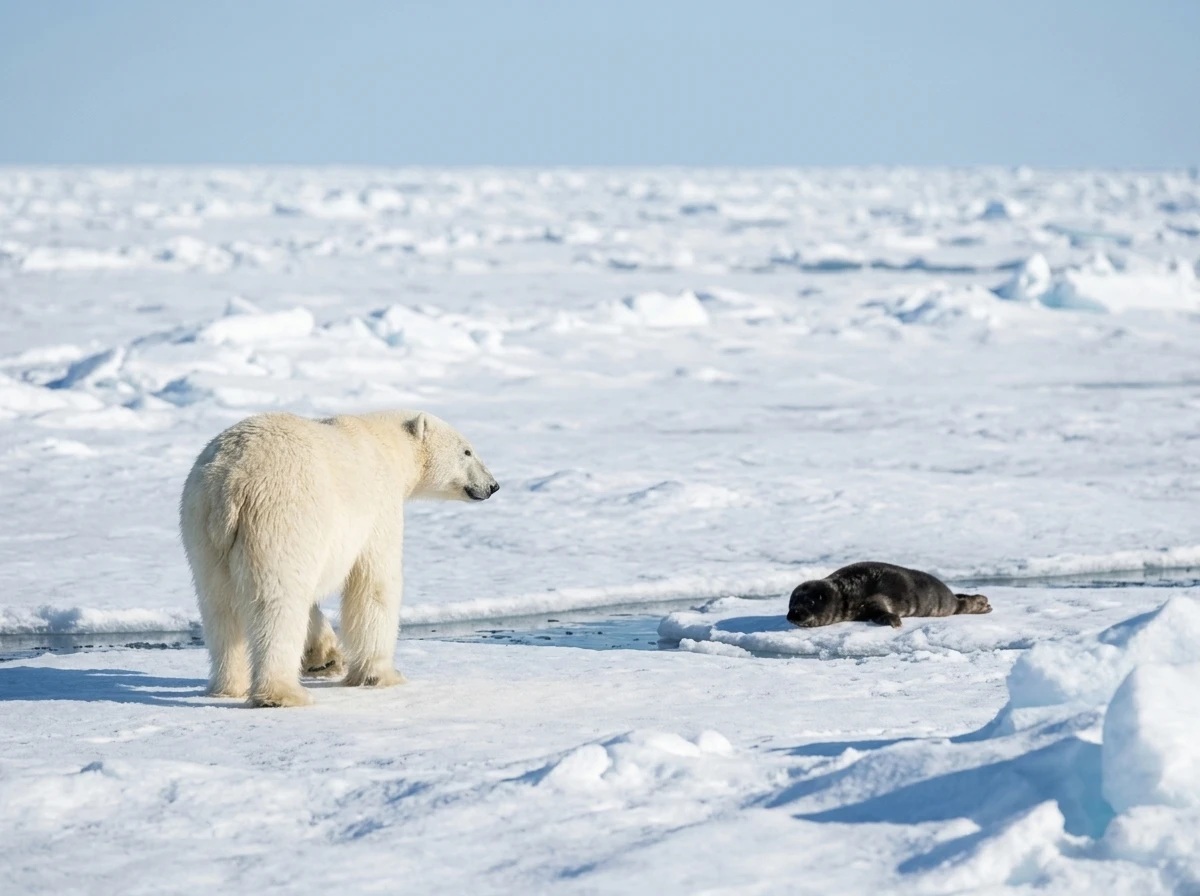
A polar bear in Billefjorden, Svalbard, dragged a juvenile bearded seal onto the ice in spring 2026, then deliberately backed away. Wildlife watchers from the expedition company Secret Atlas filmed the full sequence with telephoto lenses. The mother never surfaced to help. The bear returned, killed the pup and fed.
That pause is the second-order story. It is not pure instinct. It is a bear that has watched how bearded seals protect their young and tried to turn the rule against them.
The Sequence on Billefjorden Ice
The bear had already hunted for several hours. It stalked the pup, struck, and pulled the small seal clear of the water. Then it stepped backward instead of finishing the kill at once.
Observers and Secret Atlas staff read the move as a lure. Mother bearded seals often stay near nursing pups. A live, distressed pup on the ice can pull a mother out of the safety of the water long enough for a second strike. When no adult appeared, the bear closed in, pinned the pup with its forepaws and dragged the carcass away to eat.
- Stalk and initial strike on the juvenile bearded seal
- Pull onto ice followed by deliberate retreat from the pup
- Extended wait while scanning the water edge
- Return, pounce and drag when the mother stays submerged
Telephoto lenses made the animals appear closer than they were. All viewing followed AECO distance rules and local Svalbard regulations.
Why Bearded Seal Mothers Stay Submerged
Bearded seals (Erignathus barbatus) are the largest northern seals, adults reaching 2.1-2.7 m and 200-430 kg. Pups are born on ice floes or glacial ice in late March to mid-May, peaking in early May around Svalbard. Newborns already measure about 130 cm and weigh 34-40 kg. They can swim within hours of birth.
That early mobility is itself an anti-bear adaptation. Nursing mothers keep most of their time in the water. Research summarised by NAMMCO shows mothers spend over 80 percent of time in water and haul out to nurse only about three times a day on average. A lone pup on the ice is less conspicuous than a pair. The polar bear’s bait attempt tried to override that defence by keeping the pup visible and vulnerable long enough to force a rescue attempt.
| Trait | Bearded seal | Ringed seal (common comparison) |
|---|---|---|
| Adult size | 200-430 kg | Much smaller, typically under 100 kg |
| Pup birth mass | 34-40 kg | Far lighter, often under 5 kg at birth |
| Pup swimming | Within hours of birth | Later; often protected in subnivean lairs |
| Mother haul-out | ~3 times per day while nursing | More variable; lairs offer cover |
| Main polar-bear risk window | Open ice floes in spring | Lair digs and breathing holes |
Bearded seals supply more biomass per kill than ringed seals, the staple prey. Coastal bears that can take them gain a large calorie package.
A Tactic Scientists Hypothesized Decades Ago
Researchers have long wondered whether polar bears treat seal pups as secondary bait for the mother. Classic work by Ian Stirling and colleagues noted that some newborn ringed seal pups killed at lairs were left uneaten, raising the idea that the real target was the adult female drawn by the bond.
A large Beaufort Sea study later tested the idea with hundreds of kills and lair digs. It found no support for co-located pup and adult kills. Pup kills did not reliably produce adult females at the same sites. The Svalbard footage is different species, different ice, and an active live-lure rather than a passive dig. It supplies the rare full behavioural sequence that helicopter surveys rarely capture.
The bear spent real time reading the ice before the first strike. That patience matches known still-hunting and stalking methods, then added a calculated pause.
Coastal Bears and Shrinking Fast Ice
Svalbard sits inside the Barents Sea polar bear population, estimated around 2,650 animals in the early 2000s surveys, with roughly 250 coastal bears around Svalbard. These coastal animals keep small home ranges and focus on seals near shore and glacial ice. Pelagic bears travel far out on the pack.
The Barents region is among the fastest-warming parts of the Arctic. Landfast ice around Svalbard has declined sharply and the ice season is shorter. Coastal bears already switch more often to bird eggs, reindeer or riskier swimming leaps when seals are hard to reach from solid ice. A bear that can invent or refine a double-kill attempt on a high-value bearded seal gains an edge when every successful hunt matters more.
Body condition and numbers in the Barents have held up better than in some southern populations so far. Productive waters help. But the ice platform that makes classic still-hunting efficient is fragmenting. Learned flexibility becomes part of the survival toolkit.
Watching Under 500-Metre Rules
The tourists and guides who saw the hunt stayed within strict limits. Svalbard law and AECO guidelines now require a minimum of 300-metre year-round and 500-metre spring distances from polar bears (March 1 to June 30). It is illegal to lure, pursue or unnecessarily disturb bears. Any behavioural change caused by human presence can count as disturbance.
- No approaching closer than the legal metres with vessels or on foot
- Immediate move-away if a bear comes inside the buffer
- No seeking out known bears simply to guarantee a sighting
- Guides carry deterrents; firearms training is required for landings
Secret Atlas operates small-group micro-expeditions. Co-founder Michele D’Agostino stressed that only long, quiet time on the ice produces the full sequence rather than a snatched final grab. The company credits telephoto work and compliance with AECO and local rules for the usable footage.
What the Failed Lure Still Proves
The mother seal did not take the bait. The bear still ate. The second-order fact is the attempt itself. D’Agostino put it plainly after reviewing the footage:
The bear spent real time reading the ice before committing, then used the pup deliberately to try to draw the mother in. That’s not instinct alone. That’s a bear that has learned how bearded seals behave and is working the situation.
That assessment comes from co-founder Michele D’Agostino, who has years of polar expedition time. On X, some early viewers briefly misread the backward steps as the bear trying to rescue a drowning pup. The final pounce erased the illusion. The pause looked almost careful until it did not.
Polar bears already rank among the most specialised mammalian hunters. Adding documented, species-specific learning of seal anti-predator schedules shows cognitive range that pure instinct models understate. Whether that range can offset continuing ice loss for coastal animals remains open. One filmed hunt in Billefjorden does not rewrite population models. It does show a predator still inventing inside a shrinking arena.
Frequently Asked Questions
Why do bearded seal mothers spend most of their time in the water while nursing?
Early swimming ability lets pups escape into the water quickly, and a lone pup on ice is harder for a polar bear to detect than a mother-pup pair hauled out together. Mothers therefore limit surface time to roughly three nursing bouts a day and keep more than 80 percent of their hours submerged.
How close can ships and tourists get to polar bears in Svalbard?
Svalbard regulations set a hard 300-metre minimum year-round and raise it to 500 metres from 1 March to 30 June. AECO members follow the same buffers and ban deliberate luring or pursuit. Any forced change in bear behaviour can count as illegal disturbance.
Do polar bears commonly hunt bearded seals as well as ringed seals?
Yes. Ringed seals form the bulk of kills by number, but bearded seals, being far larger, contribute a disproportionate share of biomass. Coastal Svalbard bears take both, plus occasional land foods when ice is poor.
Had scientists predicted that polar bears might use seal pups as bait?
Yes for ringed seals. Older observations of uneaten pups at lairs led to the hypothesis that bears hoped to catch the mother. A multi-year Beaufort Sea kill study later found no clear pattern of adult females killed at the same sites as pups. The Svalbard bearded-seal sequence is a live, active version of the same idea on a different species.
How many polar bears live around Svalbard?
The broader Barents Sea population was estimated near 2,650 in joint surveys, with roughly 250 coastal bears using the Svalbard area. Numbers appear relatively stable so far despite rapid ice loss, helped by productive local waters.


Shelby’s $42.9 million Daytona Coupe cashes the bet that beat Ferrari

AI forces Apple into third security drop in three weeks

Lamborghini banks 2027 revenue with sold-out Revuelto SV

Apple’s Labor Day Habit Locks iPhone 18 Pro September Dates

Frogwares Ships Sinking City 2 After Years of Air Raids

AirTag 2 Hits Near Lows Just as Travel Season Peaks

McLaren Pop Art F1 GTR Hits $34.6 Million and Resets the Tier

Spotify Playlist Notes Bring Back Liner Notes for Streaming

AirPods Max 2 hit $429 and finally close the value gap

Star Citizen private demo of Siege of Orison still wiped the devs

Guardians Rout Twins With Seven Homers, Leave Joe Ryan One Shy of Record

Rainout Gives Red Sox Two Shots at a Franchise-Record Win Streak

Caitlin Clark Skips the WNBA 3-Point Contest for a Third Straight Year

Double Fine Cuts 23 Jobs Weeks After Xbox Independence

John Hight Exits Wizards After Digital Reckoning Hits

Day-One Big Walk Lifts PS Plus August Beyond Recycled AAA

Curtis Mead’s Red Sox Debut Ends With Fractured Wrist

Moesch and Dressel Rewrite Night One at 2026 U.S. Nationals

Red Sox Squander Hot Streak Chance in 4-3 Loss to Athletics

Boutte’s Quiet Camp Takeover Forces Patriots Receiver Choices
-

 TECHNOLOGY3 years ago
How to Adjust a Bulova Watch Band – An Easy Guide
-

 News3 years ago
Fred Pentland: Athletic Bilbao’s English mentor who changed the essence of Spanish football
-

 FINANCE3 years ago
Tax Planning for Every Season: Guide to Maximizing Your Tax Benefits
-

 Education3 years ago
African Ministers New Education Plan
-

 BUSINESS3 years ago
What is Entrepreneurial Operating System? A Comprehensive Guide to EOS
-

 Education3 years ago
Innovate Your Learning Journey with Technology and Enhance Education
-

 News3 years ago
Russians formally out of World Athletics Championships
-

 BUSINESS3 years ago
Top 9 Most Expensive American Cities to Rent an Apartment