
News
Vizio’s Mini LED Quantum Works Best as a Dumb TV, by Accident
Walmart bought Vizio for its ad business. The cheapest quantum-dot TV Vizio sells works best when you bypass SmartCast entirely and treat it as a dumb display.

Vizio’s cheapest quantum-dot TV, the 65-inch Mini LED Quantum, works best when the buyer turns off the very operating system Walmart paid $2.3 billion to acquire. The Verge’s John Higgins spent weeks testing the set and concluded the best way to use it is to bypass SmartCast entirely, declining the data prompts Walmart built into setup and treating the panel as a no-OS display fed by an external streaming stick.
Vizio’s ad business was responsible for all of the company’s gross profit at the time of the December 2024 acquisition, and the SmartCast operating system is the vehicle for that business, with over 19 million active accounts already in place. The Verge review effectively recommends buyers opt out of every SmartCast prompt at setup. The opt-out is the kind of path that Walmart has not committed to keep open in future software updates.
How the setup hands you an opt-out
The Mini LED Quantum gives buyers a chain of declines Higgins had not seen on any other TV he has tested. During setup, the set asks the user to sign in to, or create, a Walmart account; skipping triggers a warning that “you will not be able to manage payments and subscriptions or link your Vizio devices.” After Vizio’s terms of service and privacy policy come the activity data policy that unlocks the streaming apps inside SmartCast.
The mid-prompt warning screens are unusually polite for a smart-TV onboarding flow. Declining the activity data policy triggers a screen that reads “Whoops!” and warns that “skipping this step means missing out on all your Vizio smart TV features, including apps like Netflix, YouTube, and other apps.” A second decline brings the buyer to a clean HDMI-first state. For full paranoia, the user can skip Wi-Fi at the start of setup or forget the network later, which removes firmware updates as well as any chance of the TV phoning home. None of that matches what Walmart bought the company to do, and none of it requires a screwdriver.
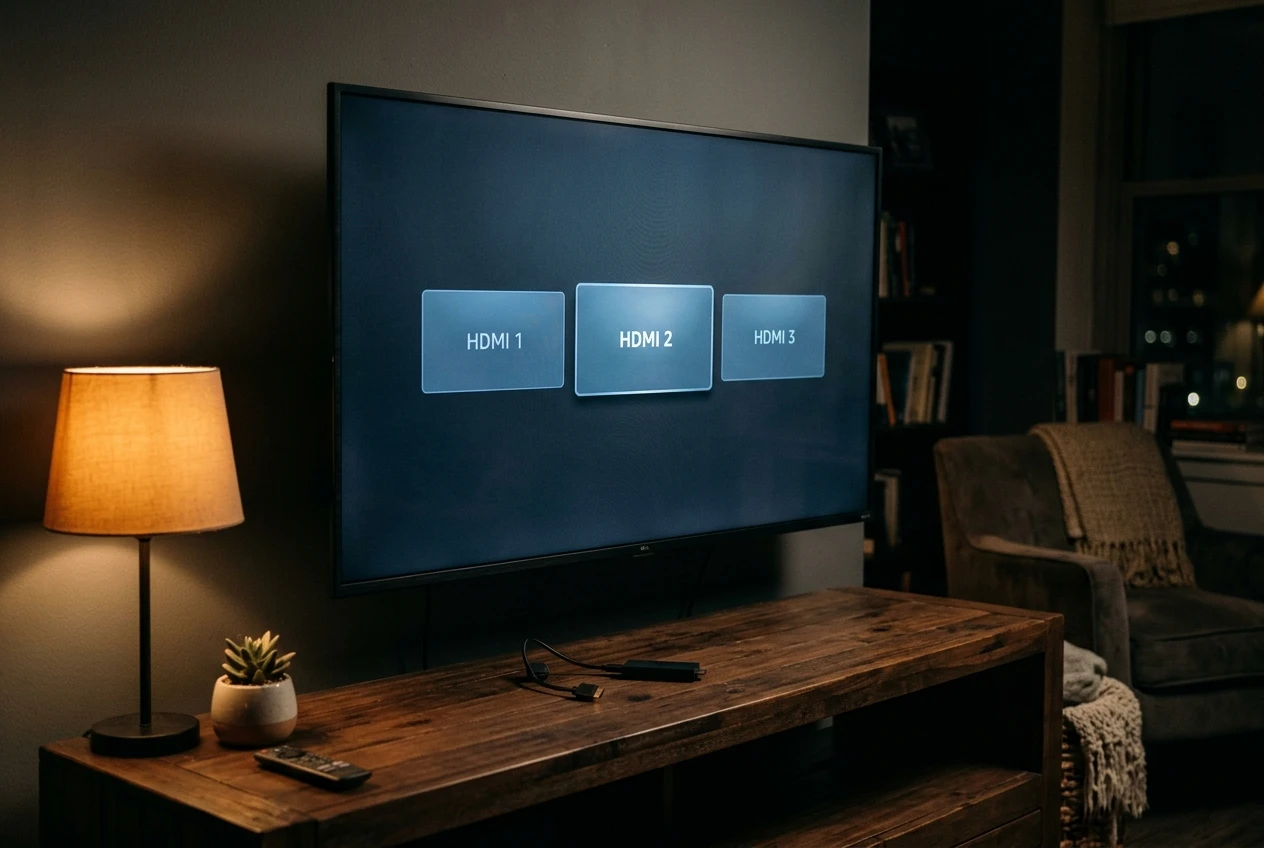
Higgins declined every prompt and ended up with what he described as “the dumb TV many are looking for: no OS and three HDMI ports awaiting a signal.” The Mini LED Quantum even supports the bypass without Wi-Fi from the first screen, booting directly into HDMI mode if the network step is skipped. Skipping the prompts means the OS never initializes, and SmartCast is the platform Walmart acquired in December 2024.
Why Walmart bought the OS in the first place
Walmart’s announcement closing the deal describes Vizio’s Platform+ advertising business as the engine that “now accounts for all the company’s gross profit.” The acquisition price was $11.50 per share in cash, equating to a fully diluted equity value of approximately $2.3 billion. The press release points to over 19 million active SmartCast accounts, growing approximately 400 percent since 2018, as the audience Walmart Connect, the retailer’s retail media business, intends to reach. The same announcement said Walmart Connect grew 26 percent in its most recent reported quarter.
Smart TVs already collect what viewers watch and how they watch it, and Walmart framed the deal as a way to “meaningfully connect with customers at scale.” Vizio was already on the regulator’s bad side for this. Higgins notes parenthetically that Vizio was caught collecting viewing data without consent in 2017.
The Mini LED Quantum’s setup flow is where the two companies meet the buyer. William Wang, Vizio’s founder, remains CEO, reporting to Seth Dallaire, Walmart U.S.’s executive vice president and chief growth officer.
The announcement says Walmart and Vizio “will continue to operate separately for the foreseeable future,” but the Mini LED Quantum’s prompts already route through Walmart’s account system. A buyer who skips those prompts is also skipping the data pipeline the deal was built around. the full Vizio Mini LED Quantum TV review from John Higgins walks through the entire panel.
Quantum dots at $398 and what the rest of the package adds
The dumb-TV pivot is the headline, but the underlying hardware is what made the review worth doing. Vizio’s Mini LED Quantum is the cheapest quantum-dot TV on the market, with quantum dots producing more saturated colors and letting the backlight push harder without washing out. At launch the 65-inch VQM65C-10 listed at $398 and the 75-inch VQM75C-10 at $498, both at Sam’s Club and Walmart.
The Mini LED Quantum is available in 43, 50, 55, 65, 75, and 85-inch sizes. HDR format support covers Dolby Vision, HDR10+, HDR10, and HLG. The set runs Vizio OS, with three HDMI 2.0 ports (one with eARC), an ATSC 1.0 tuner, USB 2.0, and optical audio out. Gaming features top out at 4K at 60Hz across the line and 1080p at 120Hz on 65-inch models and up.
One spec deserves its own paragraph. The Mini LED Quantum uses an IPS panel instead of the VA panels more common at higher prices. IPS panels offer wider viewing angles at the cost of black level, which matters for buyers who want to place this set in a room where people will sit off to the side. It also caps how deep blacks can go, which Higgins saw as visible blooming around bright highlights in dark scenes.
| Size (inches) | HDR formats | Refresh capability | Confirmed price |
|---|---|---|---|
| 43 | Dolby Vision, HDR10+, HDR10, HLG | 4K at 60Hz | not stated in review |
| 50 | Dolby Vision, HDR10+, HDR10, HLG | 4K at 60Hz | not stated in review |
| 55 | Dolby Vision, HDR10+, HDR10, HLG | 4K at 60Hz | not stated in review |
| 65 | Dolby Vision, HDR10+, HDR10, HLG | 4K at 60Hz, 1080p at 120Hz | $398 |
| 75 | Dolby Vision, HDR10+, HDR10, HLG | 4K at 60Hz, 1080p at 120Hz | $498 |
| 85 | Dolby Vision, HDR10+, HDR10, HLG | 4K at 60Hz, 1080p at 120Hz | $768 |
Prices for 65-inch and 85-inch models are from the Verge review; the 75-inch price comes from launch coverage of the Vizio Mini LED Quantum Series pricing at Sam’s Club and Walmart.
Brightness and color, measured
Higgins is an ISF Level 3 calibrator, and the measurements come from Portrait Displays’ Calman software, a Murideo 8K Seven pattern generator, and a Konica Minolta LS-100 luminance meter. He does not pre-calibrate the set, because most buyers do not. Out-of-the-box accuracy is the relevant bar, which is why the picture-mode numbers below come from Calibrated and Calibrated Dark, the two presets the review flags as the most accurate.
The standout figure is what the set does in its brightest preset. In Calibrated mode the panel reaches 936 nits, which the review calls “incredible for a budget TV.”
That figure is what lets highlights and overall picture hold up under ambient light in a living room during the day. SDR in the same mode tops out at 309 nits, and HDR reaches 579 nits with small highlights. Buyers planning to use the TV under lamps should pick Calibrated, with Calibrated Dark reserved for a darkened, light-controlled room.
Calibrated Dark is the one for a darkened, light-controlled room, and it edges out Calibrated on color accuracy. Both modes lean a little toward blue, so the image has a slight cool cast. The screen is glossy, so lamps and framed pictures show up in reflections during dark scenes. None of these issues are unique to the panel.
The IPS panel and the glossy coating together explain the two visible flaws. Black levels are not as deep as a VA-equipped set, and bright objects on dark backgrounds produce visible blooming. Fast motion also shows some blur, which Higgins caught on quick drone shots from the Austrian Grand Prix. None of these are deal-breakers at this price, and most buyers will be more than happy with the panel. Higgins used the TV to watch World Cup matches via an OTA antenna and weekly shows through an Apple TV, and described the picture as pretty good across both.
- Calibrated mode: 936 nits (peak)
- SDR (Calibrated): 309 nits
- HDR (Calibrated): 579 nits with small highlights
- Panel type: IPS, not VA
- Six sizes: 43, 50, 55, 65, 75, 85 inches
Where the budget shows
Three things give the cost-cutting away at a glance. The back of the set is all plastic, and the cable management channel along the back of each foot only fits a single cable. A buyer with more than one HDMI source cannot route all wires through that channel, and the feet have only one possible height and sit widely spaced.
The port count is short of where the rest of the budget TV category has landed. Three HDMI 2.0 ports, no HDMI 2.1, plus USB 2.0, antenna, and digital audio out. Most TVs in this bracket now ship with four HDMI ports and at least one HDMI 2.1, the Verge review notes. Vizio did include an ATSC 1.0 tuner, not the newer ATSC 3.0 standard some broadcast markets have moved to. The built-in speakers are loud without sounding great, which the review describes as true of expensive TVs too.
What Walmart could close in a software update
The ability to use the Mini LED Quantum as a dumb TV is a complete accident and software updates could change that down the road.
John Higgins, in his Verge review of the Vizio Mini LED Quantum TV.
A future firmware push that requires a Walmart account sign-in, or that disables the smart features only behind an account, would erase the cleanest part of the value proposition. Until that happens, the Mini LED Quantum at $398 lets buyers run it as a dumb display, with three HDMI ports and no smart features at all. Buyers who want streaming can plug in a $40 Fire TV Stick 4K Select, with the understanding that the OS, if active, will also share viewing data on that input back to Walmart.
The Verge’s framing matters here. The reviewer is a long-time TV specialist who recommends the set, while flagging that the recommendation depends on a software escape route the seller did not promise. A buyer who needs the smart features built in, or who cannot risk the OS being required in a future update, is looking at a different purchase. the press release closing the $2.3 billion Vizio acquisition sets the corporate backdrop for that risk.
The Mini LED Quantum also illustrates the wider tension in the smart-TV category, where the data has become the actual product and the panel is the loss leader. On the Mini LED Quantum, that pipeline still routes through prompts buyers can decline, and the reviewer’s test confirmed declining works as advertised. Walmart has made no public commitment to keep that path open in future firmware updates.
Frequently Asked Questions
What is the Vizio Mini LED Quantum TV?
The Vizio Mini LED Quantum is Vizio’s budget quantum-dot LED TV line, sold in 43, 50, 55, 65, 75, and 85-inch sizes. It runs Vizio OS, supports Dolby Vision, HDR10+, HDR10, and HLG, and tops out at 4K at 60Hz (1080p at 120Hz on 65-inch models and up).
How much does the Vizio Mini LED Quantum cost?
The Verge review puts the 65-inch at $398 and the 85-inch at $768. CNET’s launch coverage listed the 65-inch VQM65C-10 at $398 and the 75-inch VQM75C-10 at $498, both at Sam’s Club and Walmart.
Can the Vizio Mini LED Quantum really be used as a dumb TV?
Yes, at the time of the Verge review. By declining the Walmart account sign-in and the activity data policy during setup, buyers can run the set without SmartCast, with three HDMI 2.0 ports as the only inputs. The Verge notes this is a current capability, not a promised feature.
Why did Walmart buy Vizio, and what does that mean for this TV?
Walmart closed its $2.3 billion acquisition of Vizio in December 2024, in a deal described as a way to grow Walmart Connect, the retailer’s retail media business. Vizio’s Platform+ advertising segment accounted for all of Vizio’s gross profit at the time. For Mini LED Quantum buyers, that means the SmartCast prompts lead back to Walmart, and Walmart Connect is the business the data feeds.
What are the picture-quality specs of the Vizio Mini LED Quantum?
The Verge measured Calibrated mode at 936 nits, SDR at 309 nits, and HDR at 579 nits with small highlights. The Mini LED Quantum uses an IPS panel, which offers wider viewing angles at the cost of weaker black levels. HDR formats supported are Dolby Vision, HDR10+, HDR10, and HLG.






Spotify Running Mode hits Android and revives its old tempo experiment

Galaxy Tab S12 Ultra Renders Keep the Notch Fans Hate

Novato Spinning Round House Sells With Six Neighbors for $3.3 Million

Crop Tour Finds Indiana and Nebraska Corn Yields Lagging 2025

Best Buy 60th sale brings Android deals back to its roots

American Airlines reverses seatback screen bet years too late

Iran Hormuz Strikes Force Gulf Oil Onto Costlier Paths

Plague Tale Prequel Day One Joins Game Pass Wave 2 as Witcher Exits

NBA 2K27 opens The City to everyone and rewrites career eras

iOS 26.6.1 Patches 29 Flaws as AI Forces Faster Apple Updates

Double Fine Cuts 23 Jobs Weeks After Xbox Independence

Day-One Big Walk Lifts PS Plus August Beyond Recycled AAA

John Hight Exits Wizards After Digital Reckoning Hits

Curtis Mead’s Red Sox Debut Ends With Fractured Wrist

Moesch and Dressel Rewrite Night One at 2026 U.S. Nationals

Red Sox Squander Hot Streak Chance in 4-3 Loss to Athletics

Boutte’s Quiet Camp Takeover Forces Patriots Receiver Choices

Take-Two CEO Pushes Netflix Subs for GTA 6 Extended Look

Halo Campaign Evolved Skulls Meet Death Barriers That Kill the Hunt

Wildlands Free Update Hands Players the Tools They Already Invented
-

 TECHNOLOGY3 years ago
How to Adjust a Bulova Watch Band – An Easy Guide
-

 News3 years ago
Fred Pentland: Athletic Bilbao’s English mentor who changed the essence of Spanish football
-

 FINANCE3 years ago
Tax Planning for Every Season: Guide to Maximizing Your Tax Benefits
-

 Education3 years ago
African Ministers New Education Plan
-

 BUSINESS3 years ago
What is Entrepreneurial Operating System? A Comprehensive Guide to EOS
-

 Education3 years ago
Innovate Your Learning Journey with Technology and Enhance Education
-

 News3 years ago
Russians formally out of World Athletics Championships
-

 BUSINESS3 years ago
Top 9 Most Expensive American Cities to Rent an Apartment