
BUSINESS
Walmart Opens Checkouts to Tap-to-Pay After Decade of Resistance
Walmart begins phased tap-to-pay rollout August 24 for Apple Pay, Google Pay and cards at select stores.

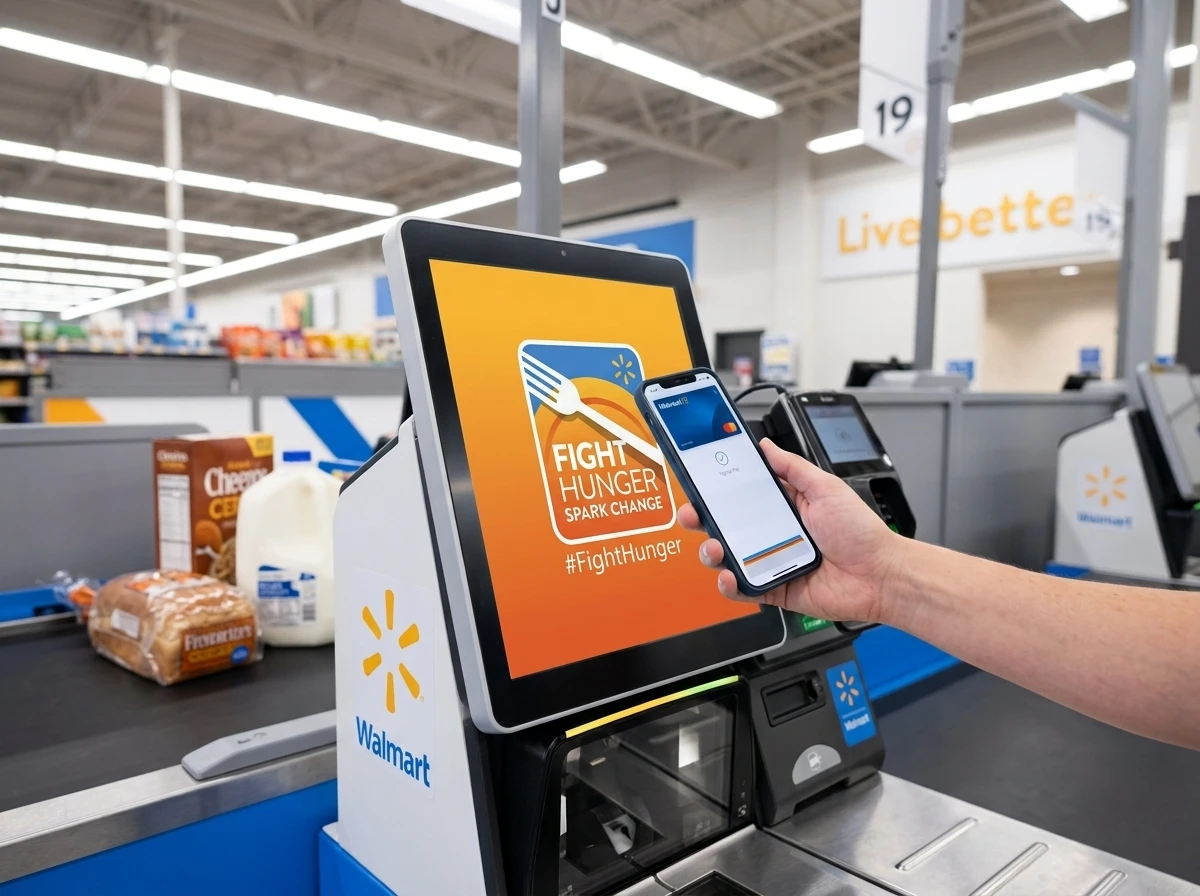
Walmart began rolling out tap-to-pay at select U.S. stores and Sam’s Club locations on August 24, 2026, letting shoppers use contactless cards, phones and smartwatches. The company plans full coverage across all U.S. stores and clubs by the end of 2026, with fuel stations following by mid-2027.
The change ends more than a decade of resistance to Apple Pay, Google Pay and similar NFC wallets. Walmart kept pushing its own QR-code Walmart Pay system even as most major retailers accepted the open standards.
A Long Bet on Closed Checkout Systems
Walmart was among the last large U.S. chains without native tap-to-pay. Apple has said Apple Pay reaches more than 85 percent of U.S. retailers. Shoppers repeatedly asked for it. YouTubers and social posts highlighted the friction of pulling out a card or opening the Walmart app for a QR code.
That resistance did not appear overnight. It followed a clear sequence of closed-system bets, each meant to keep the checkout relationship inside Walmart’s own rails.
- Early 2010s: Walmart joined the Merchant Customer Exchange consortium that backed CurrentC, a QR-based rival to Apple Pay.
- 2016: CurrentC never gained traction, suffered a data breach before launch and shut down. Walmart then launched its own Walmart Pay that same year.
- 2025: A company spokesperson still defended the approach, telling outlets it already offered convenient solutions through its app.
- August 21, 2026: Walmart announced tap-to-pay and framed the shift around customer choice.
- August 24, 2026: Rollout began in select U.S. stores and Sam’s Club locations, with full store and club coverage planned by year-end and fuel by mid-2027.
In the early 2010s the retailer joined the Merchant Customer Exchange consortium that backed CurrentC, a QR-based rival to Apple Pay. CurrentC never gained traction, suffered a data breach before launch and shut down in 2016. Walmart then launched its own Walmart Pay that same year. As recently as 2025 a company spokesperson still defended the approach, telling outlets it already offered convenient solutions through its app.
That stance is now history. In its August 21 announcement Walmart said it wants customers and members to have choice so they can check out the way that works best for them.
We want customers and members to have choice in how they pay, so they can check out in the way that works best for them. Tap to Pay is a great addition to the other payment options already offered like cash, credit card or Walmart Pay.
Walmart corporate announcement, August 21, 2026
The timing lines up with strong digital growth. CEO John Furner has pointed to price, speed and convenience as the reasons customers keep responding. The same quarter that framed the payment shift also showed where digital demand was already concentrated.
| Channel | Recent Growth |
|---|---|
| U.S. e-commerce sales | 24 percent in the second quarter |
| Sam’s Club U.S. e-commerce | 26 percent |
| International e-commerce | 19 percent |
Those gains arrived while checkout itself still forced many contactless shoppers through a QR path. Opening the terminals brings the in-store payment story closer to the speed and convenience message already working online and in pickup.
Phased State-by-State Expansion Through October
The rollout is not simultaneous. A store-management memo obtained by 9to5Mac laid out a state-by-state calendar that starts in Walmart’s home state and fans out westward then eastward. Dates remain subject to change if technical issues appear.
| States / Regions | Target Launch Window |
|---|---|
| Arkansas | Aug. 24-31 |
| California, Washington, Oregon, Nevada, Idaho, Alaska, Hawaii | Sept. 10 |
| Kansas, Louisiana, Nebraska, Oklahoma | Sept. 14 |
| Texas | Sept. 17 |
| Arizona, Utah, Colorado, New Mexico, South Dakota, Montana, North Dakota, Wyoming | Sept. 21 |
| Illinois, Ohio, Wisconsin, Minnesota, Iowa | Sept. 24 |
| Tennessee, Indiana, Michigan, Kentucky | Sept. 28 |
| Georgia, Alabama, Mississippi | Oct. 1 |
| Florida | Oct. 5 |
| North Carolina, Virginia, South Carolina, West Virginia, Puerto Rico | Oct. 8 |
| Pennsylvania, New York, New Jersey, Massachusetts, Maryland, Connecticut, New Hampshire, Maine, Delaware, Rhode Island, Vermont, District of Columbia | Oct. 12 |
Missouri does not appear on the published list. Early posts from Arkansas shoppers already show anticipation for neighborhood stores. Some customers in other states have already tried tapping and found the feature still offline, matching the staggered calendar.
The sequence itself is practical. Starting in Arkansas puts the first wave closest to home systems and support. The West Coast block lands next, then the Plains and Texas, then the Midwest and South, with the dense Northeast corridor last in mid-October. Each window is short, which keeps the hardware upgrade wave moving without flipping the entire national fleet on a single morning.
Shoppers who test a terminal before their state window should expect the older flow. Once the local cutover lands, the same hardware keeps cash, swipe, chip and Walmart Pay running beside the new tap path.
What Shoppers Can Use at the Terminal
Once live, the upgraded readers accept a wide set of contactless methods alongside everything Walmart already supported.
- Eligible contactless credit and debit cards
- Digital wallets including Apple Pay, Google Pay and Samsung Pay
- Supported smartwatches and other wearables
- Supported contactless EBT cards
- Walmart, Sam’s Club and OnePay cards added to those same digital wallets
Cash, traditional swipe and chip cards, and Walmart Pay remain fully available. At Sam’s Club, Scan & Go continues to let members scan items and pay inside the app without a traditional lane. Customers can still access Walmart+ fuel savings through the app via the existing Walmart Pay path.
When a phone is tapped, the default card in the wallet is charged. Eligible store-branded cards can sit inside Apple Wallet or Google Wallet for the same tap experience.
The practical effect is stacking, not swapping. A shopper can still open the Walmart app for QR checkout, still hand over cash, still dip a chip card, or now hold a watch to the reader. Sam’s Club members who prefer Scan & Go keep that lane-free path. The terminal becomes a hub for every method the company already offered, plus the open contactless standards it long held out on.
Scale of the Change Across Thousands of Locations
As of July 31, 2026, Walmart operated 4,615 Walmart U.S. stores and 602 Sam’s Clubs. That footprint includes 3,569 supercenters, 351 discount stores, 674 neighborhood markets and a handful of small formats. The company employs roughly 1.6 million associates in the United States alone.
Millions of weekly shoppers will gain the option. Fuel pumps lag the in-store timeline by roughly six months, reaching readiness by mid-2027. The official language frames the addition as one more tool rather than a replacement: the company is adding Tap to Pay to payment options while keeping every prior method.
The format mix matters for how the change feels on the ground. Supercenters drive the bulk of trips and basket size. Neighborhood markets and discount stores serve quicker, closer runs. Sam’s Clubs add membership traffic and Scan & Go habits. Upgrading readers across all of those formats means the same contactless choice shows up whether the trip is a full grocery load or a short club stop.
Associates still handle the same mix of tenders on the upgraded hardware. The work at the till shifts less than the options in the shopper’s hand.
Who Benefits and What Walmart Yields
Shoppers who already live inside Apple Pay or Google Pay gain the biggest day-to-day win. Many credit cards deliver higher rewards when used through those wallets. Apple Card holders, for example, have noted the jump from 1 percent to 2 percent cash back once the terminal accepts the wallet. Parents carrying kids and bags no longer need to dig for plastic. Contactless EBT users get another path.
Banks and the wallet providers gain acceptance at one of the highest-traffic retail networks left. Every tap routes through their rails and token systems instead of Walmart’s QR flow.
Walmart keeps its own financial-services layer. OnePay cards, Sam’s Cash rewards, store credit and the Walmart app tools stay in place. The retailer still captures the transaction data it needs for its own offerings and continues to promote the app for receipts, fuel discounts and membership perks. The proprietary system simply loses its near-monopoly at the physical till.
- Shoppers keep rewards routing and faster taps when their wallet is already the daily habit.
- Wallet providers and banks gain volume on tokenized rails at massive traffic stores.
- Walmart keeps OnePay, Sam’s Cash, store credit, app receipts and fuel-discount paths.
- The QR product remains available rather than retired, just no longer the only contactless door.
On X, the reaction mixed relief with pointed commentary. One widely shared take argued that a moat customers are forced into is not a real moat; Walmart’s durable edges remain scale and pricing, not the checkout app. Others simply posted “about time” after years of friction. A schedule graphic detailing the state phases drew millions of views within days of the announcement.
Contactless Habits Were Already Moving Without Walmart
PYMNTS data shows digital wallets accounted for 11.8 percent of consumers’ most recent in-store payments in 2025, nearly matching cash at 12.1 percent. That share sat at just 0.9 percent in 2022. Merchants surveyed by the same firm said the large majority would adopt smart-checkout tools quickly or selectively. Walmart’s decision lands inside that broader shift rather than leading it.
| In-store tender signal | Share |
|---|---|
| Digital wallets as most recent payment, 2022 | 0.9 percent |
| Digital wallets as most recent payment, 2025 | 11.8 percent |
| Cash as most recent payment, 2025 | 12.1 percent |
The retailer had already modernized other parts of the shopping trip. Store-fulfilled delivery and pickup powered much of the recent e-commerce jump. Scan & Go at Sam’s Club removed the traditional line for members who preferred it. Checkout itself stayed the holdout.
By opening the terminals Walmart removes a consistent complaint that cut against its convenience messaging. The company still controls the physical environment, the inventory and the pricing. It simply no longer forces every contactless-preferring customer through its own software first.
In that sense the payment shift is catch-up with shopper behavior already visible in the PYMNTS trend line. Wallet use rose toward parity with cash while Walmart still asked many of those same customers to open a proprietary QR flow. The new readers close that gap without discarding cash, chip, or the app tools that still carry receipts and membership perks.
How the App Shares the Lane With Tap
Walmart Pay does not disappear when the NFC reader lights up. The August 21 announcement listed it beside cash and credit card as a payment option that remains on offer. Tap to Pay is described as an addition, not a swap.
That design keeps several jobs inside the app even after contactless cards and wallets work at the till. Walmart+ fuel savings still move through the existing Walmart Pay path until pumps complete their later upgrade. Receipts, membership perks and Sam’s Cash remain app-side habits. OnePay and store-branded cards can also ride along inside Apple Wallet or Google Wallet, so a tap can still settle on Walmart’s own card products.
Sam’s Club adds another parallel path. Scan & Go already lets members scan and pay inside the app without a traditional lane. Tap-to-pay simply gives members who still use a staffed or self-checkout terminal the same open-wallet speed other chains already offered.
The company therefore yields the near-monopoly on contactless technique while holding the relationship layer: identity in the app, fuel discounts, rewards, and its own card rails. Choice at the reader does not require abandoning those tools.
Fuel Pumps and the Final Stretch
In-store coverage is scheduled to finish by December 31, 2026. Fuel stations sit on a later track ending mid-2027. That lag matters for Walmart+ members who already use the app for fuel discounts; the tap option will eventually sit alongside those savings.
Early states such as Arkansas are already live or going live this week. California and the West Coast follow in mid-September. The Northeast lands last in mid-October. Shoppers can check local stores once their window opens; the feature appears on upgraded point-of-sale hardware that also continues to handle every legacy method.
The two-stage finish line is easy to track. Stores and clubs aim for full tap coverage by the last day of 2026. Pumps follow about six months later, in mid-2027. Until that second wave lands, the app path remains the bridge for members who want fuel savings without waiting on pump hardware.
Walmart’s Q2 revenue reached $187.9 billion, up 5.9 percent, and the company raised its full-year outlook. The payment change is a small operational detail next to those numbers, yet it closes a long-running gap between what most Americans expect at checkout and what the country’s largest retailer actually offered.
The terminals are open. The decade of resistance is over.


Iowa Farmer Built Resilience for 16 Years Then Tariffs Hit Hard

HHS Adds FDA Tech and Drugs Deputies to Lock In AI and Review Power

Nvidia Earnings Carry a Built-In Sell-the-News Trap

HP Licenses Huawei Wi-Fi Patents Despite the Entity List

Poland Named in $131B F-15 Deal Echoes Apache Path

Sewer Scavengers Near Penn Station Repeat a Decades-Old NYC Pattern

Second Muni Fatigue Crash Exposes Surface Line Gaps

Chick-fil-A Chicken and Waffles Closes Its 80-Year Loop

Musk Data Centers Leave a Mississippi Family’s Historic Land Empty

OpenAI Data Center Chief Exits as Stargate Strategy Shifts

Double Fine Cuts 23 Jobs Weeks After Xbox Independence

Day-One Big Walk Lifts PS Plus August Beyond Recycled AAA

John Hight Exits Wizards After Digital Reckoning Hits

Curtis Mead’s Red Sox Debut Ends With Fractured Wrist

Moesch and Dressel Rewrite Night One at 2026 U.S. Nationals

Red Sox Squander Hot Streak Chance in 4-3 Loss to Athletics

Boutte’s Quiet Camp Takeover Forces Patriots Receiver Choices

Take-Two CEO Pushes Netflix Subs for GTA 6 Extended Look

Halo Campaign Evolved Skulls Meet Death Barriers That Kill the Hunt

Wildlands Free Update Hands Players the Tools They Already Invented
-

 TECHNOLOGY3 years ago
How to Adjust a Bulova Watch Band – An Easy Guide
-

 News3 years ago
Fred Pentland: Athletic Bilbao’s English mentor who changed the essence of Spanish football
-

 FINANCE3 years ago
Tax Planning for Every Season: Guide to Maximizing Your Tax Benefits
-

 Education3 years ago
African Ministers New Education Plan
-

 BUSINESS3 years ago
What is Entrepreneurial Operating System? A Comprehensive Guide to EOS
-

 Education3 years ago
Innovate Your Learning Journey with Technology and Enhance Education
-

 News3 years ago
Russians formally out of World Athletics Championships
-

 BUSINESS3 years ago
Top 9 Most Expensive American Cities to Rent an Apartment