
FINANCE
Morgan Stanley’s $300 SpaceX Target Splits Wall Street’s Six Banks
Morgan Stanley set a $300 SpaceX target on July 7, but Stifel’s $190 floor shows how thinly the AI compute consensus is held on Wall Street.

Morgan Stanley initiated coverage of SpaceX on July 7 with an Overweight rating and a $300 price target, the highest on Wall Street on the day SpaceX’s IPO quiet period expired and the stock joined the Nasdaq-100. The target implies about 87% upside from Monday’s close of $160.42 and frames the rocket maker as an AI infrastructure platform that can convert energy into intelligence at scale. Six major banks piled into Space Exploration Technologies Corp. (SPCX) on Tuesday with buy-equivalent ratings, anchoring a coverage day that positioned the company as a $110-corridor bet on the next era of AI compute. Morgan Stanley’s own forecast takes SpaceX revenue from roughly $45 billion this year to $3.3 trillion by 2040, an arc that requires about $84 billion a year in outside capital before the business turns free-cash-flow positive.
An Overweight Call on a $110 Corridor
Morgan Stanley analyst Adam Jonas’s team opened SpaceX at Overweight on July 7, the same day the 25-day quiet period on the company’s record-shattering $86 billion initial public offering expired. The $300 price target sits as the highest on Wall Street by a wide margin, set against a $600 bull case and a $75 bear case that bracket a corridor wider than the stock’s post-IPO trading range. The call pitches SpaceX as an infrastructure backbone for the next era of AI computing. Google’s $920M monthly compute deal with SpaceX is one example of the AI demand the bull case depends on.
SpaceX can convert energy into intelligence at scale and monetize it through diverse consumer and enterprise solutions, leading the next era of AI.
Morgan Stanley analysts wrote the line in their July 7 note. The full four-driver breakdown frames a target range wide enough to read as venture-stage uncertainty, anchored on Starship reusability, Starlink’s enterprise pivot, vertical integration into data-center construction, and a margin shift toward AI software. Each driver carries a specific 2030 milestone, including $500 per kilogram launch costs by 2030 and 10.3 million Starlink subscribers across 160 countries.
The $110 Spread Between Six Desks
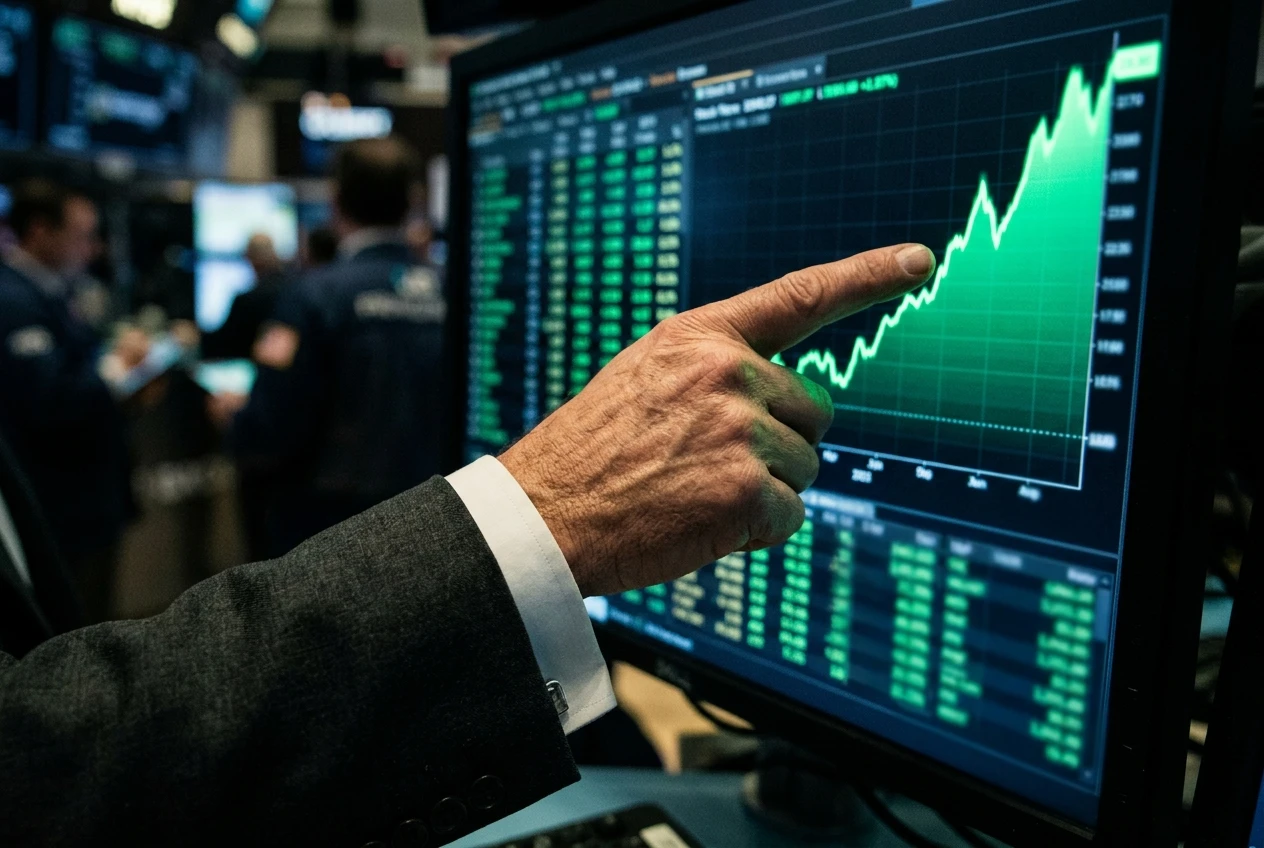
The $300 ceiling sits inside a coverage day that produced at least six buy-equivalent ratings, with Stifel holding the floor at $190. The spread across all six banks shows the trade as a unanimous direction layered over a divided thesis. On a stock that closed Monday at $160.42, the gap from low to high is $110. Each desk in the table reads SpaceX as a buy but lands on a different engine getting the credit. The table below shows a Street that agrees on direction and not much else.
| Bank | Rating | Price target |
|---|---|---|
| Morgan Stanley | Overweight | $300 |
| Wells Fargo | Overweight | $230 |
| RBC Capital Markets | Outperform | $225 |
| UBS | Buy | $210 |
| Goldman Sachs | Buy | $205 |
| Mizuho | Outperform | $200 |
| Citi | Buy | $200 |
| Stifel | Buy | $190 |
Goldman Sachs opened with Buy at $205 and UBS landed at Buy with $210. RBC Capital Markets opened at Outperform with $225 and Mizuho at Outperform with $200, while Citi and Wells Fargo joined in at $200 and $230, respectively. Each price tag was pinned to a different theory of which SpaceX engine gets credit for the upside.
AI models and applications may come and go, but compute lasts forever.
RBC analysts wrote in their initiation note, naming compute rather than launch economics as the durable moat. That framing pushed RBC’s $225 ahead of Goldman and UBS even as it sat $75 below the Morgan Stanley ceiling. Stifel, at the bottom of the table, summarized its launch-economics thesis as ‘lowest cost to orbit wins everything above it.’ Each desk landed at a different number on a stock with megacap exposure.
What $3.3 Trillion of Revenue Demands
Morgan Stanley’s revenue model runs from roughly $45 billion this year to $319 billion in 2030 and a $3.3 trillion figure by 2040. The numbers rest on a February 2026 merger with xAI and on the bank’s bet that orbital data centers and satellite-based compute can offset the terrestrial power constraints that increasingly stall AI campus builds.
AI carries most of the curve. Morgan Stanley pegs AI-related revenue at about $22 billion in 2026, $190 billion in 2030, and $2.6 trillion in 2040, a shift from launch-services revenue toward higher-margin software and enterprise offerings that the bank flags as the lever for terminal value. The S-1 filing SpaceX submitted ahead of its June 12 listing put the total addressable market at $28.5 trillion, with AI accounting for all but $2 trillion of that figure.
SpaceX’s own reported 2025 numbers sit at the opposite end of that curve, with a net loss of $4.9 billion on $18.7 billion of revenue per the prospectus and capital expenditures already running past $10 billion in the first quarter alone. Morgan Stanley projects SpaceX will need roughly $84 billion a year in outside capital from 2027 through 2034, an eight-year funding window before the business turns free-cash-flow positive. The note also flagged heavy reliance on Elon Musk, potential Tesla-related conflicts, regulatory and geopolitical uncertainty, and limited market depth among the risks that could slow deployment. The bank tied the four flags to its own $75 bear case at the bottom of the corridor.
Stifel, holding the bottom of the table, treats the same numbers with a lighter multiple, arguing that orbital data centers remain unproven at commercial scale. UBS, higher than Stifel but well below Morgan Stanley, forecast revenue and EBITDA growing at roughly 70% and 90% annual rates through 2031, with Starship launch costs falling to about $200 a kilogram from roughly $1,000 currently. Mizuho, in its $200 call, cited three different reasons the thesis might hold, including reusability tech that has reduced launch costs 85% to 90% below historical averages and a competitive moat around the Colossus compute infrastructure stack. Stifel relies most heavily on Falcon 9 launch economics at $3,000 per kilogram, while UBS and Mizuho model the long-term cost curve down to roughly $200 per kilogram. The market now has eight sourced price targets on the same stock for the same day, ranging from $190 to $300.
Nasdaq-100 Day and a $4.3 Billion Buy Pulse
SpaceX joined the Nasdaq-100 on July 7 in its first day of trading after the IPO quiet period expired, becoming the first pure-play space company in the benchmark. JPMorgan’s published estimate is that index inclusion will force $4.3 billion in passive buying from ETFs tracking the gauge. Most of that buying lands in a stock with a tiny public float and a weighting cap of about 1.3%, a constraint that places SpaceX around the 21st position in the index behind Nvidia, Walmart, Intel, and Tesla. The $50 billion in chip-and-AI forced selling the listing triggered already shows where the supply is coming from.
- IPO size: $86 billion, priced June 12, 2026
- Closing price Monday: $160.42
- Passive buying estimate: $4.3 billion
- Weighting cap: ~1.3%
- Index rank: ~21st
Pre-market trade on July 7 had the stock down 2.3% and Cboe senior vice president JJ Kinahan warned investors to prepare for $20 moves in either direction over the next week and a half as options volume reaches 2.5 times normal levels. The stock’s price-to-sales ratio sits at roughly 112, a multiple that prices in a future where nearly everything goes right.
The 42% Stake and the Single-Vote Risk
The Morgan Stanley call leans on a business model whose governance is concentrated in a single individual. Elon Musk holds roughly 42% of SpaceX shares, valued at over $1 trillion at the IPO price, with that stake locked until June 2027. Through a dual-class structure, his Class B shares carry 10 votes each, giving him 82.4% voting control.
Public Class A shareholders get the economic exposure but virtually no say in board decisions. Arete Research warned the structure could amplify both upside momentum and downside fragility, given a public float of just 4% to 5%. The Morgan Stanley note explicitly listed heavy reliance on Musk, potential Tesla-related conflicts, regulatory and geopolitical uncertainty, and limited market depth as risks bracketing the $300 target. Susquehanna analyst Charles Minervino described the staggered insider lockup expirations as a ‘near-term overhang.’
- Heavy reliance on Elon Musk across strategy, capital, and product cadence
- Potential conflicts of interest between SpaceX and Tesla
- Regulatory and geopolitical uncertainty around launches, spectrum, and AI export policy
- Limited public float and thin trading depth that can amplify price swings
Stifel’s launch-economics thesis and RBC’s compute thesis cite different parts of that risk list, with Stifel landing at $190 and RBC at $225 on a stock trading in the $155 to $165 range. The next lift in the corridor will likely come from Starship test cadence, the first operational Starship payloads, and new AI cloud contracts, the catalysts Morgan Stanley named in the note. Cathie Wood’s $1B ARK venture stake in the SpaceX IPO is one of the largest outside bets on a setup that includes the same risk list.
The Side Door: Shotwell’s $324 Million Pledge
The same SpaceX news cycle carried a separate story about where SpaceX stock is going, not for the AI trade, but for roughly two million American kids. SpaceX President Gwynne Shotwell said Monday that she and her husband would donate a portion of their SpaceX stock to Trump Accounts, the children’s investment vehicle that opened for contributions on July 6. Barron’s valued the pledge at over $324 million, based on SpaceX shares closing at $162 ahead of the holiday weekend. IPO filings show Shotwell owned about 12.6 million SpaceX shares. The announcement came days after President Donald Trump said during a Thursday CNBC interview that he expected Musk to donate SpaceX stock to Trump Accounts, a pledge Musk has not publicly addressed.
Recipients are children aged 11 to 17 in households below average income thresholds, with a geographic lean toward central Texas around the couple’s home. The New York Stock Exchange and Nasdaq rang their opening bells from the Oval Office on July 6 to mark the launch of the program, with eligibility open to any American child under 18 with a Social Security number and a $1,000 Treasury deposit going to children born between 2025 and 2028.
Shotwell framed the gift in language that mirrors her company’s mission: ‘We have been fortunate in our careers and hope this gift encourages the next generation to continue the journey of enabling humanity to live and fly amongst the stars.’ She joins a list of backers that includes the Dell family at $6.25 billion, Micron Technology at $250 million, and a group of major employers that includes BlackRock, Intel, and JPMorgan Chase doubling the Treasury’s opening contribution. Treasury guidance issued last week acknowledged stock donations can flow into the accounts, while leaving the mechanics to be clarified. More than 6 million children were enrolled in Trump Accounts as of early June, a base Shotwell’s pledge adds to.
The Shotwell gift runs in parallel with Morgan Stanley’s target rather than inside it. Each is a different way SpaceX stock is being priced, distributed, or underwritten across the same week, and investors weighing the corridor will spend Tuesday parsing the AI thesis, the supply schedule, and any announcements that come from the company itself. Musk’s June 2027 lockup expiration remains the largest single source of potential supply on the calendar.
Frequently Asked Questions
What is SpaceX’s total addressable market per its S-1 filing?
SpaceX’s S-1 filing pegged the company’s total addressable market at $28.5 trillion, with AI accounting for all but $2 trillion of that figure. The TAM underpins Morgan Stanley’s $3.3 trillion revenue forecast for 2040, since most of the modeled growth sits in the AI segment.
How much outside capital will SpaceX need to fund the Morgan Stanley revenue forecast?
Morgan Stanley projects SpaceX will need roughly $84 billion a year in outside capital from 2027 through 2034, an eight-year funding window before the business turns free-cash-flow positive. The capital need sits alongside a 2025 baseline of a net loss of $4.9 billion on $18.7 billion of revenue, with capital expenditures already running past $10 billion in the first quarter.
When does Elon Musk’s SpaceX stake unlock?
Musk’s roughly 42% SpaceX stake, valued at over $1 trillion at the IPO valuation, stays locked until June 2027. Smaller blocks of restricted stock begin expiring 70 to 135 days after the June 12 IPO, a wave Susquehanna analyst Charles Minervino called a near-term overhang. Musk controls 82.4% of voting power through a dual-class share structure regardless of when his own stake unlocks.
How much is Gwynne Shotwell donating to Trump Accounts?
Shotwell and her husband are donating a portion of their SpaceX stock, valued at over $324 million based on the $162 share price ahead of the July 4 holiday weekend, to Trump Accounts for more than two million children aged 11 to 17 in households below average income thresholds. The pledge carries a central Texas geographic lean and follows President Donald Trump’s Thursday CNBC interview in which he said he expected Musk to make such a donation.
How volatile has SpaceX stock been since the IPO?
Options volume ran at 2.5 times normal levels around the SpaceX coverage day, and Cboe senior vice president JJ Kinahan warned investors to prepare for $20 moves in either direction over the next week and a half. The thin public float of 4% to 5%, the staggered lockup expirations, and a recent price-to-sales ratio of roughly 112 create a market that moves sharply on small shifts.
Disclaimer: This article is for informational purposes only and does not constitute investment advice. Investing in equities carries risk, including the loss of principal. Figures are accurate as of the publication date and may change without notice. Readers should consult a qualified financial professional before making any investment decision.


Samsung Sets Galaxy Unpacked for July 22 in London With a Wider Fold

Pink Bearista Cup Returns July 13 as Starbucks Pink Vibes Drops

Pixel 11 Leak Doubles Base Storage to 256GB, Lifts Entry to €999

iRobot’s First Non-Robot Floor Cleaner Runs on Tap Water

Nintendo Switch Online Adds Four Classics and One Japan-Only Title

Meta’s Muse Image Lets Anyone Use Your Instagram Photos in AI

US Trade Deficit Jumps to 14-Month High as AI Spending Lifts Imports

Samsung’s $1,230 Galaxy Unpacked Deal: How It Stacks Up

Doom Studio id Software Cuts Half Its Staff in Xbox Layoffs

The $14,985 Fiat Topolino Has Landed in America, Highway Free

Destiny 2’s Final Update Pulls Its Biggest Crowd in Two Years

Xenoblade Genesis Reveals Director, Composers, Character Designers

Nintendo Confirms Zelda: Ocarina of Time Remake for Switch 2

Parabilis Sets $670M Biotech IPO Record After Decade of Building

EU Probes $24B Gulf Backing for Paramount’s Warner Bros. Deal

Susman Godfrey Pays Associates $5,000 to $10,000 Above Milbank Scale

Parabilis Sets $670M Biotech IPO Record After Decade of Building

Salesforce Cuts Agentforce Staff a Week After Its $1.2B AI Revenue

Bungie Was ‘Below the Red Line’ Before Sony’s Buyout, Ex-CM Says

Black Ops 1 and 2 PS5 Ports: $40 Price Tag Has Fans Uneasy
-

 TECHNOLOGY3 years ago
How to Adjust a Bulova Watch Band – An Easy Guide
-

 News3 years ago
Fred Pentland: Athletic Bilbao’s English mentor who changed the essence of Spanish football
-

 FINANCE3 years ago
Tax Planning for Every Season: Guide to Maximizing Your Tax Benefits
-

 Education3 years ago
African Ministers New Education Plan
-

 BUSINESS3 years ago
What is Entrepreneurial Operating System? A Comprehensive Guide to EOS
-

 Education3 years ago
Innovate Your Learning Journey with Technology and Enhance Education
-

 News3 years ago
Russians formally out of World Athletics Championships
-

 BUSINESS3 years ago
Top 9 Most Expensive American Cities to Rent an Apartment