
News
iOS 27’s Public Beta Brings Siri AI to Everyone Except the EU
Apple’s iOS 27 public beta brings a rebuilt Siri AI and big speed gains to iPhone 11 and up, but EU and China miss the headline feature.

Apple switched on the public beta for iOS 27 on July 13, putting a completely rebuilt Siri AI in front of anyone with an iPhone 11 or newer. The update also promises app launches up to 30% faster and AirDrop transfers up to 80% faster, alongside the biggest parental control overhaul in years.
None of that reaches the European Union or China at launch. Apple has split its own customers this year, by chip, by RAM, and by passport, and the gaps between what different iPhone owners get this fall are wider than in any recent release.
Siri Finally Learns to Hold a Conversation
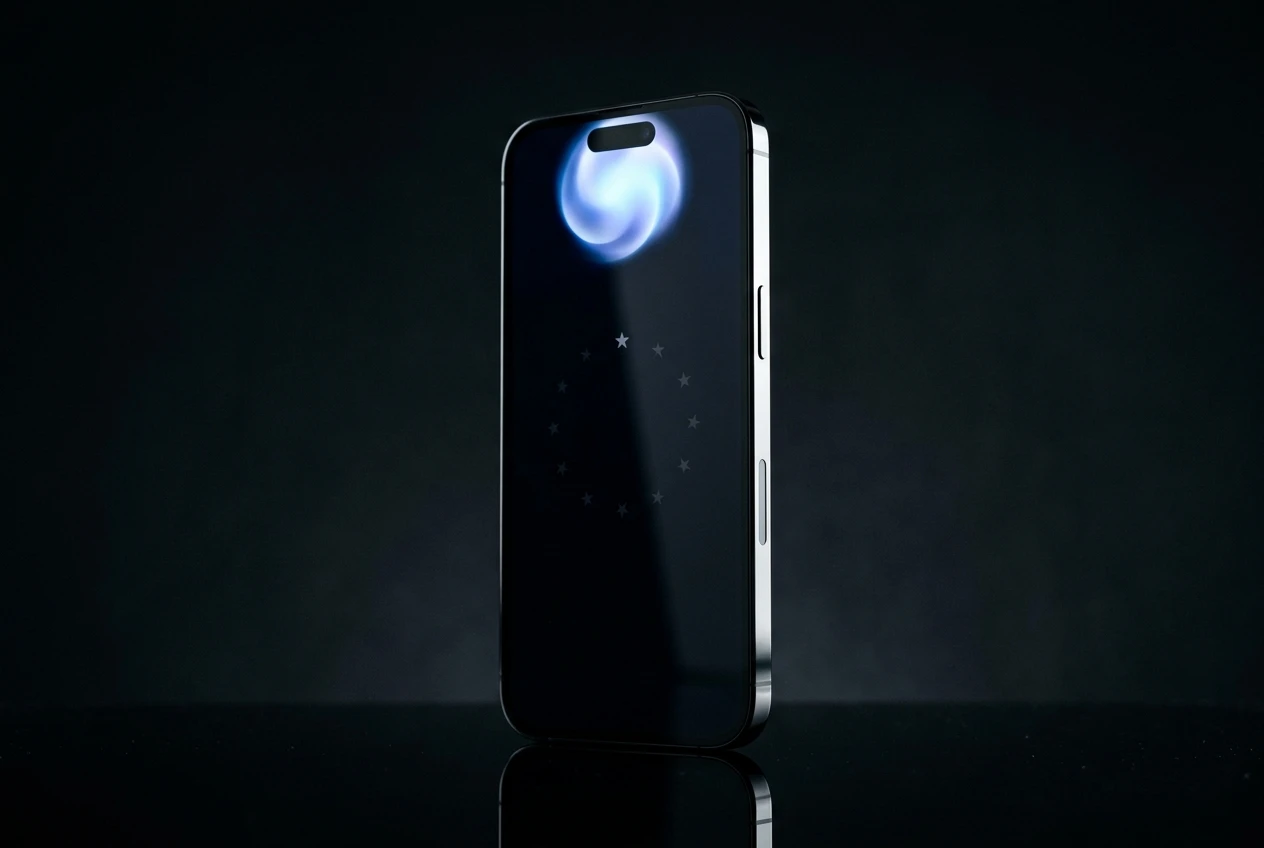
The centerpiece of iOS 27 is Siri AI, a full rebuild of the decade-old assistant that now runs on Apple’s next generation Foundation Models. It can hold a back and forth conversation instead of resetting after every command, and it lives inside the Dynamic Island as a glowing pill that expands into a search bar the moment it hears a request.
Early testers, including Bloomberg’s Mark Gurman, describe an assistant that can finally do the small things people expected years ago: move a calendar appointment by referencing who you are meeting, rename it, and swap a dial in number for an address, all in one request. A handful of capabilities set the new Siri apart from a standard chatbot.
- Personal Context – Siri searches Mail, Messages, Notes, Reminders and Calendar to actually locate what you are asking about, rather than saying it could not find it.
- Onscreen awareness – Siri can see what is currently visible on the display and answer questions about it, including inside third party apps.
- Multi-step actions – a single request can trigger several steps across different apps, like importing every event from a photographed school flyer straight into Calendar.
- A dedicated Siri app – conversation history is stored and synced across iPhone, iPad and Mac, so a chat started on one device can be finished on another.
Reactions on forums and social media split along familiar lines. Some longtime critics dismissed the rebuild before installing it, while other testers pushed back hard, with one MacRumors commenter insisting the new assistant is leaps and bounds ahead of the old one in daily use.
Apple Bets Big on Raw Speed
Beyond the AI headline, Apple spent a chunk of its WWDC keynote on something plainer: making the phone feel fast again. Stacey Ford, Apple’s vice president of OS Program Management, told developers at the keynote, “We made things faster, smoother, even easier to use.”
Apple’s own figures claim app launches up to 30% faster, new photo captures appearing up to 70% faster, and AirDrop transfers up to 80% faster, with the improved CPU scheduler extended all the way back to the iPhone 11. Independent testing has been messier. Tom’s Guide ran side by side iPhone 17 units on iOS 26 and the iOS 27 beta and found Google Maps loading in 0.53 seconds instead of 0.88, a nearly 40% drop that beat Apple’s marketing claim. A small AirDrop file transfer, by contrast, barely moved, shaving well under a second off an 11 second transfer.
The unevenness matters less than the direction. iOS 26’s Liquid Glass redesign drew months of complaints about lag and battery drain, and iOS 27 is explicitly Apple’s answer to that, reaching back six years to give an iPhone 11 owner some of the same scheduler work built for newer chips.
The Hardware Tiers Nobody Asked For
Compatibility with iOS 27 itself is broad. Apple Intelligence, the umbrella system that Siri AI runs on, is not. The split creates three effective classes of iPhone this year, before geography even enters the picture.
| iPhone Tier | Siri AI Access | What Is Different |
|---|---|---|
| iPhone 11 through iPhone 14 (all models) | None, no Apple Intelligence | Gets the speed and interface updates only; the CPU scheduler upgrade is backported here too |
| iPhone 15 Pro and newer Apple Intelligence-compatible models | Siri AI baseline | Personal Context search, onscreen awareness, multi-step app actions |
| iPhone 17 Pro, iPhone 17 Pro Max, iPhone Air | Siri AI plus the most powerful on-device model | Custom voice expressivity and pace, major dictation accuracy gains, requires 12GB of unified memory |
| All tiers, inside the EU’s 27 member states | Withheld entirely | No timeline given; the same assistant still ships on Mac and Vision Pro there |
The RAM requirement is the hard line inside that middle tier. Only the newest phones have enough unified memory to run the model behind custom Siri voices and the big jump in dictation accuracy, according to Apple’s own WWDC disclosures. Owners of a two-year-old iPhone 15 Pro get the new Siri; they do not get to change how it sounds.
Why Won’t Siri AI Launch in the EU?
Siri AI will not ship on iPhone or iPad inside the European Union when iOS 27 and iPadOS 27 arrive this fall, and Apple says it has no timeline for fixing that. The company blames the Digital Markets Act’s interoperability rules; EU regulators say Apple made its own choice not to comply.
Apple laid out its case in a newsroom post announcing the delay, arguing that regulators’ reading of the DMA would force it to give rival AI assistants deep, autonomous access to a user’s messages, files and installed apps. Apple says it offered a compromise it called a Trusted System Agent, paired with an eighteen month phased rollout, and that EU regulators did not accept any of Apple’s proposed solutions.
We’re deeply disappointed that our EU users won’t have Siri AI on iPhone or iPad when we share our new software releases later this year.
Craig Federighi, Apple’s senior vice president of Software Engineering, said that in the same announcement, adding that Apple would keep engaging regulators on a path forward. The European Commission has pushed back on Apple’s framing, telling citizens in its own DMA guidance that Apple made a “conscious decision” not to release the assistant in the bloc and that nothing in the law actually bars it from doing so.
The restriction covers all 27 EU member states, and it reaches further than the iPhone. Because Siri AI on watchOS 27 requires a paired iPhone running the feature, Apple Watch owners in the EU lose access too, and EU-based developers cannot even test Siri AI’s APIs while developers everywhere else can. China faces a separate exclusion from Siri AI and the wider Apple Intelligence suite, for different regulatory and infrastructure reasons. Reuters reported that Europe’s technology chief, Henna Virkkunen, held what she called constructive talks with Apple CEO Tim Cook as the standoff continued into summer, though neither side has announced a resolution. No one has yet explained publicly why the identical Siri AI architecture is judged safe enough for macOS and visionOS in Europe but not for iOS.
Fifteen Years Overdue, Built With a Rival’s Help
Siri has existed for about fifteen years and has rarely been anyone’s idea of cutting edge. Apple first teased an AI-powered version of the assistant back in 2024, then quietly shelved those plans when the technology wasn’t ready, leaving the company a full year behind the generative AI wave that reshaped how people use Google’s Gemini and OpenAI’s tools.
What shipped instead is built in partnership with a company Apple rarely credits: the Foundation Models behind Siri AI were developed using technology from Google’s Gemini models, and Apple is even expanding its Private Cloud Compute system to run some Apple Intelligence workloads on Google Cloud using NVIDIA hardware. Mike Rockwell, the Apple executive who leads Siri’s engineering, described the new system to reporters as a completely modern architecture with room to grow, while Federighi has called the assistant’s more autonomous, task-completing behavior experimental for now.
The comparison Apple watchers keep reaching for is Snow Leopard, the 2009 macOS release built almost entirely around fixing what already existed rather than adding what was new. iOS 26’s Liquid Glass redesign was the flashy swing; iOS 27 is the cleanup cycle that follows it, and this time Apple is asking its own code, not its users, to do the adjusting.
The Countdown Now Runs to September 14
iOS 27 has followed a metronomic beta schedule since WWDC: developer beta 1 on June 8, beta 2 on June 22, beta 3 on July 6, each exactly two weeks apart, before the July 13 public beta broke that pattern in the normal, expected way. A release candidate is expected close to Apple’s September 9 keynote, with the general release landing around September 14 on every compatible device, timed to arrive alongside new iPhone hardware.
That hardware reportedly includes Apple’s first foldable iPhone, expected to be supply constrained at launch, alongside standard iPhone 18 models. Gurman has also reported that three additional features are already running inside Apple’s internal builds and were deliberately left out of the WWDC announcement, without saying what they are, which suggests September’s release still has surprises left. Testers can already adjust how the new assistant sounds; Apple added dedicated controls to tune Siri’s pace and expressivity settings under Settings, Siri, Voice.
The version Apple demoed at WWDC now runs on every iPhone it still sells support for, except in the one place that spent eighteen months asking Apple to change it first.
Frequently Asked Questions
Which iPhones can install the iOS 27 public beta?
Any iPhone that runs iOS 26 qualifies, which reaches back to the iPhone 11 and includes the iPhone SE second generation and later. Apple Intelligence and Siri AI need an iPhone 15 Pro or newer, and the most advanced on-device voice and dictation features are limited to the iPhone 17 Pro, iPhone 17 Pro Max, and iPhone Air.
Do I need a developer account to try it?
No. The Apple Beta Software Program is free and open to anyone with an Apple Account; signing up and enabling Beta Updates under Software Update is enough to install it.
Will Siri AI ever come to the EU?
Apple says it hopes to bring Siri AI to the EU eventually and will keep talking with regulators, but it has given no timeline. Reuters reported constructive talks between Apple’s CEO and the EU’s technology chief in recent weeks, though nothing has been resolved.
What extra perks do iCloud+ subscribers get in iOS 27?
Paid iCloud+ tiers unlock higher daily usage limits for Apple Intelligence features like image generation in Image Playground, and HomeKit Secure Video cameras gain generated video recaps of activity, perks that free 5GB accounts do not receive.
Does the beta hurt battery life?
It can. Apple and outlets covering the release both warn that beta software carries a real risk of bugs, faster battery drain, and broken third-party app compatibility, which is why Apple recommends installing it on a secondary device rather than a daily driver.
When does iOS 27 launch for everyone?
A stable, general release is expected around September 14, following a release candidate build close to Apple’s anticipated September 9 hardware event, matching the same week new iPhone models typically arrive.


Walmart’s $50 Million Opioid Settlement Closes Case Without Admission

California Sues Over $120 Million Morro Bay Wind Lease Buyout

Gilead Bixlenvo FDA Nod Opens Single Pill Path for Complex HIV Cases

Meta’s $18B Kids Deal Forever Shields Data Used to Spot Under-13s

Lettuce Outbreak Drove Record Cyclospora Spike Across 20 States

Amazon Shaves $20 Off M6 Mac Mini Before It Even Ships

SpaceX Louisiana Port Tests Debt Markets on Orbital AI Scale

Microsoft High Lifts Indexes as Small Caps Crack Support

Apple Replays 2015 Saturday Midnight Preorder for iPhone 18 Pro

Updated COVID Shots Clear FDA but Access Friction Hits High-Risk Groups

Take-Two CEO Pushes Netflix Subs for GTA 6 Extended Look

Wildlands Free Update Hands Players the Tools They Already Invented

Destiny 2 Fans Unlock Vaulted Maps After Live Service Ends

Quake Gets 19 Free Maps From MachineGames Quake Club

Quordle Monday Delivers Gavel Crush Speed Ethos Cleanly

Stripe Bid Shows PayPal Moat Cracked After Years of Slide

Tyson’s Five-Year Utah Plant Falls to Cattle Shortage Reckoning

Silver Lake Workday Talks Signal Private Floor for Software

Kennedy Lewis Takes Majority Control of The Greenbrier in $500M Deal

Best Buy Marks 60 Years With Sale That Echoes Its Audio Shop Roots
-

 TECHNOLOGY3 years ago
How to Adjust a Bulova Watch Band – An Easy Guide
-

 News3 years ago
Fred Pentland: Athletic Bilbao’s English mentor who changed the essence of Spanish football
-

 FINANCE3 years ago
Tax Planning for Every Season: Guide to Maximizing Your Tax Benefits
-

 Education3 years ago
African Ministers New Education Plan
-

 BUSINESS3 years ago
What is Entrepreneurial Operating System? A Comprehensive Guide to EOS
-

 Education3 years ago
Innovate Your Learning Journey with Technology and Enhance Education
-

 News3 years ago
Russians formally out of World Athletics Championships
-

 BUSINESS3 years ago
Top 9 Most Expensive American Cities to Rent an Apartment