
BUSINESS
Trump’s Cheap Gas Promise Collapses as Prices Hit $4 Again
Gas prices are back above $4 a gallon as Trump’s Iran war escalates again, undercutting the cheap energy promise that helped define his first year back.

US gas prices climbed back above $4 a gallon on Monday, as Washington’s renewed air war with Iran wiped out five weeks of relief at the pump. The national average is now 13 cents higher than a week ago and far above the $3.14 a gallon drivers paid a year ago, according to motor club AAA and reporting by The Associated Press. Diesel, which fuels most freight trucks, jumped to $5.11 a gallon.
President Donald Trump spent his first year back in office boasting that gasoline had hit a five year low under his energy dominance agenda. Seven months before the midterm elections, prices are climbing the other way, and they are doing it because of a war Trump himself helped launch and is now escalating again.
The $2.80 Promise Is Underwater
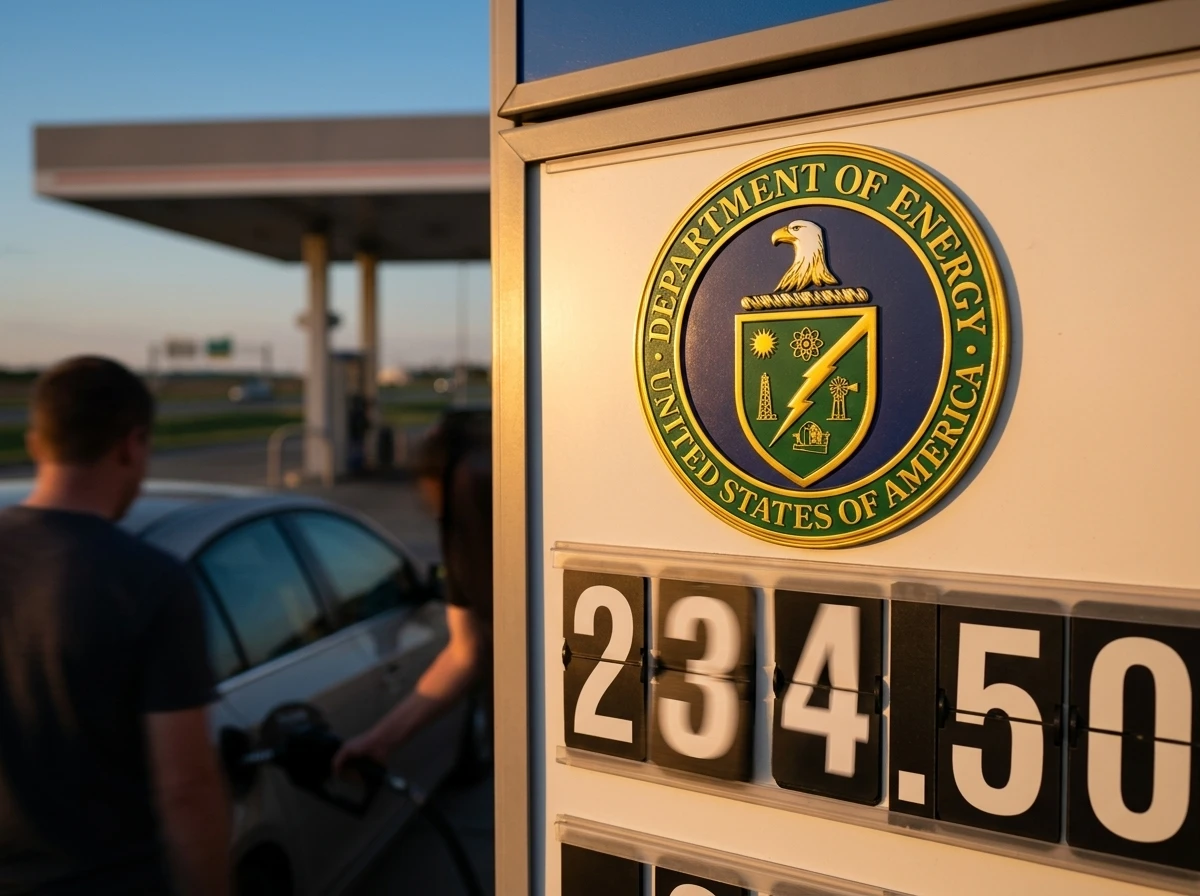
One year into his second term, the Trump administration was still celebrating a specific number. A Department of Energy progress report dated January 20, 2026, declared that gasoline had reached a five year low near $2.80 a gallon, crediting the president’s ‘Drill Baby Drill’ push and record domestic oil output for the savings.
That was the high point of the promise. Roughly five weeks later, the United States and Israel launched a new air campaign against Iran, killing Supreme Leader Ayatollah Ali Khamenei and pulling the region into war. Crude oil, the raw material behind every gallon of gasoline, spiked as tanker traffic through the Strait of Hormuz collapsed. By May, the national average had hit a four year record above $4.50 a gallon.
Prices did ease after that. An interim truce pulled the national average down to $3.79 a gallon earlier this month, its lowest point since the war began, and consumer sentiment jumped 10% in July on the strength of that dip. Then the fighting resumed.
| Date or Period | What Happened | National Average Price |
|---|---|---|
| Late January 2026 | DOE touts a five year low under Trump’s energy agenda | About $2.80 a gallon |
| February 28, 2026 | US and Israel launch new air war on Iran | About $2.98 a gallon |
| May 2026 | War disruption peaks, four year record set | Above $4.50 a gallon |
| Early July 2026 | Interim truce briefly holds | As low as $3.79 a gallon |
| July 20, 2026 | Truce collapses, strikes resume | Just above $4.00 a gallon |
The five year low the Energy Department celebrated in January is now a memory. The current average sits nearly $1.20 above it.
The Truce That Lasted Three Weeks
The current spike traces back to a deal built to prevent exactly this. On June 17, American and Iranian negotiators signed a 14 point memorandum of understanding after two months of stalled talks mediated out of Islamabad. It formalized a ceasefire, ended a US naval blockade of Iranian ports, reopened the Strait of Hormuz to commercial shipping and dangled sanctions relief in front of Tehran.
Trump celebrated the signing on social media.
Ships of the World, start your engines. Let the oil flow!
The president wrote that shortly after the deal closed, according to an analysis by Ray Takeyh, a Middle East scholar and senior fellow at the Council on Foreign Relations tracking the sixty day ceasefire’s collapse.
The engines did not stay running long. Just over a week after the signing, Iran launched a drone strike on a tanker in the strait, which Washington treated as a ceasefire violation. Limited retaliatory strikes followed, then a fragile pause. By early July, Iran had struck three more vessels, and the US answered by rescinding Iran’s license to sell oil internationally. At a NATO summit in Ankara on July 8, Trump told reporters the ceasefire was over. A US strike hit near Iran’s Bushehr nuclear plant the next day. By July 13, Trump was calling the US the ‘guardian of the Hormuz strait’ and demanding a 20% cut of cargo shipped through the waterway. Monday marked the ninth consecutive night of fresh strikes.
- What We Know: Vessel crossings through Hormuz fell roughly 50% last week compared with the week before, according to S&P Global Energy analysts, and Iran’s Revolutionary Guard has fired on and boarded commercial ships in the strait since the truce broke down.
- What’s Unconfirmed: Whether the strait is formally closed. Iran’s government has repeatedly declared it shut to American and allied shipping, while Trump has insisted commercial traffic is still moving through.
Iran’s leverage over a waterway that once carried roughly a fifth of the world’s oil is becoming a blueprint for other vulnerable chokepoints, from the Bab el Mandeb to the Malacca Strait, according to shipping analysts.
From California’s $5.50 to Indiana’s $3.35 a Gallon
Where drivers fill up matters almost as much as when. California’s average climbed to nearly $5.50 a gallon on Monday, the highest in the country, followed by Hawaii at $5.42 and Washington state at $5.01, according to AAA. Mississippi and Indiana, by contrast, averaged $3.57 and $3.35. Supply lines, refining capacity and state tax rates all help explain the spread.
| State | Average Price Per Gallon | Versus the National Average |
|---|---|---|
| California | ~$5.50 | About $1.50 higher |
| Hawaii | ~$5.42 | About $1.42 higher |
| Washington | ~$5.01 | About $1.01 higher |
| Mississippi | ~$3.57 | About 43 cents lower |
| Indiana | ~$3.35 | About 65 cents lower |
The pain is not confined to gas tanks. Diesel, which moves most of the country’s freight, averaged $5.11 a gallon on Monday, up from $4.88 a week earlier. Since the war began, American households have collectively paid nearly $71.1 billion in extra costs for gasoline and diesel alone, according to an online tracker run by Brown University’s Watson School of International and Public Affairs.
- Fertilizer shortages have worsened as the war disrupts Middle East supply chains.
- Grocery prices have climbed in recent months as higher transportation costs work their way onto shelves.
- Airline tickets cost more as carriers pass along pricier jet fuel.
- Everyday goods, from shoes to condoms, have also gotten more expensive.
The squeeze is sharper in Asia and Africa, where economies lean more heavily than the US does on Middle East imports.
Midterm Math Turns Against Republicans
Gas prices are becoming a campaign issue whether Republicans want them to be or not. A Washington Post/Ipsos poll published July 16 found that 54% of registered voters name the economy and high prices as the top factor in their midterm vote, well ahead of immigration at 28%. Just 33% approve of how Trump is handling the economy, down from 45% in February 2025, and 59% say they lack confidence that talks with Iran will bring gas prices back to normal.
Other surveys tell a similar story. An NPR/PBS News/Marist poll conducted in late April found 81% of respondents said gas prices are straining their household budgets, and more than 60% blamed Trump for the increase. His overall approval had fallen to 37%, among the highest disapproval levels Marist has recorded for him across both terms.
The swing state numbers are just as blunt. Gas jumped 72 cents a gallon in Michigan and 60 cents in Ohio in a single week this spring, according to the Christian Science Monitor, both states with contested Senate and House races on the ballot this fall.
“Based on the perception of American consumers, the economy has not gotten better, and inflation has gotten worse,” said Whit Ayres, a conservative pollster. “That’s a problem when you’ve run on a promise of lowering inflation and increasing the economy.”
The same Washington Post-Ipsos survey found Democrats ahead 48-45 on the generic congressional ballot among registered voters, a lead that grows to eight points among those most certain to vote this November.
Why the Pump Takes Weeks to Catch Up With the Barrel
Crude oil is the raw material in every gallon of gasoline, and it moves faster than pump prices do. Refineries buy crude in advance and take time to turn it into finished fuel, so retail prices trail the oil market by weeks. Brent crude, the international benchmark, swung between $86 and $91 a barrel on Monday, up from roughly $72 at the start of July.
Traders are already positioning for prices to stay elevated. On prediction market Kalshi, bettors are pricing 93% odds that gas holds above $4 a gallon, a wager that the relief drivers briefly saw in early July will not come back soon.
That delay cuts both ways. It is also why Monday’s price reflects buying decisions refiners made before the latest round of strikes even started, meaning the full cost of this week’s escalation has not reached the pump yet.
How Long Until Prices Come Back Down?
The White House says prices will fall once US strikes cripple Iran’s ability to threaten shipping through Hormuz. Energy analysts are far less certain, warning that even a ceasefire now would leave global supply chains disrupted for months, with full Persian Gulf oil output unlikely to recover before early 2027.
“Oil and gas prices will plummet back to pre conflict levels” as the military degrades Iran’s ability to disrupt trade through the strait, White House spokesperson Taylor Rogers said in a statement Monday. “President Trump remains committed to unleashing American energy dominance, cutting costs, and putting more money back in the pockets of hardworking American families,” Rogers added, a line that echoes the same agenda the administration credited for exporting a record 100 million metric tons of LNG just months earlier.
S&P Global Energy was less optimistic last month, saying it did not expect Persian Gulf oil production to fully rebound until at least the first quarter of 2027, even in a scenario where the fighting stops soon.
For drivers like Litza Mavrothalasitis, a Chicago resident filling her tank on Monday, the swings have become exhausting. “I am down to the last drops of gas,” she said, adding she was shocked by how fast prices climbed again. “It was just unbelievable. I thought we were finally settling down.”
Jacob Fisher, another Chicago driver buying gas that day, put it more bluntly. “Senseless war in Iran, and our current administration is fueling a lot of this,” he said. “It is not serving the American people. Nor does it serve anywhere in the entire world.”
Frequently Asked Questions
What was in the memorandum of understanding Trump signed with Iran?
The 14 point deal, signed June 17 after talks mediated out of Islamabad, formalized a ceasefire, ended a US naval blockade of Iranian ports, reopened the Strait of Hormuz to commercial vessels and offered Iran relief from oil sanctions. It set up a 60 day window to negotiate a lasting peace, a deadline the renewed fighting has now blown past.
Does the United States import much crude oil from the Persian Gulf?
Not in large direct volumes; most US crude imports come from Canada and Mexico. But oil is priced on a global market through benchmarks like Brent crude, so a supply shock in the Strait of Hormuz, which normally carries about a fifth of the world’s oil, raises prices everywhere, including at American pumps.
How does AAA calculate its national average gas price?
AAA’s daily figure is built from real time credit card swipe data gathered from gas stations across the country and updated every day, which is why the national average can move by more than a dime within a single week, as it did this week.
Is Iran still exporting its own oil despite the closure?
Yes. Even as broader tanker traffic collapsed, Iran kept moving crude through its own port at Bandar Abbas and set up a separate shipping channel near Larak Island for vessels willing to pay for passage, with at least one ship paying around $2 million to use it. Cargo bound for buyers in China and India has continued moving through the war.


Walmart’s $50 Million Opioid Settlement Closes Case Without Admission

California Sues Over $120 Million Morro Bay Wind Lease Buyout

Gilead Bixlenvo FDA Nod Opens Single Pill Path for Complex HIV Cases

Meta’s $18B Kids Deal Forever Shields Data Used to Spot Under-13s

Lettuce Outbreak Drove Record Cyclospora Spike Across 20 States

Amazon Shaves $20 Off M6 Mac Mini Before It Even Ships

SpaceX Louisiana Port Tests Debt Markets on Orbital AI Scale

Microsoft High Lifts Indexes as Small Caps Crack Support

Apple Replays 2015 Saturday Midnight Preorder for iPhone 18 Pro

Updated COVID Shots Clear FDA but Access Friction Hits High-Risk Groups

Take-Two CEO Pushes Netflix Subs for GTA 6 Extended Look

Destiny 2 Fans Unlock Vaulted Maps After Live Service Ends

Wildlands Free Update Hands Players the Tools They Already Invented

Quake Gets 19 Free Maps From MachineGames Quake Club

Quordle Monday Delivers Gavel Crush Speed Ethos Cleanly

Stripe Bid Shows PayPal Moat Cracked After Years of Slide

Tyson’s Five-Year Utah Plant Falls to Cattle Shortage Reckoning

Silver Lake Workday Talks Signal Private Floor for Software

Kennedy Lewis Takes Majority Control of The Greenbrier in $500M Deal

Best Buy Marks 60 Years With Sale That Echoes Its Audio Shop Roots
-

 TECHNOLOGY3 years ago
How to Adjust a Bulova Watch Band – An Easy Guide
-

 News3 years ago
Fred Pentland: Athletic Bilbao’s English mentor who changed the essence of Spanish football
-

 FINANCE3 years ago
Tax Planning for Every Season: Guide to Maximizing Your Tax Benefits
-

 Education3 years ago
African Ministers New Education Plan
-

 BUSINESS3 years ago
What is Entrepreneurial Operating System? A Comprehensive Guide to EOS
-

 Education3 years ago
Innovate Your Learning Journey with Technology and Enhance Education
-

 News3 years ago
Russians formally out of World Athletics Championships
-

 BUSINESS3 years ago
Top 9 Most Expensive American Cities to Rent an Apartment