
News
Google Vids Lets You Clone Your Face and Voice Into AI Videos
Google Vids now turns a selfie and voice clip into a personal AI avatar and adds Gemini Omni editing, arriving months after Sora’s shutdown.

Google Vids can now turn a single selfie and voice clip into a personal AI avatar that delivers a script on command, no camera or studio required. The update, announced Thursday, also folds Google’s multimodal Gemini Omni model into Vids for the first time, letting anyone edit AI video with plain language prompts instead of a timeline. It arrives months after OpenAI shut down its viral Sora app following backlash over deepfakes of real people.
Google built its version with tighter locks than Sora ever had. Personal avatars stay tied to the account holder’s own face and voice. They are gated to adults in select regions and carry an invisible watermark, called SynthID, that flags the clip as AI made. Those guardrails now scale to more than 7 million monthly Vids users, an audience dedicated avatar startups such as HeyGen and Synthesia don’t have.
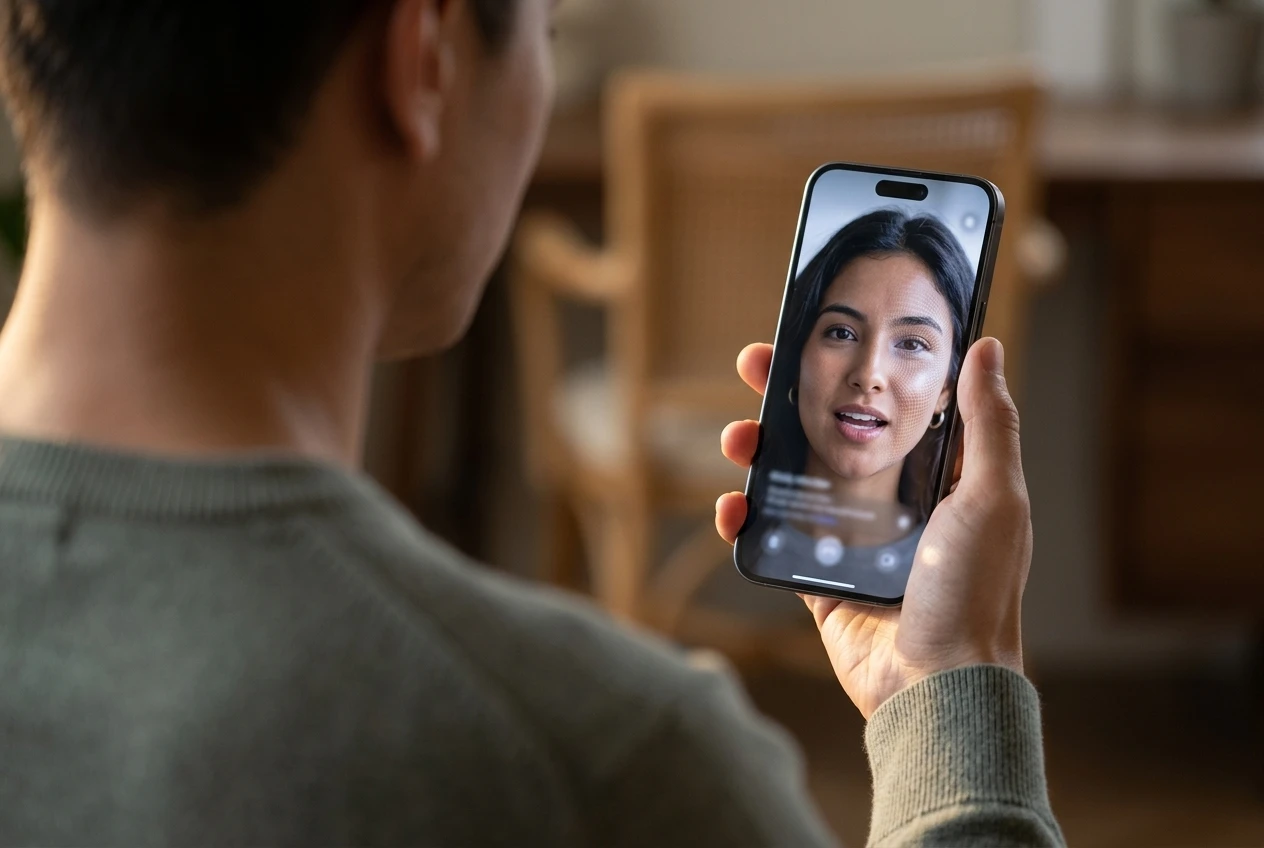
Vids Turns a Selfie Into a Talking Digital Double
The mechanics are deliberately simple. A user uploads one selfie and records a short voice sample, and Vids builds a digital avatar that looks and sounds like them, ready to deliver whatever script gets typed in next, with no filming involved.
Google laid out the update in a blog post detailing the Gemini Omni and avatar rollout, framing the pair as the fastest way yet to create, edit and personalize a video inside Vids.
Gemini Omni itself handles a different job. It turns a written prompt plus any reference images into a finished clip, or reworks footage already shot on a phone, swapping a background, fixing bad lighting, or layering in effects. Omni now supports step by step edits too, so one tweak no longer means starting the whole clip over.
The model joins Veo 3.1, which has powered free video generation inside Vids since February, after users generated millions of clips in the tool over the past year.
How Is Google Trying to Avoid a Sora Style Backlash?
Google restricts personal avatars to the account holder’s own likeness, requires users be 18 or older in eligible regions, embeds an invisible SynthID watermark on every clip, and gives Workspace administrators a kill switch, an approach built to avoid repeating the misuse controversy that helped end OpenAI’s Sora app.
Sora drew fascination and complaints in close to equal measure for how easily it produced realistic synthetic video of real people. The app shut down earlier this year after sustained backlash over its potential for misuse, IBTimes reported.
Google’s approach narrows the opening considerably. Avatars are tied directly to the account holder’s own likeness, so the tool cannot generate a video featuring someone else’s face or voice unless that person creates the avatar themselves.
- Identity lock – an avatar can only carry the face and voice of the account that created it, not a third party’s.
- Age and region gate – personal avatars are limited to users 18 or older in select regions Google has not fully named.
- Invisible watermark – every clip carries a SynthID mark that lets viewers verify AI origin through the Gemini app, Chrome or Search.
- Admin override – Workspace administrators can disable personal avatars for an entire organization from the Admin console.
The restraint reads as a pointed contrast with Sora’s early days, when loose guardrails let users generate outlandish clips of OpenAI’s own chief executive, Sam Altman. Google’s rules make that kind of stunt involving its own leadership, including CEO Sundar Pichai, far less likely.
Seven Million Monthly Users Change the Competitive Math
Vids stopped being a niche workplace tool a while ago. More than 7 million people already use it every month, according to Google’s own Workspace blog, a scale that dwarfs most dedicated AI avatar startups.
That reach is exactly why the update matters for a specific slice of the AI industry. HeyGen, Synthesia, Captions and D-ID have each built businesses on avatar based video generation, and Google folding comparable tools directly into Workspace could squeeze the smaller, more specialized players competing for the same customers.
Google’s own benchmark comparisons against rival video models show Omni’s editing tool winning head to head preference tests against other systems, comparisons published before this week’s Vids specific rollout.
| Capability | Vids Before July 16 | Vids After July 16 |
|---|---|---|
| Avatar source | Choose from a library of 53 default presets | Build a custom avatar from your own selfie and voice |
| Editing method | Timeline based scene editing | Gemini Omni conversational, step by step prompts |
| Underlying video model | Veo 3.1 only | Veo 3.1 plus Gemini Omni |
| Who can access it | Free personal accounts in the US, since June | Personal avatars limited to AI Pro, AI Ultra and Workspace business plans |
The business tiers covered are broad. Neowin reported the plan list spans Workspace’s Business, Enterprise and Education tiers plus nonprofit accounts, alongside individual AI Pro and Ultra subscribers, though editing footage that wasn’t AI generated in the first place stays off limits in the European Economic Area, the UK, Switzerland, Texas and Illinois.
A Staggered Rollout, Region by Region
The update does not land everywhere at once. Google is pushing it out across its usual release tracks over several weeks.
- May 19, 2026: Google previews Gemini Omni Flash at its I/O developer conference, rolling it out to the Gemini app, Google Flow and YouTube Shorts with clips capped at 10 seconds.
- June 17, 2026: Google expands the Vids avatar library to 53 presets and opens default avatars to free personal accounts in the US.
- July 16, 2026: Google brings personal avatars and Gemini Omni into Vids for AI Pro, AI Ultra and Workspace business customers, with Rapid Release domains starting immediately.
- August 5, 2026: Scheduled Release domains, which move on a slower cadence, begin receiving the same update.
Rapid Release visibility should reach all eligible users within roughly two weeks of Thursday’s announcement, matching Google’s usual pattern for staged Workspace rollouts.
The Watermark That Can’t Catch Everything
Every clip made with a personal avatar or Gemini Omni carries an invisible SynthID watermark, verifiable through the Gemini app, Chrome or Google Search, the same provenance system Google uses across its other AI video tools.
Google’s own marketing page for Vids avatars describes a different safeguard for its default avatar library, built with “thorough safety and fairness filters to ensure they avoid real and recognizable people.” Personal avatars work in the opposite direction. The whole feature exists to recreate one specific, recognizable person, restricted to the person who built it.
A personal likeness feature cannot filter out a real face the way a fictional avatar library can. The account tie and age gate are what stand in for a content filter here.
Google has faced this tension before, on a different platform. YouTube, its video site, rolled out a biometric likeness detection tool that asks creators to upload a government ID and a facial video, and it alarmed experts and creators who worried the sensitive data could outlive its stated purpose.
The stakes of guardrails failing elsewhere in the industry are not hypothetical. xAI is suing a Grok user over child sexual abuse material deepfakes it says it struggled to stop, an illustration that identity locks and watermarks only matter if a platform can actually enforce them.
Frequently Asked Questions
What is Gemini Omni in Google Vids?
Gemini Omni is Google’s multimodal AI model that generates or edits video from a mix of text prompts, reference images, sketches and voice recordings. Inside Vids, it replaces manual timeline editing for AI generated clips with conversational, step by step prompts, and it first appeared publicly at Google’s I/O conference in May before reaching Vids on July 16.
Is Google Vids’ new avatar feature free to use?
Not the personal avatar option. Vids’ free tier still runs on the default library of 53 avatar presets and caps users at 10 video generations a month, split between avatars and Veo clips. Building a custom avatar from your own selfie and voice currently requires a Google AI Pro or Ultra subscription or an eligible Workspace business plan.
Which languages can Google Vids avatars speak?
Vids avatars and voiceovers now cover 24 languages, up from an original set of eight, after Google added Hindi, Arabic, Vietnamese and several others in June. Custom avatars can also choose among more than 30 voices powered by Gemini Audio, with added control over pacing and expression.
Can someone make an avatar of me without my permission?
Not through Vids’ personal avatar tool. Google ties every personal avatar to the Google account that created it using a live selfie and voice sample, and the company says the feature cannot generate a video of someone else’s face or voice unless that person creates the avatar themselves.
When will Gemini Omni and personal avatars reach my account?
Timing depends on your release track. Rapid Release domains started receiving the update on July 16, with visibility expected across all eligible accounts within about two weeks. Scheduled Release domains, which move slower, begin their rollout on August 5.


NFL Three-Strike Safety Fouls Now Pull Coaches and Clubs In

Browns Fans Tape Protest Signs to Jim Brown Statue Over Watson

Amazon Pixel 11 Deal Erases the $100 Hike for One More Day

Elden Ring on Switch 2 Turns Its Own Worst Label Into a Portable Win

Ternus Takes the Stage With Apple’s Foldable Debut

Ikea Xbox Yxstaby Turns Controller Thumbstick Into Home Furniture

Pokémon Center Turns Past Worlds Wins Into Bundles and a Pikachu Coin

NFL Scraps Pro Bowl Game to Restore Pure Player Honor

New Twitter.now Bets the Brand Musk Left Behind

Bella Mir’s Famous First Loss Meets the Accountant Who Won

Curtis Mead’s Red Sox Debut Ends With Fractured Wrist

Moesch and Dressel Rewrite Night One at 2026 U.S. Nationals

Red Sox Squander Hot Streak Chance in 4-3 Loss to Athletics

Boutte’s Quiet Camp Takeover Forces Patriots Receiver Choices

Take-Two CEO Pushes Netflix Subs for GTA 6 Extended Look

Halo Campaign Evolved Skulls Meet Death Barriers That Kill the Hunt

Wildlands Free Update Hands Players the Tools They Already Invented

Quake Gets 19 Free Maps From MachineGames Quake Club

Destiny 2 Fans Unlock Vaulted Maps After Live Service Ends

Quordle Monday Delivers Gavel Crush Speed Ethos Cleanly
-

 TECHNOLOGY3 years ago
How to Adjust a Bulova Watch Band – An Easy Guide
-

 News3 years ago
Fred Pentland: Athletic Bilbao’s English mentor who changed the essence of Spanish football
-

 FINANCE3 years ago
Tax Planning for Every Season: Guide to Maximizing Your Tax Benefits
-

 Education3 years ago
African Ministers New Education Plan
-

 BUSINESS3 years ago
What is Entrepreneurial Operating System? A Comprehensive Guide to EOS
-

 Education3 years ago
Innovate Your Learning Journey with Technology and Enhance Education
-

 News3 years ago
Russians formally out of World Athletics Championships
-

 BUSINESS3 years ago
Top 9 Most Expensive American Cities to Rent an Apartment