
AUTOMOBILE
Giant Trucks and SUVs Have Killed Thousands of Pedestrians Since 2009
A NYT and IIHS analysis ties 200 to 400 pedestrian deaths a year to taller, heavier vehicles, with around 3,000 linked to higher hoods since 2016.

Pedestrian deaths in the United States have risen about 75 percent since 2009, and a joint investigation into taller vehicles and pedestrian deaths from the New York Times and the Insurance Institute for Highway Safety now puts a number on the role of larger vehicles in that surge. The analysis estimates that roughly 200 to 400 pedestrians die each year because cars grew taller and heavier, accounting for about 10 percent of the post-2009 increase.
What the New York Times and IIHS Investigation Found
The Times and IIHS paired a federal crash database with never-before-examined vehicle dimension records from Expert AutoStats, then built a statistical model to ask a counterfactual: how many fewer pedestrians would have died if vehicles had stayed roughly the same size since 2002? The answer, drawn from single-vehicle, single-pedestrian crashes reported to police between 2016 and 2024, was about 3,000 deaths attributable to the shift toward higher hoods alone.
The model is conservative, the Times notes, because crashes in parking lots, driveways and on private roads fall outside the federal data it drew on, and so do the unmeasured factors that complicate any single crash. The 200 to 400 preventable deaths per year figure, calculated against a quarter-century baseline of vehicle dimensions, represents about 10 percent of the recent increase in pedestrian deaths.
IIHS, which runs the federal fatality analysis the model relies on, tallies the broader trend separately: 7,314 pedestrians died in 2023, up 78 percent from the 4,109 killed in 2009, the low point in five decades of federal data, according to U.S. pedestrian fatality statistics and trends back to 1975. Most other wealthy countries have walked pedestrian deaths down over the same stretch, a gap that has long puzzled researchers who point to phones, speed and impairment as suspects and rarely to the vehicles themselves.
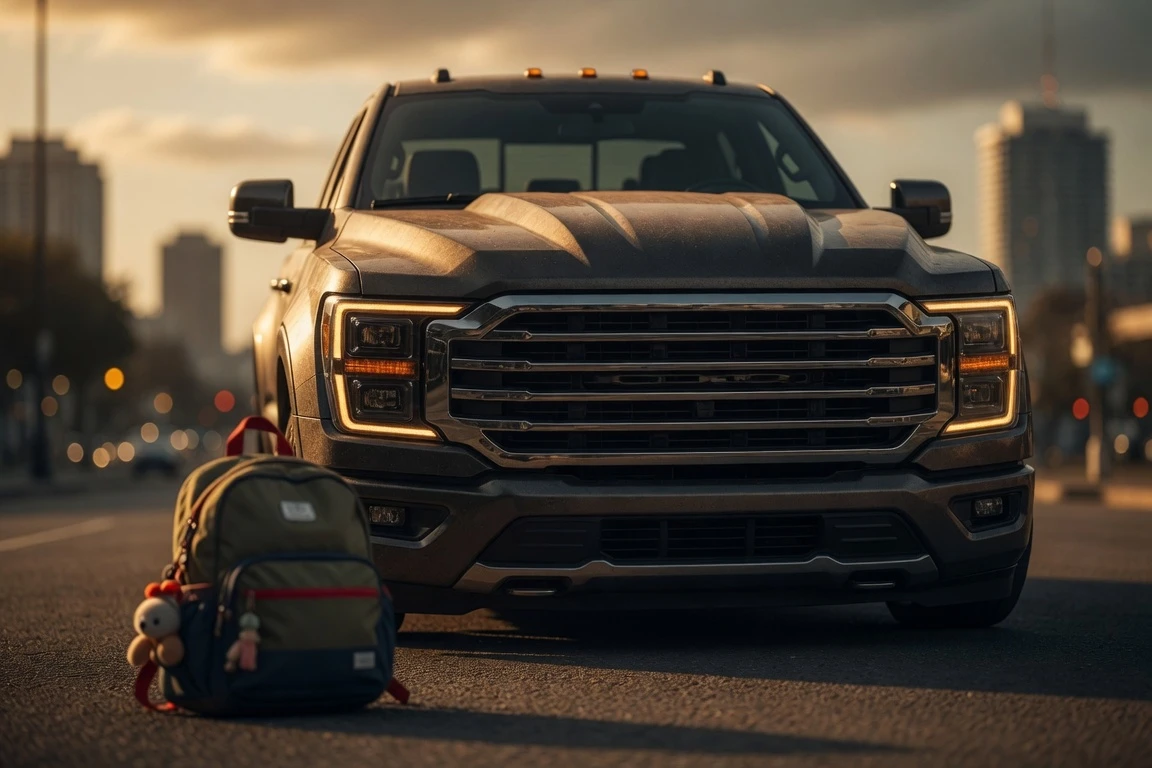
The Hood Heights That Changed
The geometric shift is concrete. The hood of an average passenger vehicle today stands about three feet off the ground, the Times reports, after a steady climb that a single line of three models captures, ending at 47 inches on a 2022 Chevrolet Silverado:
| Vehicle | Year | Hood height |
|---|---|---|
| Toyota Corolla | 2002 | 26 inches |
| Ford Escape | 2014 | 36 inches |
| Chevrolet Silverado | 2022 | 47 inches |
The average American’s center of gravity sits roughly at the belly button, and anyone shorter than 5-foot-6 would be rammed to the pavement by a substantial share of vehicles on the road today. So would most children. The half of American adults below that line did not get any shorter; the vehicles in front of them got taller.
The growth has been steepest at the top end. Vehicles with hoods above 50 inches tall, the Ford F-250 and Chevrolet Silverado 2500 among them, have grown more than five-fold in number on American roads since 2002, per the Times’s analysis of registration data from S&P Global and dimension records from Expert AutoStats.
Why Tall Hoods Kill Differently
We see a lot of devastating collisions even at lower speeds because the pedestrian gets punted forward. Before the driver knows what’s happened, the pedestrian’s head is under the wheel.
When a vehicle strikes a pedestrian below the person’s center of mass, the body tends to be pushed toward the machine. When the strike lands at or above that point, the body tends to be thrown forward, away from the vehicle, into the path of the front wheels and under the hood, exactly where the driver can no longer see. That geometry is what crash reconstructions show in fatal SUV and pickup strikes, and it is what makes taller front ends deadlier even at lower speeds.
Shawn Harrington, whose company Forensic Rock conducted crash testing for the Times and IIHS analysis, has watched the pattern in controlled collisions and in real cases. Pedestrians in those crashes are often sent forward of the vehicle, where the driver cannot see them, and end up beneath the wheel well.
The size of the surface also matters, but not in the way intuition suggests. A flatter, wider contact area can spread force over more of a body and lower the peak pressure on any one part. European regulators pushed automakers in that direction decades ago, and the low, angular hood essentially disappeared from new cars. The missing variable is mass. The average new vehicle on American roads is heavier than it was a generation ago, and the smaller cars that once diluted that average are no longer being built.
Blind Zones That Have Nearly Doubled
To map how visibility has changed, the Times used a three-dimensional scanner to compare sightlines in four of the most common pickups on American roads against their counterparts from the 1990s and early 2000s. The Chevrolet Silverado’s blind zones have nearly doubled. The GMC Sierra’s and the Toyota Tacoma’s grew by about 60 percent. The Ford F-150’s blind zones grew by about 25 percent.
Federal regulators helped set the trend in motion. In 2009, after a string of fatal rollover incidents, NHTSA required roofs to support three times a vehicle’s weight. Many automakers responded by installing thicker A-pillars, which made drivers safer in a crash and pedestrians less visible outside one. James Forbes, a longtime engineering manager at Ford, told the Times the change made his colleagues notice that they were tilting safety toward the vehicle’s owner.
The visibility problem drew attention inside the Transportation Department’s own research arm. In November 2022, researchers at the Volpe Center met with department leaders and NHTSA officials to warn that large vehicles, with their bigger blind zones, were killing hundreds of pedestrians and cyclists each year and injuring thousands more, according to meeting materials reviewed by the Times. The meeting ended with no plan for action.
Angie Byrne, a former Volpe Center employee who attended and was involved with the research, told the Times there was no acknowledgement of the problem. NHTSA, asked by the Times, pointed instead to pedestrian-detecting automatic braking as its preferred path forward, an approach detailed in the federal pedestrian safety data.
The Federal Rules That Reshaped the Fleet
The turn toward larger vehicles started before 2009, but a cluster of decisions made that year and shortly after cemented it. The Obama administration revised how fuel economy was calculated, moving to what is now called the footprint model, a formula that classifies cars by physical dimensions and tire size and sets looser efficiency targets for larger footprints. Larger cars got a wider berth to pollute.
In 2009, the federal scrap program popularly known as Cash for Clunkers erased nearly 700,000 used cars from the secondary market, forcing buyers toward newer, larger models. Soaring gas prices had already pushed nearly-new SUVs onto the used market faster than usual, and the program’s removal of cheap older inventory tilted the market further.
The economics inside the industry hardened the shift. SUVs and pickups are the source of virtually all U.S. auto industry profits, Mark Wakefield, an industry expert at the consulting firm AlixPartners, told the Times, and Ford and GM have said in their annual reports for nearly a decade that their earnings depend on them. Ford’s sedan sales collapsed from more than one million in 2017 to fewer than 100,000 five years later.
One Crash in Colorado Springs
On a morning in 2025, Charlene McAlister, a 76-year-old child-care worker, set out on foot from her Colorado Springs home and called to her daughter, “See you tonight.” A Ram 1500 TRX, a pickup marketed for off-road use and a fierce-looking front end, was turning left. McAlister was not quite five feet tall. The truck’s hood was at least four feet high. It hit her, throwing her to the pavement, according to the Times, which reviewed court records in the case.
When her daughter, Serena, arrived, she found her mother’s hedgehog-themed backpack and red purse in the road, spattered with blood, and emergency workers had draped a white sheet over the body. The driver told investigators he had not seen McAlister, and court records reviewed by the Times say the truck’s hood and side mirrors may have impeded his view. McAlister’s death sits inside a state where pedestrian deaths have climbed sharply in recent years. Colorado recorded its worst year for pedestrian deaths on record in 2025, according to statewide reporting on the 2025 toll, and the 2023 Colorado traffic fatality report had already shown pedestrians and bicyclists accounting for a record share of deaths even as overall traffic fatalities declined.
The Counterargument and the Tech Fix
Automakers do not concede the point easily. Mike Levine, a Ford spokesman, told the Times that blaming larger vehicles for pedestrian deaths overlooks systemic issues, including the design of roads. Bill Grotz, a GM spokesman, pointed to a recent study that found GM vehicles equipped with front pedestrian braking reduced the frequency of pedestrian injuries by 35 percent. NHTSA, in a statement to the Times, said automatic collision-avoidance technologies are “actively reducing the occurrence of these crashes and fundamentally shifting the risk landscape” and called them “the cornerstone of future mitigation strategies.”
Independent data backs parts of that argument. Three studies quantify the effect of pedestrian-detecting technology on real-world crashes:
- IIHS (Cicchino, 2022): vehicles with pedestrian-detecting automatic braking had a 27 percent lower rate of pedestrian crashes than vehicles without it.
- GM and the University of Michigan Transportation Research Institute: GM vehicles with front pedestrian braking cut front pedestrian injury crashes by 35 percent.
- Highway Loss Data Institute analysis of Subaru vehicles: pedestrian detection cut pedestrian injury claim rates by 35 percent.
Technology has limits the regulators themselves acknowledge. Owner’s manuals for some of the most popular vehicles warn that the safety systems can fail in bad weather, at high speeds, in shadows or on uneven pavement, and when a pedestrian is running, pushing a stroller, not standing upright, or is the size of a small child. IIHS tests have also shown that many large vehicles’ automatic braking systems do not consistently prevent collisions, and the Times reports the technology is not a perfect substitute for drivers being able to see their surroundings directly.
Why the Market Keeps Building Them
The financial pull on the industry is hard to overstate. The average sticker price for a full-size pickup is $70,000, double that of a sedan, according to Cox Automotive, and trucks and SUVs now dominate a U.S. market in which Ford alone sold more than a million sedans in 2017 and fewer than 100,000 five years later.
One was men who hoped to be seen as the neighborhood’s hero, keeping everyone safe. Another group was women who viewed a roomy S.U.V. as a way to be the community’s caregiver, taking the soccer team out for ice cream.
The speaker was Nicole Gayney, who left Ford in 2022 after identifying psychographic groups for the company’s marketing. Frank Hanley, a director at the automotive research firm JD Power, summed up the appeal in three words: “You’re the king of the road.” The same buyers who say they want to feel safe are choosing vehicles that the data, the regulators and the crash reconstructions all find make the people outside them less safe. The Times analysis puts that trade in numbers: about 3,000 pedestrian deaths tied to higher hoods since 2016.
Frequently Asked Questions
When did U.S. pedestrian deaths start rising again?
The shift dates to around 2009, when U.S. pedestrian fatalities hit a modern low of 4,109. From that point through 2023, IIHS data shows annual pedestrian deaths climbed 78 percent to 7,314. The New York Times investigation reports the increase at about 75 percent, a slightly different cut that reflects more recent data and a different baseline.
How tall are SUV and pickup hoods today?
The hood of an average passenger vehicle stands about three feet off the ground, the Times reports. At the top end, vehicles with hoods above 50 inches tall, including heavy-duty trucks like the Ford F-250 and Chevrolet Silverado 2500, are more than five times as common on American roads as they were in 2002. The 2022 Chevrolet Silverado the Times measured for the investigation has a 47-inch hood, up from 26 inches on a 2002 Toyota Corolla.
Did federal fuel economy rules contribute to larger vehicles?
Yes. The Obama-era revision to how fuel economy is calculated, now called the footprint model, classifies cars by physical dimensions and sets looser efficiency targets for larger footprints. Critics argue the framework gave automakers a structural incentive to build bigger vehicles. The same year, the federal scrap program popularly known as Cash for Clunkers erased nearly 700,000 used cars from the secondary market.
Are SUVs and pickups more dangerous to pedestrians than sedans?
The Times and IIHS analysis found that taller hoods and bigger blind zones combine to make SUVs and pickups deadlier to pedestrians than sedans. A pedestrian struck at or above their center of gravity, which sits roughly at the belly button for the average American, tends to be thrown forward of the vehicle, where the driver can no longer see them. Anyone shorter than 5-foot-6, about half of American adults, would be rammed to the pavement by a substantial share of vehicles on the road today.
Does automatic emergency braking actually help pedestrians?
Independent studies show it helps in real-world conditions. IIHS found vehicles with pedestrian-detecting automatic braking had a 27 percent lower rate of pedestrian crashes. A University of Michigan Transportation Research Institute study of GM vehicles found front pedestrian braking cut pedestrian injury crashes by 35 percent. An HLDI analysis of Subaru vehicles with pedestrian detection found a 35 percent drop in pedestrian injury claim rates. IIHS testing has also shown that many large vehicles’ systems do not consistently prevent collisions.
What can drivers of large vehicles do to reduce pedestrian risk?
Driver manuals for popular large vehicles warn that automatic braking and pedestrian detection can fail in bad weather, at high speeds, in shadows or on uneven pavement, and when a pedestrian is running, pushing a stroller, not standing upright, or the size of a small child. The Times investigation notes that the technology is not a substitute for being able to see pedestrians directly, and that the safest driver behavior is to slow at intersections, treat blind zones as if a person is in them, and wait for visual confirmation before turning across a crosswalk.





Iowa Farmer Built Resilience for 16 Years Then Tariffs Hit Hard

HHS Adds FDA Tech and Drugs Deputies to Lock In AI and Review Power

Nvidia Earnings Carry a Built-In Sell-the-News Trap

HP Licenses Huawei Wi-Fi Patents Despite the Entity List

Poland Named in $131B F-15 Deal Echoes Apache Path

Sewer Scavengers Near Penn Station Repeat a Decades-Old NYC Pattern

Second Muni Fatigue Crash Exposes Surface Line Gaps

Chick-fil-A Chicken and Waffles Closes Its 80-Year Loop

Musk Data Centers Leave a Mississippi Family’s Historic Land Empty

OpenAI Data Center Chief Exits as Stargate Strategy Shifts

Double Fine Cuts 23 Jobs Weeks After Xbox Independence

Day-One Big Walk Lifts PS Plus August Beyond Recycled AAA

Curtis Mead’s Red Sox Debut Ends With Fractured Wrist

John Hight Exits Wizards After Digital Reckoning Hits

Red Sox Squander Hot Streak Chance in 4-3 Loss to Athletics

Moesch and Dressel Rewrite Night One at 2026 U.S. Nationals

Boutte’s Quiet Camp Takeover Forces Patriots Receiver Choices

Take-Two CEO Pushes Netflix Subs for GTA 6 Extended Look

Halo Campaign Evolved Skulls Meet Death Barriers That Kill the Hunt

Wildlands Free Update Hands Players the Tools They Already Invented
-

 TECHNOLOGY3 years ago
How to Adjust a Bulova Watch Band – An Easy Guide
-

 News3 years ago
Fred Pentland: Athletic Bilbao’s English mentor who changed the essence of Spanish football
-

 FINANCE3 years ago
Tax Planning for Every Season: Guide to Maximizing Your Tax Benefits
-

 Education3 years ago
African Ministers New Education Plan
-

 BUSINESS3 years ago
What is Entrepreneurial Operating System? A Comprehensive Guide to EOS
-

 Education3 years ago
Innovate Your Learning Journey with Technology and Enhance Education
-

 News3 years ago
Russians formally out of World Athletics Championships
-

 BUSINESS3 years ago
Top 9 Most Expensive American Cities to Rent an Apartment