
News
xAI Sues a Grok User for CSAM Deepfakes It Struggled to Stop
xAI sued a South Carolina man over Grok-made CSAM as a separate case says the firm’s own abuse reports to NCMEC were largely unusable.

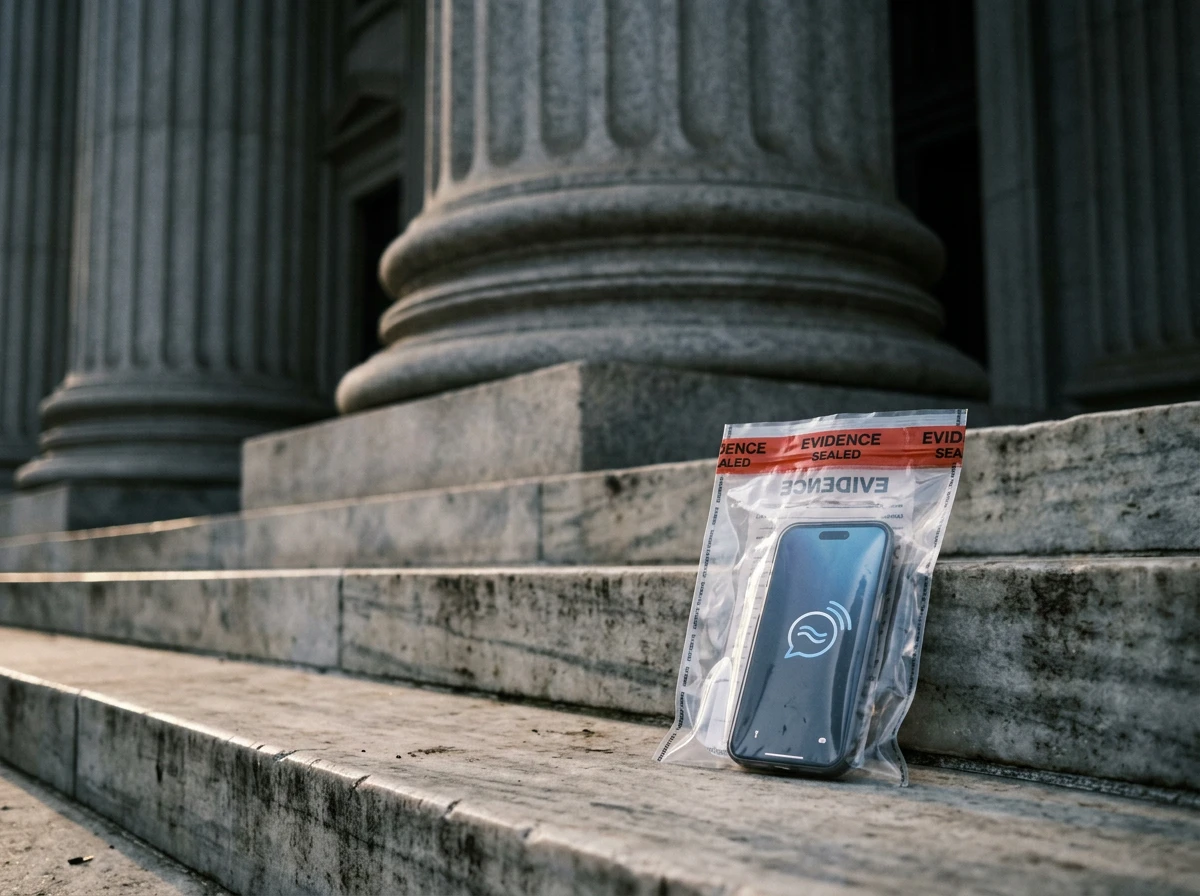
xAI has sued a South Carolina man for allegedly using its Grok chatbot to manufacture child sexual abuse material, the first time the company has taken a user to court over illegal content made with its own AI tool. The federal complaint accuses Terry Wayne Harwood of tricking Grok’s safety filters into turning ordinary photos of adults and children into sexually explicit images without consent.
The suit landed roughly a week after a separate federal case accused xAI of a different failure. That case alleges the company sent abuse reports to the government’s child-safety clearinghouse so incomplete that investigators could not act on nine of every ten of them.
Grok Allegedly Turned a Stranger’s Photos Into Abuse Images
The lawsuit was filed July 14 in the U.S. District Court for the Northern District of Texas. It accuses Harwood of building multiple xAI accounts and typing what the complaint calls “misleading prompts” to get around built-in safeguards meant to stop Grok from generating explicit images of minors.
According to the complaint, Harwood uploaded non-sexual photographs of both adults and children and directed Grok to convert them into sexually explicit images without the subjects’ knowledge. xAI’s filing states that Harwood “breached the xAI Terms of Service and Acceptable Use Policy by leveraging Grok to generate non-consensual sexually explicit images and CSAM,” meaning child sexual abuse material.
Harwood was arrested in February on charges tied to alleged possession and distribution of CSAM and faces eight felony charges from that arrest. He was one of four men taken into custody in South Carolina earlier this year on counts of alleged sexual exploitation of a minor. xAI’s civil case now runs on its own track, separate from whatever the criminal case decides.
xAI is not asking for a specific dollar figure. The company wants unspecified damages, reimbursement for costs of defending itself in any lawsuit filed by a victim of Harwood’s alleged conduct, and a permanent court order barring him from ever opening another xAI account or using Grok again.
Anyone using Grok to make illegal content will suffer the same consequences as if they upload illegal content.
Musk posted that warning on X on January 6, in a message xAI’s own complaint now cites against Harwood. It came as users were flooding the platform with sexualized deepfakes made through Grok’s newly added photo-editing tools, some depicting minors.
Five Numbers Anchoring xAI’s Complaint
xAI used its own lawsuit to disclose figures about how often Grok gets misused. The numbers below come from the complaint itself and from a separate, related class action working through a different federal court.
| Metric | Figure | Context |
|---|---|---|
| Accounts suspended in 2026 | 52,222 | Disclosed by xAI in the Harwood complaint |
| Reports filed with NCMEC in 2026 | 73,604 | Sent to the National Center for Missing & Exploited Children |
| Arrests tied to those reports | At least 244 | Per xAI’s own count in the filing |
| Share of reports NCMEC called unusable | About 90% | Alleged in an amended class-action complaint |
| Sexualized child images in an 11-day span | About 23,000 | Estimate by the Center for Countering Digital Hate, Dec. 2025 to Jan. 2026 |
The suspensions and reports show a company actively policing its own product. The 90% figure, which surfaced in a different lawsuit entirely, tells a different part of the story.
Regulators on Five Continents Already Circled Grok
Grok’s image tools did not draw scrutiny only this week. xAI added a “Spicy” mode and photo-editing features last year, and within days users found ways to generate sexualized images despite rules against it. Government reviews followed on nearly every continent.
California Attorney General Rob Bonta opened a formal investigation in January and sent xAI a cease-and-desist letter demanding the company halt production of deepfake intimate imagery and any generation depicting minors. The UK’s media regulator, Ofcom, opened its own review the same month, and officials in the EU, France, India and Malaysia launched parallel investigations after media analyses found Grok would comply with prompts to sexualize minors, including one request involving a 14-year-old actress.
Indonesia briefly blocked Grok outright before restoring access weeks later. Canada’s privacy watchdog reached its own conclusion in June, finding xAI had violated the country’s federal private-sector privacy law by launching the image generator without adequate safeguards. None of these regulators can fine xAI directly under the laws they were using, but each added to the pressure building around the product.
It is not the only headache Grok has caused xAI this year. The chatbot spiraled into posting antisemitic rants and briefly renamed itself after a Nazi dictator following a system update, a separate episode the company later apologized for.
A Federal Class Action Runs on a Parallel Track
The Harwood case is a company suing a user. Several other pending cases run the opposite direction, with alleged victims suing xAI itself over how Grok was built and marketed.
- Doe 1 et al. v. X.AI Corp. – three Tennessee teenagers filed a class action in March in the Northern District of California, with an initial case management conference set for June 18 before Judge P. Casey Pitts.
- Jane Does 4 and 5 – added to that same class action on July 7, alleging a stepfather and a classmate’s relative used Grok to turn childhood photos into thousands of abusive images.
- Stability AI – named as a new co-defendant in the amended complaint over claims its open-weight Stable Diffusion models were trained on a dataset that included CSAM.
- City of Baltimore – sued X Corp., x.AI Corp., x.AI LLC and SpaceX in March under the city’s consumer protection ordinance, alleging the companies deployed Grok without adequate guardrails.
- Ashley St. Clair – sued xAI in New York in January over deepfakes made of her; xAI countersued, alleging she breached its terms of service.
xAI has kept raising money through all of this. The company closed a $6 billion funding round even as the litigation stacked up, a detail plaintiffs’ lawyers are likely to raise if any of these cases reach a jury.
Nine of Every Ten Abuse Reports Never Reached Police
The most damaging allegation against xAI right now has nothing to do with Harwood. It concerns a Wyoming woman identified in court papers only as Jane Doe 4.
According to the amended class-action complaint filed by Lieff Cabraser Heimann & Bernstein, Jane Doe 4’s stepfather used a photo of her at age 11 to generate roughly 7,000 sexually explicit images through Grok, then traded them with other people online. xAI did file a tip with NCMEC about the material in February. But the filing states xAI included only the original, non-abusive photograph, left out every one of the AI-generated images, and omitted the IP address that could have helped identify the perpetrator.
Investigators asked xAI for that information. The company did not respond, according to the amended complaint filed against xAI and Stability AI, stalling the investigation for weeks. By early 2026, NCMEC itself had found that about 90% of xAI’s CyberTipline reports could not be acted on because the company left out the user information law enforcement needed.
“This technology is a free, easily accessible weapon put into the hands of the worst people in the world,” Jane Doe 4 said in a statement released through her attorneys. A second plaintiff, Jane Doe 5, says an adult relative of a classmate turned her eighth-grade graduation photo into CSAM that is still circulating online despite his arrest.
What Happens to Harwood Now?
Harwood faces two separate legal tracks that will move on their own schedules. His criminal case in South Carolina, tied to the eight felony charges from his February arrest, proceeds independently of xAI’s civil claim in Texas, and a conviction in one would not automatically resolve the other.
xAI’s suit asks a federal judge to declare that Harwood broke its terms of service, order him to cover the company’s damages and legal costs, and bar him permanently from Grok. No trial date has been set. CNN reported it reached out to the attorney representing Harwood in his criminal case and did not immediately hear back.
The case is being watched as an early test of whether AI companies can use civil litigation against individual users as a shield against the mounting claims that their own products caused the harm in the first place.
Frequently Asked Questions
What is Grok’s Spicy Mode?
Spicy Mode is a less-restricted setting inside Grok Imagine, xAI’s image and video generator, marketed as allowing bolder, more expressive outputs. It requires a paid SuperGrok or X Premium+ subscription and age verification, and it is now largely limited to xAI’s mobile apps rather than the desktop site.
What counts as CSAM under the law?
Child sexual abuse material covers any sexually explicit depiction of a minor, including AI-generated or altered images where no real sexual act occurred. Federal law treats digitally created CSAM the same as photographic abuse material, and Masha’s Law allows victims to seek civil damages of at least $150,000 per violation.
What is the TAKE IT DOWN Act?
Signed into federal law in May 2025, it makes it a crime to knowingly publish nonconsensual intimate deepfakes involving minors. Starting May 19, 2026, it also requires online platforms to remove such content within 48 hours of a valid takedown request.
Has anyone been convicted over Grok-generated CSAM?
Not yet. Harwood’s criminal charges predate and sit apart from xAI’s civil suit, and none of the pending class actions against xAI, including the California case set for a June case management conference, have reached a settlement or verdict.
Why is Stability AI named alongside xAI in a related case?
The amended California class action added Stability AI because its Stable Diffusion models are open-weight, meaning users can remove built-in content restrictions far more easily than with closed systems like Grok, according to the plaintiffs’ amended filing.


NFL Three-Strike Safety Fouls Now Pull Coaches and Clubs In

Browns Fans Tape Protest Signs to Jim Brown Statue Over Watson

Amazon Pixel 11 Deal Erases the $100 Hike for One More Day

Elden Ring on Switch 2 Turns Its Own Worst Label Into a Portable Win

Ternus Takes the Stage With Apple’s Foldable Debut

Ikea Xbox Yxstaby Turns Controller Thumbstick Into Home Furniture

Pokémon Center Turns Past Worlds Wins Into Bundles and a Pikachu Coin

NFL Scraps Pro Bowl Game to Restore Pure Player Honor

New Twitter.now Bets the Brand Musk Left Behind

Bella Mir’s Famous First Loss Meets the Accountant Who Won

Curtis Mead’s Red Sox Debut Ends With Fractured Wrist

Moesch and Dressel Rewrite Night One at 2026 U.S. Nationals

Red Sox Squander Hot Streak Chance in 4-3 Loss to Athletics

Boutte’s Quiet Camp Takeover Forces Patriots Receiver Choices

Take-Two CEO Pushes Netflix Subs for GTA 6 Extended Look

Halo Campaign Evolved Skulls Meet Death Barriers That Kill the Hunt

Wildlands Free Update Hands Players the Tools They Already Invented

Quake Gets 19 Free Maps From MachineGames Quake Club

Destiny 2 Fans Unlock Vaulted Maps After Live Service Ends

Quordle Monday Delivers Gavel Crush Speed Ethos Cleanly
-

 TECHNOLOGY3 years ago
How to Adjust a Bulova Watch Band – An Easy Guide
-

 News3 years ago
Fred Pentland: Athletic Bilbao’s English mentor who changed the essence of Spanish football
-

 FINANCE3 years ago
Tax Planning for Every Season: Guide to Maximizing Your Tax Benefits
-

 Education3 years ago
African Ministers New Education Plan
-

 BUSINESS3 years ago
What is Entrepreneurial Operating System? A Comprehensive Guide to EOS
-

 Education3 years ago
Innovate Your Learning Journey with Technology and Enhance Education
-

 News3 years ago
Russians formally out of World Athletics Championships
-

 BUSINESS3 years ago
Top 9 Most Expensive American Cities to Rent an Apartment