
Health
Taco Bell Pulls Lettuce as Michigan Cyclosporiasis Cases Top 3,300
Michigan’s cyclosporiasis outbreak has topped 3,300 cases as several Taco Bell locations quietly pulled lettuce while investigators zero in on salad greens.

Michigan’s cyclosporiasis outbreak has infected 3,309 people since June 22, and six metro Detroit Taco Bell locations have quietly stopped serving lettuce and cilantro. No government agency or Taco Bell itself has officially tied the chain to the outbreak. The state’s own investigation, though, is pointing the same direction: lettuce.
Corporate Taco Bell stayed silent for days after employees at those six restaurants started pulling the greens on their own. It finally put a statement in writing on July 14, the same day Michigan’s case count blew past 3,300.
Six Detroit-Area Taco Bells Quietly Drop the Lettuce
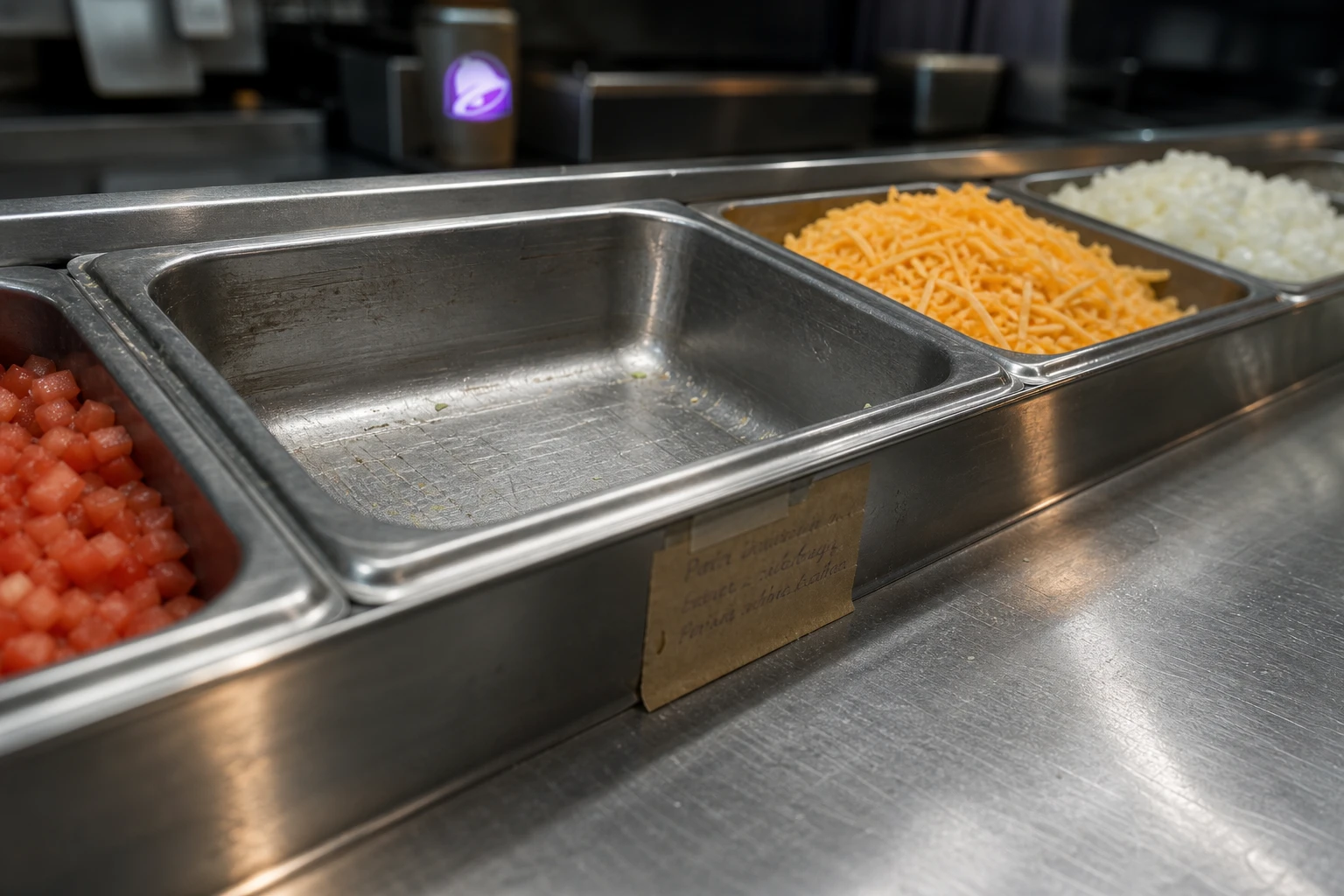
The Detroit Free Press visited six metro Detroit-area Taco Bell restaurants on July 8 and 9. Employees at every one, in Trenton, Woodhaven, Wyandotte, Taylor, Riverview and Southgate, said the same thing: fresh lettuce and cilantro were off the menu.
None cited a company memo or a formal recall. They simply were not serving the items anymore.
The U.S. Food and Drug Administration (FDA, the federal agency that regulates food safety) told the Detroit Free Press in a July 9 email it was ‘not aware of any voluntary recall made by Taco Bell related to lettuce or cilantro associated with Cyclospora.’ The agency said it and the Centers for Disease Control and Prevention (CDC, the federal public health agency) ‘are actively engaged with state partners to identify the source of the growing number of illnesses.’
Taco Bell’s corporate media relations office did not respond to phone and email requests asking why the items had disappeared.
Michigan Points a Finger at Lettuce
The Michigan Department of Health and Human Services (MDHHS) said July 13 it was zeroing in on lettuce and other salad greens as the outbreak’s likely source, even without a confirmed culprit.
Although we do not have a definite product identified as the source of the outbreak, we want to let Michiganders know what we have learned so far so they can take steps to protect their families. Early information has shown lettuce as a common product that regularly comes up during the investigation. We will continue to provide updates as we learn more.
Dr. Natasha Bagdasarian, Michigan’s chief medical executive, said the line in the July 13 statement.
‘Current results point to lettuce or salad greens as a potential source for this outbreak, although other food items cannot be completely ruled out,’ MDHHS spokesperson Lynn Sutfin wrote in a July 14 email to the Detroit Free Press. No specific grower or supplier has been identified.
The state’s public timeline shows how fast the picture changed:
- June 22: Michigan’s official case count for the outbreak begins.
- July 1: MDHHS issues its first public notice of the outbreak.
- July 8 to 9: The Detroit Free Press visits six metro Detroit Taco Bell locations and finds lettuce and cilantro already pulled.
- July 9: The FDA says it knows of no voluntary Taco Bell recall tied to the outbreak.
- July 13: MDHHS publicly names lettuce and salad greens as the likely common thread; the state count reaches 2,640.
- July 14: Michigan’s count climbs to 3,309, and Yum Brands confirms Taco Bell has pulled select items at select restaurants.
Corporate Silence, Then a Statement
Taco Bell’s corporate parent, Yum Brands, confirmed the pullback in writing for the first time on July 14, five days after the Detroit Free Press first asked corporate media relations why local restaurants had stopped serving lettuce and got no answer.
Yum said Taco Bell had voluntarily and temporarily removed a short list of items at select restaurants: lettuce, cilantro, pico de gallo and guacamole. The company was careful about what it did not say. Taco Bell told CNBC that public health officials have not confirmed a link between the outbreak and its restaurants, or any specific ingredient, supplier or retailer.
No FDA recall has been issued for lettuce, cilantro or any other product connected to the outbreak.
The Numbers Behind Michigan’s Worst Outbreak in Decades
Michigan typically logs about 50 cyclosporiasis cases in a full year. This outbreak has produced more than 66 times that total in barely three weeks, and health officials do not expect it to slow down soon.
Of the people infected since June 22, at least 44 have been hospitalized, according to MDHHS. No deaths have been reported. Confirmed cases now span roughly 40 counties, with Monroe County reporting the most at 215.
| Location | Reported Cases | Detail |
|---|---|---|
| Michigan | 3,309 since June 22 | 44 hospitalized; already far beyond the state’s typical yearly total |
| Ohio | More than 500 | Northwest Ohio among the hardest-hit areas outside Michigan |
| New York | Nearly 400 | One of 31 states reporting cases to the CDC since May 1 |
| CDC four-state cluster | More than 400 genetically linked cases | Formally connects illnesses in Michigan, Ohio, West Virginia and Kentucky |
Michigan’s own running case count for the outbreak updates as lab-confirmed results arrive. The multistate cluster tracking for this outbreak run by the CDC counts only genetically linked illnesses, a narrower number than Michigan’s own tally, a gap regulators have not explained publicly.
Why Bagged Greens Keep Outrunning Investigators
Cyclospora cayetanensis does not behave like a typical foodborne bacteria. It resists routine chemical disinfection, a property that makes standard produce-safety protocols far less effective against it than they are against germs like salmonella.
Tracing the parasite back to a single farm is slower still. Symptoms can take up to two weeks to appear after exposure, and cyclospora’s genomic fingerprint is harder to sequence than more common pathogens. Some of the state public health labs that would normally run that testing have also faced budget cuts in recent years.
Past cyclosporiasis outbreaks in the United States have been traced to raspberries, fresh basil and bagged leafy greens, and each took weeks or longer to identify. A federal review of past investigations found that integrating genomic sequencing with old-fashioned interviews sped up source identification, but only in labs equipped to run both at once.
Cyclosporiasis cases rise every summer as fresh produce consumption climbs. This year’s surge has outrun that normal seasonal bump by a wide margin.
Is It Safe to Eat Salad Right Now?
Whole heads of lettuce are safer than pre-washed bagged blends, according to Michigan health officials, though no product has been formally recalled. Cooking leafy greens thoroughly is the only method proven to defeat the parasite. Raw bagged salad remains legal to sell and eat nationwide, but Michigan is actively urging residents to reconsider it.
- Skip pre-washed bagged salad and buy whole heads of lettuce instead, per MDHHS guidance.
- Cook leafy greens to at least 158 degrees Fahrenheit before eating them, since rewashing bagged lettuce will not remove the parasite.
- Watch for watery, sometimes explosive diarrhea, the outbreak’s signature symptom, and see a doctor if it does not resolve.
- Report suspected cases to a local health department so investigators can trace the source faster.
A darker thread has also spread online: posts framing the infection as a fast way to shed pounds. Doctors have pushed back hard, stressing cyclosporiasis is a parasitic infection that can land people in the hospital, not a shortcut to weight loss.
MDHHS officials say they expect the case count to keep climbing into August as lab-confirmed results catch up with symptom onset. Three weeks into the investigation, the source still does not have a name.


Walmart’s $50 Million Opioid Settlement Closes Case Without Admission

California Sues Over $120 Million Morro Bay Wind Lease Buyout

Gilead Bixlenvo FDA Nod Opens Single Pill Path for Complex HIV Cases

Meta’s $18B Kids Deal Forever Shields Data Used to Spot Under-13s

Lettuce Outbreak Drove Record Cyclospora Spike Across 20 States

Amazon Shaves $20 Off M6 Mac Mini Before It Even Ships

SpaceX Louisiana Port Tests Debt Markets on Orbital AI Scale

Microsoft High Lifts Indexes as Small Caps Crack Support

Apple Replays 2015 Saturday Midnight Preorder for iPhone 18 Pro

Updated COVID Shots Clear FDA but Access Friction Hits High-Risk Groups

Take-Two CEO Pushes Netflix Subs for GTA 6 Extended Look

Halo Campaign Evolved Skulls Meet Death Barriers That Kill the Hunt

Wildlands Free Update Hands Players the Tools They Already Invented

Destiny 2 Fans Unlock Vaulted Maps After Live Service Ends

Quake Gets 19 Free Maps From MachineGames Quake Club

Stripe Bid Shows PayPal Moat Cracked After Years of Slide

Quordle Monday Delivers Gavel Crush Speed Ethos Cleanly

Tyson’s Five-Year Utah Plant Falls to Cattle Shortage Reckoning

Silver Lake Workday Talks Signal Private Floor for Software

Kennedy Lewis Takes Majority Control of The Greenbrier in $500M Deal
-

 TECHNOLOGY3 years ago
How to Adjust a Bulova Watch Band – An Easy Guide
-

 News3 years ago
Fred Pentland: Athletic Bilbao’s English mentor who changed the essence of Spanish football
-

 FINANCE3 years ago
Tax Planning for Every Season: Guide to Maximizing Your Tax Benefits
-

 Education3 years ago
African Ministers New Education Plan
-

 BUSINESS3 years ago
What is Entrepreneurial Operating System? A Comprehensive Guide to EOS
-

 Education3 years ago
Innovate Your Learning Journey with Technology and Enhance Education
-

 News3 years ago
Russians formally out of World Athletics Championships
-

 BUSINESS3 years ago
Top 9 Most Expensive American Cities to Rent an Apartment