
BUSINESS
China’s Capital Goods Surge Locks Factories Worldwide Into Its Supply
China’s intermediate goods exports rose 25% and capital goods 12% in the first five months of 2026, embedding its machinery deeper in global plants despite tariffs.

China’s exports of intermediate goods jumped 25% and capital goods 12% in the first five months of 2026, while consumer goods rose only 4%, according to a McKinsey Global Institute analysis of official customs data. The country is shipping more chips, precision machinery and robotic arms that keep other nations’ plants running.
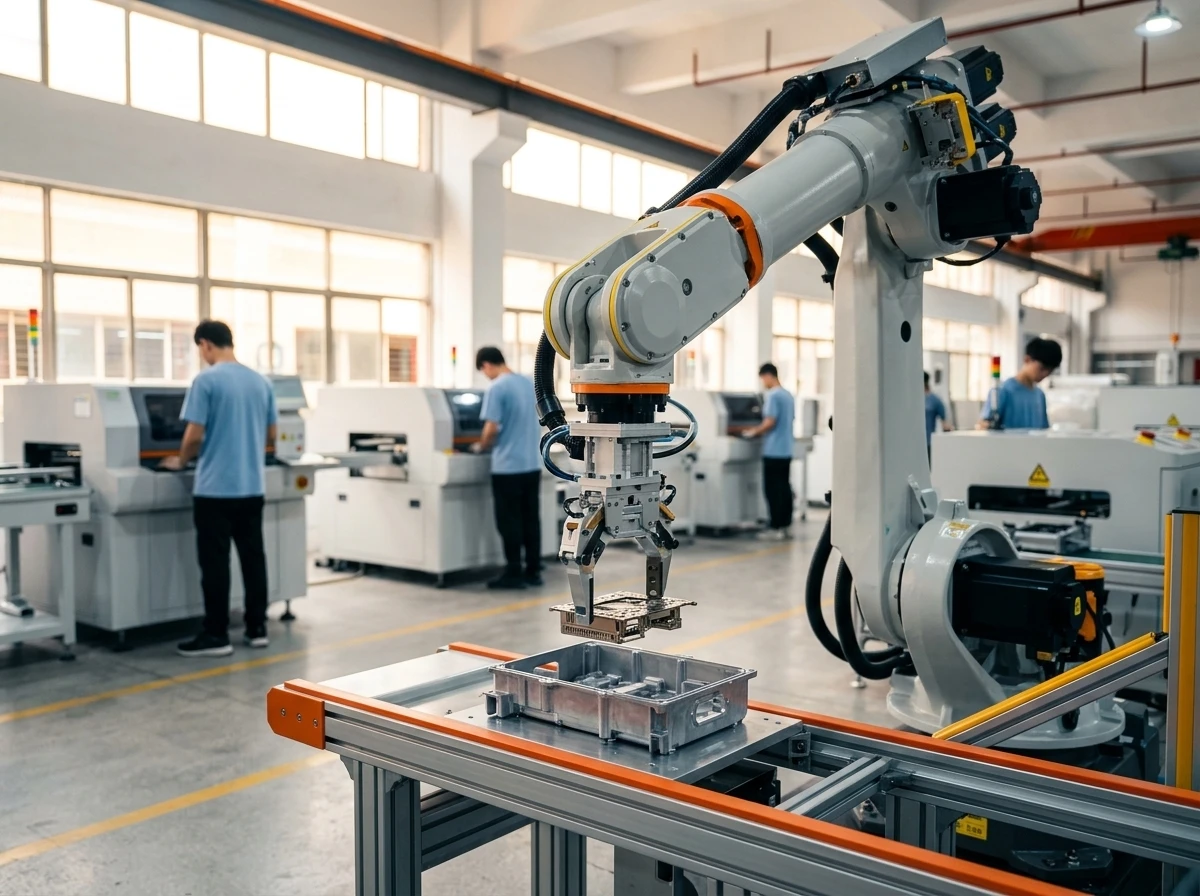
Dongguan, the Pearl River Delta city once known for toys and shoes, now sits at the center of this upstream shift. Local firms sell the tools that power factories from Vietnam to Mexico.
The gap between those growth rates is the story. Intermediate and capital shipments are rising several times faster than finished consumer lines. That tilt reshapes what “Made in China” means for buyers abroad.
Dongguan Builds the Machines Other Plants Run
Decades ago Dongguan helped make China the world’s low-cost assembly floor. Today its factories turn out the higher-value gear that underpins manufacturing elsewhere. Frank Jiang, vice president of international business at Topstar, one of China’s largest industrial robotics and machinery makers, put the change plainly.
In the past, advanced manufacturing was led by Germany and Japan. But we believe our technology has caught up. For many products, we have surpassed them.
Jiang spoke as Topstar expands its global footprint. The company now reports operations spanning over 50 countries, supplying injection-molding auxiliaries, robots and full factory solutions to clients in 3C electronics, automotive and medical sectors.
McKinsey Global Institute describes the broader pattern as China expanding its factory to the factories role, ramping shipments of industrial components and capital goods to fast-growing emerging economies.
The city’s old staples still ship, yet they no longer set the pace. Toys, footwear and garments once defined Dongguan’s export identity. Precision machinery and robotic systems now do. Local capacity that once finished consumer goods now equips plants that finish those goods somewhere else.
That move upstream keeps Chinese firms inside foreign production even when final assembly leaves Chinese soil. The customer list stretches across electronics, auto and medical lines, the same sectors that once bought finished Chinese output.
Where the Export Numbers Moved
Official Chinese customs figures for the first half of 2026 show the same tilt. Mechanical and electrical products, the broad category that includes much of the intermediate and capital equipment, rose sharply while many finished consumer lines stagnated or fell.
| Category | Jan-Jun 2026 Value Growth YoY | Notable Detail |
|---|---|---|
| Mechanical and electrical products | +24.5% | Core of intermediate and capital goods |
| Electronic integrated circuits | +96.1% | Value more than doubled |
| Automatic data processing machines and parts | +41.3% | Servers, computers, components |
| Motor vehicles (incl. chassis) | +53.9% | Volume and value both surged |
| Hi-tech products | +38.5% | Broad advanced category |
| Garments and clothing accessories | -0.7% | Classic consumer line |
| Footwear | -8.6% | Volume and value down |
| Toys | -11.3% | Long-time Dongguan staple |
The mechanical and electrical products up 24.5% line sits at the heart of the new engine. Integrated circuits alone nearly doubled in export value. That growth supplies the chips and boards that feed assembly lines far outside China.
Read side by side, the table shows two export economies running at once. Hi-tech products, vehicles, data-processing machines and circuits all post double-digit or triple-digit gains. Garments, footwear and toys, the classic consumer set, post flat or negative results.
The contrast is not seasonal noise. It matches the McKinsey split between fast intermediate and capital growth and slow consumer growth. Customs data and the institute’s framing point the same way: value is migrating into the gear that other factories need to operate.
Tariffs Hit Finished Goods Harder Than the Tools
Most recent tariff rounds target completed consumer items: cars, appliances, electronics ready for retail. Intermediate inputs and capital equipment often face lower or different barriers, or they move through third countries before final assembly.
The result is a second-order resilience. A Vietnamese or Mexican plant that once imported Chinese finished goods may now import Chinese robotic arms, molds and control systems to make those goods itself. The Chinese content stays inside the factory walls. Diversification of final assembly still leaves Chinese machinery and components embedded upstream.
Crowd discussion on X has sharpened the same point. Analysts note China now ships the mature-node chips, packaging, power equipment and grid gear that form the “boring layer” every data center and factory needs. One widely shared observation put Chinese integrated-circuit exports in the first four months of 2026 above Saudi oil export values for the same stretch. The more other economies race to build capacity, the more they buy the tools and parts from the same source.
- Finished consumer goods draw the heaviest tariff focus.
- Intermediate inputs and capital equipment often clear under lower or different rules.
- Third-country assembly can further obscure origin of the embedded tools.
- Capacity races abroad raise demand for the same Chinese components and machines.
Policy designed to cut reliance on Chinese retail products therefore leaves a wide channel open. The channel carries the molds, controllers, chips and arms that make those products elsewhere. Trade friction at the shelf does not automatically reach the factory floor that stocks the shelf.
Germany and Japan Feel the Pressure First
Advanced manufacturing once belonged to a short list of countries. Germany and Japan long dominated high-end machine tools, precision components and industrial robots. That edge is narrowing.
In 2025 China exported $8.03 billion of industrial robots and claimed a record 11 percent global robot export share, overtaking Germany for second place behind Japan. ASEAN took a third of China’s robot export volume by quantity. India became the single largest destination country at 15.7 percent.
First-half 2026 data continue the climb. Industrial robot exports reached roughly 6.29 billion yuan ($930 million), up 18.6 percent year on year, with shipments to 141 countries and regions. Full robot-category exports in the first five months approached 20 billion yuan. China became a net exporter of industrial robots in 2025 for the first time.
Japanese technicians who recently tore down a Chinese humanoid unit publicly conceded that catching up in the short term looks difficult. Domestically China already accounts for more than half of global industrial robot deployments. The export wave simply extends that scale overseas.
- 2025: China posts $8.03 billion in industrial robot exports, takes 11 percent global share, passes Germany for second place, and becomes a net exporter for the first time.
- Q1 2026: Industrial robot export value jumps 42 percent.
- First five months 2026: Full robot-category exports approach 20 billion yuan.
- H1 2026: Industrial robot exports hit about 6.29 billion yuan ($930 million), up 18.6 percent, reaching 141 countries and regions.
Japan still leads overall robot export value. The share gap is closing from below. Germany, once the clear number two, now competes with a rival that already dominates home deployments and is scaling outbound shipments fast. Mid-to-high segments that long looked secure face direct price and volume pressure.
Who Buys the New Chinese Factory Kit
Emerging manufacturing hubs form the core customer base. The destinations map cleanly onto places that have absorbed final-assembly work shifting out of China.
- ASEAN nations taking larger shares of robot and machinery shipments for electronics and auto plants.
- India as top single market for Chinese industrial robots, feeding its own production push.
- Mexico and other near-shoring sites needing capital equipment for North American-bound goods.
- Middle East and Russia markets for both industrial and specialized robots.
- European buyers still purchasing Chinese intermediate inputs even as finished-goods friction rises.
These buyers gain speed and cost. They also deepen structural dependence. Once a production line is tooled with Chinese robots, controllers and precision parts, switching suppliers means re-engineering the process, re-training staff and absorbing downtime. The lock-in compounds with every new plant that opens.
Geography reinforces the pattern. ASEAN already takes a third of Chinese robot export volume by quantity. India alone accounts for 15.7 percent as the top single country destination. Mexico’s near-shoring wave needs capital equipment on short lead times. Each of those routes converts assembly relocation into fresh demand for Chinese kit.
European purchases of intermediate inputs add another layer. Finished-goods friction rises, yet the parts and machines that feed European lines keep moving. The customer map is not a single bloc. It is a set of parallel industrial build-outs that share one major equipment source.
Robots, Chips and the Next Layer of Control
The product mix itself is moving up. Topstar’s recent open day in Dongguan showcased a humanoid robot already working in injection-molding workshops serving more than 15,000 industrial clients. Core components are machined to tolerances thinner than a human hair. The company pairs that hardware with AI vision and full-factory solutions.
Stats snapshot of the robotics push:
- $8.03 billion Chinese industrial robot exports in 2025, 11% global share.
- +42% industrial robot export value in Q1 2026 alone.
- 18.6% growth in industrial robot exports H1 2026.
- Net exporter status first achieved in 2025.
Chips tell a parallel story. Electronic integrated-circuit exports nearly doubled in the first half of 2026. Combined with computers and parts, they have driven large slices of recent monthly export surges. These are not always the most advanced frontier nodes, yet they are the volume layers that power everything from EVs to data centers.
Humanoid units in live workshops signal where the hardware path is heading. Tolerances thinner than hair, paired with AI vision, turn standalone arms into full-factory packages. Clients in 3C electronics, automotive and medical sectors already buy that stack from the same suppliers.
Mature-node chips, packaging and power gear form the quiet base under both robots and data centers. Export value in integrated circuits more than doubled in the half-year window. That volume layer is what every new plant and every new server hall still needs in bulk.
Switching Costs Bind Foreign Plants to Chinese Kit
Lock-in is not abstract. A line built around Chinese robots, molds and controllers carries sunk costs in tooling, software interfaces and trained crews. Replacing that stack means redesigning process steps, requalifying output and stopping production while the changeover runs.
Buyers who chose Chinese kit for speed and cost therefore face a second bill if they later try to exit. Downtime, retraining and re-engineering all hit at once. The longer the line runs, the more process knowledge accumulates around the original equipment.
That dynamic turns each new factory opening into a multi-year demand stream. Installation is only the first order. Spares, upgrades, software and expansion cells follow. The supplier relationship deepens after the ribbon cutting, not only at the moment of sale.
Emerging hubs chasing rapid capacity growth are the most exposed. They need working lines quickly. Chinese capital goods meet that clock. Once the lines are live, the same hubs become repeat customers for the parts and systems that keep throughput stable.
Upstream Supply Outlasts Finished Goods Shifts
Assembly can move. The machines that make assembly possible move more slowly. When final production shifts from China to Vietnam, Mexico or India, the robotic arms, precision parts and control systems often still originate in Chinese plants such as those in Dongguan.
McKinsey’s factory-to-the-factories frame captures the mechanism. China expands shipments of industrial components and capital goods precisely into the economies absorbing the relocated assembly work. Diversification of the last step leaves the earlier steps concentrated.
Tariff design reinforces the split. Barriers rise around cars, appliances and retail electronics. Barriers stay lower, or routes stay more open, for the intermediate and capital goods that feed third-country plants. Policy pressure and commercial logic point in the same direction: finished goods face friction, tools face demand.
The implication is durability. A trade map that only tracks consumer shipments will miss the deeper exposure. Every plant tooled with Chinese equipment carries that exposure inside its walls, regardless of the passport on the finished box.
Factories Outside China Now Depend on Chinese Tools
The second-order consequence is straightforward. Policy makers who spent years trying to reduce reliance on Chinese finished goods now confront a deeper form of exposure. Their own manufacturers need the machines, molds, robots and components that China increasingly dominates.
Germany’s machine-tool and robot exporters face direct competition in the mid-to-high segments they once owned. Japan still leads overall robot export value but watches its share compress. Emerging economies gain industrial capacity faster, yet that capacity runs on Chinese capital goods.
Tariff walls built around consumer products leave the gates open for the equipment that makes those products. Every new factory that opens in a third country becomes another customer for Dongguan’s robotic arms and Guangdong’s precision lines. The export machine grows more formidable precisely because it no longer needs to ship only the final item. It ships the means of production itself.
Consumer lines such as garments, footwear and toys already show flat or falling export values. Mechanical and electrical products, circuits, data-processing gear and hi-tech categories post the gains. The mix shift is visible in the customs table and in the McKinsey growth rates alike.
That is the quiet transformation underway in 2026. China is no longer merely the world’s factory floor. It is becoming the supplier of floors everywhere else.


iPhone 18 Pro Price Hike Hands Wins to Memory Makers

Apple Lifts Trade-In Credits Ahead of Costly iPhone 18 Cycle

Hisense Ships Dolby Vision 2 First and the Brightness Catch

Quake Gets 19 Free Maps From MachineGames Quake Club

SpaceX Moon Factories Aim to Break Earth’s AI Limits

OpenAI Bets $300 Donut Speaker Can Beat Smart Home Economics

Marantz Cinema Series 2 Puts Dirac and FreeSync on Midrange Boxes

AirPods Pro 3 Hit $190 as Camera Models Loom Pricier

Ford Places Its $30K Fathom Bet on a New Production Era

Seiko Wraps Its Speedtimer in Edo Purple for 145 Years

Doom Studio id Software Cuts Half Its Staff in Xbox Layoffs

Nintendo Switch Online Adds Four Classics and One Japan-Only Title

Meta’s Muse Image Lets Anyone Use Your Instagram Photos in AI

Pink Bearista Cup Returns July 13 as Starbucks Pink Vibes Drops

Samsung Sets Galaxy Unpacked for July 22 in London With a Wider Fold

Marine Cloud Brightening Could Weaken Super El Niños, Study Says

US Trade Deficit Jumps to 14-Month High as AI Spending Lifts Imports

Micron Stock Just Entered a Bear Market. Is It Time to Buy?

Samsung’s $1,230 Galaxy Unpacked Deal: How It Stacks Up

Meta Tests ‘Super Sensing’ AI Glasses That Record Every Moment
-

 TECHNOLOGY3 years ago
How to Adjust a Bulova Watch Band – An Easy Guide
-

 News3 years ago
Fred Pentland: Athletic Bilbao’s English mentor who changed the essence of Spanish football
-

 FINANCE3 years ago
Tax Planning for Every Season: Guide to Maximizing Your Tax Benefits
-

 Education3 years ago
African Ministers New Education Plan
-

 BUSINESS3 years ago
What is Entrepreneurial Operating System? A Comprehensive Guide to EOS
-

 Education3 years ago
Innovate Your Learning Journey with Technology and Enhance Education
-

 News3 years ago
Russians formally out of World Athletics Championships
-

 BUSINESS3 years ago
Top 9 Most Expensive American Cities to Rent an Apartment