
BUSINESS
RWE Takes $1.22 Billion Exit From Humboldt Wind Lease
German developer RWE exits three U.S. offshore wind leases including Humboldt for $1.22 billion and shifts capital to gas.

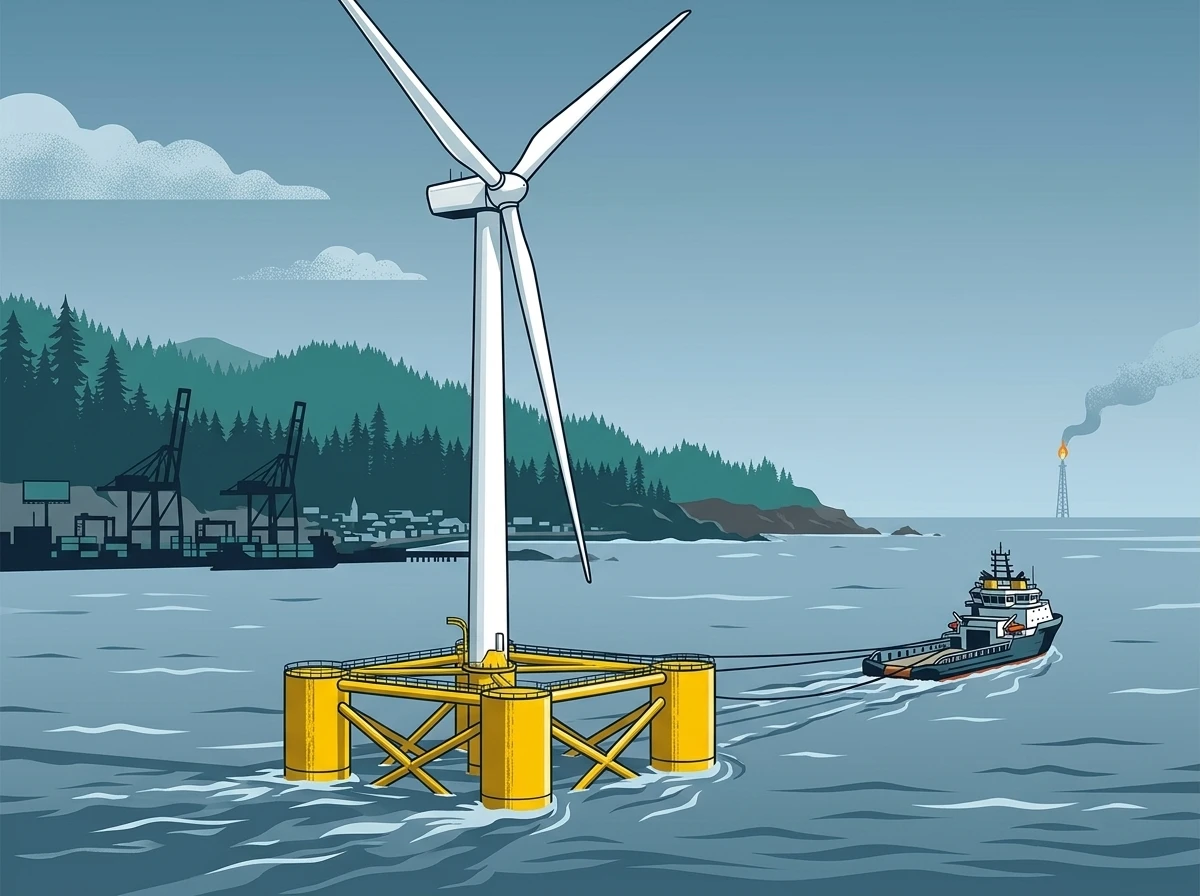
German energy giant RWE will take $1.22 billion from the U.S. government to drop three offshore wind leases, including the one off Humboldt Bay, and plow the capital into natural gas and LNG instead. The deal, announced August 6, is the largest single buyback in a Trump administration series that has now reached nearly $4 billion.
North Coast elected officials immediately labeled it a taxpayer-funded sham that kills local jobs and California’s clean-power timeline. The harbor district says the heavy-lift terminal still moves forward.
The $1.22 Billion Exit Terms
RWE U.S. Offshore reached a settlement with the Department of the Interior to relinquish leases in the New York Bight, off California (the Humboldt-area Canopy project), and off Louisiana. The company said it had invested more than $1 billion and years of planning across the three sites.
In RWE’s full settlement announcement, executives stated there is “no path forward to permit these projects in the U.S. for the foreseeable future.” The cash resolves legal claims and frees capital for projects that can advance with certainty.
- $1.22 billion settlement payment to RWE
- More than $1 billion previously invested by the company in the leases and development
- About 7 gigawatts of potential capacity across the three leases, enough for more than 5 million homes
- $900 million RWE stake (16 percent indirect) in a Louisiana LNG project plus $300 million in turbine reservations for 15 U.S. gas peaker plants
The arithmetic is straightforward. The settlement roughly matches what RWE already spent. It converts sunk development costs into liquid capital that can move at once into projects the administration will permit. Legal exposure ends. Balance-sheet uncertainty ends. The company walks away whole and redirects the same dollars.
Interior Secretary Doug Burgum welcomed the move, saying Americans deserve energy built on common sense rather than costly subsidies or technologies that cannot meet current demand. He framed the agreement as supporting dependable baseload power and affordable electricity.
Local Officials Call It a Sham
Rep. Jared Huffman, whose district includes the Humboldt site, issued a blistering statement. He called the administration the most corrupt and lawless in history and said it was using more than $1 billion in taxpayer dollars to kill clean-energy projects that would create thousands of good jobs and lower bills for Californians.
“Like a mob boss, Trump tightened the screws on RWE and, shamefully, the company capitulated,” Huffman said. He promised the settlements would be reversed by courts or future Congress and that participants would own the shame.
Assemblymember Chris Rogers was equally direct: “While RWE’s shareholders get their bag, the rest of us get the finger. We the people are paying for this buyout, and what we get in return is more expensive energy, backwards climate policy, and greater harm to our communities.” He added that every American should be enraged.
State Sen. Mike McGuire called the action “utter BS” and said the overall California RWE project would have delivered clean, reliable wind energy enough to power 5 million homes plus good rural jobs. He described the forced reinvestment in fossil fuels as total buffoonery ripped from a political satire script.
Tom Wheeler of the Arcata-based Environmental Protection Information Center put the trade-off bluntly: the winners today are the fossil fuel industry and the losers are Humboldt County and the planet. He still argued the administration can only delay, not suppress, the future of locally built offshore wind.
The shared complaint is simple. Public money is paying a private developer to abandon leases the same government once sold. Local job and climate timelines absorb the loss while shareholders recover their stake.
RWE Moves the Capital Into Gas
The settlement is not a pure cash-out. RWE is redeploying into U.S. gas infrastructure. The $900 million Louisiana LNG commitment helps fund terminal construction. The $300 million turbine deal locks in equipment for a pipeline of 15 natural-gas peaking plants aimed at growing electricity demand and grid reliability.
RWE Americas separately plans roughly €17 billion of U.S. investment over six years, lifting generation capacity from about 13 GW across 27 states today to 22 GW by 2031. Flexible gas peakers sit alongside continued solar, onshore wind and storage growth. The company stressed it remains a major global offshore wind player with 18 farms operating and more under construction overseas, including new UK capacity.
That split is deliberate. Overseas offshore wind keeps growing. Inside the United States the near-term dollars now favor gas and LNG, the fuels the current federal government will green-light. Peak capacity rises. Fuel mix shifts.
Earlier buybacks followed a similar pattern: developers receive lease refunds or settlements conditioned on or paired with fossil redirects. The series now includes TotalEnergies (nearly $1 billion), Golden State Wind and Bluepoint Wind (nearly $900 million combined), Invenergy ($765 million) and others. RWE’s is the largest single check.
| Developer | Approx. Settlement | Leases Dropped | Noted Redirect |
|---|---|---|---|
| RWE | $1.22 billion | 3 (NY, CA, LA) | LNG stake + gas peakers |
| TotalEnergies | nearly $1 billion | 2 | fossil fuels |
| Golden State / Bluepoint | nearly $900 million | multiple | equal fossil investment |
| Invenergy | $765 million | 4 | lease-fee reimbursement |
Crowd reaction on X framed the economics simply: the government is paying companies not to build wind so they can build gas instead, with taxpayers covering the exit fee on leases originally sold at auction.
What California Stands to Lose
California has a statutory goal of a 100 percent zero-carbon electricity grid. Offshore wind is written in as a major contributor toward 25,000 megawatts by 2045. The five West Coast lease areas auctioned in 2022 carried combined potential of roughly 4.6 GW. RWE’s Humboldt parcel was one of two in the Humboldt Wind Energy Area; the other went to California North Floating.
Losing even one commercial-scale floating project removes a block of future baseload-equivalent renewables, construction jobs, port activity and supply-chain spending that rural Humboldt had counted on. Lower utility bills for the wider state were part of the original pitch. Transmission and port upgrades already in motion now face a smaller near-term project pipeline.
- One commercial-scale floating project and its multi-gigawatt contribution toward the 25,000-megawatt offshore target
- Construction payrolls, port activity and supply-chain spending Humboldt County had counted on
- A clearer path to lower utility bills that formed part of the original statewide pitch
- Near-term utilization of transmission and port upgrades already moving forward
The federal cancellation of an earlier $400 million-plus grant for the Humboldt Bay Offshore Wind Heavy Lift Multipurpose Marine Terminal forced the state to step in with its own funding. That terminal remains the physical keystone for assembling and deploying floating turbines.
Grid planners must now source replacement megawatts from other technologies or other leaseholders, or accept a slower climb toward the 2045 mandate. Every year of delay compounds the shortfall the statute was written to close.
Humboldt’s Terminal Still Moves Ahead
Humboldt Bay Harbor District Executive Director Chris Mikkelsen told local reporters the district will continue under strong direction from the state of California. The project is in environmental review. It is too soon to know exactly how losing one lease changes the terminal’s scale or schedule, but he remains optimistic.
Projects can be built smaller or phased as community comfort and market appetite grow, he said. Timelines might stretch five years. “One president can’t change the demand for energy that we as Americans have. We know we have to get energy from new sources.”
That stance keeps local blue-collar construction and long-term operations jobs on the table even if the first commercial turbines arrive later. State money already plugged the federal grant hole, so the physical infrastructure track is not frozen.
The terminal’s value does not vanish with one lease. It remains the assembly and deployment hub for whichever floating-wind developer eventually holds the water. Scale may shrink and schedules may slip, yet the concrete and cranes stay on the path the state is funding.
How the Leases Were Won in 2022
- December 6-7, 2022, BOEM runs the first California offshore wind auction for five lease areas totaling 373,268 acres with potential for about 4.6 GW.
- Auction close, RWE Offshore Wind Holdings bids $157.7 million for 63,338 acres (OCS-P 0561) in the Humboldt WEA; California North Floating takes the sister parcel for $173.8 million. Combined Humboldt area exceeds 132,000 acres roughly 20 miles west of Eureka.
- Post-auction, RWE assigns the lease to Canopy Offshore Wind, LLC. Progress reports begin; no Construction and Operations Plan has been filed.
- 2025-2026, Federal grant for the heavy-lift terminal is cancelled; California backfills funding. Trump administration begins systematic lease buybacks.
- August 6, 2026, RWE settlement announced; company exits all remaining U.S. offshore wind positions.
Full lease documents and status updates remain on the BOEM lease page for OCS-P 0561. The page still lists communications plans, fisheries coordination and multiple progress reports submitted under the original lease terms.
The Buyback Series Keeps One Pattern
RWE’s exit is the largest check, yet it follows the same template already used with TotalEnergies, Golden State Wind, Bluepoint Wind and Invenergy. Each developer surrenders leases. Each receives a large federal payment. Most pair the cash with fresh fossil commitments or simply leave the wind business in U.S. waters.
The cumulative total now approaches $4 billion. That sum once represented auction revenue and private development risk. It now functions as a public off-ramp from offshore wind into gas and LNG. The policy signal is consistent across every deal on the list.
Companies facing an explicit “no path forward” on permits take the certainty of cash and the runway of gas projects the administration prefers. Taxpayers underwrite the pivot. The leases return to federal inventory or stay idle until policy shifts again.
Fossil Fuel Industry Collects the Win
RWE shareholders receive cash certainty and a clear runway into LNG and peaking gas that the current federal government prefers. The broader gas and LNG sector gains both capital and political tailwinds. Taxpayers fund the exit from leases the same government once sold at competitive auction.
Humboldt County loses near-term project certainty, associated construction payrolls and a clearer path to the state’s 2045 offshore wind target. California’s grid planners must replace the lost megawatts elsewhere or accept a slower ramp. Environmental groups see a delayed climate contribution and a precedent that other developers may follow.
Lawsuits already challenge earlier buybacks as illegal. Huffman and others vow court and congressional reversals. Whether those succeed will decide if the leases can be re-offered or the settlements stand. In the meantime the money has moved and the gas investments are underway.
States fighting other Trump energy rollbacks, including Colorado’s parallel fight on Trump climate rules, are watching the same legal and political battlefield. For Humboldt the next concrete steps remain local: keep the terminal on schedule and keep the remaining floating-wind conversation alive until federal policy shifts again.
The settlement is complete. The turbines that would have stood off Eureka will not rise on RWE’s watch. The harbor cranes and state funding packages are still being built for whoever comes next.


iPhone 18 Pro Price Hike Hands Wins to Memory Makers

Apple Lifts Trade-In Credits Ahead of Costly iPhone 18 Cycle

Hisense Ships Dolby Vision 2 First and the Brightness Catch

Quake Gets 19 Free Maps From MachineGames Quake Club

SpaceX Moon Factories Aim to Break Earth’s AI Limits

OpenAI Bets $300 Donut Speaker Can Beat Smart Home Economics

Marantz Cinema Series 2 Puts Dirac and FreeSync on Midrange Boxes

AirPods Pro 3 Hit $190 as Camera Models Loom Pricier

Ford Places Its $30K Fathom Bet on a New Production Era

Seiko Wraps Its Speedtimer in Edo Purple for 145 Years

Doom Studio id Software Cuts Half Its Staff in Xbox Layoffs

Nintendo Switch Online Adds Four Classics and One Japan-Only Title

Meta’s Muse Image Lets Anyone Use Your Instagram Photos in AI

Pink Bearista Cup Returns July 13 as Starbucks Pink Vibes Drops

Samsung Sets Galaxy Unpacked for July 22 in London With a Wider Fold

Marine Cloud Brightening Could Weaken Super El Niños, Study Says

US Trade Deficit Jumps to 14-Month High as AI Spending Lifts Imports

Micron Stock Just Entered a Bear Market. Is It Time to Buy?

Samsung’s $1,230 Galaxy Unpacked Deal: How It Stacks Up

Meta Tests ‘Super Sensing’ AI Glasses That Record Every Moment
-

 TECHNOLOGY3 years ago
How to Adjust a Bulova Watch Band – An Easy Guide
-

 News3 years ago
Fred Pentland: Athletic Bilbao’s English mentor who changed the essence of Spanish football
-

 FINANCE3 years ago
Tax Planning for Every Season: Guide to Maximizing Your Tax Benefits
-

 Education3 years ago
African Ministers New Education Plan
-

 BUSINESS3 years ago
What is Entrepreneurial Operating System? A Comprehensive Guide to EOS
-

 Education3 years ago
Innovate Your Learning Journey with Technology and Enhance Education
-

 News3 years ago
Russians formally out of World Athletics Championships
-

 BUSINESS3 years ago
Top 9 Most Expensive American Cities to Rent an Apartment