
News
Apple Music’s Price Hike Traces Back to a 2022 Royalty Deal
Apple Music jumped to $11.99 this week, and the real driver is a federal royalty rate set in 2022 that keeps climbing until it caps in 2027.

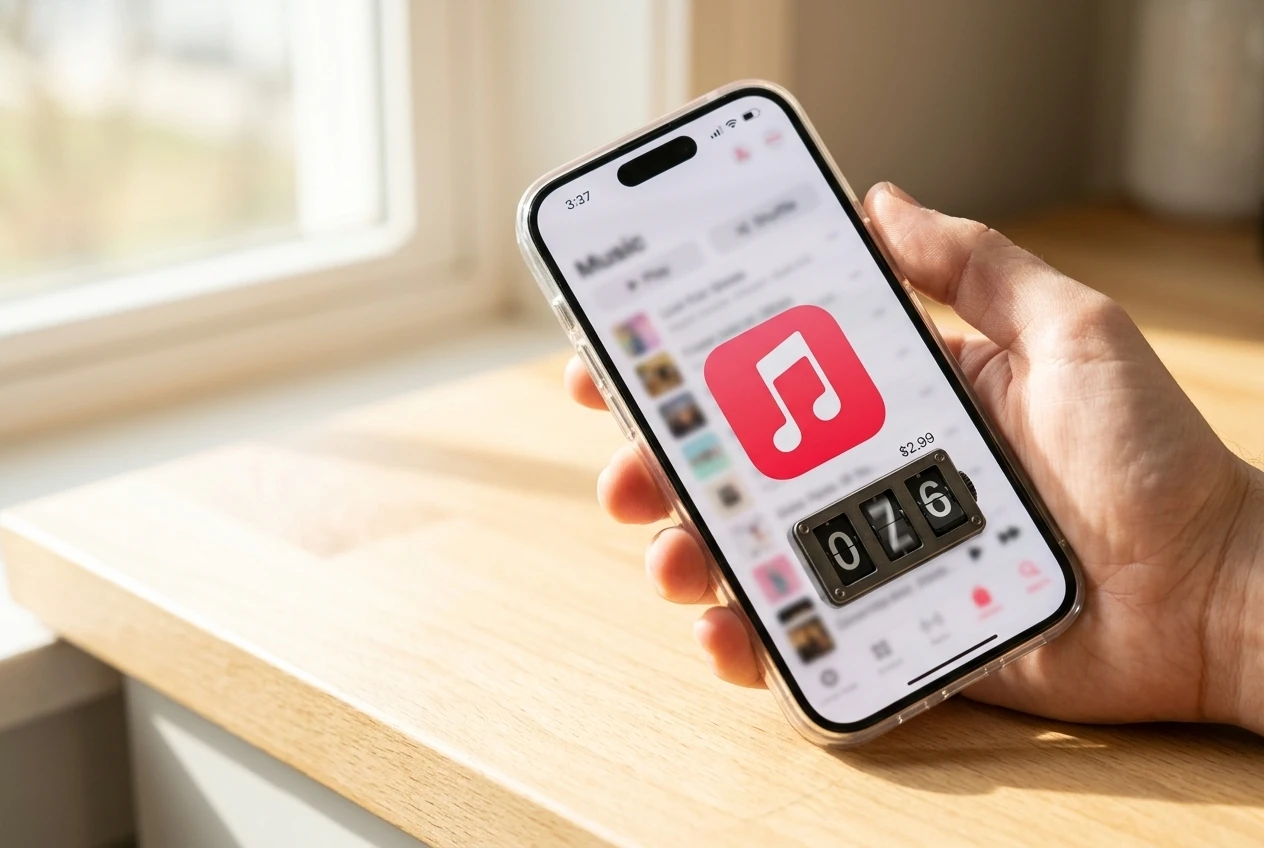
Apple raised the price of Apple Music to $11.99 a month on Friday, the streaming service’s first increase since October 2022, and blamed it on “rising licensing costs.” Family and student plans climbed too, along with several tiers of the Apple One bundle.
Every outlet that covered the hike repeated Apple’s phrase without saying what it actually means. There is a real number behind it: a federal royalty rate that regulators locked in back in 2022 and that keeps rising on a fixed schedule through 2027, whether Apple raises its own prices or not.
The New Price Sheet
The individual Apple Music plan moved from $10.99 to $11.99. The family plan, which covers up to six people, jumped from $16.99 to $19.99. The student plan rose from $5.99 to $6.99. Apple confirmed the changes in a statement given to the trade outlet Music Business Worldwide, saying the increase was “a result of rising licensing costs.”
Apple One, the bundle that packages Apple Music with services like Apple TV, iCloud+, Apple Arcade and Apple News+, moved too, though not evenly.
| Plan | Old Price | New Price | Change |
|---|---|---|---|
| Apple Music Individual | $10.99 | $11.99 | +$1.00 (about 9%) |
| Apple Music Family | $16.99 | $19.99 | +$3.00 (about 18%) |
| Apple Music Student | $5.99 | $6.99 | +$1.00 (about 17%) |
| Apple One Individual | $19.95 | $19.95 | No change |
| Apple One Family | $25.95 | $27.95 | +$2.00 (about 8%) |
| Apple One Premier | $37.95 | $39.95 | +$2.00 (about 5%) |
One detail slipped past most of Friday’s coverage: Apple Music’s new $11.99 rate is exactly what Spotify’s individual plan cost before Spotify’s own increase earlier this year, when Premium moved from $11.99 to $12.99. Apple Music remains a dollar cheaper than Spotify at the top tier, for now.
The Federal Rate Behind Rising Licensing Costs
Apple did not say which licenses got more expensive. Some of that is knowable, because part of what streaming services pay for music is set by a public body, not a private contract.
The Copyright Royalty Board, a panel of three federal judges housed inside the Library of Congress, sets the mechanical royalty rate that on-demand streaming services pay songwriters and publishers for use of their compositions. Under a determination covering 2023 through 2027, that rate rises every January 1: 15.1% of US revenue in 2023, 15.2% in 2024, 15.25% in 2025, and 15.3% as of this January, on its way to a locked ceiling of 15.35% in 2027. The five-year rate schedule reaching 15.35% of revenue binds every major on-demand service, not just Apple.
Spotify, Amazon Music, YouTube Music and Pandora all pay against the same schedule. It is one documented, dated piece of the vague phrase every streaming company reaches for when a price goes up.
A Royalty Clock Set Running in 2022
The current schedule was not sprung on the industry this year. It traces to August 31, 2022, when the National Music Publishers’ Association, the Nashville Songwriters Association International and the Digital Media Association, the trade group representing Spotify, Apple, Amazon and others, jointly proposed the settlement locking in escalating streaming royalty rates rather than fight another multi-year legal battle.
The Copyright Royalty Board accepted it that December.
Songwriters will enjoy the highest rates in the world and the highest rates in the history of digital streaming.
David Israelite, president and chief executive of the National Music Publishers’ Association, said that after the CRB’s final rule accepted that December. It is worth noting that 2022 is also the last year Apple touched Apple Music’s price before Friday, moving the individual plan from $9.99 to $10.99 that October. The two clocks, Apple’s pricing and the government’s rate schedule, started ticking in the same year.
- 2023: Streaming mechanical rate opens the new term at 15.1% of US revenue.
- 2024: Rate steps up to 15.2%.
- 2025: Rate reaches 15.25%.
- 2026: Rate climbs to 15.3% on January 1, the same year Apple raises its own prices.
- 2027: Rate hits its contracted ceiling of 15.35%, the highest the mechanical streaming rate has ever been.
That schedule alone does not explain every dollar of Friday’s increase. It explains one dated, public slice of it.
Where Does the Extra Dollar Go?
Most of it does not go where a subscriber might assume. The federal rate covers only the songwriter and publisher side of the business, the mechanical royalty. The larger cost, the license fee paid directly to record labels for the master recordings themselves, is negotiated privately between Apple and the three major labels, and none of those terms are public.
There is at least one real number showing that side of the business is getting more expensive too. Reservoir Media, a publicly traded music rights company, reported that its recorded music royalty costs rose 10% in fiscal 2026, to $13.5 million from $12.3 million, while writer and publishing royalty costs rose 7%, to roughly $48.5 million. Reservoir is not one of Apple’s label suppliers, but its books are a rare public look at royalty costs actually climbing inside the industry, not just in a corporate statement.
Apple’s own math may already run higher than rivals to begin with. Per-stream payout data compiled from distributor and label reporting shows Apple Music pays roughly $0.006 to $0.010 per stream, compared with about $0.003 to $0.005 at Spotify, meaning Apple was already absorbing a steeper baseline cost per play before Friday’s increase.
Canada Is Fighting the Same Math
The same government-cost-into-consumer-price pattern is playing out north of the border, on a different mechanism. Canada’s broadcast regulator, the CRTC, tripled its foreign streaming levy to 15% in May, requiring big platforms to funnel that share of Canadian revenue into domestic content funds. That 15% rule formally targets video streamers like Netflix and Disney+; audio-only services such as Apple Music and Spotify are not yet covered, though they are separately contesting an earlier 5% base levy from 2024 in federal court.
Spotify raised its Canadian prices anyway, with the Individual plan climbing to CAD $13.99 a month (roughly US$10) from CAD $12.69, effective in July.
- The CRTC says the higher contribution stabilizes funding for Canadian and Indigenous content.
- Canadian Prime Minister Mark Carney pushed back publicly, saying it was “not the time to raise the cost for Canadians.”
- US Representative Lloyd Smucker has called the policy discriminatory toward American streaming platforms and pushed a bill seeking a formal trade investigation.
Ottawa has since asked the CRTC to revisit the framework, but the pattern already showed itself: a government sets a cost, and a subscriber’s bill moves before the dust settles on who actually owes what.
Already on the Calendar
Apple Music’s Friday increase is not an isolated corporate decision. It lands inside a run of streaming price increases that has been building since the same 2022 settlement started phasing in.
- Apple Music – individual plan up from $10.99 to $11.99, its first change since October 2022.
- Spotify – Premium plan up from $11.99 to $12.99 earlier this year.
- Amazon Music – up to $11 a month for Prime members and $12 for everyone else last year.
- Apple TV – up from $9.99 to $12.99 in August 2025, after a separate $3 increase in October 2023.
The subscribers footing these bills are the same ones who sat through a multi-country outage that hit the service this spring, a reminder that reliability and price do not always move together.
What is not in question is the next scheduled step. On January 1, 2027, the federal mechanical rate rises to its contracted ceiling of 15.35%, a number already written into a determination signed three years ago. Apple has not said whether another price change is coming. The paperwork setting the floor underneath one already is.
Frequently Asked Questions
Does the Higher Price Apply to Me Right Away?
New subscribers pay the new rate immediately. Existing subscribers keep their current price until their ongoing billing cycle ends, then renew at the new rate, consistent with how Apple has handled past subscription price changes.
What Does Each Apple One Tier Include?
Apple One bundles Apple Music with a mix of other services depending on the tier, including Apple TV, Apple Arcade, iCloud+, Apple Fitness+ and Apple News+. The Individual, Family and Premier tiers each unlock a different combination of those services alongside Apple Music at a lower combined price than subscribing to each one separately.
Why Did Apple Music and Spotify Raise Prices in the Same Year?
Both companies answer to the same Copyright Royalty Board rate schedule, and both are represented in that process by the Digital Media Association, the streaming industry’s trade group. That shared federal schedule is part of why the two companies’ price increases keep landing in the same rough window, even without any public coordination between them.
Will Apple Music’s Price Rise Again Before 2027?
Apple has not announced another increase. But the federal rate schedule still has one mandated step left, reaching 15.35% on January 1, 2027, and Apple’s separate, private licensing deals with the three major record labels renew on their own cycles that the company has never disclosed.
Does Apple Music Offer a Free Tier Like Spotify?
No. Apple Music has never offered a free, ad-supported tier the way Spotify does. Every Apple Music subscriber pays from day one, aside from an introductory free trial month for new sign-ups.


NFL Three-Strike Safety Fouls Now Pull Coaches and Clubs In

Browns Fans Tape Protest Signs to Jim Brown Statue Over Watson

Amazon Pixel 11 Deal Erases the $100 Hike for One More Day

Elden Ring on Switch 2 Turns Its Own Worst Label Into a Portable Win

Ternus Takes the Stage With Apple’s Foldable Debut

Ikea Xbox Yxstaby Turns Controller Thumbstick Into Home Furniture

Pokémon Center Turns Past Worlds Wins Into Bundles and a Pikachu Coin

NFL Scraps Pro Bowl Game to Restore Pure Player Honor

New Twitter.now Bets the Brand Musk Left Behind

Bella Mir’s Famous First Loss Meets the Accountant Who Won

Double Fine Cuts 23 Jobs Weeks After Xbox Independence

Day-One Big Walk Lifts PS Plus August Beyond Recycled AAA

John Hight Exits Wizards After Digital Reckoning Hits

Curtis Mead’s Red Sox Debut Ends With Fractured Wrist

Moesch and Dressel Rewrite Night One at 2026 U.S. Nationals

Red Sox Squander Hot Streak Chance in 4-3 Loss to Athletics

Boutte’s Quiet Camp Takeover Forces Patriots Receiver Choices

Take-Two CEO Pushes Netflix Subs for GTA 6 Extended Look

Halo Campaign Evolved Skulls Meet Death Barriers That Kill the Hunt

Wildlands Free Update Hands Players the Tools They Already Invented
-

 TECHNOLOGY3 years ago
How to Adjust a Bulova Watch Band – An Easy Guide
-

 News3 years ago
Fred Pentland: Athletic Bilbao’s English mentor who changed the essence of Spanish football
-

 FINANCE3 years ago
Tax Planning for Every Season: Guide to Maximizing Your Tax Benefits
-

 Education3 years ago
African Ministers New Education Plan
-

 BUSINESS3 years ago
What is Entrepreneurial Operating System? A Comprehensive Guide to EOS
-

 Education3 years ago
Innovate Your Learning Journey with Technology and Enhance Education
-

 News3 years ago
Russians formally out of World Athletics Championships
-

 BUSINESS3 years ago
Top 9 Most Expensive American Cities to Rent an Apartment