
News
Portland’s $573 Million Arena Offer to the Blazers Has No Budget
Portland’s draft Moda Center term sheet asks for $573 million in public money but leaves the construction budget, and the Blazers’ contribution, unresolved.

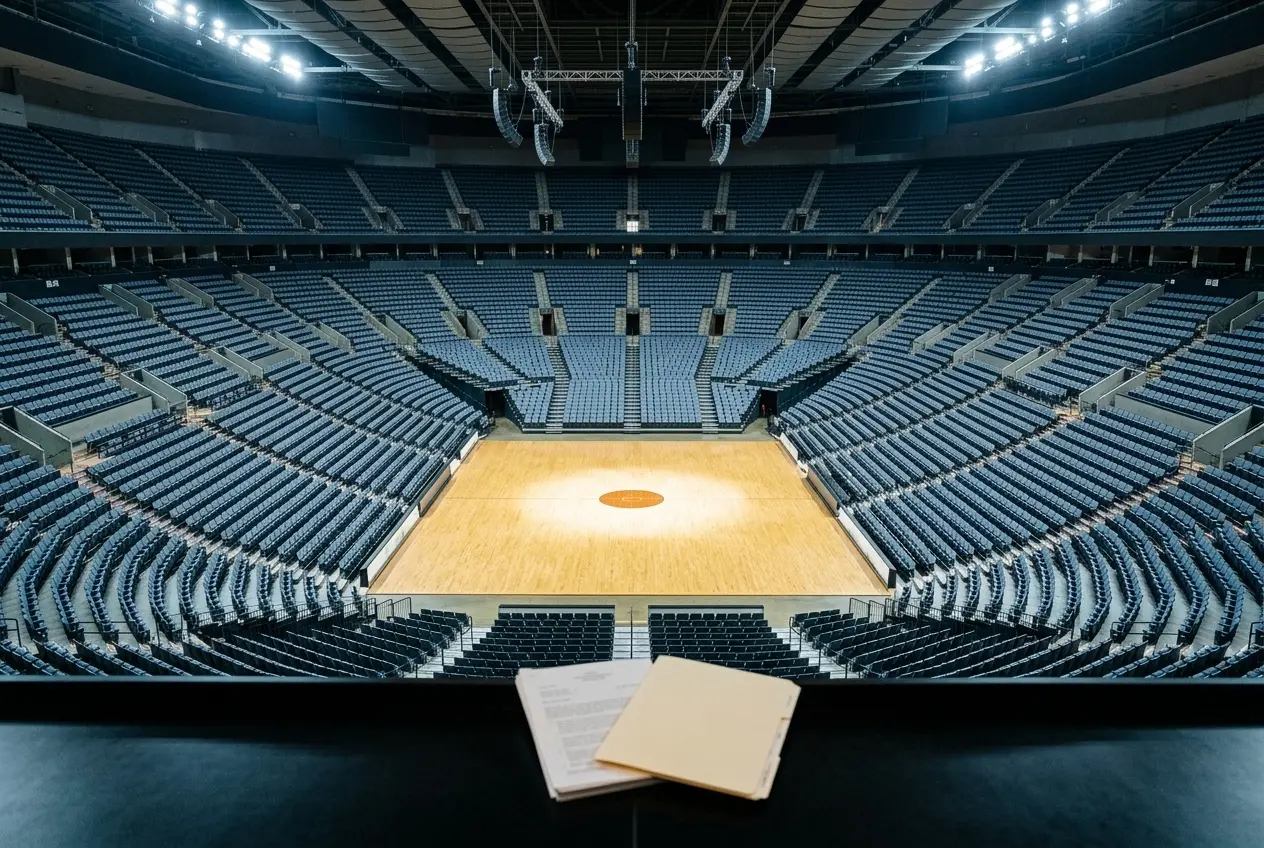
Portland sent the Trail Blazers a 14-page draft this week pledging $573 million in public money for a Moda Center renovation, and left the construction budget blank. City officials call it the first formal offer in a year of on-and-off talks over the arena, which opened in 1995. The document sets rules for how the team would run the building, what it would pay in place of property taxes, and what happens if it ever leaves, but not what the renovation will actually cost.
Behind the dollar figure is a rougher fight: whether the city council actually authorized what went out the door, whether the county wants any part of the current plan, and whether team owner Tom Dundon will put in a single dollar of his own.
Inside the 14-Page Offer Portland Just Sent the Blazers
The document is titled “Moda Center: Arena Renovation and Post-Renovation Operations Term Sheet.” City administrators delivered it to the Blazers on July 16, hours after a four-hour closed-door session with the City Council. In a press release describing the framework, the city called it reasonable, fair and focused on keeping the Trail Blazers in Portland.
Under the draft, Rip City Management, the Blazers’ operating arm, would run the arena year round, including scheduling, maintenance, concessions, security and utilities, while meeting a quality operations standard tied to NBA requirements. The team would also commit to:
- Playing all home games at Moda Center for 20 years, backed by a non-relocation clause with liquidated damages if the team leaves anyway
- Paying prevailing wages on construction and signing labor-peace agreements covering both construction workers and ongoing arena staff
- Giving hiring preference to local workers during the renovation itself
- Opening the arena for at least 10 community events a year at no rent, with affordable concession pricing
- Paying $3 million a year in lieu of property taxes, a figure that climbs 5% annually and gets split among the city, Multnomah County and Portland Public Schools
That last item is the closest thing to a Blazers financial contribution anywhere in the draft. Escalated over a 20-year lease, city officials peg it at close to $106 million, split three ways.
The Budget Line That Isn’t There Yet
Search the draft for a construction budget and there isn’t one. The city’s own exhibit for renovation costs is blank; officials say figures will be added at a later date.
That is not a small gap. The number driving the whole negotiation, a $600 million renovation estimate, comes from studies the Blazers commissioned over several years and have not made public. The city has not seen them either.
If the $573 million in the draft holds, taxpayers would cover roughly 95% of a $600 million project, with ownership on the hook only for cost overruns beyond that ceiling, a condition state lawmakers wrote into the bond bill in March.
| Government | Contribution | Funding Source | Status |
|---|---|---|---|
| State of Oregon | $365 million in bonds | Income tax withholding tied to Rose Quarter wages | Approved by the Legislature in March; contingent on a signed Blazers lease |
| City of Portland | $275 million over 20 years | Moda Center user fees, Veterans Memorial Coliseum profit share, Rose Quarter tourism funds | Written into the July draft term sheet |
| Multnomah County | About $88 million for renovation, plus $13.6 million for operations through 2036 | Business, lodging and rental car taxes | Commissioners seeking a “reset” before a July 23 vote |
| Trail Blazers ownership | $3 million a year, rising 5% annually (about $106 million over the lease) | Team revenue, as a property tax offset | Requested in the draft, not yet agreed to |
Even the state’s slice costs more than face value. Legislative budget analysts have estimated the bonds could ultimately run between $530 million and $625 million once interest is added, on top of the $365 million in net proceeds the bill authorizes.
Councilors Say the City Jumped the Gun
Portland’s council did not sign off on the document the Blazers received, at least not as a final position. Councilor Mitch Green wrote on Bluesky that councilors met in executive session Thursday morning expecting to discuss “themes” for a future draft, not approve one for delivery. He said he learned around lunchtime that a term sheet was already headed to the team. Councilor Angelita Morillo posted separately that the council never reached consensus on the document during that session.
“I want to be clear that what the Blazers received today is not a term sheet from Council,” Green wrote. “That will be the product of a resolution that Council will consider, debate, amend and adopt. What they received today was the same draft that we received after initial reactions in executive session.”
He went further in a follow-up post. “It’s extremely misleading to paint the process this way, especially since executive sessions are not the place to develop policy direction from Council,” Green added. “They are a place to discuss sensitive matters and get a ‘temp check.’ You develop policy at the dais in a public meeting.”
Council President Jamie Dunphy offered a different read. “Lacking meaningful engagement from the Blazers up to this point, the city has developed a draft term sheet based on our professional staff’s advice, community feedback, and direction from Council,” Dunphy told The Oregonian.
The County Isn’t Ready to Sign a Blank Check
Two Multnomah County commissioners want their own government to slow down. Julia Brim-Edwards and Meghan Moyer, who represent the county’s third and first commission districts, wrote an open letter on July 16 asking County Chair Jessica Vega Pederson to reset negotiations. They said a June 23 work session produced little because Blazers representatives skipped it despite committing to attend.
The commissioners noted the county owns no piece of the arena and collects no income or property tax tied to it, yet the Chair’s Proposal set for a July 23 vote would commit the county to renovation costs that Brim-Edwards says grow toward nearly $140 million once bond interest is counted, extending obligations out to 2049.
“We should not be rushing to a vote. We don’t have the information we need. The county should not be just writing a blank check,” Brim-Edwards told KATU.
The push for a pause lands as Multnomah County projects an $80 million budget deficit over the next several years. “The county provides services to the most vulnerable,” Commissioner Moyer said. “And when we have to take money that could go to our general fund to support that and instead be part of a deal to keep the Blazers here, we won’t be funding those things.”
The commissioners also want a clawback if the Blazers ever leave and a promise that no new tax increment financing district gets created without direct county approval.
Why Won’t the Billionaire Owner Chip In?
Tom Dundon, the Texas billionaire who led the group that bought the Trail Blazers in March for roughly $4.25 billion, has said publicly he will not put personal or private money into the Moda Center renovation, leaving the entire construction bill to city, county and state taxpayers instead.
Dundon made the case directly to a crowd of more than 750 business and political leaders at the Portland Metro Chamber’s annual meeting in June, framing the purchase itself as his contribution. “It feels like we’re making a pretty big investment by staying here and paying these tax rates,” he told the crowd, according to multiple outlets covering the event. Roughly 50 protesters gathered outside the venue, some carrying signs objecting to public money benefiting a billionaire owner.
City councilors weren’t won over. “I am going to have a hard time agreeing to give public money if I’m not seeing a private investment,” Councilor Candace Avalos said. Green was blunter about the stakes. “The City of Portland is in a very difficult financial moment. If we’re going to defund our basic priorities to help a billionaire increase the value of his team, we need to see all that laid out honestly,” he told KPTV.
Dundon also owns the Stanley Cup champion Carolina Hurricanes, whose home arena, the Lenovo Center in Raleigh, is undergoing its own $300 million renovation that Dundon has helped fund in part, a contrast Portland officials have pointed to as they press him for money in Moda Center’s case.
Every Deadline Now Points to the Same Two Months
NBA Commissioner Adam Silver added his own pressure Tuesday, telling reporters in Las Vegas that Portland’s negotiations “seem to have gone off track.” Mayor Keith Wilson pushed back in a statement, saying the absence of essential details from the Blazers is slowing progress at a moment when urgency is required. A Blazers spokesperson, Charles Boyle, countered that the city has more information than state leaders had during the legislative session.
Silver used the same Las Vegas meeting to discuss NBA expansion, saying ownership groups have submitted bids for franchises in both Seattle and Las Vegas. Fans have floated Seattle as a landing spot if Portland’s funding push collapses, though a Seattle expansion team would remove that option entirely.
The calendar leaves little room to sort any of it out. Here is how the year has unfolded and where it points next:
- March 2026: Dundon’s ownership group completes its roughly $4.25 billion purchase of the Trail Blazers from the estate of former owner Paul Allen.
- March 2026: The Oregon Legislature passes Senate Bill 1501, authorizing $365 million in state bonds, contingent on a signed 20-year Blazers lease and creating the Oregon Arena Fund to finance the renovation.
- June 2026: Dundon tells the Portland Metro Chamber he will not contribute personal funds to the project.
- July 16, 2026: The City Council meets in a four-hour executive session; the city delivers its first draft term sheet to the Blazers that afternoon.
- July 16 to 17, 2026: Commissioners Brim-Edwards and Moyer send their reset letter, and the city releases the full draft publicly.
- July 23, 2026: The Multnomah County Board of Commissioners is scheduled to vote on the Chair’s funding proposal.
- August 12, 2026: The Portland City Council is scheduled to vote on a revised term sheet to guide final lease negotiations.
- Dec. 17, 2026: The deadline cited by the business-backed “We Are Rip City” coalition for finalizing a deal before the state’s $365 million commitment is put at risk.
The county votes first, on July 23. Portland follows on August 12. Neither vote requires the Blazers to have named a number of their own.
Frequently Asked Questions
How much economic activity does Moda Center generate for Portland?
Moda Center generates an estimated $670 million in annual economic impact and supports close to 4,500 jobs, hosting more than 240 event days and drawing about 1.6 million visitors a year, figures lawmakers cited when the bond bill moved through the Legislature in March.
When does the Trail Blazers’ lease at Moda Center expire?
The team’s current lease runs through 2030, the same year the city hopes to finish renovations in time to host the NCAA Women’s Final Four. The draft term sheet would replace that lease with a new 20-year term tied to the renovation deal.
Could the Trail Blazers actually move to Seattle?
It is a real fear among fans, but NBA Commissioner Adam Silver said ownership groups have already filed bids for a Seattle expansion franchise. If the league awards Seattle a new team instead, that removes the most talked about relocation destination for the Blazers.
Who else plays home games at Moda Center?
The Portland Fire, the NBA’s newest WNBA expansion franchise, began its inaugural season at the arena in May 2026, giving the city-owned building a second full-time professional tenant alongside the Trail Blazers.
What happens if the Trail Blazers relocate during the new lease?
The draft term sheet includes a non-relocation agreement and outlines liquidated damages the team would owe for leaving before the 20-year term ends, on top of the separate clawback protections Multnomah County commissioners have requested for the county’s own contribution.


NFL Three-Strike Safety Fouls Now Pull Coaches and Clubs In

Browns Fans Tape Protest Signs to Jim Brown Statue Over Watson

Amazon Pixel 11 Deal Erases the $100 Hike for One More Day

Elden Ring on Switch 2 Turns Its Own Worst Label Into a Portable Win

Ternus Takes the Stage With Apple’s Foldable Debut

Ikea Xbox Yxstaby Turns Controller Thumbstick Into Home Furniture

Pokémon Center Turns Past Worlds Wins Into Bundles and a Pikachu Coin

NFL Scraps Pro Bowl Game to Restore Pure Player Honor

New Twitter.now Bets the Brand Musk Left Behind

Bella Mir’s Famous First Loss Meets the Accountant Who Won

Double Fine Cuts 23 Jobs Weeks After Xbox Independence

Day-One Big Walk Lifts PS Plus August Beyond Recycled AAA

John Hight Exits Wizards After Digital Reckoning Hits

Curtis Mead’s Red Sox Debut Ends With Fractured Wrist

Red Sox Squander Hot Streak Chance in 4-3 Loss to Athletics

Moesch and Dressel Rewrite Night One at 2026 U.S. Nationals

Boutte’s Quiet Camp Takeover Forces Patriots Receiver Choices

Take-Two CEO Pushes Netflix Subs for GTA 6 Extended Look

Halo Campaign Evolved Skulls Meet Death Barriers That Kill the Hunt

Wildlands Free Update Hands Players the Tools They Already Invented
-

 TECHNOLOGY3 years ago
How to Adjust a Bulova Watch Band – An Easy Guide
-

 News3 years ago
Fred Pentland: Athletic Bilbao’s English mentor who changed the essence of Spanish football
-

 FINANCE3 years ago
Tax Planning for Every Season: Guide to Maximizing Your Tax Benefits
-

 Education3 years ago
African Ministers New Education Plan
-

 BUSINESS3 years ago
What is Entrepreneurial Operating System? A Comprehensive Guide to EOS
-

 Education3 years ago
Innovate Your Learning Journey with Technology and Enhance Education
-

 News3 years ago
Russians formally out of World Athletics Championships
-

 BUSINESS3 years ago
Top 9 Most Expensive American Cities to Rent an Apartment