
BUSINESS
Trump Polysilicon Floors Crown US Plants Over China Supply
New 15% tariff and minimum import prices on polysilicon take effect December 4, shielding Hemlock and Wacker while raising costs for solar importers.

President Donald Trump signed a proclamation on August 6 imposing a 15 percent tariff on polysilicon derivatives and setting minimum import prices on the material and solar components, effective December 4. The order follows a Section 232 national security investigation and aims to reverse the collapse of U.S. production against Chinese oversupply.
China holds roughly 93 percent of global polysilicon output. American share has fallen below 2 percent. Domestic plants and firms that commit to new U.S. factories gain a protected market. Import-heavy solar projects face higher costs.
The Price Floors and Tariff That Take Effect in December
The proclamation establishes four minimum import prices and adds a 15 percent ad valorem duty on specified derivatives. Goods entered on or after 12:01 a.m. eastern time December 4, 2026, fall under the rules. Importers must certify sales at or above the floor or face a specific tariff equal to the shortfall. False documentation can bar the importer and affiliates permanently.
| Product | Minimum Import Price |
|---|---|
| Polysilicon | $21 per kilogram |
| Ingots and wafers | $100 per kilogram |
| Solar cells | $0.22 per watt |
| Solar modules | $0.38 per watt |
The Commerce Secretary may adjust the floors later to match non-distorted market values. For products from Japan, Korea, Taiwan, Switzerland, Liechtenstein or EU members, the 15 percent Section 232 duty plus the normal Column 1 rate is capped so the sum equals 15 percent. United Kingdom goods face a 10 percent rate under the same clause. The full text sets out the minimum import prices and 15 percent duty together with the onshoring program.
Companies that submit approved plans to build, refurbish or expand U.S. facilities for polysilicon, ingots, wafers or cells can receive duty relief on production equipment and related imports during construction. Construction must start by January 20, 2029. Progress is monitored; failure can rescind benefits, even retroactively in fraud cases.
How American Output Fell Below Two Percent
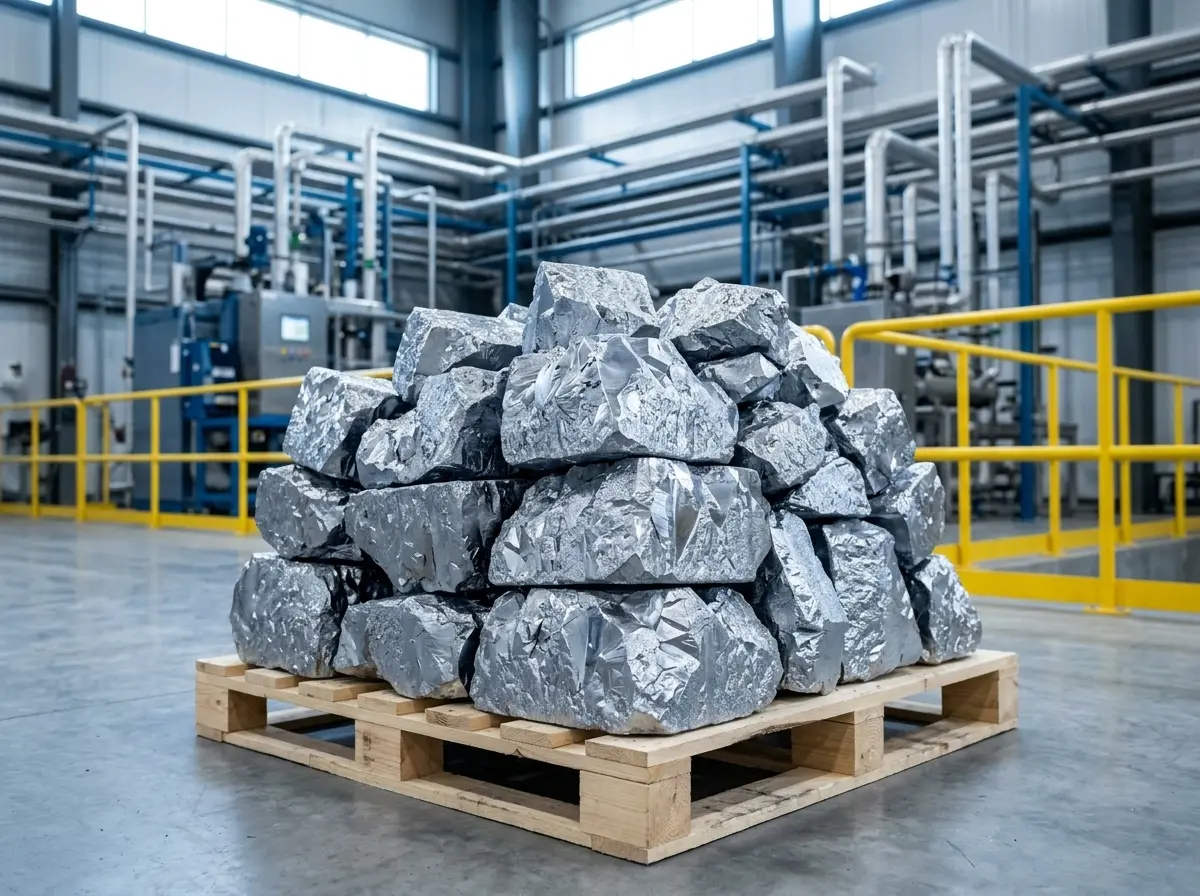
Polysilicon is the ultra-pure feedstock for both semiconductor wafers and crystalline solar cells. Trump’s order states that U.S. global production capacity share dropped from 50 percent in 2005 to less than 2 percent in 2024. Global output rose more than 270 percent since 2020. Inventories hit a record 400,000 tons by the end of 2024.
- Solar-grade demand accounts for the overwhelming share of volume; semiconductor-grade is only about 2.4 percent of global production.
- China’s capacity reached roughly 93.5 percent of world output in 2024, with nine of the ten largest makers Chinese.
- U.S. wafer fab share also slid from 37 percent in 1990 to 10 percent in 2024, per the same findings.
Semiconductor Industry Association comments filed during the investigation noted that U.S. fair-market value for solar-grade material sits near $24 per kilogram while Chinese producers have sold at roughly one-fifth that level. High-volume solar-grade runs keep unit costs viable for the far more expensive semiconductor-grade product. Without a workable solar market, domestic producers cannot sustain the ultra-pure lines needed for chips used in radar, missiles, drones and AI systems. That link between the two grades is why the order covers the full chain.
Industry data also show nine of the top ten producers Chinese, with Wacker the only non-Chinese name still inside the top group. The volume gap leaves U.S. plants exposed whenever Chinese export prices collapse.
Hemlock, Wacker and the Onshoring Bet
Two producers anchor U.S. capacity today. Hemlock Semiconductor operates in Michigan and has received CHIPS Act support, including a $325 million grant for high-purity expansion. It has ties to Corning and Shin-Etsu. Wacker Chemie runs a major plant in Charleston, Tennessee, and ranks among the leading global semiconductor-grade suppliers. Both have long argued that Chinese subsidies and overcapacity made profitable operation difficult after China imposed its own tariffs on U.S. material a decade ago.
The order is structured to favor them and any company that locks in domestic feedstock:
- Hemlock and Wacker gain a price floor that lifts the floor under dumped imports and a 15 percent duty wall on derivatives.
- Firms already contracting U.S. polysilicon and wafers (examples include certain domestic module makers with Hemlock and Corning deals) see competitors’ import costs rise.
- New entrants or expanders that file approved onshoring plans receive temporary duty relief scaled to their investment and progress milestones.
- Trade-agreement partners that adopt equivalent minimum-price regimes may later receive adjusted treatment.
Market chatter on X quickly mapped the same winners: Corning-linked Hemlock exposure, Wacker’s U.S. plant, and thin-film or fully domestic supply-chain names that avoid the poly bottleneck. The pattern echoes earlier moves that similar domestic-maker preference on robot vacuums by listing covered foreign gear and clearing space for U.S. producers.
Solar Developers and Chinese Exporters Carry the Cost
Most polysilicon volume still feeds solar panels. Raising the effective U.S. price of cells and modules hits project economics for developers who have relied on low-cost Asian supply. Installers and utility-scale buyers face sticker shock once the December floor and duty bite. Some may accelerate purchases before the effective date, creating a temporary glut followed by a sharper reset in early 2027 guides.
Chinese producers lose the ability to undercut at will inside the U.S. market. Their domestic overcapacity remains, so pressure may shift to other export destinations or force further rationalization at home. Secondary suppliers in Korea, Malaysia and elsewhere sit in a middle zone: they may benefit if they clear any carve-outs or if Chinese volumes are displaced, yet they still face the same floor if their landed prices sit below it.
Downstream electronics and auto users of semiconductors feel the effect more indirectly. Chip-grade polysilicon is a tiny slice of total tons, but the order treats secure domestic feedstock as a national-security input for defense systems. Higher solar costs are the visible near-term trade-off for that security argument.
Beijing Calls the Move Protectionism
The Chinese embassy in Washington responded that the action “seriously disrupts” trade and that Washington is “abusing state power to go after Chinese businesses.” It added that protectionism will not make the United States more competitive and that Beijing will act to protect its companies.
China firmly opposes the US overstretching the concept of national security and abusing state power to unjustifiably suppress Chinese companies. Protectionism will not enhance US competitiveness.
An embassy spokesperson used that language in the days around the announcement. The statement sits inside a broader exchange: the United States has layered restrictions on drones, humanoid robots and other tech, while China has tightened export controls and opened national-security reviews of its own. Analysts quoted in Chinese state media framed the polysilicon step as the latest effort to limit China’s role in critical technology chains.
The same friction has already moved markets in related corners, including earlier China chip-tool supply shocks that hit equipment and memory names when export rules tightened.
December Start Date and the Exemption Path
Four months remain before the MIP program and 15 percent duty apply. Commerce and Customs will stand up certification and enforcement. Stockpiling before December 4 is explicitly flagged; the Secretary can restrict imports by companies that race material across the border and may act against affiliates.
The onshoring channel is the clearest relief valve. An approved plan requires a commitment to U.S. production of covered products, a commercially reasonable timeline, and construction start by January 20, 2029. Benefits cover equipment and commensurate volumes of inputs, can vary with use of U.S. polysilicon, and stay contingent on milestones. The Secretary may audit reports and pull relief for substantial shortfalls.
Trading partners that enact substantially equivalent minimum-price systems can negotiate altered treatment. Drawback is available under narrow conditions for certain trade-agreement partners whose articles use only partner-origin polysilicon. The prior solar safeguard tariff that expired in February 2026 is replaced by this broader package.
In short, the winners are the remaining U.S. producers and any firm that turns the exemption process into real factories. The losers are low-price Chinese exporters and the solar projects that must now budget for higher module and cell costs. Whether the protected market actually rebuilds meaningful American capacity will be measured in tons poured and wafers started after the floors lock in.
Frequently Asked Questions
What exact minimum import prices did the proclamation set?
The order sets $21 per kilogram for polysilicon, $100 per kilogram for ingots and wafers, $0.22 per watt for solar cells, and $0.38 per watt for solar modules. The Commerce Secretary can revise those levels later to reflect non-distorted market conditions. Importers who cannot certify an arm’s-length sale at or above the floor pay a specific tariff equal to the difference.
Which companies still produce polysilicon inside the United States?
Hemlock Semiconductor in Michigan and Wacker Chemie’s plant in Charleston, Tennessee, are the principal U.S. producers named across industry and government materials. Hemlock has received CHIPS Act funding for high-purity expansion. REC Silicon has historical capacity in the Northwest that has faced restarts and idling. Together they hold a small fraction of global tons.
How far did the U.S. share of global polysilicon production fall?
According to the proclamation’s findings, the United States held 50 percent of global production capacity in 2005 and less than 2 percent in 2024. Over the same long arc, semiconductor wafer fabrication capacity share dropped from 37 percent in 1990 to 10 percent in 2024. China’s output share reached approximately 93.5 percent in 2024.
Why does solar-grade polysilicon matter for semiconductor supply?
Semiconductor-grade material represents only about semiconductor-grade demand at 2.4 percent of total global polysilicon production. Producers rely on high-volume, lower-purity solar-grade runs to spread fixed costs and keep the ultra-pure lines economically viable. Without a functioning solar market, domestic semiconductor-grade capacity becomes harder to sustain at scale.
When do the new tariffs and floors actually begin?
Both the minimum-import-price program and the additional 15 percent ad valorem duty apply to goods entered for consumption or withdrawn from warehouse on or after 12:01 a.m. eastern time on December 4, 2026. Contracts with fixed terms signed before the proclamation date can be certified under limited exceptions. Pre-effective stockpiling can trigger separate restrictions.


iPhone 18 Pro Price Hike Hands Wins to Memory Makers

Apple Lifts Trade-In Credits Ahead of Costly iPhone 18 Cycle

Hisense Ships Dolby Vision 2 First and the Brightness Catch

Quake Gets 19 Free Maps From MachineGames Quake Club

SpaceX Moon Factories Aim to Break Earth’s AI Limits

OpenAI Bets $300 Donut Speaker Can Beat Smart Home Economics

Marantz Cinema Series 2 Puts Dirac and FreeSync on Midrange Boxes

AirPods Pro 3 Hit $190 as Camera Models Loom Pricier

Ford Places Its $30K Fathom Bet on a New Production Era

Seiko Wraps Its Speedtimer in Edo Purple for 145 Years

Doom Studio id Software Cuts Half Its Staff in Xbox Layoffs

Nintendo Switch Online Adds Four Classics and One Japan-Only Title

Meta’s Muse Image Lets Anyone Use Your Instagram Photos in AI

Pink Bearista Cup Returns July 13 as Starbucks Pink Vibes Drops

Samsung Sets Galaxy Unpacked for July 22 in London With a Wider Fold

Marine Cloud Brightening Could Weaken Super El Niños, Study Says

US Trade Deficit Jumps to 14-Month High as AI Spending Lifts Imports

Micron Stock Just Entered a Bear Market. Is It Time to Buy?

Samsung’s $1,230 Galaxy Unpacked Deal: How It Stacks Up

Meta Tests ‘Super Sensing’ AI Glasses That Record Every Moment
-

 TECHNOLOGY3 years ago
How to Adjust a Bulova Watch Band – An Easy Guide
-

 News3 years ago
Fred Pentland: Athletic Bilbao’s English mentor who changed the essence of Spanish football
-

 FINANCE3 years ago
Tax Planning for Every Season: Guide to Maximizing Your Tax Benefits
-

 Education3 years ago
African Ministers New Education Plan
-

 BUSINESS3 years ago
What is Entrepreneurial Operating System? A Comprehensive Guide to EOS
-

 Education3 years ago
Innovate Your Learning Journey with Technology and Enhance Education
-

 News3 years ago
Russians formally out of World Athletics Championships
-

 BUSINESS3 years ago
Top 9 Most Expensive American Cities to Rent an Apartment