
News
United Flight to Spain U-Turns Over a Bluetooth Named BOMB

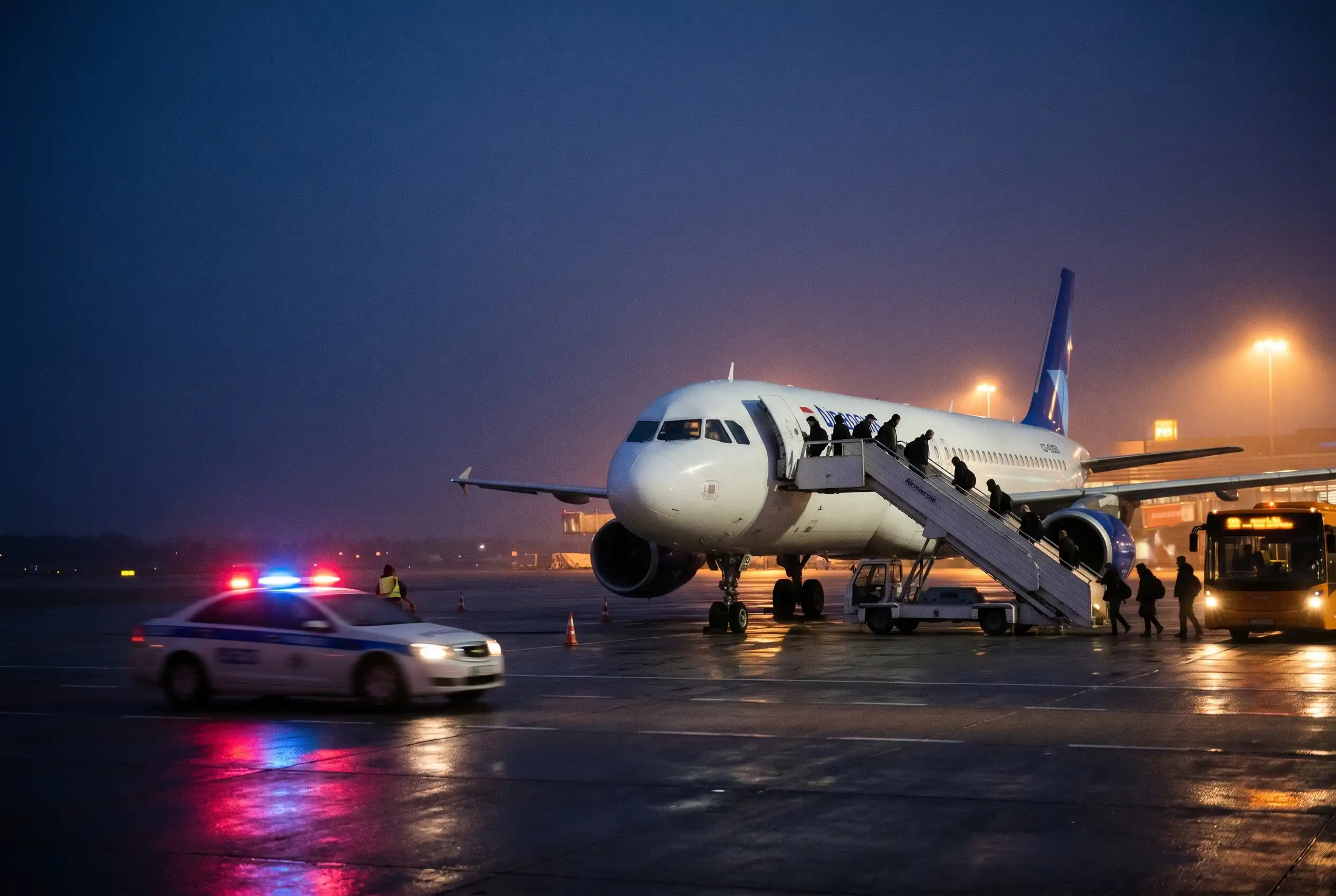
A teenager’s Bluetooth speaker, tagged with a single four-letter word, turned a transatlantic United Airlines flight around over the open ocean and sent 190 passengers back to Newark. United Flight 236 left Newark Liberty International Airport for Palma de Mallorca, Spain, around 6 p.m. on Saturday, May 30, and was back on the tarmac by 9:37 p.m., according to the Port Authority of New York and New Jersey. Security swept the Boeing 767 from cabin to cargo hold. No explosives turned up. The device was named BOMB.
What reads like a single viral mishap is the latest entry in a fast-growing 2026 problem. Passengers keep naming phones, speakers and hotspots after threats, and airlines have no practical way to treat any one of them as a joke. By the time a crew sees the word, the only safe assumption is that it might be real.
A Fitbit, a Speaker and 190 Passengers Back on the Ground
The trigger was small and almost comic. According to air traffic control audio captured by LiveATC.net, security boarded the jet after a passenger device broadcast a name a controller would only call “a certain four-letter word.” Reporting since the flight points to a teenage passenger and a Bluetooth speaker carried in the cabin. The owner and the device were not deemed a threat once police finished the search.
The cabin response escalated fast. Crew members repeatedly asked everyone to switch off all Bluetooth devices, a passenger account posted to social media said, and two devices stayed active past the deadline. The crew then consulted United’s operations base in Chicago and made the call to return.
Getting 202 people off a widebody at night is not quick. Passengers left the aircraft on airstairs, boarded buses on the tarmac, and were re-screened by the Transportation Security Administration (TSA, the federal agency that screens airline passengers) and Customs and Border Protection before a replacement aircraft and a fresh crew were arranged.
- 190 passengers and 12 crew were aboard the Boeing 767 when it turned around.
- 9:37 p.m. was the landing time back at Newark, roughly three and a half hours after departure.
- 9 hours is about how late the replacement flight ran, reaching Palma the following afternoon.
Why a Crew Cannot Laugh Off the Name
From a passenger seat, diverting a transatlantic flight over a speaker label looks absurd. From the flight deck, the math runs the other way. A crew at 35,000 feet cannot verify a device, cannot question the owner mid-ocean, and cannot un-ring the bell once the word “bomb” enters the cabin. Federal protocol treats an unresolved threat as credible until the ground proves otherwise.
They have to inspect the whole aircraft, including the cargo area.
That was the Newark tower on the ATC audio, describing the sweep that waited for Flight 236. It captures the trap neatly. Once a possible threat is logged, there is no shortcut to clearing it short of landing, emptying the plane, and searching every hold.
The Federal Aviation Administration (FAA, the U.S. regulator that oversees civil aviation) confirmed the basics in a short statement, saying the flight returned “after the crew reported a passenger disturbance.” The agency’s zero-tolerance policy on disruptive passengers gives crews little room to exercise discretion when a security trigger appears. Treating it as harmless is the one option that ends careers if it is wrong.
A Spring of Device-Name Bomb Scares
Here is the part the late-night jokes miss. The Newark turnaround is not isolated. It is at least the fourth time in 2026 that a wireless name, broadcast as an SSID (Service Set Identifier, the label a phone or speaker shows to nearby devices), forced an emergency response across U.S. and European aviation.
Each case followed the same arc: a crew member spots a threatening name, the threat cannot be cleared in the air, and a costly intervention follows on the ground or in the sky.
| Flight / Route | Name flagged | Response |
|---|---|---|
| Turkish Airlines, Istanbul to Barcelona (January) | Hotspot reading “I have a bomb, everyone will die” | Military jet escort, emergency landing, full sweep; no explosives |
| Wizz Air, London Luton to Tel Aviv (February) | Hotspot appearing to read “terrorist” | Intercepted by Israeli fighter jets |
| KLM, Malaga to Amsterdam | Hotspot referencing a bomb on board | Held on the tarmac for hours before clearance |
| United, Newark to Palma de Mallorca (May) | Bluetooth speaker named BOMB | Mid-Atlantic U-turn, sweep, re-screening |
A separate United flight saw a captain give a passenger 30 seconds to drop an offensive hotspot name or have police inspect every phone aboard. The throughline is consistent. Personal devices now broadcast text into a shared space, and that text can move fighter jets.
The Disturbance Count Behind the Headlines
Zoom out and the device-name scares sit on top of a broader spike. Airlines have reported more than 640 unruly passenger incidents so far in 2026, the FAA said, and the United diversion was only the latest in a rough stretch for the carrier.
Within days of the Bluetooth turnaround, United absorbed several other disruptions:
- A domestic United flight was diverted on the Friday before the Newark return because of a security concern tied to an unruly passenger.
- Another United flight diverted to Wisconsin after a passenger made what a crew member described as multiple attempts to breach the cockpit.
- Earlier in the month, a United Boeing 767 landing at Newark struck a semitrailer and a light pole while moving at 160 mph; no one was hurt.
The longer trend is friendlier than the headlines suggest. The FAA says the rate of unruly passenger incidents has fallen more than 80 percent since the record highs of early 2021. The problem is that the floor stopped dropping, and a new failure mode, the named-device scare, arrived to push the count back up just as summer travel peaks. The agency has leaned on its policy of referring serious cases to the FBI to keep the deterrent visible.
The Bill for Turning a 767 Around
A transatlantic U-turn is one of the most expensive non-crash events an airline can have. The costs stack quickly, and almost none of them are recoverable from the passenger who caused the scare.
- Fuel and weight. A 767 departing for Spain carries hours of fuel it must burn off or hold before it is light enough to land safely, which can mean a long loiter or a planned overweight landing inspection.
- Crew duty limits. The original crew timed out, which is why Flight 236 needed an entirely new crew before the replacement could depart.
- The security sweep. Port Authority police searched the aircraft end to end while passengers waited, and the plane could not re-enter service until it was cleared.
- Re-accommodation. Buses, re-screening through TSA and Customs, a substitute aircraft, and overnight handling for 190 people add up before a single seat moves toward Spain again.
Multiply that by four high-profile incidents in five months and the cost stops being a curiosity. For a Breeze Airways flight that diverted to Grand Junction over a violent passenger, the same chain of fuel, crew and rebooking costs played out on a smaller jet. The device-name version simply adds a trigger that any teenager with a speaker can pull.
Whether the Teenager Faces Penalties
Authorities did not classify the speaker’s owner as a threat, which lowers the odds of a terrorism charge. It does not make the episode cost-free. The FAA can pursue civil penalties for interfering with a crew, and federal prosecutors have charged passengers in other diversion cases when conduct crossed into a crime.
United declined to detail the cause publicly, and no charges had been announced as of publication. What the case establishes is simpler and more durable than any one penalty: a wireless name is now treated as a statement made aloud in a sealed metal tube, and the people around it will act on it. Until that lesson spreads, expect more jets to turn around over a word nobody meant to detonate.
Frequently Asked Questions
Why Did United Flight 236 Return to Newark?
The Boeing 767 returned because a passenger’s Bluetooth device was broadcasting the name BOMB, and the crew could not verify it was harmless in flight. After consulting United’s operations base, the crew turned back, and Port Authority police searched the aircraft on the ground. No explosives were found.
Can You Be Fined for Naming a Device Something Like BOMB?
Yes. The FAA can impose civil penalties for behavior that interferes with a flight crew or causes a disturbance, and serious cases can be referred to the FBI for criminal review. Even when no charge follows, the passenger can face liability for triggering a diversion.
How Common Are Device-Name Security Scares in 2026?
They have become a recurring problem. The United turnaround was at least the fourth widely reported case in 2026, following incidents on Turkish Airlines, Wizz Air and KLM where a Wi-Fi hotspot or device name suggested a bomb or threat and forced an emergency response.
How Many Unruly Passenger Incidents Has the FAA Logged This Year?
Airlines have reported more than 640 unruly passenger incidents so far in 2026, according to the FAA. The broader rate has dropped more than 80 percent since its 2021 peak, but the count has been climbing again ahead of the summer travel season.
Did the Passengers Reach Spain?
Yes. The travelers boarded a replacement aircraft with a new crew early the next morning and landed in Palma de Mallorca that afternoon, arriving roughly nine hours later than scheduled.





Spain’s Diaspora-Rooted Squad Wins Over New York Ahead of the Final

Colby Covington Stuns Tsarukyan as Askren Retires in Tears at RAF 11

AI Solvent Recipe Doubles QLED Efficiency, Lifts Lifetime 40-Fold

England Beats France 6-4 to Claim World Cup Bronze Medal

BTS’ J-Hope Fold8 Tease Follows Samsung’s Five-Year Ambassador Playbook

Antonelli’s Perfect Throttle Lift Beats Verstappen and Leaves Russell Behind

Phantom Twist Drone Fools the Eye, Not Radar or Ears

Galaxy Watch 9 Leak Confirms Snapdragon Chip Swap From Exynos

iPhone 18 Pro’s Price Hike Is Collateral in an AI Chip War

KFC’s 1991 Name Change Reason Still Splits the Fact-Checkers

Halo Studios Reverses PS Plus for Halo: Campaign Evolved on PS5

Black Ops 1 and 2 PS5 Ports: $40 Price Tag Has Fans Uneasy

Matt Brown Dismisses Rousey and Paul’s MVP MMA Ratings Win Over UFC

Star Wars: Galactic Racer Is a Roguelite Racer With a Podracing Skin

Julius Randle Traded to Nets as Wolves Reclaim Cap Space for Dosunmu

Sega’s $49.99 Sonic Classic and Modern Bundles Hit Switch in October

Colombia Edge DR Congo as Muñoz Books World Cup Knockout Place

Warriors Take Yaxel Lendeborg, the Oldest Pick in the 2026 NBA Draft

Douze Dixièmes Closes Five Months After MIO: Memories in Orbit

Warhammer Horus Heresy Super-Heavy Tanks Share a Plastic Chassis
-

 TECHNOLOGY3 years ago
How to Adjust a Bulova Watch Band – An Easy Guide
-

 News3 years ago
Fred Pentland: Athletic Bilbao’s English mentor who changed the essence of Spanish football
-

 FINANCE3 years ago
Tax Planning for Every Season: Guide to Maximizing Your Tax Benefits
-

 Education3 years ago
African Ministers New Education Plan
-

 BUSINESS3 years ago
What is Entrepreneurial Operating System? A Comprehensive Guide to EOS
-

 Education3 years ago
Innovate Your Learning Journey with Technology and Enhance Education
-

 News3 years ago
Russians formally out of World Athletics Championships
-

 BUSINESS3 years ago
Top 9 Most Expensive American Cities to Rent an Apartment