
BUSINESS
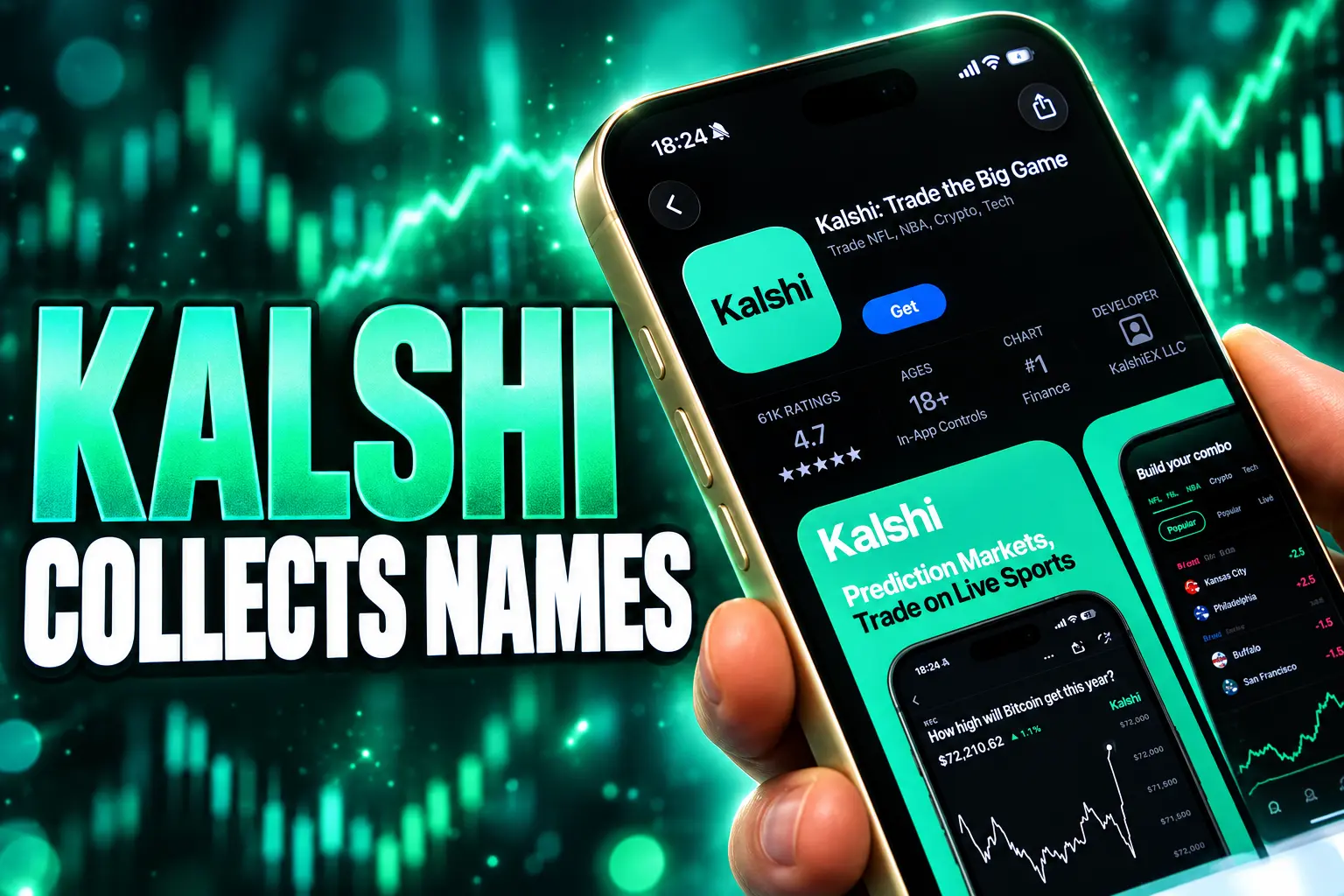
Kalshi Collects Employer Names to Keep High-Risk Markets Open
Kalshi now asks for employer names on high-risk bets, a form aimed at regulators and banks as much as cheats.

Kalshi said on June 9, 2026 that traders must name their employers before buying contracts it scores as high-risk for insider trading. The rule took effect that day on the CFTC-registered exchange.
The form looks like a simple job check. It is also how Kalshi shows Washington it can fence off insiders, and how it tries to get funds that will not trade until a compliance desk can see the account.
Employer Names Are Now Part of High-Risk Trades
Kalshi posted new market integrity measures drawn from the first report of its independent Surveillance Audit Committee. For markets with a high enough score, it now collects employment information before a trader can take part, then tries to screen out people it treats as presumptive insiders.
Robert DeNault, Kalshi’s head of enforcement, said the company would “lead the industry on the issue of market integrity amongst federally regulated prediction markets.” The same post said every market now carries a tip tool that routes to a surveillance team watching the feed 24/7.
The score is not a single switch. Kalshi said it runs each proposed listing through corporate-event risk, how concentrated the outcome is in one person or a closed group, how large the market is, whether the contract fits the rules, whether someone could hold material non-public information with no legal duty to stay out, and national security risk.
Kalshi does not list contracts on war, assassination, or violence. DeNault wrote that even a leadership or foreign-policy market can still raise incidental national security issues, so the firm now scores that risk before a listing goes live.
A Kalshi spokesperson said users will fill in an online form. The company will not check the workplace unless it opens a probe. It may still block some people from some contracts based on the job they typed in. One example the firm gave is a Google employee trying to trade a Google-related market.
The $1.2 Million Case Landed on Polymarket
That Google example is not hypothetical, and it did not happen on Kalshi. On May 27, 2026, the CFTC filed a CFTC complaint against Michele Spagnuolo, a Google software engineer living in Switzerland, in the U.S. District Court for the Southern District of New York.
The civil case says Spagnuolo used confidential Year in Search 2025 data, then bought Yes or No shares on at least 23 related contracts on Polymarket.com, including “#1 Searched Person on Google this year” and “Top 5 Most Searched People on Google 2025,” with near-perfect accuracy. He used the handle AlphaRaccoon and made about $1.2 million.
As I have said repeatedly, the Commission will not tolerate fraud, manipulation, or insider trading, regardless of the technology or platform that is used.
Michael S. Selig, Chairman, Commodity Futures Trading Commission
David I. Miller, the CFTC’s director of enforcement, said employees entrusted with confidential business information cannot take that information for personal gain. The same day, federal prosecutors in Manhattan charged Spagnuolo with commodities fraud, wire fraud, and money laundering. The criminal complaint says the AlphaRaccoon account risked $2,754,092 from Oct. 15, 2025, through Dec. 4, 2025, the day Google released the public list.
An unverified job field on Kalshi would not have seen a Swiss Google engineer funding a Polymarket wallet. The case still became the template Kalshi now cites when it talks about blocking a Google worker from a Google market.
THE SPAGNUOLO FILE
- The profit: About $1.2 million on Polymarket Year in Search 2025 contracts, per the CFTC.
- The stake: $2,754,092 risked from Oct. 15, 2025, through Dec. 4, 2025, per the criminal complaint.
- The contracts: At least 23 search-list markets, including the #1 person and Top 5 people contracts.
- The handle: AlphaRaccoon, tied to a Google software engineer living in Switzerland.
Kalshi’s own first-quarter enforcement tally, posted with the June 9 changes, sits next to that case as the firm’s proof it was already policing its book.
THE SPRING 2026 INTEGRITY CALENDAR
- April 22, 2026: Kalshi fines and suspends three congressional candidates for trading on their own races.
- May 20, 2026: Kalshi describes Politically Exposed Persons screening that can deny or limit accounts at sign-up.
- May 27, 2026: The CFTC and Manhattan prosecutors charge Spagnuolo over the Polymarket search-list trades.
- June 9, 2026: Kalshi starts collecting employer names on high-risk markets, effective immediately.
- June 10, 2026: The CFTC issues its proposed public-interest rule for event contracts.
- June 17, 2026: Kalshi and StarCompliance say employers can watch staff Kalshi trades in real time.
Thirteen days separate the Spagnuolo charges from the employer form. One day separates that form from the CFTC’s event-contract proposal. Eight days after the form, a vendor built for bank compliance desks is on the product sheet.
Kalshi Will Not Verify Most Job Claims
The June 9 post titled the step “Employment Verification.” The body of the post is narrower. Kalshi will collect the job. It will try to screen people it sees as insiders. A spokesperson said the firm will not verify the workplace unless an investigation is warranted.
Those are three different steps. Collection is the form. Verification is a check against reality. Blocking is a possible filter based on the name the trader typed. A Google employee who tells the truth can be kept off a Google contract. A Google employee who types a different employer is, on the ordinary path, believed until a probe starts.
WHAT WE KNOW
- The trigger: High insider or manipulation scores, including corporate performance, national security, and major geopolitical events.
- The form: An online employment submission before the trade, effective June 9, 2026.
- The block: Kalshi says some workplaces can be kept off related contracts, and gave Google as the example.
WHAT IS UNCONFIRMED
- Routine checks: Kalshi has not said it will match job titles to payroll, LinkedIn, or corporate email on every high-risk trade.
- The public score: Traders have not been given a live list of which markets sit above the cutoff.
- False names: There is no published test of what happens when a trader simply types the wrong employer.
The honest employee at a sensitive firm is the person the form can actually catch. The person willing to lie, or to route money through someone else, is not the person an unchecked field is built to stop. Kalshi’s harder tools sit around that field: the Q1 screens, the candidate cases, the PEP list, and the employer feed that followed eight days later.
Three Candidates Paid Fines as Small as $539.85
On April 22, 2026, Kalshi posted three political insider trading cases it said were flagged by new safeguards that block candidates from trading on their own elections. The dollar amounts were small. The bans were not.
THE APRIL 22 CANDIDATE CASES
| Race | Fine | Suspension | How it closed |
|---|---|---|---|
| Minnesota 2nd CD Democratic primary | $539.85 | 5 years | Settled after the trader acknowledged the rule breach |
| Texas 21st CD Republican primary | $784.20 | 5 years | Settled; Kalshi said it blocked the trader first |
| Virginia U.S. Senate Democratic primary | $6,229.30 | 5 years | No settlement after the trader stopped responding |
Kalshi said the Minnesota trader had dealt a small amount on his own race, then cooperated. The Texas trader also cooperated after a pre-emptive block. The Virginia trader had dealt in a 2026 candidate market on himself, then again on his own Senate primary, acknowledged the problem, and later cut off contact. Kalshi said it did not refer those three files to the CFTC or the Justice Department.
The firm’s Q1 tally, posted in June, is a separate stack: 150+ investigations kept confidential until they close, 100+ potential insider trades blocked by new screening tools, 20+ referrals to law enforcement, and 5 disciplinary actions. April 22 sits in the second quarter, so those three candidate files are not the same five Q1 actions.
What the candidate cases show is the kind of insider Kalshi can actually reach on its own rails. The people used their own names on a KYC exchange and bet on races they were in. The fines start at $539.85. The cost that matters is the five-year ban.
The Phone Call That Unlocked a Hedge Fund
On June 17, 2026, eight days after the employer form, Kalshi and StarCompliance said they would let employers see staff prediction-market trades in real time. StarCompliance already watches employee stock and derivatives trading for financial firms. Under the tie-up, workers at those firms link their Kalshi accounts so the vendor can flag activity to the client.
The companies said in a joint statement that as prediction markets grow, financial firms face a new path for staff to profit from material non-public information, and that the software lets firms monitor Kalshi activity against their own policies.
We’re obsessed with compliance.
Max Crowley, Vice President of Business Development, Kalshi
Crowley said the product exists because a large New York hedge fund wanted an institutional account to hedge on Kalshi and refused to trade without a StarCompliance hookup. He called strong compliance systems the table stakes for the institutions Kalshi needs if it wants volume to keep rising.
Once an account is linked, the feed is not limited to a contract on the employer’s own results. A compliance desk that can see a Google-related trade can also see a sports bet on the same login. That is the bargain the fund asked for, and it is a wider window than the June 9 form, which only appears on markets Kalshi has already scored as sensitive.
The retail trader gets a job field that Kalshi may never check. The bank trader gets a live pipe to the boss. Both are sold as insider-trading controls. Only one of them requires the trader’s workplace to be true.
A Public-Interest Test Aimed at Insiders
On June 10, 2026, the day after Kalshi’s post, the CFTC issued a proposed public-interest rule for event contracts, published in the Federal Register on June 12. Comments were due July 27, 2026. The proposal would spell out when an event contract is contrary to the public interest and cannot be listed or cleared on a registered venue.
Among the factors the commission put on the table are the risk of information leakage and the exploitation of material non-public information by insiders. Law-firm summaries of the same notice also describe the agency looking at whether an exchange has guardrails against that misuse, including bans on categories of traders likely to hold inside information.
That is the listing test the June 9 score is built to survive. Kalshi’s six-part review is, in plain terms, a memo to the CFTC that the exchange asked the insider question before the contract went up.
WHAT KALSHI SCORES BEFORE A LISTING
- Corporate events: Markets that look like classic material non-public information, including company metrics and product launches.
- Outcome concentration: Higher risk when one person or a closed group can decide the result; lower when the result is a broad process or a physical measurement.
- Market importance: Niche hobby contracts versus large national or geopolitical markets; a small market with a high insider score can still be rejected.
- Regulatory fit: Whether the contract is compatible with the rules that already bind the exchange.
- Duty-free insiders: People who know the answer but have no preexisting legal duty to keep quiet or to stay out of the market.
- National security: How much kinetic activity could reasonably attach to the event that settles the contract, even when the listing is not a war market.
Selig’s line after Spagnuolo was that the platform does not matter. For Kalshi, the platform is the whole point. It is the onshore, name-known, CFTC-registered venue. If the public-interest test treats weak insider controls as a reason to kill a contract class, the employer field, the PEP list, and the StarCompliance pipe are how Kalshi tries to keep those classes on the board.
Who Already Cannot Trade on Kalshi
The June 9 form is a late layer. On May 20, 2026, Kalshi said it already runs Politically Exposed Persons screening at sign-up and can deny or limit accounts. The post said members of Congress who can open a normal brokerage account are automatically denied on Kalshi.
KALSHI’S PEP SCREEN AT SIGN-UP
- National offices: Presidents, cabinet members, top party officials, U.S. Congress, senior armed forces members, and U.N. ambassadors.
- Regional offices: Governors, statewide elected officials, and members of the judiciary.
- Local offices: Mayors and leaders of large cities, plus employees of state-owned companies.
- Hard denials: Kalshi said some PEPs cannot trade at all, including members of Congress, presidents, governors, federal judges, and high-ranking military personnel.
That list is a category ban. The employer form is a market-by-market filter. The candidate cases are after-the-fact discipline on people who still got through. The Spagnuolo file is a federal case on a different platform. Put together, they are the stack Kalshi now points to when it says prediction markets can be “safe spaces to trade.”
The stack still leaves a hole in the one new piece the June 9 post added. Kalshi has the name the trader typed, a score on the market, and a 24/7 tip line. It does not, on the ordinary path, have a confirmed job. The people who can force a confirmed job are the employers who pay StarCompliance to watch the account, and the investigators who already have enough to open a file.
Spagnuolo’s civil case remains in the Southern District of New York, with the CFTC seeking restitution, disgorgement, civil penalties, trading and registration bans, and a permanent injunction. On Kalshi, the high-risk ticket now starts with a job title the exchange may never check.
Disclaimer: This article is news reporting and analysis of Kalshi’s published rules, CFTC and Justice Department actions, and related company statements. It is for information only and is not investment, trading, legal, or tax advice, and it is not a recommendation to buy, sell, or avoid any event contract, prediction-market position, or other financial product. Readers who are considering trading, or who need to know whether a workplace policy or securities law applies to them, should consult a licensed financial adviser, compliance officer, or attorney before acting. Figures, case statuses, and platform rules reflect the cited Kalshi posts, CFTC Release 9237-26, the June 2026 proposed event-contract rule, and related statements as published, and all of those can change as investigations, listings, and final rules move.

macOS 27.2 Adds Touch Gestures 15 Years After Jobs

Seiko Turns the 2024 Panda Concept Into 5,000 Watches

FAO Food Price Index Rises Despite a Near-Record Harvest

Iran Threat Sends America’s B-1 Bombers Home From Fairford

D&D World of Warcraft Rebuilds Seven Dungeons as Tools

Microsoft 365 Auth Fault Took Down Exchange and Teams

Xbox Caps Game Pass Cloud Gaming at 15 Hours

Squishy Dumpling Toys Recalled After Hiding Illegal Water Beads

IFA 2026’s Weird Gadgets Are Building a Sensor Home

Tesla Puts Its Wheel-Free Cybercab on Austin Streets
-
 NEWS1 month ago
Microsoft 365 Auth Fault Took Down Exchange and Teams
-
 GAMING1 month ago
Xbox Caps Game Pass Cloud Gaming at 15 Hours
-
 AUTO1 month ago
Tesla Puts Its Wheel-Free Cybercab on Austin Streets
-
 LIFESTYLE1 month ago
Squishy Dumpling Toys Recalled After Hiding Illegal Water Beads
-
 BUSINESS1 month ago
ChargePoint Stock Rally Prices Wilmer’s Three-Year Cash Plan
-
 NEWS1 month ago
IFA 2026’s Weird Gadgets Are Building a Sensor Home
-

 BUSINESS1 month ago
Diesel Breaks Its Record as the White House Claims Credit
-

 NEWS1 month ago
OpenAI Unveils GPT-6 Astra With a Critical Cyber Label