
BUSINESS
Jio Bets Public Markets Will Fund Debt Without Exits
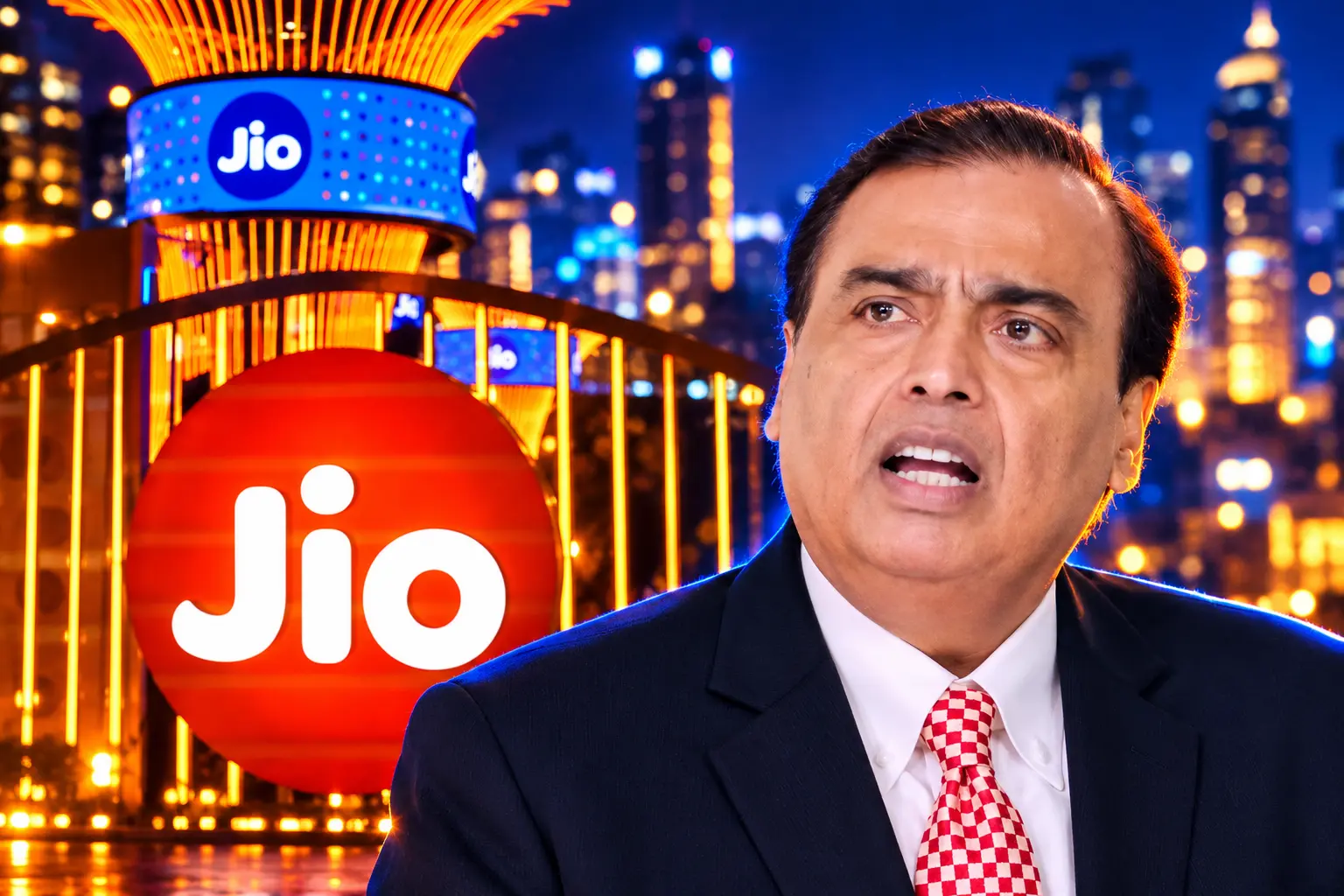
Jio Platforms will start global IPO meetings for a November listing, a fresh issue that pays down debt while insiders keep their stakes.

Jio Platforms plans to begin Jio IPO meetings from the week of 14 September 2026 for a November listing that could raise as much as $4 billion (about ₹37,700 crore). People familiar with the matter said the digital arm of Reliance Industries will sit with investors in the United States, Singapore, Hong Kong, London and the Middle East. Size, value and timing can still move.
Every share on the table is new. Reliance, Meta and Google are not selling. The public is being asked to fund term-loan paydown at a price that existing holders would not take when the deal was still an exit.
Jio Takes Its $4 Billion Pitch on the Road
The regulator cleared the path on 28 August 2026, when Jio Platforms received SEBI’s observation letter on the draft red herring prospectus filed on 19 June. The offer is a book-built fresh issue of up to 27 crore equity shares of face value ₹10, equal to 2.93 percent of post-issue equity. Pre-issue capital stands at 8,93,90,30,830 shares; post-issue it would be 9,20,90,30,830.
That sliver sits just above the floor India now allows for giants. Companies with a post-listing market value above ₹5 lakh crore may list after selling 2.5 percent, then have 10 years to reach a 25 percent public float. The government notified the cut on 13 March 2026, after SEBI proposed it in September 2025.
Up to 50 percent of the net issue can go to qualified institutional buyers, at least 35 percent to retail buyers and at least 15 percent to non-institutional buyers. Eligible Reliance Industries shareholders and Jio employees get reserved slices. Nineteen banks are running the books, with Kotak Mahindra Capital and Morgan Stanley among the first hired, and KFin Technologies as registrar. A Jio representative did not comment on the meeting plan.
The Offer That Stopped Being a Cash-Out
The first design was an offer for sale. Existing holders would have sold about 2.8 percent and the company would have issued no new paper. Some of those holders pulled back from the price on the table, people involved in the process said, with a weak market and a softer rupee cutting dollar returns. The file that went to SEBI is a full primary issue, so the cash stays inside Jio Platforms and inside India.
KKR, Meta, Google and other investors had been asked to sell a slice on a pro-rata basis so the float test could be met without changing relative ownership. They stay on the register. The listing, internally called Project Jupiter, is Reliance’s first IPO since Reliance Petroleum in 2006. Mukesh Ambani first talked about a Jio listing in 2019.
THE PATH TO THE ROADSHOW
- August 2025: Ambani tells shareholders Jio should list in the first half of 2026.
- September 2025: SEBI eases the minimum dilution rule for companies valued above ₹5 lakh crore.
- 13 March 2026: The government notifies the 2.5 percent listing floor.
- 19 June 2026: The Jio Platforms board clears the draft prospectus and files it the same day as Reliance’s annual meeting.
- 28 August 2026: SEBI issues its observation letter, valid for 12 months.
- Week of 14 September 2026: Global investor meetings are due to start, with a November listing still the working target.
The flip is the wager. Early backers keep their paper. New buyers fund the balance sheet. Control barely moves, and Reliance remains the promoter with 66.43 percent before the issue, a holding that would ease only by the 2.93 percent dilution.
What 27 Crore New Shares Are Meant to Pay
The draft prospectus earmarks up to ₹27,500 crore of net proceeds to prepay borrowings at Reliance Jio Infocomm, the operating subsidiary. The target is three syndicated term-loan facilities with principal of about ₹30,057.2 crore as of 31 March 2026, originally drawn for capex and spectrum. The rest is general corporate use, capped at 25 percent of gross proceeds.
WHERE THE IPO CASH IS MEANT TO GO
- Term-loan prepay: Up to ₹27,500 crore toward those three facilities at Reliance Jio Infocomm.
- General use cap: No more than 25 percent of gross proceeds, covering strategy, deals, deferred dues, marketing, capex, working capital and contingencies.
- Stated aim: Lower net debt and servicing costs, lift net asset value per share, and leave room for 5G densification, home broadband, AI and cloud, enterprise digital work and overseas tech ties.
Jio Platforms’ finance costs rose to ₹8,653 crore in FY26 from ₹4,905 crore a year earlier after 5G spectrum assets came onto the books. Net debt was ₹27,579 crore on 31 March 2026. CARE Ratings put RJIL net overall gearing at 0.53 times on that date, with net debt to operating profit at 2.17 times. This is a refinance of expensive loans, not a rescue.
The 2020 Round Still Shapes the Public Price
In 2020 Jio Platforms sold about a third of itself for about $20 billion, at a value of about $65 billion. Facebook, now Meta, paid $5.7 billion in April 2020 for a 9.99 percent stake through Jaadhu Holdings. Google put in $4.5 billion in July 2020 for 7.7 percent, later disclosed at 7.73 percent. Silver Lake, Vista, KKR, Mubadala, Saudi Arabia’s Public Investment Fund, ADIA, TPG and others filled out the rest.
People familiar with the IPO have put the company at about $137 billion, which is the number the 2.93 percent primary has to support if the raise is near $4 billion. That is more than double the 2020 private price, and it is the figure the roadshow has to defend. Because there is no offer for sale, the 2020 funds do not get a window. Their relative stakes shrink only by the new shares.
WHO OWNS JIO PLATFORMS BEFORE THE ISSUE
| Holder | Stake (31 Mar 2026) | 2020 cheque, where known |
|---|---|---|
| Reliance Industries | 66.43% | Promoter |
| Meta (Jaadhu Holdings) | 9.98% | $5.7 billion |
| Google International | 7.73% | $4.5 billion |
| Saudi Public Investment Fund | 2.31% | $1.5 billion |
| KKR | 2.31% | $1.5 billion |
| Vista Equity Partners | 2.31% | $1.5 billion |
Silver Lake at 1.88 percent, Mubadala at 1.85 percent, General Atlantic at 1.34 percent, ADIA at 1.16 percent and TPG at 0.93 percent sit behind that group. The register still reads like a 2020 private placement, only now the next buyer is the Indian public market.
Hyundai Still Holds the Record Jio Wants
If the issue lands near ₹37,700 crore it would pass Hyundai Motor India’s ₹27,859 crore sale in October 2024, still the largest completed Indian IPO, and it would also pass the National Stock Exchange’s proposed float of about ₹30,000 crore. Hyundai was a 100 percent offer for sale by the Korean parent. Jio is the opposite structure: new shares, cash to the issuer.
INDIA’S MEGA IPOS AGAINST THE JIO TARGET
| Issue | Year | Size | Structure | Debut vs issue |
|---|---|---|---|---|
| Jio Platforms (target) | 2026 | About ₹37,700 crore | 100% fresh issue | Not priced |
| NSE (proposed) | 2026 | About ₹30,000 crore | Not the same deal | Not priced |
| Hyundai Motor India | 2024 | ₹27,859 crore | 100% offer for sale | Listed at ₹1,934 vs ₹1,960, 1.33% below |
| LIC | 2022 | ₹20,557 crore | 100% offer for sale | Opened under the ₹949 issue price |
Marquee Indian IPOs have a habit of listing tired. Hyundai opened 1.33 percent under its ceiling. LIC opened under ₹949. As of December 2025, half of India’s ten largest IPOs still traded below issue. A November window that also holds the NSE float will split retail cash, and listing-gain hunters already talk about bidding both. The parent stock is part of the pitch too: a soft Reliance price is a poor teaser for a Jio meeting, even though the float is a different company.
Spectrum Dues Sit Outside the IPO Cheque
The ₹27,500 crore is aimed at bank loans, not at the Department of Telecommunications. Jio’s deferred spectrum liability was ₹1.04 trillion at March-end, down 4.2 percent as instalments were paid. There was no auction in FY26. The 2021 auction still carries ₹30,213 crore, payable in 13 annual instalments at 7.30 percent. The 2022 5G auction carries ₹73,425 crore over 16 instalments. The July 2024 auction adds ₹876 crore over 18 instalments, starting in August 2026.
THE BALANCE SHEET THE ROADSHOW HAS TO EXPLAIN
- Bank debt in the prospectus: About ₹30,057.2 crore of principal on three syndicated lines, with up to ₹27,500 crore of IPO cash aimed at prepay.
- Spectrum instalments: ₹1.04 trillion still owed to the government on a long calendar, outside that prepay line.
- Leverage vs peers: Consolidated net debt to EBITDA at 0.36 times for Jio, against 1.36 times at Bharti Airtel, in the industry report filed with the draft papers.
- Headcount: 28,163 full-time staff across Jio Platforms and subsidiaries on 31 March 2026.
General corporate proceeds may touch deferred payment liabilities, but the headline object is the term loans. Buyers who think a $4 billion IPO wipes the spectrum slate will be reading the wrong line of the prospectus.
Isha, Akash and Anant Run the Meetings
At Reliance’s 49th annual meeting on 19 June 2026, the same day the draft papers went in, Mukesh Ambani put his three children on the listing.
This is a deeply emotional moment for me, for the entire Reliance Family, and millions of its shareholders.
Mukesh Ambani, Chairman, Reliance Industries, 49th annual general meeting
He said Isha, Akash and Anant “are heading the Jio IPO process,” and he told prospective buyers that “a brighter future awaits Jio.” Ten years after launch, the user base had crossed 524 million, with 268 million on 5G, 77 million of those added in the year, and JioAirFiber at 13 million homes. Fixed broadband customers were 27.1 million. Network data traffic in FY26 was 241 exabytes, up 30.8 percent. Exit-quarter ARPU was ₹214.0, and per-user data use was 42.3 GB a month.
The Jio Platforms FY26 results put revenue from operations at ₹1,46,885 crore ($15.5 billion), up 14.6 percent, EBITDA at ₹76,255 crore ($8.0 billion), up 18.8 percent, with margin at 51.9 percent after a 190 basis-point lift, and profit after tax at ₹30,053 crore. Those are the operating numbers in the Jio FY26 operating metrics pack that sits with the draft papers. In the July update on the listing, first-quarter revenue was ₹45,961 crore, up 12.0 percent, and EBITDA was ₹20,865 crore, up 15.1 percent, at a 53.3 percent margin. Ambani called the IPO a milestone in Jio’s next phase.
The meetings that open in the week of 14 September 2026 will not be about whether Jio can service its instalments. They will be about whether public money will pay about $137 billion for a 2.93 percent primary after the people who already own the company declined to sell at the last number on the sheet.
Disclaimer: This article is news reporting and analysis of a planned share sale, and it is for information only. It is not a recommendation to apply for, buy or sell Jio Platforms, Reliance Industries or any other security, and it is not investment, tax or legal advice. Readers should consult a SEBI-registered investment adviser or other qualified financial professional before acting on any IPO or listed stock. Offer size, price band, dates and use of proceeds can change as the red herring prospectus is filed and as markets move, and all figures here come from company filings, the draft prospectus and named statements that may be updated.

Final Fantasy Resonance Turns a Dead Gacha Into HD-2D

PHP2Shell Forced Sites Offline While Exploits Stalled

Kindle+ Folds AI Audiobooks Into the Page-Read Fund

Chip Stocks Fall as the Bond Rally Cheapens AI Spend

Comcast’s Record Odyssey Quarter Doubles as the Exit

Microsoft 365 Auth Fault Took Down Exchange and Teams

Xbox Caps Game Pass Cloud Gaming at 15 Hours

OpenClaw 2.0 Ships a Team Workplace With Host-Trust Defaults

OpenAI Unveils GPT-6 Astra With a Critical Cyber Label

Diesel Breaks Its Record as the White House Claims Credit
-
 NEWS2 months ago
Microsoft 365 Auth Fault Took Down Exchange and Teams
-
 GAMING2 months ago
Xbox Caps Game Pass Cloud Gaming at 15 Hours
-
 NEWS2 months ago
OpenAI Unveils GPT-6 Astra With a Critical Cyber Label
-
 NEWS2 months ago
OpenClaw 2.0 Ships a Team Workplace With Host-Trust Defaults
-
 BUSINESS2 months ago
Diesel Breaks Its Record as the White House Claims Credit
-

 LIFESTYLE2 months ago
Squishy Dumpling Toys Recalled After Hiding Illegal Water Beads
-

 BUSINESS2 months ago
ChargePoint Stock Rally Prices Wilmer’s Three-Year Cash Plan
-

 AUTO2 months ago
Tesla Puts Its Wheel-Free Cybercab on Austin Streets