
NEWS
New Jersey Asks the Court That Legalized Sports Betting
Eight years after winning sports betting at the Supreme Court, New Jersey asks that Court to treat Kalshi sports contracts as state-regulated bets.

New Jersey asked the Supreme Court on September 2 to treat Kalshi sports contracts as bets, not Wall Street swaps. The filing lands eight years after that Court told states they could legalize sports wagering on their own terms.
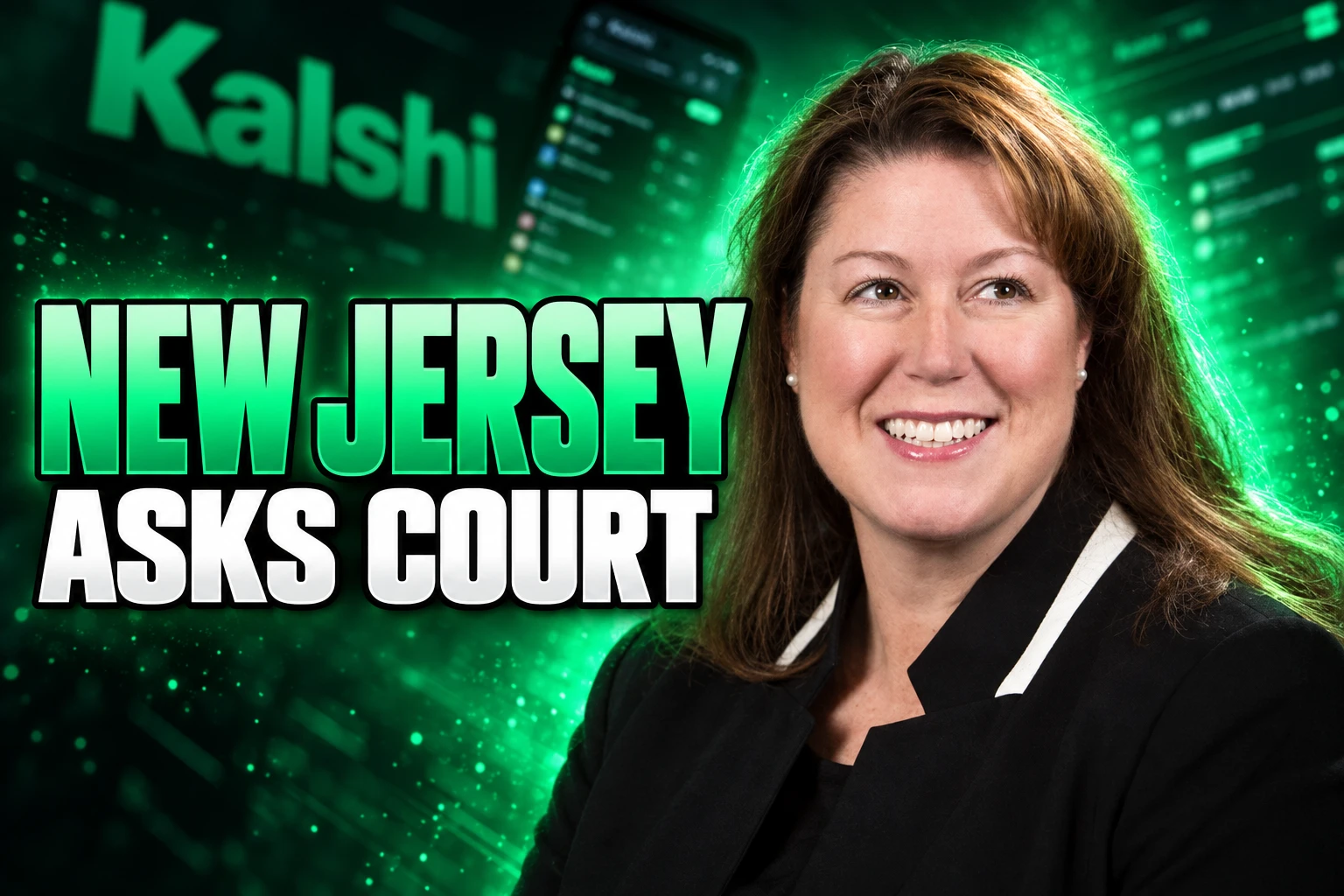
Attorney General Jennifer Davenport’s petition is the first ask for high-court review of a business that lists sports wagers on a Commodity Futures Trading Commission exchange and then skips state gambling codes. Kalshi still runs those contracts in the Third Circuit. Nevada can now police the same product.
The 2018 Case New Jersey Won
On May 14, 2018, the Supreme Court struck down the Professional and Amateur Sports Protection Act, the federal statute that had blocked most states from authorizing sports gambling. Justice Samuel Alito wrote the majority opinion in Murphy v. NCAA. New Jersey had spent years trying to open sportsbooks at casinos and racetracks. The leagues and the NCAA had sued to stop it.
Americans have never been of one mind about gambling, and attitudes have swung back and forth.
Justice Samuel Alito, majority opinion, Murphy v. NCAA
Alito’s Court held that Congress had commandeered state legislatures by telling them they could not authorize sports betting. PASPA did not make sports gambling a federal crime. It told states what their own laws could not say. If Congress would not each State is free to act on its own, Alito wrote, then states kept the choice.
Governor Phil Murphy signed New Jersey’s Sports Wagering Act on June 11, 2018. Casinos and tracks could license a sports pool, including online. Voters had already carved out one hard limit in 2011: no bets on a college event in New Jersey, and no bets on a New Jersey college team anywhere.
That is the regime Kalshi walked into. The company’s pitch, in Davenport’s words, is legal sports betting in all 50 states. The state’s pitch is that the Court already assigned this industry to Trenton, not to a derivatives desk in Washington.
How Dodd-Frank Became a Sportsbook License
KalshiEX LLC is a designated contract market, certified by the CFTC in 2020. In that status it may list event contracts, binary yes-or-no trades that pay if something happens. On January 24, 2025, it self-certified sports contracts, including college basketball rounds, and began listing them the next business day.
Dodd-Frank’s 2010 rewrite of the Commodity Exchange Act gives the CFTC exclusive jurisdiction over “swaps” traded on those markets. The statute defines a swap as a contract whose payment depends on “the occurrence, nonoccurrence, or the extent of the occurrence of an event or contingency associated with a potential financial, economic, or commercial consequence.” Kalshi’s lawyers say a game result fits. New Jersey’s lawyers say a game result is a bet.
A designated market can list a new contract by sending the CFTC a written certification. The agency has 10 business days to stay the listing for review, then 90 days to finish. The CFTC did not prohibit Kalshi’s sports slate. A separate rule, 17 C.F.R. §40.11(a), still bars contracts that involve gaming. Kalshi’s position is that the sports contracts are swaps on a registered exchange, so state codes fall away.
THE PATH TO THE PETITION
- January 24, 2025: Kalshi self-certifies sports event contracts and lists them on its exchange.
- March 27, 2025: New Jersey’s Division of Gaming Enforcement sends a cease-and-desist letter to chief executive Tarek Mansour, citing the Sports Wagering Act and the college-sports ban.
- April 28, 2025: A federal district judge in New Jersey enjoins the state from enforcing those laws against Kalshi.
- April 6, 2026: The Third Circuit, by a 2-1 vote, affirms that injunction.
- August 28, 2026: The Ninth Circuit, 3-0, lets Nevada enforce its gaming laws against the same product.
- September 2, 2026: Davenport and Interim Director Mary Jo Flaherty file for Supreme Court review.
Judge David Porter, joined by Chief Judge Michael Chagares, held that a sports outcome “certainly can be associated with a potential financial, economic, or commercial consequence,” naming sponsors, advertisers, networks, franchises, and cities. Because the contracts trade on a licensed market and turn on those outcomes, the majority said, they are swaps. Field and conflict preemption then block New Jersey’s gambling statutes. Judge Roth dissented, writing that Kalshi can comply with both state and federal law by getting a New Jersey license, and that the CFTC’s own gaming rule already undercuts the preemption claim.
Opposite Answers From Two Appeals Courts
Five months later a different panel, in KalshiEX, LLC v. Assad, read the same definition the other way. Judges Ryan Nelson, Bridget Bade, and Kenneth Lee, all appointed by Donald Trump, held that Kalshi’s sports contracts were not swaps “because they were sports bets.” Nelson wrote that placing sports bets, even when called by another name, is still gambling. The panel also said Kalshi’s self-certification was unlawful under the gaming bar that is still on the books.
HOW THE CIRCUITS SPLIT
| Question | Third Circuit (April 6, 2026) | Ninth Circuit (August 28, 2026) |
|---|---|---|
| Case | KalshiEX v. Flaherty (New Jersey) | KalshiEX v. Assad (Nevada) |
| Vote | 2-1 | 3-0 |
| Are sports contracts swaps? | Yes, because game results have economic effects | No, because they are sports bets |
| Does the CEA lock out the state? | Yes; New Jersey cannot enforce its gambling laws | No; Nevada can enforce its gaming laws |
| What about the CFTC gaming rule? | Congress put gaming inside the CFTC’s review power | The current rule bars gaming contracts, so the listing is unlawful |
Lee’s concurrence supplied the picture a betting slip already makes obvious. Few people, he wrote, would call the New York Mets’ latest loss an “event” in the swap-contract sense. A loss might send a few fans to the tap. That is not the financial consequence Congress wrote into a post-crisis derivatives statute.
Congress did not take a wrecking ball to all sports gambling regulations built up over decades by federal, state, and tribal governments.
U.S. Court of Appeals for the Ninth Circuit, KalshiEX, LLC v. Assad, August 28, 2026
New Jersey co-led an amicus brief in that appeal, joined by 39 other jurisdictions. The Ninth Circuit cited the brief for the point that Congress did not hide national gambling control inside the words “event” and “associated with.” Kalshi spokeswoman Dani Lever said the Ninth Circuit still agreed that federal law blocks states from regulating trading on a licensed exchange, and that it parted ways only on a regulation “in the process of being rewritten.” Kalshi, she said, will seek further review.
A sports contract that pays if a team covers the spread still looks like a ticket a sportsbook would sell. The two courts have now written opposite labels on that ticket. One label makes the CFTC the only cop. The other hands the whistle back to state gaming boards.
Casino Windows Could Become Federal Crimes
Davenport’s petition turns that label into a trap for the industry New Jersey built after Murphy. Dodd-Frank also makes it unlawful for a person to enter a swap off a designated contract market. If Kalshi is right that a sports bet is a swap, then a window at the Borgata, a Las Vegas race book, or a tribal sportsbook is offering swaps off-exchange.
The petition says those licensed books, “including at brick-and-mortar casinos,” would have been violating Dodd-Frank all along. That is the sting inside the federalism fight. A Kalshi win would not only punch a hole in state codes. It would recast the legal sportsbooks those codes created as the illegal ones.
Lever’s reply is that Kalshi is “an open, nationwide financial exchange” and “cannot be regulated by 50 different regulators.” Both the Third Circuit and the New Jersey district court, she said, already held that CFTC jurisdiction preempts state law, and nothing in the new filing changes that view. The company is not asking for a sportsbook license. It is asking to be treated as a market.
In 2025, 90 percent of Kalshi’s trades were tied to sports, and 95 percent of its revenue came from those contracts, the petition and the attorney general’s office both state. The product at issue is not a side market in Fed meetings. It is the company’s business.
Nine Suits and a 44-State Revolt
Litigation over the model has reached at least 20 states, with dozens of suits pending and several state gambling laws already enjoined. The CFTC has filed nine of its own cases against states, a campaign that, in the agency’s own court papers, asserts exclusive authority over designated contract markets. Chairman Michael Selig has described state crackdowns as an intrusion on a uniform national swaps market. The Trump administration has backed that reading in court. Donald Trump Jr. is an advisor to Kalshi and to Polymarket, and his firm has put money into Polymarket.
A conservative majority does not settle this. The three Ninth Circuit judges who ruled against Kalshi were Trump appointees. They treated the contracts as bets and left Nevada’s gaming board in charge. Federalism here cuts against the White House, not for it.
THE MONEY ON THE TABLE
- State take, 2025: Sports betting generated $16.89 billion in revenue for states nationwide, Davenport’s office said, not counting tribal sportsbooks.
- Kalshi mix, 2025: Sports supplied 95 percent of the company’s revenue and 90 percent of its trades.
- New Jersey, July 2026: Licensed sportsbooks posted $97.0 million in gross gaming revenue, up 29.7 percent from $74.8 million in July 2025, according to the Division of Gaming Enforcement.
- New Jersey, 2026 so far: Sports wagering gross revenue was $609.9 million through July, down 2.7 percent from $626.8 million a year earlier.
Forty-four states have already opposed Kalshi’s theory, in comments on a CFTC prediction-market proposal and in briefs. Hundreds of tribes have warned that the reading would let an unlicensed exchange siphon gaming revenue off Indian lands. The CFTC, in a 2024 Federal Register notice quoted in the petition, has said it “is not a gaming regulator” and lacks the mandate and the experience to oversee gambling. Davenport’s filing asks how that agency became the sole cop for a multi-billion-dollar betting market by way of a single word in a 2010 financial-crisis statute.
Former CFTC general counsel Rob Schwartz, now in private practice, has argued the other way on the statute’s “special rule,” which expressly lists gaming among the activities the commission may bar as contrary to the public interest. In his reading, Congress expected some event contracts to involve sports and still put them in the CFTC’s shop. The Ninth Circuit said the current bar on gaming contracts is enough to sink Kalshi’s listing. Schwartz says the special rule is evidence the contracts can be swaps in the first place.
WHAT WE KNOW
- The split: The Third Circuit shields Kalshi in New Jersey; the Ninth Circuit lets Nevada enforce its gaming laws against sports event contracts.
- The ask: New Jersey’s petition presents one question, whether Dodd-Frank preempted state sports bets offered on CFTC-registered markets.
- The first filing: Davenport’s office says this is the first certiorari petition on the self-certified sports-wager model.
WHAT IS UNCONFIRMED
- A grant: The Court has not said whether it will take the case.
- A rewrite: Kalshi says the CFTC gaming regulation is being rewritten; no final replacement rule is in force.
- A national map: Appeals remain live in other circuits, so the Third and Ninth results do not yet bind the rest of the country.
Davenport said companies like Kalshi claim to offer legal sports betting in all 50 states and then refuse to follow any state’s gambling laws. She called on the Court to hold that Congress did not silently make the industry immune from state law. Flaherty called it a states’ rights fight and said New Jersey is upholding a constitutional choice its voters already made.
College Games Stay Off the New Jersey Board
That choice is specific. The 2011 amendment still bars wagering on a college sport that takes place in New Jersey, and on any event in which a New Jersey college team plays, wherever the game is held. The Sports Wagering Act repeats the ban. Kalshi’s college-tournament contracts, Flaherty said, include NCAA games in the state and games with New Jersey teams.
WHAT NEW JERSEY STILL REQUIRES
- A state license: Only a licensed casino or racetrack, or its approved internet partner, may operate a sports pool.
- The college bar: No bets on New Jersey college events or New Jersey college teams, by constitution and by statute.
- Insider bans: Athletes, coaches, referees, directors, and owners may not bet.
- Problem-gambling funds: A portion of the state fee is earmarked for prevention, education, and treatment.
- Audits and enforcement: The Division of Gaming Enforcement investigates operators and can shut them down.
Those rules do not apply to Kalshi inside the Third Circuit while the injunction stands. They do apply to every DraftKings, FanDuel, and Atlantic City book that paid for a license. If the Supreme Court backs Kalshi, a CFTC registration becomes the nationwide pass New Jersey spent a decade telling the Court that Congress had never issued. If the Court backs New Jersey, the 2018 holding survives in a new form: states still set the terms, and calling a bet a swap does not move it to Washington.
The petition is now on the Court’s docket. Kalshi’s sports contracts remain live where the Third Circuit’s injunction holds. Nevada’s gaming board, after August 28, can treat the same contracts as an unlicensed sports pool.
Disclaimer: This article is news reporting and legal-policy analysis for general information only. It is not legal advice, tax advice, or a recommendation to place, accept, or avoid any wager or event contract. Readers who face licensing, enforcement, or personal-betting questions should consult a qualified attorney or a licensed gaming-compliance professional in the relevant state before acting. Case status, CFTC rules, and the revenue figures cited here reflect the public filings and agency releases available on September 2, 2026, and those facts can change with the next court order or monthly report.

The Salary Cap Fight That Can Freeze Baseball’s TV Payday

The 2027 Mercedes GLE and GLS Keep Alabama Busy

Margaret Hamilton Dies at 90 With a Harder Fight Unfinished

Unity Parks Its Engine Inside Google’s Prompt Games

The Hidden Vendor Cut in 403(b) vs 401(k) Plans

IFA 2026’s Weird Gadgets Are Building a Sensor Home

Microsoft 365 Auth Fault Took Down Exchange and Teams

Tesla Puts Its Wheel-Free Cybercab on Austin Streets

OpenClaw 2.0 Ships a Team Workplace With Host-Trust Defaults

OpenAI Unveils GPT-6 Astra With a Critical Cyber Label
-
 NEWS1 month ago
Microsoft 365 Auth Fault Took Down Exchange and Teams
-
 NEWS1 month ago
IFA 2026’s Weird Gadgets Are Building a Sensor Home
-
 AUTO1 month ago
Tesla Puts Its Wheel-Free Cybercab on Austin Streets
-

 GAMING1 month ago
Xbox Caps Game Pass Cloud Gaming at 15 Hours
-
 NEWS1 month ago
OpenClaw 2.0 Ships a Team Workplace With Host-Trust Defaults
-

 BUSINESS1 month ago
ChargePoint Stock Rally Prices Wilmer’s Three-Year Cash Plan
-
 NEWS1 month ago
OpenAI Unveils GPT-6 Astra With a Critical Cyber Label
-

 NEWS1 month ago
Sony and Warner Sue Anthropic Over Torrented Song Lyrics