
FINANCE
US Producer Prices Jump 6.5% in May on Energy Shock From Iran War
US producer prices rose 6.5% in May, the largest yearly jump since November 2022, as Iran war energy costs feed the Fed’s preferred inflation gauge.

US wholesale prices rose at the fastest annual pace in three and a half years in May, driven by a 23.4% spike in gasoline and a 10.7% jump in energy goods that traces directly to the Feb. 28 Iran war. The Labor Department’s producer price index climbed 6.5% from May 2025 and 1.1% from April, the largest 12-month increase since the 7.4% reading recorded in November 2022. Wholesale prices are an early read on where consumer inflation goes next, and the May numbers land five months before midterm elections that will decide whether President Donald Trump’s Republicans keep full control of Congress.
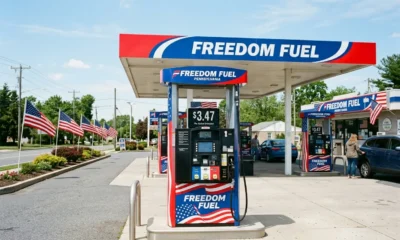
The May print is the wholesale version of the energy shock that has been visible at the gas pump since March. Gasoline at the pump has been above $4 a gallon since then, according to motor club AAA, and the U.S. driving season that pushes prices higher each year has just begun. The May PPI is the first monthly wholesale reading to capture the full pass-through of the Strait of Hormuz closure, a step an AP-cited report on the data called the biggest disruption in oil supplies in history.
Wholesale Prices Surge 6.5% Year-Over-Year, Biggest Annual Jump Since November 2022
The producer price index for final demand rose 1.1% in May on a seasonally adjusted basis, the Bureau of Labor Statistics said in its May 2026 wholesale price index release, matching the revised April increase. On a 12-month basis, the index climbed 6.5%, the largest annual gain since 7.4% in November 2022. The release shows the energy shock that started the day the US and Israel struck Iran on Feb. 28 is now moving through the wholesale pipeline in a single, sharp step.
Final demand goods, the goods-only slice of the index, jumped 2.8% in May, the largest monthly rise since BLS first calculated the series in December 2009. Energy goods alone rose 10.7% and accounted for 80% of that goods increase. Within energy, the gasoline index surged 23.4% and drove more than half of the goods-only advance. Diesel fuel, jet fuel, plastic resins, industrial chemicals, and natural gas liquids also moved higher. Pork fell 10.1%, the only large decliner in the BLS report.
The May PPI is the third monthly reading since the US and Israel struck Iran on Feb. 28, and the largest of the three on a year-over-year basis.
- PPI final demand, m/m: +1.1% in May (April revised to +1.1%)
- PPI final demand, y/y: +6.5% from May 2025 (largest since 7.4% in November 2022)
- Final demand goods: +2.8% m/m (largest monthly gain in BLS series history)
- Final demand energy goods: +10.7% m/m, drove 80% of the goods advance
- Final demand less foods, energy, and trade services: +0.8% m/m (largest since March 2022), +5.1% y/y

Gasoline Alone Drove Half the May Wholesale Increase
Over half of the May advance in prices for final demand goods traces to a 23.4% jump in the wholesale gasoline index, the BLS said. Wholesale gasoline prices are up nearly 70% from a year earlier, the steepest year-over-year wholesale swing of the post-2022 era. The pass-through to consumers is already visible in the May 2026 consumer price index release, a day earlier than the PPI report, with gasoline at the pump up 7.0% in May and 40.5% from May 2025. Wholesale prices for diesel fuel rose 15.7% in May, and crude petroleum jumped 11.8% on the unprocessed-goods side of the BLS table.
Some of those PPI components, notably healthcare and financial services, feed directly into the personal consumption expenditures index, the Federal Reserve’s preferred inflation gauge. Capital Economics chief North America economist Stephen Brown said the May release supports his view that the Fed will hike interest rates toward the end of the year. The CPI release Wednesday set the stage for the PPI report: consumer prices are up 4.2% from a year earlier, the highest annual rate in three years.
- Gasoline (PPI): +23.4% m/m in May, up nearly 70% y/y
- Diesel fuel (PPI): +15.7% m/m in May
- Crude petroleum (PPI, unprocessed): +11.8% m/m in May
- Plastic resins, industrial chemicals, jet fuel, NGLs: all moved higher
The Spread Is Reaching Processed Goods and Services
Energy is doing most of the work in the May release, but the increase is spreading to other corners of the wholesale economy. Processed goods for intermediate demand, a measure of what manufacturers pay for inputs, rose 3.5% in May, the largest monthly advance since March 2021. On a 12-month basis, processed-goods prices are up 13.3%, the largest annual gain since 14.3% in August 2022.
That is a faster 12-month pace than the headline index, a sign the energy shock is feeding into the cost of materials and chemicals that factories use to make other goods. Within processed goods, processed energy goods jumped 10.4% and diesel fuel rose 15.7%. Unprocessed goods for intermediate demand climbed 4.9%, with crude petroleum up 11.8%. Natural gas in the unprocessed-energy category fell 18.2%, a sharp counter to the broader energy complex.
The core final-demand index, which excludes foods, energy, and trade services, rose 0.8% in May and 5.1% on a 12-month basis, both the largest gains since 2022. Portfolio management, securities brokerage, and airline passenger services all moved higher, alongside truck transportation of freight.
Services for intermediate demand also picked up, with the index rising 0.5% in May and 4.7% over the past 12 months, the largest annual gain since 4.7% in July 2023. Within that, transportation and warehousing services rose 1.2% and securities brokerage, dealing, and investment advice rose 5.4%. Trade services margins fell 1.1% on the final demand side and 0.2% on the intermediate demand side, a reminder that not every corner of the wholesale economy is moving the same way. The May print nonetheless shows a wholesale inflation pulse that is broader than the energy category alone.
| Component | May m/m | 12-month y/y | Note |
|---|---|---|---|
| Final demand (headline) | +1.1% | +6.5% | Largest y/y since Nov 2022 |
| Final demand goods | +2.8% | n/a | Largest monthly gain since Dec 2009 |
| Energy goods (final demand) | +10.7% | n/a | 80% of goods advance |
| Gasoline (PPI) | +23.4% | nearly 70% | Over half of goods advance |
| Final demand less foods, energy, and trade services | +0.8% | +5.1% | Largest gains since March/Oct 2022 |
| Processed goods for intermediate demand | +3.5% | +13.3% | Largest y/y since Aug 2022 |
| Crude petroleum (unprocessed) | +11.8% | n/a | Two-thirds of unprocessed rise |
PCE Components Are Already Heating Up
The CPI report released Wednesday, a day before the PPI release, showed consumer prices rose 4.2% from May 2025, the highest annual rate in three years. Energy accounted for over 60% of the monthly all-items increase, the BLS said, with gasoline up 7.0% on the month and airfares up 2.7%. Shelter rose 0.3%. The energy index is up 23.5% on a 12-month basis, with gasoline up 40.5%.
The “core” CPI, which excludes food and energy, rose 2.9% year-over-year, well above the Fed’s 2% target. Some PPI components, notably healthcare and financial services, flow into the PCE index, the Fed’s preferred inflation gauge. Capital Economics chief North America economist Stephen Brown flagged the May print in a note Thursday morning. The Federal Reserve’s April 2026 FOMC minutes already show participants debating whether the Iran-driven energy shock is a sustained policy problem, and earlier coverage of the April PCE inflation jump tied to the Iran war traced the war’s earlier flow-through into that same gauge.
- CPI all items, y/y: +4.2% from May 2025 (highest in three years)
- CPI energy, y/y: +23.5%
- CPI gasoline, y/y: +40.5% (+7.0% m/m)
- CPI airfares, m/m: +2.7% in May
- CPI core (ex food and energy), y/y: +2.9%
that feed into the PCE price calculation rose by much more than we expected … It supports our view that the Fed will hike interest rates toward the end of the year.
That line came from Stephen Brown, chief North America economist at Capital Economics, in a note the morning of the PPI release. Capital Economics expects the Fed to hike rates toward the end of 2026, a position in the minority of forecasters that tracks the bond market’s pricing of a year-end move.
The Fed Walks Into a Midterm Year With Rates Above Target
The Fed’s 2% inflation target is now further away than it has been in three years. Financial markets expect the central bank’s June 17 meeting to leave the benchmark rate unchanged in the 3.5% to 3.75% range where it has been since January. But markets also price in the possibility that the Fed could raise rates by the end of the year in an effort to curb price increases, a notable shift from the easing bias that prevailed in late 2025 and early 2026.
The FOMC’s April meeting minutes, released at the end of May, show officials already debating whether a sustained energy-driven inflation pulse would require policy to lean against price increases. With wholesale gasoline up 23.4% in a single month and processed-goods inflation running at a 13.3% annual rate, the May data sharpens that debate. The case for a year-end rate hike is being made in the price data, not in speeches.
- Fed target range: 3.5% to 3.75% (held since January 2026)
- June 17 FOMC meeting: market expects a hold
- By year-end: markets price in the possibility of a rate hike
Inventories Are Heading Toward a ‘Danger Zone’
S&P Global Energy warned Thursday that US crude oil inventories are being drawn down as the summer driving season begins. Aaron Brady of S&P Global Energy said inventories “remain above estimated minimum operating thresholds” but added that continued Middle East disruption means “draws are likely to extend into the third quarter, even in the event of a near-term diplomatic resolution.” Sustained drops, he said, “would likely signal entry into a ‘danger zone’ for the US refining system.” Gasoline at the pump has been above $4 a gallon since March, according to AAA, with the U.S. driving season just starting.
The inventory picture is the question hiding under the May print. Wholesale prices for crude petroleum jumped 11.8% in May, a single-month move at a time when global oil markets are still digesting the closure of the Strait of Hormuz. The May PPI captured only the first round of that flow-through; the June numbers will show whether the inventory drawdown has translated into a second, larger step in wholesale prices.
The May print also captures the upstream cost of diesel, jet fuel, and plastic resins, with diesel fuel up 15.7% in a month and processed energy goods up 10.4%. Processed-goods inflation is running at a 13.3% annual rate, the fastest since August 2022. The full pass-through to consumer gasoline is already visible, with pump prices up 40.5% from a year earlier per the BLS CPI release. Brent crude oil price reaction to the Iran-Israel ceasefire has been the visible market response so far, but inventories are still drawing down.
Frequently Asked Questions
What is the producer price index?
The producer price index is a Bureau of Labor Statistics gauge of what US producers and wholesalers receive for their output. The May 2026 release tracks final demand, intermediate demand, and crude materials, with separate indexes for goods and services. It is the wholesale-side counterpart to the consumer-focused CPI that the BLS released a day earlier.
Why does the May 2026 PPI matter for the average household?
Wholesale prices feed into the personal consumption expenditures index, the Federal Reserve’s preferred inflation measure. Some PPI components, including healthcare and financial services, flow into that PCE calculation. Households are already seeing the energy pass-through at the gas pump, where regular gasoline is up 40.5% from a year earlier per the BLS.
Is the Federal Reserve likely to raise interest rates in 2026?
The Fed’s June 17 meeting is widely expected to leave the benchmark rate in the 3.5% to 3.75% range. Capital Economics chief North America economist Stephen Brown said the May PPI supports his view that the Fed will hike rates toward the end of the year. The Federal Reserve’s own April meeting minutes show FOMC participants debating whether sustained energy-driven inflation will force a policy response.
What is driving wholesale energy prices higher?
The Feb. 28, 2026 US and Israeli strikes on Iran triggered the closure of the Strait of Hormuz. Iran shut the waterway, a step the AP-cited report on the May PPI described as an unprecedented disruption to global oil supply. Wholesale gasoline, diesel, and crude petroleum prices have moved higher since, with the May PPI capturing the first full monthly pass-through to US producers.
What is the difference between headline PPI and core PPI?
Headline PPI is the all-items final-demand index. Core PPI strips out foods, energy, and trade services in an effort to capture underlying inflation pressures. In May, the headline index rose 1.1% over the month and 6.5% over the year, while the core index rose 0.8% over the month and 5.1% over the year. The 5.1% annual core print was the largest since October 2022.
Disclaimer: This article is for informational purposes only and does not constitute financial, investment, or economic advice. Inflation, interest rates, and energy prices are subject to rapid change. Figures cited are accurate as of publication based on the Bureau of Labor Statistics releases for May 2026 PPI and CPI. Consult a qualified financial professional before making investment or spending decisions tied to inflation expectations.





Spotify Running Mode hits Android and revives its old tempo experiment

Galaxy Tab S12 Ultra Renders Keep the Notch Fans Hate

Novato Spinning Round House Sells With Six Neighbors for $3.3 Million

Crop Tour Finds Indiana and Nebraska Corn Yields Lagging 2025

Best Buy 60th sale brings Android deals back to its roots

American Airlines reverses seatback screen bet years too late

Iran Hormuz Strikes Force Gulf Oil Onto Costlier Paths

Plague Tale Prequel Day One Joins Game Pass Wave 2 as Witcher Exits

NBA 2K27 opens The City to everyone and rewrites career eras

iOS 26.6.1 Patches 29 Flaws as AI Forces Faster Apple Updates

Caitlin Clark Skips the WNBA 3-Point Contest for a Third Straight Year

Rainout Gives Red Sox Two Shots at a Franchise-Record Win Streak

Double Fine Cuts 23 Jobs Weeks After Xbox Independence

John Hight Exits Wizards After Digital Reckoning Hits

Day-One Big Walk Lifts PS Plus August Beyond Recycled AAA

Curtis Mead’s Red Sox Debut Ends With Fractured Wrist

Red Sox Squander Hot Streak Chance in 4-3 Loss to Athletics

Moesch and Dressel Rewrite Night One at 2026 U.S. Nationals

Boutte’s Quiet Camp Takeover Forces Patriots Receiver Choices

Take-Two CEO Pushes Netflix Subs for GTA 6 Extended Look
-

 TECHNOLOGY3 years ago
How to Adjust a Bulova Watch Band – An Easy Guide
-

 News3 years ago
Fred Pentland: Athletic Bilbao’s English mentor who changed the essence of Spanish football
-

 FINANCE3 years ago
Tax Planning for Every Season: Guide to Maximizing Your Tax Benefits
-

 Education3 years ago
African Ministers New Education Plan
-

 BUSINESS3 years ago
What is Entrepreneurial Operating System? A Comprehensive Guide to EOS
-

 Education3 years ago
Innovate Your Learning Journey with Technology and Enhance Education
-

 News3 years ago
Russians formally out of World Athletics Championships
-

 BUSINESS3 years ago
Top 9 Most Expensive American Cities to Rent an Apartment