
LIFESTYLE
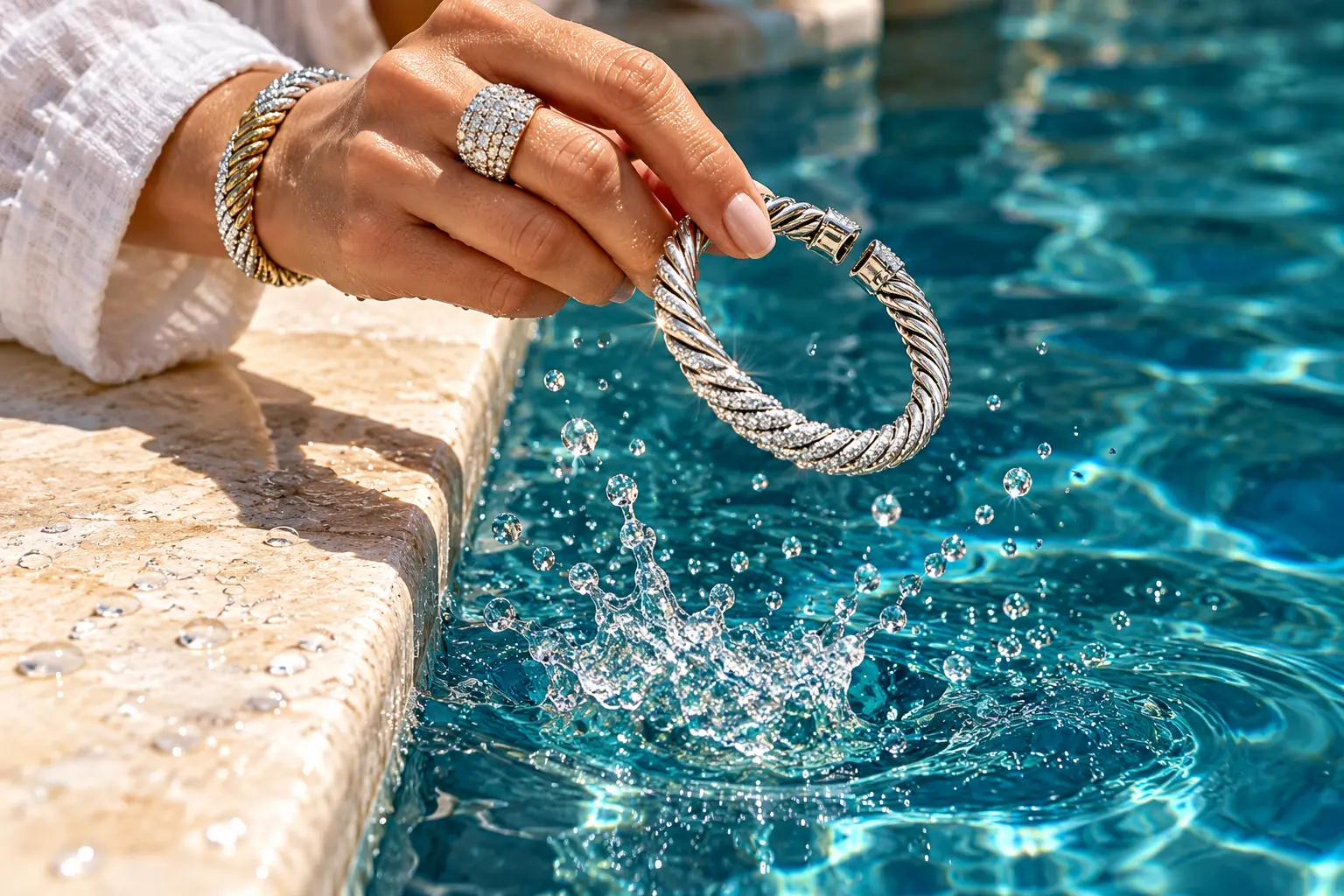
Can You Wear David Yurman in the Pool?
Can you wear David Yurman in the pool? No. The care guide bars chlorine, showers, and salt water, and explains which stone or metal to rinse first.

The question at the water’s edge is can you wear David Yurman in the pool, and the maker’s answer is no. The David Yurman at-home jewelry care guide, dated July 14, 2025, says “Do not wear jewelry in chlorinated pools, while showering, or in salt water.”
Warm water and a drop of mild soap are how many of these pieces get washed at home, and that rinse is a short soak in a bowl. A pool, a shower, or the ocean holds chlorine, soap, or salt on the metal long enough to leave a film in a twisted cable or under a stone. The metal sets one limit, and any stone in the setting can set a stricter one.
Chlorine and Salt Rules for David Yurman Jewelry
Daily wear leaves a film even when you never swim. Skin oil, lotion, soap residue, hard-water spots, sweat, and makeup sit on the same cleaning list as chlorine, because each one dulls the surface if it dries in place. A soft cloth is the first pass on gold and on silver, before any soap touches the piece.
SINK CARE VERSUS POOL WATER
- Regular cleaning: Clear skin oil, lotion, soap film, hard-water spots, sweat, chlorine, and makeup before they dry on the metal.
- Separate storage: Keep each piece apart from the others so metals and stones do not scratch.
- Right cloth: Use a polishing cloth made for fine jewelry, and keep paper towels off silver.
- Harsh products: Keep household cleaners and other strong chemicals off the piece.
- No grit: Skip abrasive scrubs that can scratch metal and gemstones.
A proper wash uses a few drops of mild dish soap without a heavy scent or harsh chemicals, mixed into warm water. Rinse in a bowl, then dry the piece fully before it goes into the pouch. That bowl of water is a cleaning tool, and it is a different exposure from an hour of pool chemistry or ocean salt.
Shower water is on the avoid list even though the water itself starts out fresh, because shampoo, conditioner, and steam join it. Salt water adds salt, and sand caught in a clasp works like grit on the metal. The metal under those rules is the next split, because a black rhodium plate and a plain gold band do not come back from a bad day in the same condition.
Which David Yurman Metal Should Stay Out of the Pool?
David Yurman works in 18K gold, sterling silver, platinum, titanium, and stainless steel, and many designs mix those metals with a black rhodium plate or a blackened finish. Match the metal to its home wash and to the finish note on the care sheet. The pool, shower, and salt water line still sits over every row.
| Metal | Home cleaning | Finish and chemical notes |
|---|---|---|
| 18K gold | Soft cloth, a few drops of mild soap in warm water, a short rinse, then a full air dry in the pouch. | It does not tarnish or corrode easily. Toothpaste and baking soda are too abrasive to use as cleaners. Oils and lotions still leave a film. |
| Sterling silver | Soft cloth, mild soap, lukewarm rinse, then a full dry. A polishing cloth comes with a silver purchase. | Chlorine and household cleaners can discolor it. Paper towels scratch. Moisture in storage speeds tarnish. |
| Platinum | Soft cloth, mild diluted soap, warm rinse, full dry, then the pouch. | On mixed pieces, skip abrasive cleaners, steam, and ultrasonic machines. |
| Black rhodium | Soft cloth, then mild diluted soap if needed, then a full dry. | Remove it before bathing, swimming, or washing your hands. Salt, chlorine, and other solutions can damage this plated finish. No polishing compound and no coated polishing cloth on black oxidation. |
| Titanium | No chemical jewelry cleaner. A very soft cloth, mild soap, rinse, and dry. | Take it off before exercise or intense activity. It is resilient and can still show wear. |
| Stainless steel | Warm water and mild diluted soap, then a clean towel. | That wash is a cleaning step. The care guide does not write a swim plan for it. |
| Bronze and copper | Bronze: the white side of a David Yurman polishing cloth. Copper: soft cloth, mild soap, rinse, and dry. | Copper develops a patina. Some people see a harmless skin mark that washes off. Very sensitive skin may not tolerate copper or bronze. |
Black rhodium is a rare type of platinum plated over silver and gold to create a darker color, and like other plating it fades with wear. Salt and chlorine are called out because they damage that color, not because a plain wipe is forbidden. On a Blackened Silver Renaissance cable, the dark tone is an oxidized patina the design uses, and a coated polishing cloth can strip a finish that was meant to stay.
Sterling silver also darkens as it meets air, and the care guide treats that slow patina as part of the metal. Chlorine and household cleaners are listed apart from that patina because they discolor the surface. The dry step for silver is a soft cloth and then air, never a paper towel.
Fine jewelry should come off before a chlorinated pool and before household cleaners, and chlorine bleach can pit or damage gold alloys. That warning is in GIA’s jewelry care tips on pool chemicals, and it is why an 18K cuff is not a free pass just because everyday tarnish is slow. Hairspray, lotion, perfume, and other cosmetics can also damage pearls and porous gems such as turquoise.
A few less common materials chip or scratch in ways a smooth gold band does not. Aluminum scratches more easily than sterling silver, so it should not bang on a pool ladder or a concrete deck. Silver paired with ceramic can be washed with mild soap and water and air dried, and gold areas on that mix take the white side of a David Yurman polishing cloth once they are dry, but ceramic can chip if it hits concrete, metal, or wood.
When a bracelet mixes sterling silver, gold, and a plated finish, clean it by the stricter metal and skip any polish the blackened area cannot take. If a stone is set into that mix, the stone can be the reason the whole piece stays on the chair.
How Do Pool Chemicals Affect David Yurman Gemstones?
Many designs add diamonds, colored stones, or pearls, and the gemstone sheet sorts them into care groups rather than one wash for every piece. A hard stone can sit in a setting that chlorine hurts even when the stone itself is tough. Read the group your stone belongs to before you decide the bracelet can follow the metal-only wash.
Diamonds and Translucent Stones
Diamonds are hard, and they still pick up oil that makes them look dull. Sapphires, rubies, aquamarine, amethyst, and citrine sit with them in the translucent group: a soft cloth first, then mild diluted soap and warm water if a wipe is not enough, then a full dry.
- Prongs and pavé: Use a soft-bristle baby toothbrush instead of a polishing cloth, because the cloth can catch a prong or loosen a diamond.
- Emeralds: Never use an ultrasonic cleaner or a steam machine, and keep them away from sudden temperature changes, perfume, cosmetics, and household chemicals.
- Settings: Take diamond jewelry off before a chlorinated pool, because chlorine can erode alloys in the setting and loosen prongs, which is covered in guidance on traveling with pearls and diamond jewelry.
Rinse diamond pieces in a bowl or a glass of water rather than over an open drain, so a loose stone does not go down the sink. Abrasive cleaners, steamers, and ultrasonic machines are off the list for these settings even when the diamond itself can take a gentle soap wash.
Turquoise, Onyx, and Other Opaque Stones
Turquoise, malachite, lapis lazuli, and onyx are in the opaque group, and the home clean for that group is a soft, dry cloth. Ultrasonic cleaners, heat, and direct light are off that list, which already rules out a long soak after a swim.
KEEP TURQUOISE OUT OF CHLORINE
- Chlorine: Take it off before a chlorinated pool, because the gemstone care sheet for turquoise and pearls says chlorine, perfume, household cleaners, and cosmetics can affect the look.
- Impact: Turquoise is a softer stone, so do not knock it on tile, a ladder, or the pool edge.
- Mixed settings: If turquoise shares a piece with gold or silver, do not give the whole piece a soap bath just because the metal could take one.
Simulated turquoise is in the same family of care. It is made from natural stone that is ground, bound with resin, and dyed, and it still should not go into an ultrasonic cleaner. A dry cloth and a wide berth around pool water cover both the natural stone and that simulated version.
Pearls in Chlorine or Salt Water
Pearls are the strictest wear on a pool day. The care sheet tells you to keep them away from chlorine, salt water, perspiration, perfume, cosmetics, vinegar, ammonia, and dirt. Put them on last, after hair products and perfume, and take them off before exercise.
A PEARL WIPE, NOT A SOAK
- After wear: Wipe with a slightly damp cloth once the strand is off.
- Deeper clean: Use mild soap, not detergent, and a soft cloth, then rinse in clean water.
- Drying: Wrap the strand in a thin damp cotton towel rather than rubbing it hard.
- Spills: If pearls meet food or a drink, wipe at once with a soft damp cloth and dry with a towel.
- Machines: Never wash pearls in an ultrasonic cleaner.
Wearing pearls often is how the care sheet says you keep the luster, and that wear is meant for dry hours. Pearls can crack if you store them where the air is too dry, so a strand should not sit for months in a bone-dry safe. A steamy bathroom is still a poor room for any silver clasp on the same strand.
Pool Rules for a Mixed David Yurman Piece
Those separate rules meet in the mixed bracelets this maker is known for, where silver, gold, and a stone share one clasp. Picture a cable bracelet in sterling silver with 18K gold ends, a row of small diamonds, and a turquoise station. Four rules apply at once, and the turquoise rule decides the pool.
- The pool: Leave the whole bracelet in the pouch, because turquoise stays out of chlorinated water and the silver does not earn the piece a pass.
- The shower: Leave it off there too, so shampoo and hot water do not dry inside the cable twist.
- A splash: Use a dry cloth on the turquoise. If you cannot keep soap off that stone, stop at a fresh-water rinse and a full dry.
- The diamonds: Later, at home, a baby toothbrush can go around the prongs once the piece is fully dry.
That same order works for a ring or a pair of earrings. An earring feels safer because it is not fully underwater, and it still meets splash, chlorine, and the sunscreen on your fingers when you adjust it. A ring is the easiest piece to lose when you cannot see your hand, so it stays in the pouch with the bracelet while you are in the water.
If the piece already went in, the order of the rinse matters more than which rule you meant to follow. Get the chlorine or the salt off while it is still liquid, then deal with the finish you can see.
What to Do After David Yurman Jewelry Gets Wet
A soft-bristle toothbrush, unscented mild dish soap, and a soft cloth are enough for a home clean, which is the tool list in the care guide. A David Yurman cleaning kit adds a jar of gentle cleaner, a four-ply polishing cloth, and a small basket and brush. Sterling silver purchases already come with a polishing cloth, and that cloth is for shine, not for scrubbing a blackened finish.
- Rinse in a bowl: Use lukewarm fresh water, with the drain closed if you are at a sink, so a loose stone cannot disappear.
- Soap only when the stone allows it: Gold, sterling silver, and platinum with no opaque stone and no pearls can take a few drops of mild soap and a second rinse. Opaque stones stay on a dry cloth. Pearls get a slightly damp cloth, not a soak in leftover pool water.
- Dry all the way: Pat with a soft cloth, skip paper towels on silver, and let the piece air dry before the pouch. Water trapped in a crevice keeps working after you leave the deck.
- Leave darkened finishes alone: No coated polishing cloth and no polishing compound on black rhodium or blackened silver.
- Check the clasp and the stones: A stone that shifts, or a clasp that feels weak, should go to the store rather than meet a harder brush at the sink.
Check that night for a dull film, a new dark patch on silver, or a prong that moves when you touch it gently. Wear on a thin plate will not always show in that look, which is why a black rhodium piece that went swimming is worth a store visit even when the color still looks even. Once the piece is dry, storage decides whether silver sits in damp air, which speeds tarnish.
How to Store David Yurman After a Swim
The pouch that came with the piece is the right home for it, because pieces stored together scratch each other. Silver should stay out of humid spots such as a bathroom shelf, since moisture speeds tarnish. Extreme humidity and direct sun are on the avoid list for the collection in general, so a windowsill in a steamy room is a poor shelf.
Take pieces off before lotion, perfume, and hard exercise, and go easy on lotion while you are wearing them. Sweat from a workout belongs in the same group as pool residue: it sits on the metal until you wipe it. A cable you swim in and then drop into a damp bathroom will meet both problems in one afternoon.
A free cleaning is available for every David Yurman design, in the stores, either as a walk-in or by appointment. Plan on a professional clean at least once a year, and go sooner when tarnish will not lift with a gentle polish, when dullness stays after a home clean, or when a stone is loose or a clasp has weakened.
For diamond pieces with prongs or pavé, that yearly visit is also when a loose stone can be reset before you lose it. Bring the piece in if a pool day left a film you cannot lift with the soft cloth and mild soap the guide already allows. The store clean is the step past what a bowl of water can do.
Frequently Asked Questions
Can You Wear David Yurman in a Hot Tub?
No. Leave the piece in the pouch. Hot tubs are chlorinated, and the travel guidance that covers diamond settings names them beside pools. Emerald and tourmaline should avoid sudden temperature changes, and layered stones should stay away from heat, so spa water is a mismatch for those gems as well.
Can You Sleep in a David Yurman Bracelet?
Take it off at night. The metal care sheet says to remove jewelry at night to cut down on skin reactions, and to keep it off during exercise or heavy sweating. Hours of sleep also press lotion residue and sweat into a cable, which is the film a morning wipe is meant to lift.
How Often Should David Yurman Pearls Be Restrung?
Every two years if you wear the strand regularly, and also whenever the string looks dirty, even if two years have not passed. That is the restring rule on David Yurman’s gemstone care sheet. Restringing replaces a string that has picked up dirt or started to weaken, which a surface wipe does not fix.
Does Sunscreen Damage David Yurman Jewelry?
Put sunscreen on before the jewelry, or leave the jewelry off while you are at the pool. The care guide tells you to remove pieces before lotions and perfumes. Lotion, perfume, and hairspray can permanently damage the surface of pearls and of porous gems such as turquoise, so sunscreen on the same wrist belongs in that group.
How Should You Carry David Yurman to the Pool?
Carry it in the pouch, inside a dry pocket or a zipped dry bag, not loose in a beach tote. Sand is abrasive, and the care sheets tell you to keep abrasive surfaces off the metal and the stones. A sunscreen bottle in the same open bag can leak lotion onto the piece you just kept out of the water.
Rinse a wet piece in a bowl, dry it fully, and check the clasp before it goes back in the pouch. The pool, the shower, and the ocean stay off the wearing list, and the stone on the piece is what makes that list nonnegotiable.

Final Fantasy Resonance Turns a Dead Gacha Into HD-2D

PHP2Shell Forced Sites Offline While Exploits Stalled

Kindle+ Folds AI Audiobooks Into the Page-Read Fund

Chip Stocks Fall as the Bond Rally Cheapens AI Spend

Comcast’s Record Odyssey Quarter Doubles as the Exit

Microsoft 365 Auth Fault Took Down Exchange and Teams

Xbox Caps Game Pass Cloud Gaming at 15 Hours

OpenClaw 2.0 Ships a Team Workplace With Host-Trust Defaults

OpenAI Unveils GPT-6 Astra With a Critical Cyber Label

Squishy Dumpling Toys Recalled After Hiding Illegal Water Beads
-
 NEWS2 months ago
Microsoft 365 Auth Fault Took Down Exchange and Teams
-
 GAMING2 months ago
Xbox Caps Game Pass Cloud Gaming at 15 Hours
-
 NEWS2 months ago
OpenAI Unveils GPT-6 Astra With a Critical Cyber Label
-
 NEWS2 months ago
OpenClaw 2.0 Ships a Team Workplace With Host-Trust Defaults
-
 LIFESTYLE2 months ago
Squishy Dumpling Toys Recalled After Hiding Illegal Water Beads
-

 BUSINESS2 months ago
Diesel Breaks Its Record as the White House Claims Credit
-

 BUSINESS2 months ago
ChargePoint Stock Rally Prices Wilmer’s Three-Year Cash Plan
-

 NEWS2 months ago
IFA 2026’s Weird Gadgets Are Building a Sensor Home