
LIFESTYLE
Maryland Leads Halloween Candy Spending as Poor States Keep Up
Maryland spends $67.95 a person on Halloween candy, but West Virginia and Mississippi rank next despite some of the lowest U.S. household incomes.

Maryland budgets $67.95 a person for Halloween candy, the most in the United States, in a Solitaired survey of residents in every state. West Virginia and Mississippi come next, even though both land near the bottom of Census household income.
The average American plans to spend $49.19 on candy for trick-or-treaters, which puts South Carolina’s $48.93 right on the national mark. The ranking is a 2025 snapshot of typical spending, and it is circulating again as shoppers buy for Halloween 2026 with candy prices running hotter than overall inflation.
Maryland’s $67.95 Candy Bill
Solitaired, an online games company, published its study of Halloween habits in every state on October 9, 2025, after scoring answers on spending, what gets handed out, and whether parents get a treat too. Maryland’s figure is about $19 above the national candy average, and 1 in 9 people nationwide said they plan to spend more than $100.
Pennsylvania is third at $59.35, a few cents ahead of Mississippi at $59.32. Indiana, Illinois, and Michigan fill the next slots, then Texas, Oklahoma, and Louisiana. That is one Northeastern state in the top 10, three from the Midwest, and six from the South. The East Coast does not own this list.
Seventy-eight percent of people said they keep candy spending at $50 or less, so Maryland, West Virginia, and most of that top 10 are already above what most households call a normal run. Houses in the survey expected about 42 trick-or-treaters. Fifty-five percent of respondents said it matters to be known as the “good candy house.”
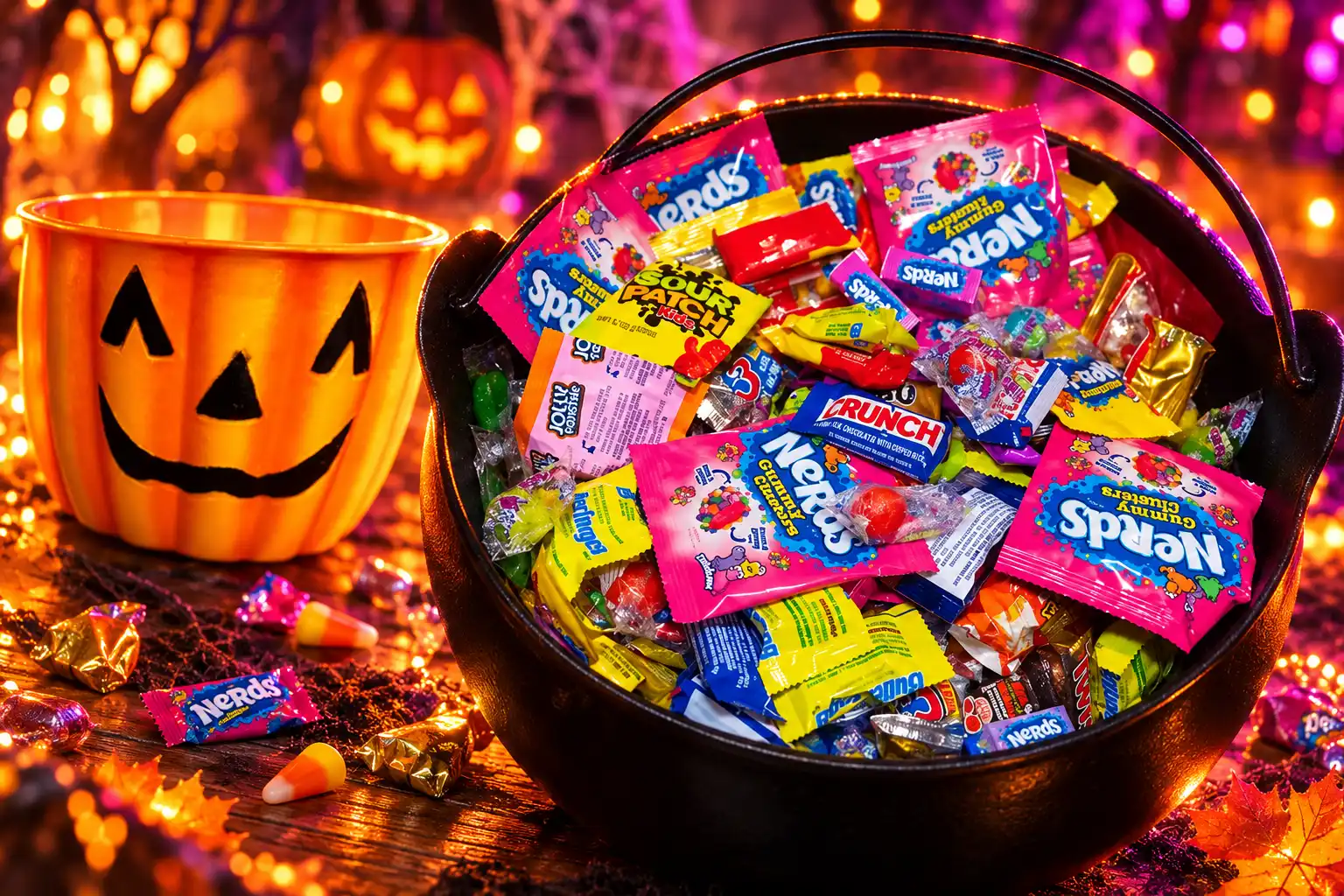
Low Incomes, High Candy Receipts
Census Bureau 2024 American Community Survey 1-year estimates, compiled as 2024 median household income, put Maryland at $102,905, among the highest state figures, with Massachusetts at $104,828 and New Jersey at $104,294. Mississippi is last among states at $59,127. West Virginia is next from the bottom at $60,798, and Louisiana is $60,986. Arkansas joins that low-income group in the Census brief.
New Jersey, sitting in that rich income cluster with Maryland, budgets $38.67 on Halloween candy, the second-lowest spend Solitaired recorded. Colorado, at $97,113 in median income, budgets $39.39. Oregon, above the U.S. median of $81,604 at $85,220, is last on candy at about $34.
CANDY SPEND AND HOUSEHOLD INCOME
| State | Avg. candy spend | 2024 median income |
|---|---|---|
| Maryland | $67.95 | $102,905 |
| West Virginia | $61.32 | $60,798 |
| Pennsylvania | $59.35 | $77,545 |
| Mississippi | $59.32 | $59,127 |
| Indiana | $59.14 | $71,959 |
| Illinois | $58.12 | $83,211 |
| Michigan | $57.78 | $72,389 |
| Texas | $56.88 | $79,721 |
| Oklahoma | $56.78 | $66,148 |
| Louisiana | $55.85 | $60,986 |
| Colorado | $39.39 | $97,113 |
| New Jersey | $38.67 | $104,294 |
| Oregon | about $34 | $85,220 |
| United States | $49.19 | $81,604 |
West Virginia’s candy budget is close to Maryland’s, on a household income that is about $42,000 lower. Mississippi’s spend is almost identical to Pennsylvania’s, on the lowest median income in the country. The receipt is not a wealth ranking.
96.68 Puts West Virginia First for Generosity
Solitaired turned those habits into a 0-to-100 generosity score, giving points for full-size bars, extra treats, and including parents. West Virginia led at 96.68. Eighty-eight percent of people there said they usually hand out candy, the second-highest share in the survey.
Mississippi scored 91.81. Nearly 1 in 4 people there said they mix candy with glow sticks, toys, or other non-candy extras. Georgia was third at 90.74, and 60% of Georgia respondents said they let kids pick what they want, against a national pattern in which more than two-fifths of people just grab candy at random.
GENEROSITY LEADERS AND LAGGARDS
- West Virginia: 96.68 out of 100, with 88% usually handing out candy.
- Mississippi: 91.81, with nearly 1 in 4 mixing in non-candy extras.
- Georgia: 90.74, with 60% letting kids choose the treat.
- North Carolina: 57.54, the lowest score; 41% said they do not care about being a good candy house.
- Oregon: 63.67, with 1 in 2 saying they have pretended not to be home.
- Iowa: third most stingy; 53% ration candy, and 1 in 6 keep the good stuff and give cheaper candy to kids.
Nevada led a separate adult-treat score at 97.44, with 78% giving candy to parents on the route. New York was next at 94.87 and ranked first for non-candy snacks for grown-ups. New Jersey ranked first for handing full-size bars to parents. Maryland, Texas, and Utah were the most likely to offer alcoholic drinks to adults walking the block.
Seventy-nine percent of Americans in the Solitaired survey said they usually pass out candy. That is a typical-year habit, not the same question the National Retail Federation asked about plans for 2026.
Dark Porches and a $34 Candy Budget
Oregon’s last-place candy budget lines up with its generosity rank. Half of Oregon respondents said they have faked an empty house to dodge trick-or-treaters. North Carolina’s 57.54 was the weakest generosity score, and people there were the least likely to say they usually give candy out at all.
Iowa’s stingy rank is a rationing story: 53% said they meter the bowl so it lasts, and 1 in 6 admitted they keep the better candy and give kids the cheap stuff. The survey’s “stingy” label is a score, not a moral verdict, but the behaviors it counted are concrete: hiding, metering, and swapping the good bars out of the bowl.
Colorado’s $39.39 spend is third from the bottom, even with a high median income. Local writeups of the same Solitaired study found Colorado first for full-size bars, which is a reminder that a smaller dollar figure can still mean a better piece in the bucket if the house buys fewer, larger bars.
Candy Prices Are Up 8.1% This Year
The National Retail Federation’s 2026 Halloween survey, fielded September 1 to 9 among 7,889 consumers with a margin of error of plus or minus 1.1 percentage points, expects U.S. Halloween spending of $13.5 billion, up from a record $13.1 billion in 2025. Candy is the most common purchase, with 96% of consumers planning to buy sweets and spending expected to total $4.1 billion on Halloween candy.
Shoppers budget $115.14 a person for the whole holiday, close to $114.45 in 2025. Seventy-four percent plan to celebrate, compared with 73% in 2025 and 68% in 2019. Handing out candy is the top activity at 61%, then costumes at 50%. Decorating, carving pumpkins, and watching scary movies each drew 42%.
2026 HALLOWEEN MONEY
- Total spend: $13.5 billion expected, after $13.1 billion in 2025.
- Candy: $4.1 billion, with 96% of consumers buying sweets.
- Decorations: $4.3 billion, planned by 78% of consumers.
- Costumes: $4.4 billion, planned by 71% of consumers.
Greeting cards are expected to add $800 million. If prices come in higher than planned, 31% said they will comparison shop and 26% will look for coupons or sales. Another 34% plan to buy items they can reuse. Forty-nine percent said they would start shopping in September or earlier, up from 34% in 2016.
Consumers continue to make Halloween a spending priority, but they are also approaching the season with affordability in mind. This year’s results show that shoppers are being thoughtful and strategic, looking for ways to maximize value throughout the season.
Allison Zeller, NRF vice-president of industry and consumer insights, 2026 Halloween survey
The Bureau of Labor Statistics candy and chewing gum index stood at 228.786 in August 2026, up from 211.596 in August 2025, an 8.1% increase. The all-items consumer price index was up 3.4% over the same span. Candy is rising faster than the rest of the cart, which is the pressure sitting under Maryland’s $67.95 and West Virginia’s $61.32 as those bags go into carts for October 31, 2026.
Porch talk this month is already about smaller handfuls. People are cutting the count to one piece a kid, or leaving the light off, because the bags feel worse than they did a year ago. That complaint is not a state-ranking argument. It is a price argument, and the index backs the gripe.
Why Some Houses Skip the Bowl This Halloween
Solitaired asked people who do not hand out candy why they skip. A quiet street beat a thin wallet. The National Confectioners Association, in a separate September 2026 survey, found chocolate still leads the treat list, followed by gummies, hard candy, and candy corn, and that 83 percent of parents sneak candy from their kids’ hauls.
WHY HOUSES SIT OUT
- Quiet block: 63% of skippers said too few kids come to the door.
- Cost: 1 in 5 people who do not give candy said it is too expensive.
- No holiday: 18% said they do not celebrate Halloween, and 18% said they just do not feel like taking part.
- Other plans: 17% had a party or another event, and nearly 1 in 6 were out with their own kids.
- The fake-dark house: 2 in 5 Americans admitted they have pretended not to be home on Halloween.
Cost is the second reason, not the first. In a year when candy is up 8.1%, that second reason gets louder, especially in West Virginia and Mississippi, where the candy receipt is already fat relative to income. The 55% who still want the “good candy house” name are bidding against that price.
Pennsylvania Still Runs on Chocolate
Pennsylvania’s third-place spend sits next to the state’s candy plants. The Hershey Company remains headquartered in Hershey, PA, with corporate offices and plants on Chocolate Avenue, including the Reese factory. Just Born, the company behind Mike and Ike, Hot Tamales, and Peeps, is also based in the state. Maryland has Goetze’s Candy Company in Baltimore, maker of Caramel Creams and Cow Tails.
Those factories do not explain West Virginia or Mississippi. They do explain why a Pennsylvania house can treat candy as local grocery, not a once-a-year import. Maryland can afford the $67.95. West Virginia is paying a high-spend state’s candy bill on a low-income state’s paycheck, and the generosity score says people there still want the porch to be the one kids remember.
Halloween 2026 falls on October 31. NRF found 61% of consumers planning to hand out candy this season, while Solitaired’s older, broader habit question put usual participation at 79%. Greeting-card money, costume money, and decoration money will take the rest of that $13.5 billion. The candy line is the one that hits the door, and the states already spending past $55 a person will feel the 8.1% first.

Final Fantasy Resonance Turns a Dead Gacha Into HD-2D

PHP2Shell Forced Sites Offline While Exploits Stalled

Kindle+ Folds AI Audiobooks Into the Page-Read Fund

Chip Stocks Fall as the Bond Rally Cheapens AI Spend

Comcast’s Record Odyssey Quarter Doubles as the Exit

Microsoft 365 Auth Fault Took Down Exchange and Teams

Xbox Caps Game Pass Cloud Gaming at 15 Hours

OpenClaw 2.0 Ships a Team Workplace With Host-Trust Defaults

OpenAI Unveils GPT-6 Astra With a Critical Cyber Label

Diesel Breaks Its Record as the White House Claims Credit
-
 NEWS2 months ago
Microsoft 365 Auth Fault Took Down Exchange and Teams
-
 GAMING2 months ago
Xbox Caps Game Pass Cloud Gaming at 15 Hours
-
 NEWS2 months ago
OpenAI Unveils GPT-6 Astra With a Critical Cyber Label
-
 NEWS2 months ago
OpenClaw 2.0 Ships a Team Workplace With Host-Trust Defaults
-
 BUSINESS2 months ago
Diesel Breaks Its Record as the White House Claims Credit
-

 LIFESTYLE2 months ago
Squishy Dumpling Toys Recalled After Hiding Illegal Water Beads
-

 BUSINESS2 months ago
ChargePoint Stock Rally Prices Wilmer’s Three-Year Cash Plan
-

 AUTO2 months ago
Tesla Puts Its Wheel-Free Cybercab on Austin Streets