
GAMING
Strands 960 Hides Greek Myth Behind an Old Joke
NYT Strands 960 used a MYTHOLOGICAL spangram and seven Greek-myth figures under a title that means unreadability.

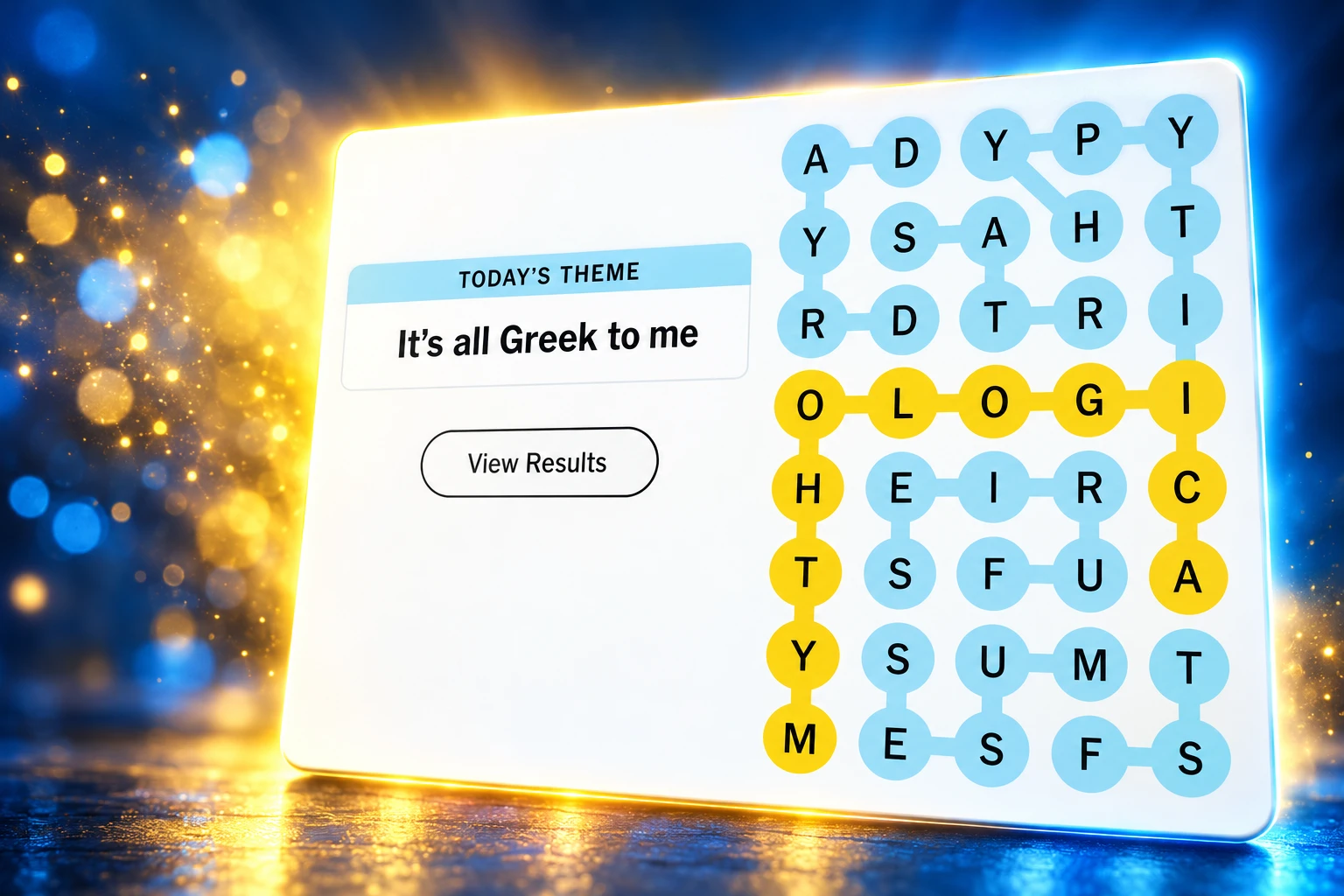
NYT Strands #960 on October 19, 2026 hid seven Greek-myth figures behind the 12-letter spangram MYTHOLOGICAL. The theme line was “It’s all Greek to me.”
That phrase is an old joke about not being able to read. The answers are English classroom words, and the hard part was guessing what kind of Greek the grid wanted.
Monday’s Spangram Was Mythological
The yellow word on the 6-by-8 grid is MYTHOLOGICAL. It starts on the M at the bottom of the left column and winds up and across, ending on an L at the right edge. The seven theme words, which light up blue, are DRYAD, SATYR, NYMPH, DEITY, FURIES, MUSES and FATES.
THE OCTOBER 19 WORD LIST
- Spangram: MYTHOLOGICAL, 12 letters, yellow once found.
- Nature spirits: DRYAD, NYMPH and SATYR.
- Named groups: FATES, FURIES and MUSES.
- Catch-all: DEITY, the plain English word for a god.
Those eight strings use every letter on the board. There is no second solution, and the puzzle is free on the official daily Strands board.
Soft hints published with the grid pointed at Zeus and at Homer’s Odyssey, which is a cleaner steer than the theme line. The theme sounds like a shrug. The board is a labeled set of beings.
The Title Is Older Than the Puzzle
English uses “it’s all Greek to me” when a page, a speech, or a system will not yield. Medieval copyists, faced with Greek inside a Latin book they could not transcribe, wrote Graecum est, non legitur: it is Greek, it cannot be read.
The joke was already in English before Shakespeare. George Gascoigne used a version in 1566 in his translation The Supposes. The line everyone still hears is Casca’s line in Julius Caesar, first staged in 1599.
Those that understood him smiled at one another and shook their heads; but, for mine own part, it was Greek to me.
Casca, Julius Caesar, Act 1, Scene 2
Casca has just heard Cicero speak Greek. Other men smile. He cannot follow, and he says so. The Strands theme borrows that shrug and then fills the grid with words English already stole from the same culture.
THE PHRASE BEFORE THE PUZZLE
- Medieval manuscripts: Scribes mark unread Greek with Graecum est, non legitur.
- 1566: Gascoigne puts a “Greek to me” line into The Supposes.
- 1599: Casca says it was Greek to him after Cicero’s speech.
Other languages pick a different stand-in for gibberish. French talks about Chinese. Italian talks about Arabic. English kept Greek, which is why a Monday word search can wear the idiom as a costume.
What the Seven Theme Words Mean
The seven blue answers are not random myth names. They sort into creature types, named trios, and one generic. A dryad is a kind of nymph, so two of the “separate” answers sit inside the same family.
| Word | Letters | What it names |
|---|---|---|
| DRYAD | 5 | A tree nymph; the Greek root drys means oak |
| NYMPH | 5 | A broader nature spirit; dryads belong in this class |
| SATYR | 5 | A male woodland companion of Dionysus |
| DEITY | 5 | A god, in plain English rather than a proper name |
| FATES | 5 | The Moirai: Clotho, Lachesis and Atropos |
| FURIES | 6 | A named Greek trio, the Erinyes in Greek sources |
| MUSES | 5 | Goddesses of the arts, traditionally linked to Apollo |
Classical sources describe dryads as oak and tree nymphs, with a tighter subtype, the hamadryad, bound to one trunk. Satyrs are the noisy male counterparts on the same woodland beat, half beast and fond of wine. The Fates handle a mortal life as a thread: Clotho spins it, Lachesis measures the portion, and Atropos cuts it. Even Zeus, in the usual telling, does not take that cut back.
FURIES is the only six-letter blue word. Everything else in the theme set is five letters, which is why the 12-letter yellow path does so much of the geometric work. Add them up and the board is exact: 5 + 5 + 5 + 6 + 5 + 5 + 5 + 12 = 48, which is a 6-by-8 grid with no leftover tile.
Why Dryad Stopped People Cold
The theme invited three bad first guesses, and solvers walked into all of them. Greek food. Letters of the Greek alphabet. Museum props such as vases. One walkthrough even went hunting for gyros before it admitted it did not know DRYAD.
That is the actual difficulty. The title sounds like a language problem. The sting is a vocabulary problem in English. NYMPH, SATYR, MUSES and FATES sit in a lot of high-school reading lists. DRYAD does not, unless someone already likes trees with names.
Short junk English on the same tiles was easier to see than the theme set. Recaps listed HEIR, MUSE, GOLD, DAYS and MESSY as words that feed the hint meter. MUSE is a one-letter trap next to MUSES. Find the four-letter word and the five-letter answer is still sitting there unsolved.
People who found MYTHOLOGICAL first played a different game from people who did not. The yellow path names the category. After that, you are filling a list. Before that, you are staring at an idiom and a jumble, which is what Casca was doing.
The Yellow Path Opens the Board
Strands is a word search that bends. Letters join up, down, left, right, or diagonal, and a word can turn in the middle. Tracy Bennett, who also edits Wordle, edits the daily lists. Juliette Seive pitched the game at an in-house Game Jam. The beta opened on March 4, 2024, and the Games app added it on June 26, 2024.
THE BOARD IN NUMBERS
- Grid: 6 columns by 8 rows, 48 letters, each used once.
- Spangram: MYTHOLOGICAL, 12 letters, must touch two opposite edges.
- Theme set: 7 blue words, 36 letters among them.
- June 2024 note: 83 percent of players find the spangram each day, with completion around 81 percent.
Those 2024 figures are company stats from the week the game landed in the app, not a live dashboard for puzzle 960. They still explain the design. The yellow word is the intended door. On this board it eats the left column and a crossbar of tiles, so the remaining clumps are small enough to read as DRYAD or FATES instead of alphabet soup.
The share card after a solve marks blue dots for theme words, a yellow dot for the spangram, and a lightbulb for any word that needed a hint. Spangram-first is its own tracked line in the official stats, because the editors know that order changes the puzzle.
A Hint Costs Three Extra Words
You do not fail Strands. There is no timer and no guess cap. A too-short or invalid entry just shakes. Three valid non-theme words of four letters or more fill the hint meter, which is how Strands hints unlock. Tap the meter and the game highlights every letter of one remaining theme word. You still have to draw the path.
On this grid that meter was a reasonable tool, not a shame badge. Theme words hid in bends. Ordinary English sat in straight shots. One published walkthrough used three hints and called the puzzle hard after the food detour. Other finished cards show a clean yellow-first line and no bulbs at all.
WORDS THAT ARE NOT THE ANSWER
- MUSE: Four letters, and a near-miss for MUSES.
- HEIR: Sits on tiles that also serve the yellow path and FATES.
- GOLD, DAYS, MESSY: Recap fodder for filling the hint meter without touching the theme.
The help page says a new puzzle posts at midnight in the player’s timezone. October 19’s board is closed. The letters have one legal grouping, and it is the myth list, not the menu.
The title promised unreadability. The 12-letter yellow word did the reading. After MYTHOLOGICAL lights up, the Greek on this board is just English with older parents, and the last open tiles are a dryad, a satyr, and the usual named trios.
Frequently Asked Questions
Can You Fail a NYT Strands Puzzle?
No. Strands does not run out of guesses and does not use a clock, so a stalled board can sit as long as you like. Invalid words shake and do nothing; three valid extra words still buy a hint. You finish when every letter belongs to the spangram or a theme word.
What Is the Difference Between a Dryad and a Hamadryad?
A dryad is a tree nymph, originally tied to oaks. A hamadryad is the tighter case: her life is bound to one tree, and she dies if that trunk dies. Puzzle 960 uses DRYAD, the broader English word, and scores NYMPH as a separate answer even though dryads are a class of nymphs.
Does the Spangram Always Run Left to Right?
No. The spangram has to touch two opposite sides of the 6-by-8 grid, which can be left and right or top and bottom. On October 19 it started at the bottom of the left column and ended on the right edge, mixing vertical and horizontal steps inside one 12-letter path.
Who Created NYT Strands?
Juliette Seive pitched the game at a New York Times Games Game Jam. Tracy Bennett, the Wordle editor, edits the daily Strands lists. The web beta opened on March 4, 2024, and the iOS and Android Games app added it on June 26, 2024.
What Do the Dots Mean on a Strands Share Card?
Each blue dot is a theme word you found without a hint highlight on that word. The yellow dot marks when you found the spangram. A lightbulb marks a theme word whose letters were revealed by the hint meter. The card for 960 has room for seven blue dots and one yellow dot.

Final Fantasy Resonance Turns a Dead Gacha Into HD-2D

PHP2Shell Forced Sites Offline While Exploits Stalled

Kindle+ Folds AI Audiobooks Into the Page-Read Fund

Chip Stocks Fall as the Bond Rally Cheapens AI Spend

Comcast’s Record Odyssey Quarter Doubles as the Exit

Microsoft 365 Auth Fault Took Down Exchange and Teams

Xbox Caps Game Pass Cloud Gaming at 15 Hours

OpenClaw 2.0 Ships a Team Workplace With Host-Trust Defaults

OpenAI Unveils GPT-6 Astra With a Critical Cyber Label

Diesel Breaks Its Record as the White House Claims Credit
-
 NEWS2 months ago
Microsoft 365 Auth Fault Took Down Exchange and Teams
-
 GAMING2 months ago
Xbox Caps Game Pass Cloud Gaming at 15 Hours
-
 NEWS2 months ago
OpenAI Unveils GPT-6 Astra With a Critical Cyber Label
-
 NEWS2 months ago
OpenClaw 2.0 Ships a Team Workplace With Host-Trust Defaults
-
 BUSINESS2 months ago
Diesel Breaks Its Record as the White House Claims Credit
-

 LIFESTYLE2 months ago
Squishy Dumpling Toys Recalled After Hiding Illegal Water Beads
-

 BUSINESS2 months ago
ChargePoint Stock Rally Prices Wilmer’s Three-Year Cash Plan
-

 AUTO2 months ago
Tesla Puts Its Wheel-Free Cybercab on Austin Streets