
LIFESTYLE
Recalled Gripe Water Held More Alcohol Than the 1851 Formula
A recalled Babies’ Magic Tea gripe water lot tested at 8.3% ethanol, higher than the original 1851 formula, plus undeclared methanol.

Pacific Health Sciences recalled one lot of Babies’ Magic Tea Baby Sleep Gripe Water after tests found about 8.3% ethanol that the label never listed. The 4-ounce bottles, lot 25122bw, also held methanol and isopropanol. They had been sold through Secrets of Tea and Amazon.
Gripe water was invented in 1851 as an alcohol tonic for fretful babies. This lot came back with more ethanol than that original formula, plus two other alcohols a children’s medicine could not hide.
One Lot, a Blue Box, and an Oral Syringe
The Oxnard, California, formulator, in business since 1977, posted the recall on Oct. 6, 2026. The Food and Drug Administration published the company notice the next day. FDA testing of the lot found ethanol, methanol, and isopropanol that were not declared on the product label.
WHAT FDA TESTING MEASURED
- Ethanol: About 8.3%, the drinking alcohol in beer and wine, omitted from the label.
- Methanol: About 0.35%, a toxic industrial alcohol, also omitted.
- Isopropanol: About 0.48%, the alcohol in rubbing alcohol, also omitted.
- The package: A 4 fl oz (about 118 mL) amber bottle in a small blue cardboard box, best before 12/2028, with an oral syringe in the box.
The lot number sits on the bottom of the box and on a side panel of the bottle. Pacific Health Sciences shipped the affected bottles to Secrets of Tea, which then sold them through secretsoftea.com and Amazon. The Amazon listing was down as of Oct. 8. The company said it had received no reports of adverse events associated with the lot.
Their presence may pose a risk depending on the amount consumed and the age and body weight of the person using the product.
Pacific Health Sciences, company announcement posted by the FDA, Oct. 7, 2026
The official recalls account posted the same notice with a photo of the blue box and amber bottle.
Pacific Health Sciences Voluntarily Recalls One Lot of Babies' Magic Tea Brand Baby Sleep Gripe Water Dietary Supplement
MORE: https://t.co/OVwu3jrVTx pic.twitter.com/AmX146Peml
— U.S. FDA Recalls and Alerts (@FDArecalls) October 7, 2026
Parents and caregivers are told to stop using any product from Lot 25122bw and to discard it or return it for a refund. Anyone who feels sick after using it should get medical care and call the company.
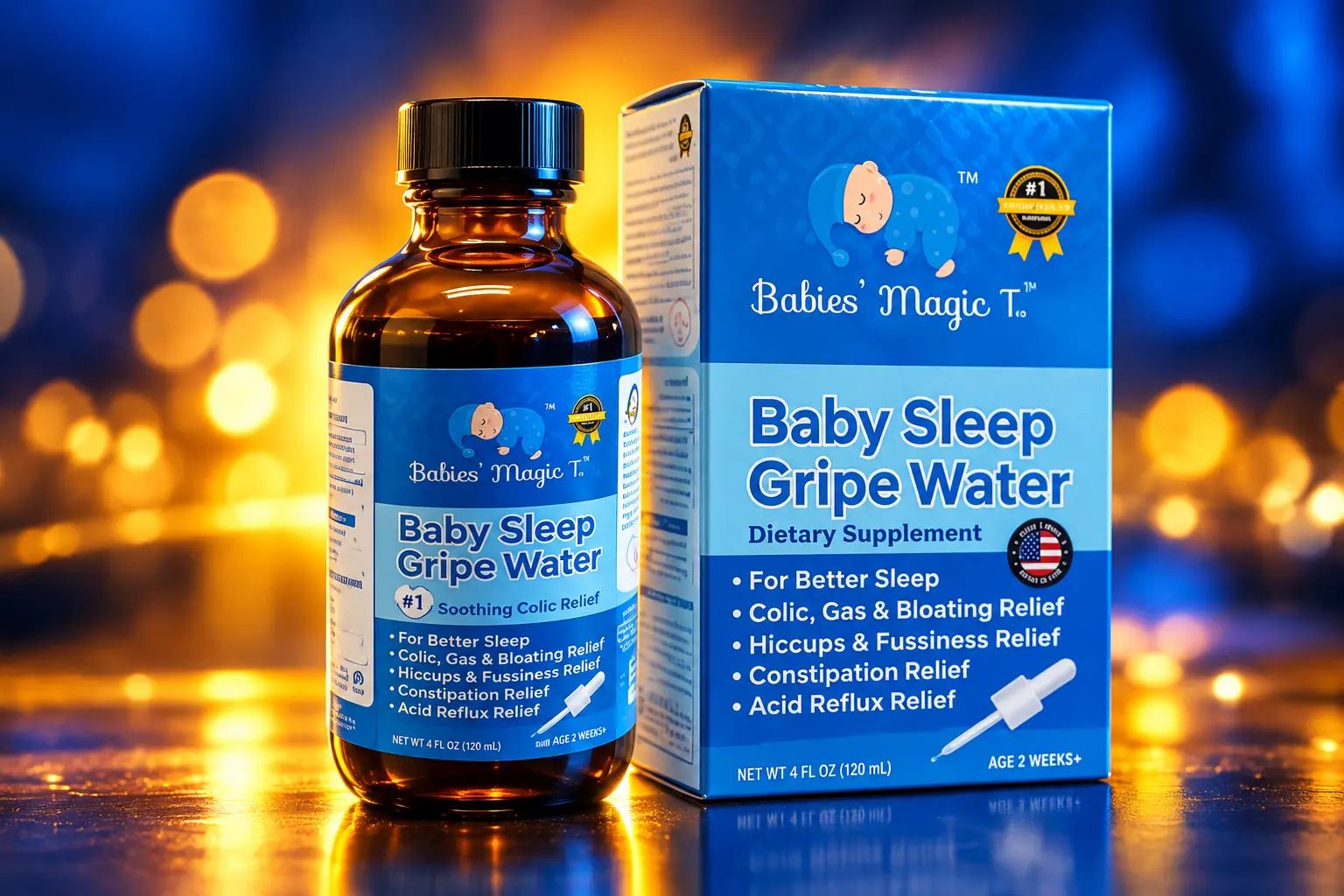
The Recalled Bottle Beat the 1851 Formula
English pharmacist William Woodward mixed the first commercial gripe water in Nottingham in 1851, drawing on a fen-fever recipe local doctors were already using. The original Woodward’s bottle held 3.6% alcohol, dill oil, sodium bicarbonate, sugar, and water. He registered the name as a trademark in 1876. British paediatrician Ivan Blumenthal later wrote that Woodward sold the elixir to the public by the ounce and to doctors and hospitals by the gallon.
Alcohol was not a trace solvent in that trade. Historical accounts put some copycat formulas as high as 9%. Parents passed the bottle down with the line “Granny told Mother and Mother told me.” In Britain, after public pressure, alcohol came out of Woodward’s formula in 1992. The licensed UK medicine sold today under that name is labeled alcohol-free and sugar-free, with dill seed oil and sodium hydrogen carbonate as the listed actives; Woodward’s Gripe Water is now alcohol-free in that licensed version, and it is not this Amazon supplement.
Lot 25122bw tested at about 8.3% ethanol, more than twice the 3.6% alcohol in the 1851 original, and in the same neighborhood as those 9% historical copies. It also carried methanol and isopropanol, which Woodward never put on a baby label. An 8.3% ethanol liquid sits in the range of a strong beer. The box still included an oral syringe, the usual tool for measuring an infant dose.
ALCOHOL IN GRIPE WATER, THEN AND NOW
| Formula or rule | Alcohol | What it was |
|---|---|---|
| Woodward’s, 1851 | 3.6% alcohol | Original tonic with dill, soda, sugar |
| Some historical copies | As high as 9% | Unlicensed 19th-century rivals |
| UK Woodward’s after 1992 | 0% | Alcohol removed after public pressure |
| Lot 25122bw, 2026 | About 8.3% ethanol, plus 0.35% methanol and 0.48% isopropanol | Undeclared on a dietary-supplement label |
How the three alcohols got into this lot is not explained in the notice. The comparison still holds: a product sold as a modern herbal soother came back with more ethanol than the Victorian bottle that made the category famous.
Children’s Oral Drugs Cap Ethanol at 0.5%
If this liquid had been sold as an over-the-counter drug for children under 6, federal rule 21 CFR 328.10 would have applied. For any OTC drug meant for oral use and labeled for children under 6, the amount of alcohol in the product shall not exceed 0.5 percent alcohol. The recalled lot’s ethanol share is more than 16 times that cap.
A June 2025 comment in Pediatric Research restated the same FDA figure and set it beside other pediatric limits. The American Academy of Pediatrics Committee on Drugs says blood ethanol should not exceed 25 mg/100 mL after a single dose of medicine. The European Medicines Agency’s line is a blood ethanol level no higher than 1 mg/dL after a single dose, or a dose no higher than 6 mg/kg in children under 6. For preterm newborns, the same paper said, a safe ethanol exposure, if any, is unknown.
Those limits exist because young children clear alcohol slowly. The Pediatric Research comment noted that newborns in neonatal units already get ethanol as a solvent or preservative in ordinary medicines, and that the youngest preterms show more leftover ethanol metabolites in urine. The authors argued that clinicians should know the exact ethanol share in anything a baby swallows. Lot 25122bw listed none.
Methanol Came Along for the Ride
Ethanol is the alcohol people drink. Methanol is the one that used to be called wood alcohol. The NIOSH emergency card on methanol says its metabolic by-products cause an accumulation of acid in the blood, then metabolic acidosis, blindness, and death. Early signs include drowsiness, confusion, headache, and unsteady movement. The FDA notice did not say methanol was present at a poisoning dose. It said the risk depends on how much was swallowed and on the child’s age and weight.
Isopropanol, at about 0.48%, is the third alcohol in the same bottle. It is the main ingredient in many rubbing alcohols. In a product meant to be squirted into a baby’s mouth, all three share the same problem: none of them appeared on the label, so a parent measuring a syringe of “gripe water” had no way to know the mix.
Ethanol, methanol, and isopropanol can show up as solvents or preservatives in some drugs and household products. In a children’s oral drug, ethanol still has to stay under 0.5% and be declared. In this dietary supplement, the lab found all three, declared none, and left parents to find out from a recall notice.
Why Gripe Water Skips the Drug Alcohol Rule
The FDA listed the product type as dietary supplements, not drugs. That classification is why 21 CFR 328 never had to touch the bottle. The alcohol cap in that rule applies to over-the-counter drugs intended for oral ingestion. A gripe water sold as a supplement does not go through the same premarket review as a children’s medicine, and its maker decides the formula.
The Cleveland Clinic has put the same gap in plainer words. Because herbal remedies are not subject to the same oversight as food or medicine, there is no way to be sure the gripe water a parent buys meets basic quality or safety standards. The ingredients and the manufacturing process, the clinic said, sit at the discretion of the company making it. Common advertised ingredients across the category are baking soda, ginger, and flavorings. Alcohol is not supposed to be the selling point anymore.
The June 2025 Pediatric Research comment was written about hospital medicines, not Amazon herbs, but the warning fits this label:
It is vital to clearly state the concentrations of potentially toxic excipients including ethanol.
Pediatric Research, June 17, 2025
The authors also wrote that clinicians should clearly state the concentrations of ethanol so someone can choose a safer formula. Lot 25122bw gave them nothing to read. The overnight soother was still a supplement, the syringe was still in the box, and the ethanol share was still about 8.3%.
Earlier Recalls Hit Gripe Water for Other Failures
This is not the first time a U.S. gripe-water bottle has come back through the FDA’s recall desk. The failures have been different chemicals in the same basic package: a 4-ounce amber bottle, a dropper or syringe, a claim to ease gas and colic.
GRIPE WATER ON THE RECALL DESK
- 1851: William Woodward formulates gripe water in Nottingham with 3.6% alcohol, dill oil, sodium bicarbonate, sugar, and water.
- 1876: Woodward registers Gripe Water as a trademark and sells it by the ounce to families and by the gallon to doctors.
- 1992: Alcohol is removed from Woodward’s British formula after public pressure.
- February 15, 2019: Kingston Pharma recalls all lots of DG Baby Gripe Water, a 4-ounce amber bottle sold with an oral syringe, after an undissolved citrus flavonoid is found; the firm logs one one-week-old infant with swallowing trouble and three other complaints.
- October 6, 2026: Pacific Health Sciences recalls lot 25122bw of Babies’ Magic Tea Baby Sleep Gripe Water after FDA testing finds about 8.3% ethanol, 0.35% methanol, and 0.48% isopropanol undeclared.
The 2019 Dollar General product was a swallowing hazard, not an alcohol problem, and the company said use should not be considered hazardous. The packaging rhyme is the point: the category still ships infant liquids in amber bottles with oral syringes, and the FDA still meets them after something undeclared, undissolved, or unwelcome is already in homes.
How to Identify Lot 25122bw
Only one lot is named. The best-before date is 12/2028, so unopened bottles can still be sitting in a kitchen cabinet more than two years after the recall notice. The number is printed in two places so a parent does not have to guess from the brand name alone.
IF YOU HAVE LOT 25122BW
- Match the code: Look for 25122bw on the bottom of the blue box and on a side panel of the amber bottle.
- Stop the dose: Do not give any more of that lot. The oral syringe in the box does not make an undeclared alcohol mix safer.
- Discard or return: Throw the bottle away or take it back to the place of purchase for a refund.
- Call if a child is sick: Get medical care, then contact Pacific Health Sciences at 310-457-1775 or myorder@pacifichealth.com, Monday through Thursday, 9:30 a.m. to 5:00 p.m. Pacific Time.
- File with FDA: Adverse reactions can also go to MedWatch online, or by calling 1-800-332-1088 to request a form.
The company is taking questions on a four-day phone window, not a seven-day one. The recall is voluntary and is being conducted with the knowledge of the FDA. Lot 25122bw remains the only lot named, and Pacific Health Sciences said it had received no reports of adverse events tied to it.
Frequently Asked Questions
Does the 0.5% Pediatric Ethanol Cap Apply to This Gripe Water?
No. The 0.5% ceiling in 21 CFR 328.10 binds over-the-counter drugs for oral use that are labeled for children under 6. The same rule sets a 5% alcohol cap for products labeled for children 6 to under 12, and a 10% cap for anyone 12 and over. FDA classified Babies’ Magic Tea Baby Sleep Gripe Water as a dietary supplement, so those drug limits did not apply to the bottle even though the ethanol share was about 8.3%.
What Should Parents Do If a Baby Already Had a Dose From Lot 25122bw?
Stop further doses, keep the bottle for the lot number, and call a doctor if the child is drowsy, vomiting, unsteady, or otherwise unwell. For immediate poisoning help, the national Poison Help line is 1-800-222-1222, staffed 24 hours. Pacific Health Sciences also asks to be told about reactions at 310-457-1775, and FDA’s MedWatch line is 1-800-332-1088.
Is Woodward’s Gripe Water Included in This Recall?
No. The recall names only Babies’ Magic Tea Baby Sleep Gripe Water, lot 25122bw, made for Secrets of Tea and sold online. The Woodward’s product sold as a licensed UK medicine is a different formula, labeled alcohol-free and sugar-free, with terpeneless dill seed oil 2.3 mg/5 mL and sodium hydrogen carbonate 52.5 mg/5 mL, and it is not to be used under one month of age.
Why Did 19th-Century Gripe Water Contain Alcohol?
Alcohol worked as a solvent and a preservative, and many families believed it was what calmed a colicky baby. Woodward’s 1851 bottle used 3.6% alcohol with dill oil and sodium bicarbonate; some rival formulas ran as high as 9%. Britain forced that alcohol out of the Woodward’s recipe in 1992, which is why the licensed version now on pharmacy shelves is labeled alcohol-free.
The best-before date on lot 25122bw is December 2028, which means unused bottles can still be in a cupboard. Parents who find that number are told to stop, throw the bottle out or take it back, and call a doctor if a child is sick.
Disclaimer: This article is news reporting on an FDA-posted company recall and related pediatric alcohol rules. It is for information only and is not medical advice, a diagnosis, or a recommendation to use or avoid any specific product beyond the recall instructions for lot 25122bw. Readers who think a child has swallowed the recalled gripe water, or who have questions about infant colic remedies, should contact a pediatrician, a pharmacist, or the Poison Help line before acting. The lot numbers, lab figures, and company statements here reflect the FDA notice and the other primary sources cited, and those details can change if the firm or the agency expands the recall.

Final Fantasy Resonance Turns a Dead Gacha Into HD-2D

PHP2Shell Forced Sites Offline While Exploits Stalled

Kindle+ Folds AI Audiobooks Into the Page-Read Fund

Chip Stocks Fall as the Bond Rally Cheapens AI Spend

Comcast’s Record Odyssey Quarter Doubles as the Exit

Microsoft 365 Auth Fault Took Down Exchange and Teams

Xbox Caps Game Pass Cloud Gaming at 15 Hours

OpenClaw 2.0 Ships a Team Workplace With Host-Trust Defaults

OpenAI Unveils GPT-6 Astra With a Critical Cyber Label

Diesel Breaks Its Record as the White House Claims Credit
-
 NEWS2 months ago
Microsoft 365 Auth Fault Took Down Exchange and Teams
-
 GAMING2 months ago
Xbox Caps Game Pass Cloud Gaming at 15 Hours
-
 NEWS2 months ago
OpenAI Unveils GPT-6 Astra With a Critical Cyber Label
-
 NEWS2 months ago
OpenClaw 2.0 Ships a Team Workplace With Host-Trust Defaults
-
 BUSINESS2 months ago
Diesel Breaks Its Record as the White House Claims Credit
-

 LIFESTYLE2 months ago
Squishy Dumpling Toys Recalled After Hiding Illegal Water Beads
-

 BUSINESS2 months ago
ChargePoint Stock Rally Prices Wilmer’s Three-Year Cash Plan
-

 AUTO2 months ago
Tesla Puts Its Wheel-Free Cybercab on Austin Streets