
NEWS
Bose Buys Skullcandy After Lending It Flagship ANC
Bose bought Skullcandy on October 21, 2026 after Sound by Bose already put flagship quiet in $279.99 Crusher cans the Bose name could not sell.

Bose bought Skullcandy on October 21, 2026 and left the price off the page. The Park City, Utah, audio brand stays its own name inside Bose’s Premium Consumer Audio group, after a multi-year Sound by Bose tie-up already put Bose noise canceling and spatial audio into Skullcandy gear.
That is the growth line. The awkward part is already on sale: Skullcandy’s Crusher 1080 ANC headphones list at $279.99, and Skullcandy sets that against $449 for Bose’s QuietComfort Ultra, a gap the brand calls $170.
Skullcandy Stays Its Own Brand at Bose
Bose acquired Skullcandy as a separate brand from a fund managed by Mill Road Capital Management, a Connecticut private investment firm. Jones Day was Bose’s counsel. Financial terms stay confidential. Headquarters stay in Park City, where the company was founded in 2003.
Bose said it will put in technology, distribution, and commercial relationships while leaving Skullcandy free to keep evolving in ways that match its own buyers. The brand sits in the same premium consumer audio business as Bose’s own headphones and speakers, not as a discount sticker on a QuietComfort box.
THE DEAL ON PAPER
- Close date: Bose announced the purchase on October 21, 2026, from Framingham, Massachusetts, and Park City.
- Seller: A fund managed by Mill Road Capital Management, which had owned Skullcandy since a 2016 take-private.
- Brand plan: Skullcandy remains separate, with Bose promising to invest and not to move the office.
- Price: Undisclosed, which is Bose’s habit on deals; the McIntosh Group purchase in 2024 was confidential too.
Chief executive Lila Snyder framed the buy as part of a shift Bose has been talking about in public for two years: sell Bose products, license Bose tech, and own more than one brand. Skullcandy is the loud, cheap-looking end of that shelf.
For more than 60 years, Bose has been committed to delivering incredible audio experiences however and wherever people choose to listen. As we work to reach even more people, we’re expanding how we do that, not only through Bose products, but through technology partnerships and a growing portfolio of brands.
Lila Snyder, Chief Executive Officer, Bose Corporation press release
Snyder added that Bose, still privately held, can make long-term bets, and that Skullcandy is one of them. She has also said, in a separate interview, that Skullcandy reaches a customer base Bose is largely missing with the Bose name, and she put it in a line with McIntosh and Sonus faber. The Bose brand still means airport quiet. The skull logo is how Framingham plans to show up where that meaning does not travel.
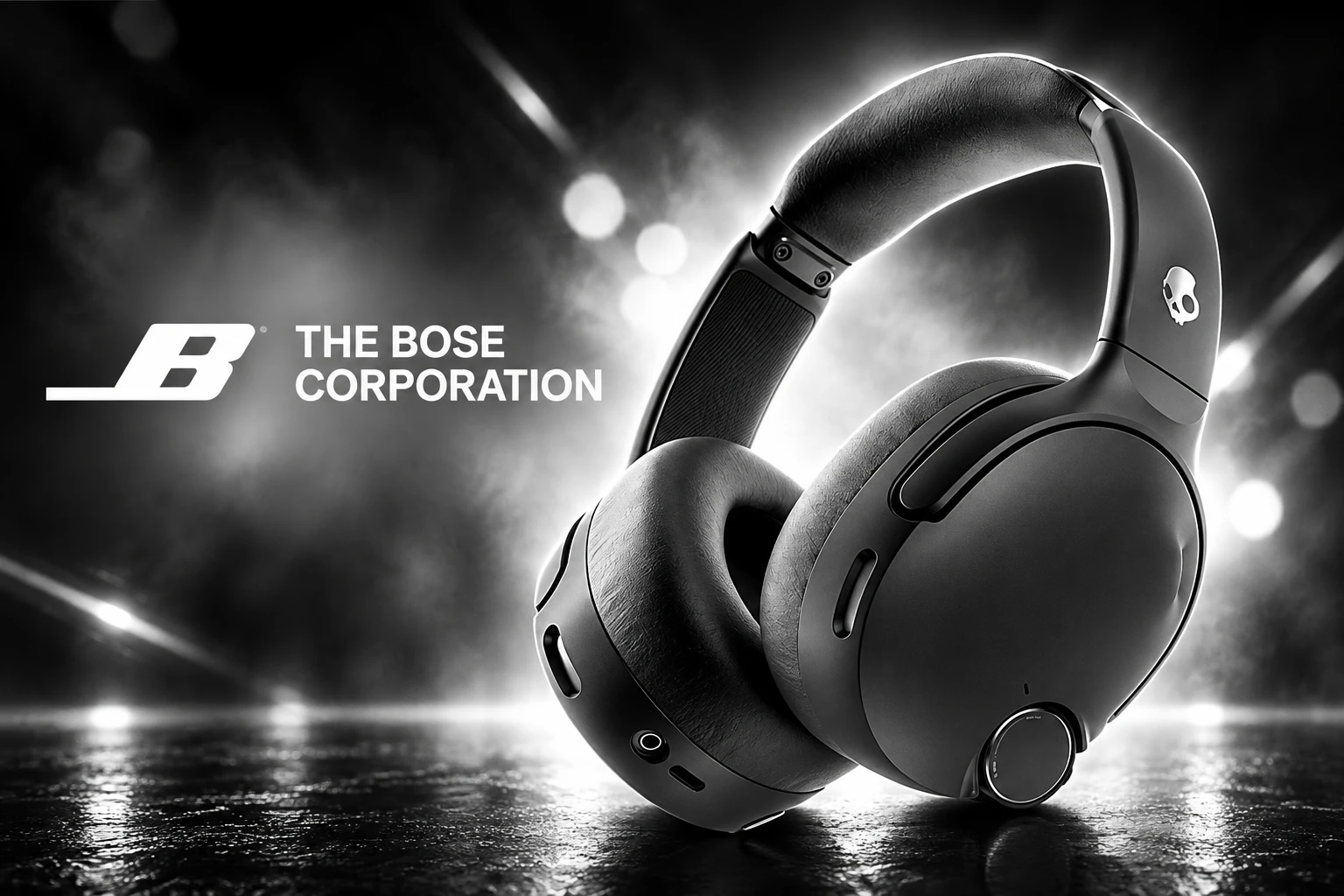
Bose Already Lent Skullcandy Its Best Quiet
The companies did not meet at the closing table. Bose’s own release calls the work a multi-year partnership that had already put Sound by Bose technology into Skullcandy earbuds and headphones, and says both sides had seen that the mix could hold without sanding off Skullcandy’s look.
The first widely sold fruit was the Method 360 ANC earbuds in April 2025, with Sound by Bose tuning and Bose-licensed fit fins and gels. Skullcandy opened them at a $99.99 introductory price and a $129.99 regular price. Reviewers noted the case and oval tips echo Bose’s own in-ear shape, which is the point of an ingredient brand: the quiet is Bose’s, the colors and clip-on case are Skullcandy’s.
In July 2026 Skullcandy shipped the Crusher 1080 ANC, the bass line’s flagship, and billed it as the first time Bose had put this proprietary stack inside a headphone that is not a Bose. Skullcandy’s own product copy is blunt about the handoff. It kept patented Crusher Bass, the dual-driver rumble you feel in your chest, and handed the quiet, the calls, and the spatial mix to Bose.
On October 22, Skullcandy’s Japan account was still pushing new Method 360 ANC colors (Cement, Crazy Pink, Future) as if the brand’s calendar had not paused. The purchase changes who cashes the invoice. It does not, on day one, change the SKUs.
What Bose Put Inside the Crusher 1080 ANC
Skullcandy lists four Bose pieces on that model, running as software and processing on Skullcandy’s own 36mm hardware rather than as Bose-built drivers. That split is why a $279.99 price is even possible.
THE SOUND BY BOSE STACK
- QuietControl ANC: A six-microphone array that adapts as the room gets louder or quieter, with Quiet, Aware, and Off modes.
- TrueSpatial: Spatial audio with head tracking, meant to keep the stage in front of you as you turn.
- WaveForm Audio Engine: Processing that Skullcandy says keeps vocals clean when Crusher Bass is turned up.
- SpeechClarity: Voice pickup tuned so calls do not collapse when the bass drivers are working.
Crusher Bass stays Skullcandy’s trick: a full-range driver plus a dedicated bass unit in each cup, with a dial on the earcup and in the app. The company has spent years selling that physical rumble to people who thought Bose sounded polite. The 1080 ANC is the first Crusher that also tries to disappear a subway car, and Bose’s licensing desk already knew the recipe worked well enough to sell.
Why McIntosh and Sonus faber Matter Here
Skullcandy is not Bose’s first extra logo. On November 19, 2024, Bose bought McIntosh Group in November 2024 from Highlander Partners, picking up McIntosh and Sonus faber in one stroke. Terms were confidential then too. Jones Day was counsel then too.
McIntosh still builds amplifiers, speakers, and turntables in Binghamton, New York, the factory story it has told since 1949. Sonus faber still makes speakers in Vicenza, Italy. Bose said those brands would keep doing high-end boxes while Bose kept headphones, soundbars, and car audio. The press kit even added the years together as more than 175 years of combined audio work.
Snyder’s own grouping is the tell. McIntosh is heritage metal and blue meters. Sonus faber is Italian cabinets. Skullcandy is boardsports, gaming, and a skull on the cup. They do not share a customer. They share an owner who has decided the Bose word cannot stretch across all three without tearing. The 2024 luxury buy went up-market. The 2026 lifestyle buy goes the other way. Same portfolio logic, opposite price.
Bose is also selling the quiet as a license, not only as a finished Bose product. Sound by Bose is the ingredient mark; Powered by Bose is the hearing-health mark. Motorola’s moto buds+ carry Sound by Bose tuning. Lexie hearing aids carry Powered by Bose. Skullcandy was the rare case of that license going to another headphone brand, which is a stranger fit than putting Bose code in a phone company’s buds. Buying the licensee closes that circle.
The Crusher 1080 Undercuts Bose’s Own Flagship
Skullcandy did not whisper the price gap. Its Crusher 1080 ANC pages put $279.99 next to $449 for QuietComfort Ultra and call the Bose-licensed quiet a flagship feature at a friendlier number. Battery life on the Crusher is listed at up to 60 hours, which is the kind of spec a business-traveler brand used to own outright.
PRICE TAGS BOSE NOW OWNS
| Product | Brand | Listed price | What Bose contributes |
|---|---|---|---|
| QuietComfort Ultra headphones | Bose | $449 | Native Bose design and ANC |
| Crusher 1080 ANC | Skullcandy | $279.99 | QuietControl, TrueSpatial, WaveForm, SpeechClarity |
| Method 360 ANC earbuds | Skullcandy | $129.99 regular, $99.99 intro | Sound by Bose tuning and licensed fit parts |
Bose now collects the revenue on both sides of that table. Before October 21 it collected a licensing cut on the Skullcandy rows and the full ticket on QuietComfort. The purchase only makes sense if Framingham would rather own the cheaper unit than rent the tech to it, and if it believes the skull logo will not drag the Bose name down with it.
The risk sits in the same spreadsheet. A shopper who used to pay Bose prices for silence can now buy silence plus theatrical bass for $279.99, with the Bose stack named on the box. Keep the brands visually apart and you still taught the market that QuietControl is portable. That lesson does not go back in the bottle because the licensee became a subsidiary.
People who follow headphone drops treated the buy as the obvious next step after the collab, and as Bose stepping onto the budget shelf on purpose. The surprise was never the pairing. It was Bose deciding the Bose word would not do that job, so it bought a word that would.
Park City Keeps the Chairlift Address
Snyder has said Park City is the center of board-sports culture and that Bose wants Skullcandy to stay in the middle of it. The release leans on longstanding athlete ties and on music, gaming, and fitness crowds Bose does not reach. Bose products still skew toward people who fly and commute. Skullcandy is the bet that those buyers were never going to walk into a Bose store, no matter how good the ANC got.
We believe this is a win for Skullcandy and our fans. Skullcandy was born on a chairlift in Park City, Utah, over 20 years ago, and we’ve always believed great music should be part of the experiences people love. Joining Bose gives us the opportunity to make those experiences even better by bringing more of their audio expertise and technology to our products, and it opens up even more ways to take Skullcandy further.
Brian Garofalow, Chief Executive Officer, Skullcandy, company release
Garofalow came out of action-sports marketing and took the CEO job in 2023. His brief has been culture first, engineering second, which is why a Bose license was attractive and why Bose does not need Skullcandy’s labs. It needs the people who would never wear a QuietComfort on a lift. Leave them in Park City, keep the skull, pour Bose code into the next Crusher, and hope the two names do not smear.
That is a harder trick than the press line. Skullcandy’s reputation for bass-first, style-first cans is the asset. It is also the thing Bose has to leave alone, or the crowd Snyder wants will smell the airport lounge. If Park City starts shipping polite black headphones with a tiny skull, the point of the check evaporates.
A Decade of Private Equity Ends in Framingham
Mill Road’s exit is the part of the story that is actually finished. The Greenwich firm fought for Skullcandy in 2016, beat a signed deal with Incipio, and took the company private after it had faded on Nasdaq. Bose’s release names that fund as the seller. Mill Road’s own write-up of Mill Road Capital’s Skullcandy holding says going private let the company dump unrelated work, cut costs, and return to an edgy, style-led assortment.
SKULLCANDY’S PATH TO BOSE
- 2003: Skullcandy is founded on a chairlift in Park City as a lifestyle audio brand aimed at boardsports.
- August 24, 2016: After Incipio’s offer stalls, Skullcandy signs with Mill Road for $6.35 a share in cash, about $196.6 million, roughly 4% above Incipio’s $6.10 and about 43% above the June 22, 2016 close.
- April 2025: Method 360 ANC earbuds ship with Sound by Bose tuning at $99.99 introductory, $129.99 regular.
- July 2026: Crusher 1080 ANC ships at $279.99 with QuietControl, TrueSpatial, WaveForm, and SpeechClarity.
- October 21, 2026: Bose acquires Skullcandy from the Mill Road fund and leaves the brand in Park City.
A decade is a long hold for a headphone brand that had already been through a public-market slide. Mill Road gets a strategic buyer that had already stress-tested the products. Bose gets a live channel into shops and feeds its own stores do not own. Nobody published the multiple, so the only hard number left from 2016 is that $196.6 million take-private, which is a floor on history, not a clue to what Framingham paid.
Frequently Asked Questions
Who owned Skullcandy before Bose bought it?
Mill Road Capital Management, a Connecticut private investment firm with offices in Greenwich and the San Francisco Bay Area, took Skullcandy private in 2016 after a bidding fight with Incipio. Incipio had a signed merger at $5.75 a share, later $6.10; Mill Road, already a 9.8% holder, won at $6.35 a share, about $196.6 million. Founder Thomas Lynch said at the time that Mill Road was raising a 9.8% stake into full ownership. Bose bought the company from a Mill Road fund on October 21, 2026.
What does Sound by Bose mean on a product?
Sound by Bose is Bose’s ingredient license for its audio technology and, when Bose allows it, its name on someone else’s hardware. Motorola’s moto buds+ use Sound by Bose tuning, including ANC and adjustable EQ. A sister mark, Powered by Bose, is used on Lexie hearing aids for mild to moderate hearing loss. On Skullcandy, the mark has meant Bose processing and, on the Crusher 1080 ANC, QuietControl ANC, TrueSpatial, the WaveForm Audio Engine, and SpeechClarity running on Skullcandy drivers.
Which other audio brands does Bose own?
Besides Bose and now Skullcandy, the company owns McIntosh Group, purchased on November 19, 2024 from Highlander Partners. That group includes McIntosh, still based in Binghamton, New York; Sonus faber, based in Vicenza, Italy; and Sumiko Phono Cartridges. McIntosh has also supplied audio for select Jeep Wagoneer and Grand Cherokee models, and Sonus faber has automotive ties with Lamborghini and Maserati. Bose said those luxury lines would keep making amplifiers, speakers, and turntables rather than Bose-branded earbuds.
Where is Skullcandy based, and when was it founded?
Skullcandy was founded in 2003 on a chairlift in Park City, Utah, and Bose said it will remain based there. Garofalow’s line is that the company is a little more than 20 years old and was built so music would ride along with the sports its customers already did. Snyder has called Park City the epicenter of board-sports culture and said Bose wants to stay in the middle of that scene rather than pull the brand east to Framingham.
Bose now owns the polite cans and the rude ones, the $449 quiet and the $279.99 quiet with a bass dial. The skull stays in Park City. The code stays Bose. Whether those two facts can share a parent without flattening each other is the work that starts after the release.

Final Fantasy Resonance Turns a Dead Gacha Into HD-2D

PHP2Shell Forced Sites Offline While Exploits Stalled

Kindle+ Folds AI Audiobooks Into the Page-Read Fund

Chip Stocks Fall as the Bond Rally Cheapens AI Spend

Comcast’s Record Odyssey Quarter Doubles as the Exit

Microsoft 365 Auth Fault Took Down Exchange and Teams

Xbox Caps Game Pass Cloud Gaming at 15 Hours

OpenClaw 2.0 Ships a Team Workplace With Host-Trust Defaults

OpenAI Unveils GPT-6 Astra With a Critical Cyber Label

Diesel Breaks Its Record as the White House Claims Credit
-
 NEWS2 months ago
Microsoft 365 Auth Fault Took Down Exchange and Teams
-
 GAMING2 months ago
Xbox Caps Game Pass Cloud Gaming at 15 Hours
-
 NEWS2 months ago
OpenAI Unveils GPT-6 Astra With a Critical Cyber Label
-
 NEWS2 months ago
OpenClaw 2.0 Ships a Team Workplace With Host-Trust Defaults
-
 BUSINESS2 months ago
Diesel Breaks Its Record as the White House Claims Credit
-

 LIFESTYLE2 months ago
Squishy Dumpling Toys Recalled After Hiding Illegal Water Beads
-

 BUSINESS2 months ago
ChargePoint Stock Rally Prices Wilmer’s Three-Year Cash Plan
-

 AUTO2 months ago
Tesla Puts Its Wheel-Free Cybercab on Austin Streets