
NEWS
macOS 27.2 Adds Touch Gestures 15 Years After Jobs
macOS 27.2 beta 3 adds touch gestures in Safari, Notes, and Photos on the 15th anniversary of Steve Jobs rejecting a finger Mac.

macOS 27.2 beta 3 adds touch-specific gesture code to Safari, Photos, Notes, and Quick Look. Apple seeded the build on October 5, 2026, 15 years to the day after Steve Jobs died.
The strings are the plumbing a vertical-screen Mac would need. They also work with Sidecar, so Apple can still call this an iPad feature if the rumored OLED laptop slips.
The Four New Recognizers Hide in First-Party Apps
Code finder Aaron Perris posted the touch gesture strings in the 27.2 beta after digging through developer builds. Safari gets a touch sentinel recognizer, Photos gets PXGTouchDwellGestureRecognizer, Notes gets ICTouchPressGestureRecognizer, and Quick Look gets a dragTouch feature.
Those four apps are the ones people actually poke. A web page, a photo grid, a note, a file preview. This is not a hidden debug flag in a framework nobody ships.
TOUCH STRINGS IN 27.2 BETA 3
| App | Code name | What the words describe |
|---|---|---|
| Safari | touch sentinel recognizer | A watcher for finger input on a page |
| Photos | PXGTouchDwellGestureRecognizer | A finger that stays on one spot |
| Notes | ICTouchPressGestureRecognizer | A press on the glass |
| Quick Look | dragTouch | A drag performed with a finger |
The same beta also gives Dock icons a new long-press animation. Earlier Golden Gate work already described menu-bar controls that grow when tapped, and extra options that appear after a tap on a button. A point release that teaches first-party apps to tell a finger from a pointer is how a platform changes before the keynote does.
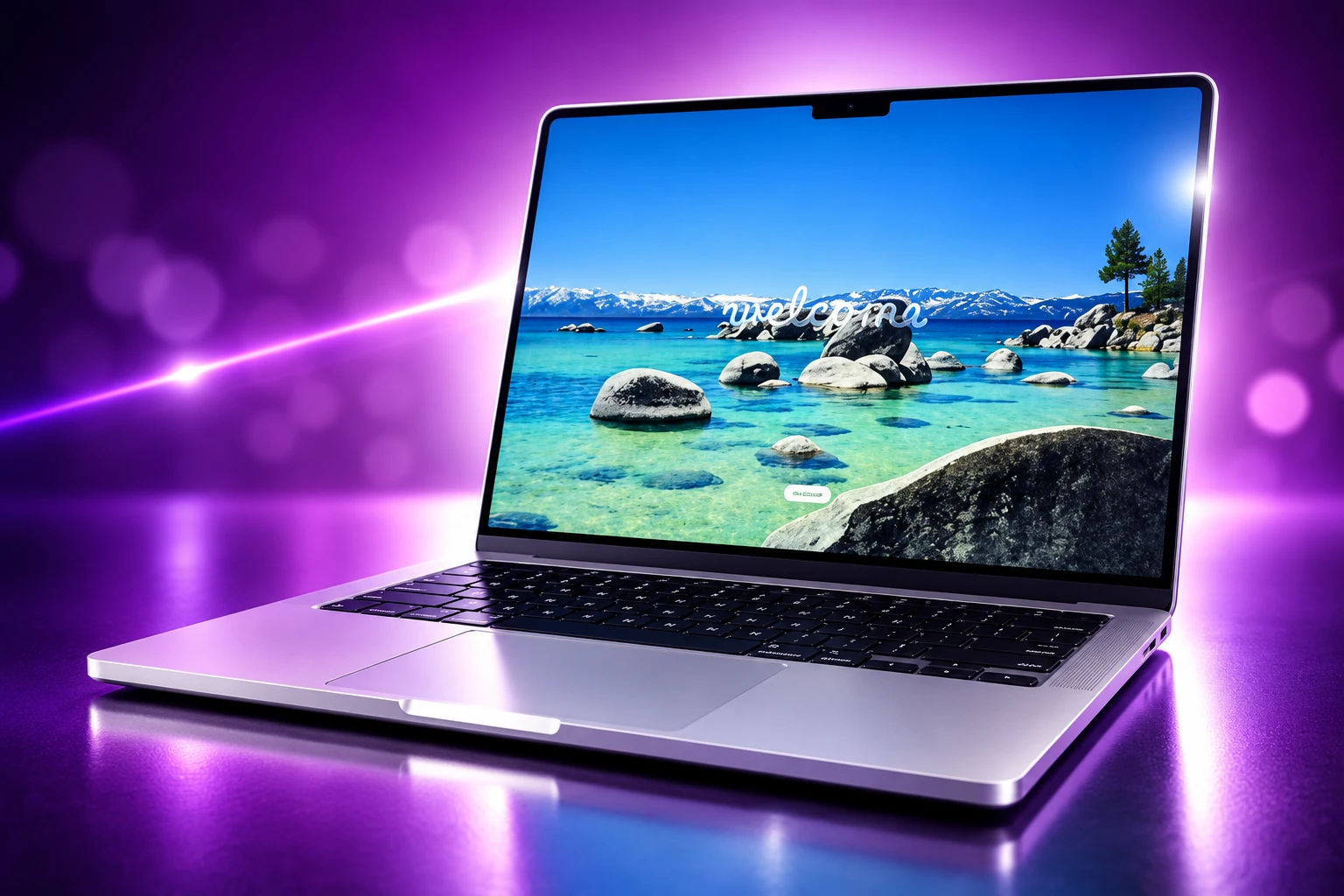
Jobs Called Vertical Touch Ergonomically Terrible
Jobs shut the idea down in October 2010 after what he described as a lot of user testing. He was talking about a laptop screen, held upright, poked like a phone.
We’ve done tons of user testing on this, and it turns out it doesn’t work. Touch surfaces don’t want to be vertical. It gives great demo but after a short period of time, you start to fatigue, and after an extended period of time, your arm wants to fall off. It doesn’t work, it’s ergonomically terrible. Touch surfaces want to be horizontal, hence pads.
Steve Jobs, October 2010
Craig Federighi, Apple’s software chief, kept that line in 2018. He said the ergonomics of a Mac are hands rested on a surface, and that lifting an arm to poke a screen is a pretty fatiguing thing to do. In 2020, after Big Sur’s rounder look sparked a fresh round of touch-Mac rumors, he said the redesign was not remotely considering touch.
Phil Schiller, then Apple’s marketing chief, said teams had tested the idea more than once and come away sure it was the wrong thing to do. Tim Cook, in 2012, compared a fused PC and tablet to a toaster merged with a refrigerator. The company did put a thin OLED touch strip above the keys, the Touch Bar, then killed it after a lukewarm run.
Tom Boger, vice president of Mac and iPad marketing, left a crack in 2024. He still split the products the old way, iPad as touch-first and Mac as indirect, then added that he could not say they never change their mind. macOS 27.2 is that change showing up in code, on the anniversary of the person who made the opposite case a brand promise.
Sidecar Is Still the Cover Story
Apple already ships a touch Mac. It is an iPad parked beside the laptop. Sidecar lets you use your iPad as a second display for a Mac, extending or mirroring the desktop, and Golden Gate widened that path to full touch input.
That is why the 27.2 strings are deniable. A dwell recognizer in Photos can fire on an iPad glass just as well as on a future laptop panel. A press in Notes, a sentinel in Safari, a finger-drag in Quick Look: all of that is useful when the second screen is already a touch tablet.
TOUCH CHANGES ALREADY IN GOLDEN GATE
- Pull-to-refresh: The launch build added the iPhone-style swipe in Safari, Mail, and Calendar.
- Sidecar touch: Golden Gate brought full touch input to the iPad-as-Mac-display feature, so taps on that panel already reach Mac apps.
- Larger targets: Tapped menu-bar items and buttons have been described as growing or revealing extra controls, a pattern that helps a finger more than a cursor.
- Dock long-press: Beta 3 of 27.2 adds a new long-press animation on Dock icons, the same hold a touch UI uses to expose options.
If Apple only wanted a nicer Sidecar, this is a coherent path. If it wants a first-ever touchscreen Mac, the same path is how you ship the software first and keep the hardware rumor in a box until the event. Both readings fit the files. Only one of them needs a new chassis.
Gurman Now Says October or November
Mark Gurman, speaking on the first Power On podcast on October 1, 2026, tightened a window that had stretched into 2027. He said Apple is already testing the machines on macOS 27.2, the same train that just grew the new recognizers.
Apple, I believe, will introduce its first touchscreen MacBook Pro this fall, as early as October. It could slip to November, but as early as October.
Mark Gurman, Power On podcast, October 1, 2026
He has the laptops as 14-inch and 16-inch models with touch-enabled OLED panels, a thinner shell, and a Dynamic Island in place of the notch. The chips would be the M5 Pro and M5 Max already in the current Pro line, not a new M6 pair. Some reports float a MacBook Ultra name sitting above the regular Pro. Gurman has treated the branding as unsettled.
macOS 27.2 itself is expected toward the end of October, which is why a hardware announcement in that same stretch of calendar keeps coming up. Mid-September testing inside Apple used 27.1. Public Golden Gate landed on September 14, 2026.
THE ROAD TO THE 27.2 TOUCH STRINGS
- October 2010: Jobs tells an audience that vertical touch is ergonomically terrible after user testing.
- 2018: Federighi repeats that Mac hands should rest on a surface, not rise to poke glass.
- September 14, 2026: macOS Golden Gate ships with pull-to-refresh and full Sidecar touch.
- October 1, 2026: Gurman puts a first touchscreen MacBook Pro in October or November, already running 27.2 inside Apple.
- October 5, 2026: Apple seeds 27.2 beta 3 with the four new touch recognizers and a Dock long-press animation.
That calendar is tight. A software train due at the end of the month, a hardware rumor aimed at the same month or the next, and gesture names landing in first-party apps in between.
WHAT WE KNOW
- The code: Beta 3 of macOS 27.2 contains new touch recognizers in Safari, Photos, Notes, and Quick Look.
- The software date: Gurman has 27.2 arriving toward the end of October.
- The chips in the rumor: M5 Pro and M5 Max, the same silicon already selling in MacBook Pro.
WHAT IS UNCONFIRMED
- The name: MacBook Ultra is a rumor tag, not a listed product, and Pro branding may stay.
- The day: October or November is Gurman’s window, not an Apple event invite.
- The cause: The strings can serve Sidecar, a new laptop, or both, and Apple has not said which.
Apple has not confirmed a touchscreen Mac, an OLED MacBook, or a new Ultra tier. Until it does, the only finished fact is the code.
Current MacBook Pros Weigh 3.4 and 4.7 Pounds
The machine Apple would have to beat is not a mystery. The 14-inch M5 MacBook Pro at 3.4 pounds (1.55 kg) is 0.61 inch (1.55 cm) thick, with a 14.2-inch Liquid Retina XDR panel. Apple’s 16-inch M5 Pro and M5 Max sheets list 4.7 pounds (2.14 kg on the Pro, 2.15 kg on the Max) and a 0.66-inch (1.68 cm) height, with a 16.2-inch XDR panel.
WHAT THE CURRENT PRO LINE WEIGHS
| Model | Weight | Height | Panel now | Rumored change |
|---|---|---|---|---|
| 14-inch M5 | 3.4 pounds | 0.61 inch | 14.2-inch Liquid Retina XDR | OLED touch, thinner, lighter |
| 16-inch M5 Pro / Max | 4.7 pounds | 0.66 inch | 16.2-inch Liquid Retina XDR | OLED touch, thinner, lighter |
Gurman has called the next shell significantly lighter and said Apple miniaturized parts and moved them around to get there. He has not published a target weight. OLED would replace the current XDR stack and add a touch layer, which is usually a reason a lid gets heavier, not lighter, unless the rest of the box shrinks enough to pay for it.
Keeping M5 Pro and M5 Max in a redesigned body is the other compromise. The rumor puts a new display, a new cutout, and a new input method on last season’s high-end chips, then holds a further silicon jump for the regular Pro line later. That split only makes sense if the point of this SKU is the panel and the glass, not a faster CPU.
Fingerprints and Clamshell Mode Still Get in the Way
The objection that keeps coming back is simpler than Jobs’s arm argument. A lot of MacBook Pro owners close the lid and park the computer under a monitor. A touch overlay on a panel they never see does not help them, and it can still cost money, power, and thickness.
An OLED that you actually tap will also need wiping. The company already ships a polishing cloth with the nano-texture option. Fingers on a glossy black panel turn that cloth from a box extra into a weekly tool. People who have lived with Windows touch laptops also know the other failure: a palm grazing the screen while you type, and a control you did not mean to hit.
Developers just shipped Golden Gate. A point release that adds dwell, press, sentinel, and drag tools in Apple’s own apps is a hint that third-party Mac software will be expected to follow. Pointer-first buttons, dense menus, and hover states do not magically become finger-friendly because Safari learned a new recognizer. The tired part of that job is real, and it lands on studios that did not ask for a touch Mac.
If the hardware shows up in October or November, those studios will have weeks, not months, after 27.2 goes public. If it slips, the code still sits in the OS, teaching first-party apps to wait for a finger that most current Macs cannot feel. Either way, Apple has already picked a side in the files. The keynote, if it comes, will only name the chassis.

Final Fantasy Resonance Turns a Dead Gacha Into HD-2D

PHP2Shell Forced Sites Offline While Exploits Stalled

Kindle+ Folds AI Audiobooks Into the Page-Read Fund

Chip Stocks Fall as the Bond Rally Cheapens AI Spend

Comcast’s Record Odyssey Quarter Doubles as the Exit

Microsoft 365 Auth Fault Took Down Exchange and Teams

OpenClaw 2.0 Ships a Team Workplace With Host-Trust Defaults

Xbox Caps Game Pass Cloud Gaming at 15 Hours

OpenAI Unveils GPT-6 Astra With a Critical Cyber Label

Diesel Breaks Its Record as the White House Claims Credit
-
 NEWS2 months ago
Microsoft 365 Auth Fault Took Down Exchange and Teams
-
 GAMING2 months ago
Xbox Caps Game Pass Cloud Gaming at 15 Hours
-
 NEWS2 months ago
OpenClaw 2.0 Ships a Team Workplace With Host-Trust Defaults
-
 NEWS2 months ago
OpenAI Unveils GPT-6 Astra With a Critical Cyber Label
-
 BUSINESS2 months ago
Diesel Breaks Its Record as the White House Claims Credit
-
 AUTO2 months ago
Tesla Puts Its Wheel-Free Cybercab on Austin Streets
-

 NEWS2 months ago
Sony and Warner Sue Anthropic Over Torrented Song Lyrics
-

 LIFESTYLE2 months ago
Squishy Dumpling Toys Recalled After Hiding Illegal Water Beads