
NEWS
OpenAI Boardroom Bug Case Turns on a $13.99 Board
Prosecutors charged OpenAI engineer Abdulrahman Alfozan with bugging an executive room using a $13.99 board.

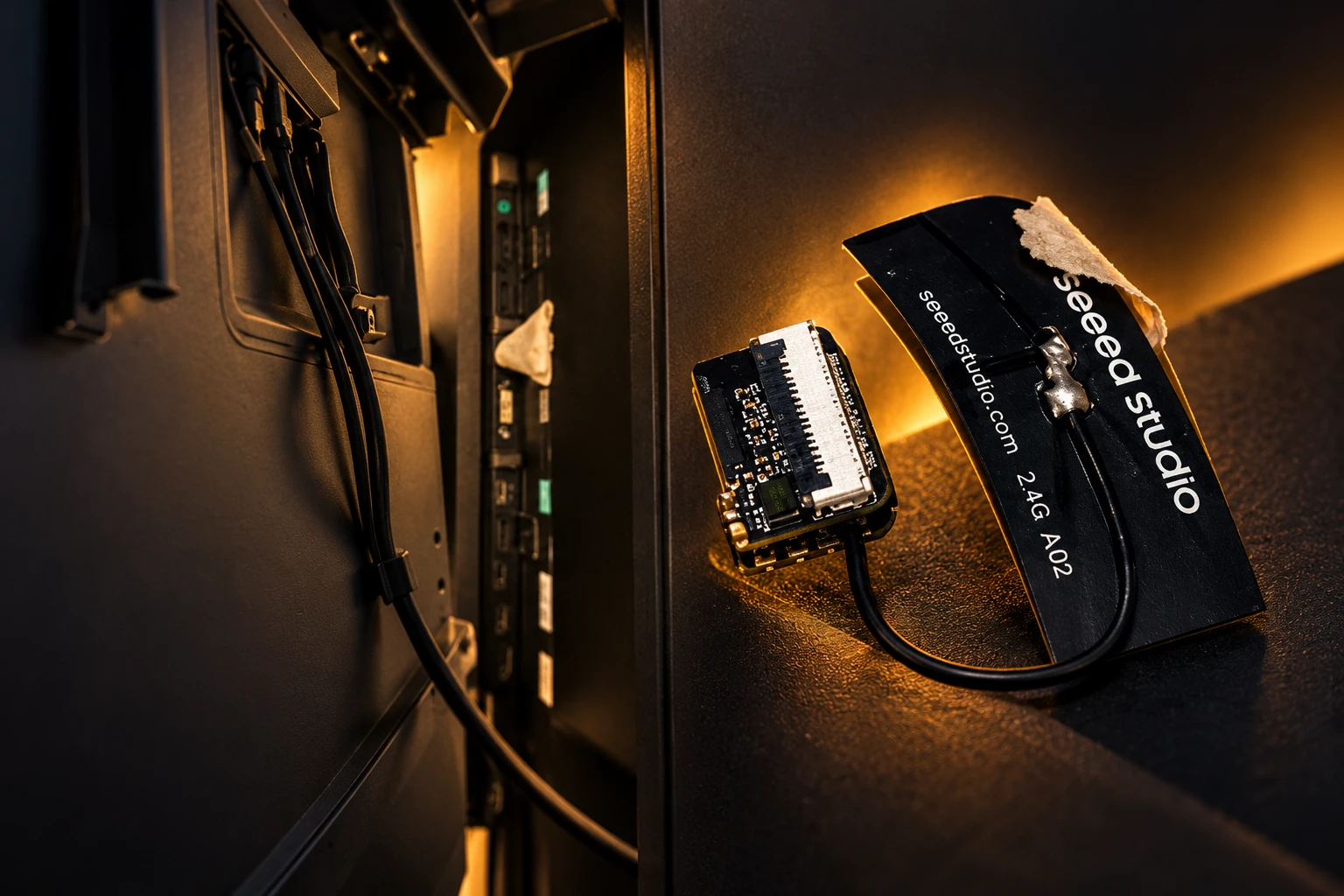
Federal prosecutors charged OpenAI engineer Abdulrahman Alfozan with bugging an executive conference room using a thumb-sized hobbyist board wrapped in toilet paper. Alfozan, 35, a Saudi national and U.S. lawful permanent resident, was arrested on October 9 and charged in San Francisco, then made his first court appearance on October 13.
FBI Director Kash Patel said the hidden recorder was meant to capture talk about the company’s super intelligence technology. OpenAI said its own models helped trace the device, and that it has no indications the engineer took model weights, source code, or customer data.
A Thumb-Sized Board Wrapped in Toilet Paper
On or about September 30, OpenAI staff found a hidden audio recorder in a USB port on the back of a television in an executive conference room at one of the company’s San Francisco buildings. They later concluded it had gone in about two days earlier, on or about September 28, and that the files on it were encrypted.
The FBI affidavit in the complaint, signed by Special Agent Lydia Liang, names the gadget as a Seeed XIAO ESP32-S3 Sense. Seeed Studio lists the board at $13.99 as a thumb-sized development module with a digital microphone, a detachable camera, Wi-Fi, and a microSD slot. The affidavit notes that Seeed is based in Shenzhen.
OpenAI called the find a sophisticated recording device and told outsiders it had advanced encryption, audio monitoring, and a way to move data that was built to dodge monitoring. Those extras sit on top of a maker board, not a custom spy kit from a lab. Liang wrote that the USB adapter may have been changed so the board would not pass data to the television, that a forensic image of the microSD card would not give up its files, and that the limited data recovered included a MAC address and a custom header, NANOVOL1. The firmware appeared to have been compiled on September 28, which is why investigators treat that date as the install.
THE BOARD AND WHAT THE AFFIDAVIT ADDS
| Piece | On the shelf | In the complaint |
|---|---|---|
| Hardware | Seeed XIAO ESP32-S3 Sense development board | Same board, firmware compiled on September 28 |
| How it sat | Thumb-sized module with a microphone and microSD slot | Wrapped in toilet paper and plugged into a TV USB port |
| Storage | Onboard microSD slot | Custom header NANOVOL1, files not recovered |
| Maker | Seeed Studio | Affidavit notes the company is based in Shenzhen |
The room could be reserved only by executives and executive assistants, Liang wrote, and it was used for leadership meetings, technical sessions, and briefings with government officials and business counterparts. Alfozan had no authority to go in or sit in those meetings. The complaint says the talk in that room often covered private research, product plans, government work, and commercial relationships.
Chatbot Prompts Mapped the Building and the Bug
Before the board went in, Alfozan used a productivity agent between August 17 and September 16 to ask about OpenAI building addresses, meeting rooms, room capacities and calendars, “leadership and exec” locations, and external partner meetings. The affidavit quotes him asking how to send USPS mail to a company building, where a room’s calendar came from, and whether a different building was “the mailing building now.”
A chatbot account tied to his spouse, which the complaint says shared multiple identifiers with his own chatbot account, then submitted prompts between September 24 and September 30 about building, customizing, installing, recording, testing, hiding, and remotely reaching a device. On September 27 and 28, the same account asked about the planted device itself, including its custom header and unique MAC address.
PROMPTS TIED TO THE SPOUSE-LINKED ACCOUNT
- Continuous recording: Build a continuous audio recorder.
- Wireless setup: Customize Wi-Fi connectivity.
- Live audio: Improve audio and live listening.
- Storage: Encrypt the SD card.
- This device: Ask about its custom header and unique MAC address on September 27 and 28.
The papers do not name the chatbot vendor, and they do not say the spouse typed the prompts. They say the accounts overlapped, and that the questions tracked the hardware found in the wall. OpenAI spokesperson Nate Evans said Alfozan joined in July 2025 and worked on the product team, which means he already had a badge, a laptop, and an internal agent that would answer questions about rooms.
OpenAI Put a Camera Behind the TV
The conference room had no camera inside it on the day the board went in. Closed-circuit cameras elsewhere in the office still placed Alfozan near that room on 10 dates from September 8 through September 29, including a stretch on September 28 from 2:18 p.m. to 6:30 p.m. Several of the other hits last a minute. A few last most of an afternoon.
After the find, staff put a camera behind the television. On October 5, Alfozan walked into the executive room and appeared to look behind the set where the first recorder had been seated. That same day he left a bag unattended in a different room in an OpenAI building. Security opened it and found his wallet, his ID, and a second recorder similar to the first.
FROM THE FIRST QUERY TO THE ARREST
- August 17 to September 16, 2026: Uses a productivity agent to ask about buildings, rooms, calendars, and leadership locations.
- September 24 to September 30, 2026: A spouse-linked chatbot account asks how to build, hide, encrypt, and reach a recorder.
- September 28, 2026: Firmware on the first board appears compiled; the complaint treats this as the install date.
- September 30, 2026: Staff find Recording Device 1 in a TV USB port, wrapped in toilet paper.
- October 5, 2026: He enters the room and looks behind the television; a bag yields Recording Device 2.
- October 8, 2026: Liang’s complaint is filed as case 3:26-mj-71329.
- October 9, 2026: He is arrested and fired, with OpenAI coordinating the timing with the FBI.
- October 13, 2026: He appears in federal court; the complaint is unsealed; OpenAI and the Justice Department speak publicly.
OpenAI said it tightened his access after September 30, then suspended physical and network access, put him on leave, and secured company gear before the arrest. OpenAI also said it had evidence he meant to plant more recorders in sensitive parts of its offices. The complaint itself describes two devices, not a finished second install.
Why Prosecutors Filed a Wiretap Count?
The complaint charges a single count of using a device to intercept oral communications under 18 U.S.C. § 2511(1)(b), a wiretap offense with a 5 years maximum, a $250,000 fine, and 3 years of supervised release. It does not charge trade-secret theft, acting as a foreign agent, or removing model weights, even as FBI and intelligence officials describe a fight over superintelligence.
According to the complaint unsealed today, Abdulrahman Alfozan allegedly concealed a covert recording device inside his employer’s executive conference room to secretly capture sensitive communications about the company’s super intelligence technology.
Kash Patel, FBI Director, Justice Department statement, October 13, 2026
Director of National Intelligence Jay Clayton said the case shows why winning a global super intelligence race is a national security job, and he credited President Trump with creating a Super Intelligence Force. U.S. Attorney Craig H. Missakian said, “For us it is a matter of national security,” and described the arrest as part of a fight against people “who seek to steal our technology, as alleged in the complaint.” Scott Schelble, special agent in charge of the FBI’s San Francisco field office, called it an attempt to obtain protected information from U.S. super intelligence companies.
The charging document is still a federal wiretap statute on oral intercepts. Assistant U.S. Attorney Nicolas Parker is prosecuting the case with Trial Attorney Kate Tagert of the National Security Division’s Counterintelligence and Export Control Section, and the Justice Department said the prosecution supports National Security Presidential Memorandum 11, written to back American superiority in super intelligence. That staffing and that memo are the overlay. The count underneath is still one alleged bug in a conference room.
Alfozan has been a lawful permanent resident since September 2020. The papers identify his nationality and do not name a foreign government, a handler, or anyone who was supposed to receive a recording. William Pernik, his attorney, said his client is presumed innocent and cautioned against jumping to conclusions at this stage or politicizing a prosecution based on nationality.
OpenAI Says Its Models Traced the Device
OpenAI’s public note on October 13 did two jobs at once. It described a criminal referral, and it pitched the company’s models as the tool that traced the hardware. A security team can call the FBI without turning the arrest into a product demonstration, and that second job was a choice.
We discovered a sophisticated recording device that was hidden inside one of our offices. We used our models to understand the device and where it had come from, identifying that a specific employee had planted it a few days earlier. We referred the matter to the FBI, and we’re…
— OpenAI Newsroom (@OpenAINewsroom) October 13, 2026
The company said it used its models to understand the device and where it had come from, then identified a specific employee who had planted it a few days earlier. It thanked agents and prosecutors, said the FBI investigation is ongoing, and framed the episode as proof that AI can help against insider risks, cybercriminals, and nation states. The same note said there were no signs this person had taken model weights, source code, or customer data, and that he had been fired.
That last clause is the part the charging papers can actually carry. The models-as-detective line is OpenAI’s account of its own forensics, and the complaint still leans on cameras, a bag, a MAC address, and a chatbot log. If the board was “sophisticated,” it was sophisticated in the way a customized ESP32 can be, with encryption and a header, not in the way a purpose-built intelligence implant is.
A Second Recorder Turned Up in His Bag
The second device is why the case does not read as a one-off prank that ended at the television. OpenAI security found it with his wallet and ID, on the same day cameras caught him checking the first hiding spot. Liang’s affidavit treats that pairing as probable cause that he was still trying to intercept talk in the building through at least October 5.
Motive is the hole. Patel’s statement fills it with super intelligence. The complaint does not. It does not say whether he wanted leverage inside the company, material for a rival, a souvenir, or something else. OpenAI employs thousands of people, per the affidavit, and an engineering lead on the product team still had to scout the exec room with an internal agent and walk the hallway on 10 recorded dates.
The same calendar held another fight over sensitive information. On October 9, the day of the arrest, OpenAI research leaders said they had parted ways with safety researchers Jasmine Wang, Mikita Balesni, and Tomek Korbak after an investigation found they had violated policies on handling sensitive information, a “significant breach of trust” in the company’s words. The three said they were pushed out for putting safety first. Those are separate files. They landed in public view in the same stretch of days as a physical bug in the room where executives meet.
He Remains in Custody Until October 19
Alfozan is in federal custody. He is next scheduled to appear for a detention hearing on October 19 before U.S. Magistrate Judge Alex G. Tse. A complaint is an accusation. The Northern District’s own release says he is presumed innocent unless the government proves the charge beyond a reasonable doubt, and any sentence would follow the guidelines and 18 U.S.C. § 3553.
The hardware is still a Seeed board that retails for $13.99, wrapped in toilet paper, seated in a TV. The overlay is a superintelligence race, a presidential memorandum, and a counterintelligence section at Main Justice. Between those facts sits a fired engineer, two recorders, a chatbot log, and a company that used the arrest to advertise its models.
Disclaimer: This article is news reporting on a pending federal criminal case and is for information only. It is not legal advice, a finding of guilt, or a prediction of how the court will rule on detention, plea, or trial. Readers with questions about criminal charges, workplace investigations, or recording laws should consult a licensed criminal-defense attorney in the relevant jurisdiction before acting on anything described here. Names, charges, court dates, penalties, and company statements reflect the Justice Department complaint unsealed on October 13, 2026, the accompanying press releases, and OpenAI’s public note, and those facts can change as the investigation proceeds.

Final Fantasy Resonance Turns a Dead Gacha Into HD-2D

PHP2Shell Forced Sites Offline While Exploits Stalled

Kindle+ Folds AI Audiobooks Into the Page-Read Fund

Chip Stocks Fall as the Bond Rally Cheapens AI Spend

Comcast’s Record Odyssey Quarter Doubles as the Exit

Microsoft 365 Auth Fault Took Down Exchange and Teams

Xbox Caps Game Pass Cloud Gaming at 15 Hours

OpenClaw 2.0 Ships a Team Workplace With Host-Trust Defaults

OpenAI Unveils GPT-6 Astra With a Critical Cyber Label

Diesel Breaks Its Record as the White House Claims Credit
-
 NEWS2 months ago
Microsoft 365 Auth Fault Took Down Exchange and Teams
-
 GAMING2 months ago
Xbox Caps Game Pass Cloud Gaming at 15 Hours
-
 NEWS2 months ago
OpenAI Unveils GPT-6 Astra With a Critical Cyber Label
-
 NEWS2 months ago
OpenClaw 2.0 Ships a Team Workplace With Host-Trust Defaults
-
 BUSINESS2 months ago
Diesel Breaks Its Record as the White House Claims Credit
-

 LIFESTYLE2 months ago
Squishy Dumpling Toys Recalled After Hiding Illegal Water Beads
-

 BUSINESS2 months ago
ChargePoint Stock Rally Prices Wilmer’s Three-Year Cash Plan
-

 AUTO2 months ago
Tesla Puts Its Wheel-Free Cybercab on Austin Streets