
GAMING
Sony Gives Base PS5 the AI Upscaling It Called Impossible
QSSR brings AI-guided upscaling to standard PS5 in Wolverine and Ghost of Yōtei, a taste of PSSR that still leaves the Pro ahead.

Sony opened Quick Spectral Super Resolution on the base PlayStation 5 on October 1, 2026, in Marvel’s Wolverine and Ghost of Yōtei. Both first-party games were patched the same day, and the company said the library will go out to every PlayStation studio.
Daniel Craig, principal engineer for graphics R&D at Sony Interactive Entertainment, had just reminded readers that PlayStation Spectral Super Resolution analyzes frames pixel by pixel with AI, and that until now its compute needs made that path on PS5 impossible.
Sony Told Players the Math Would Not Fit
QSSR is the workaround. Craig described it as a new performance tier of AI upscaling, born from Project Amethyst, Sony’s AI graphics work with AMD. The recipe is a thinner neural net plus a hand-tuned pass built for the original console’s GPU, which has no dedicated machine-learning block.
PSSR still gets the gold-standard label on PS5 Pro. QSSR, Craig wrote, improves detail and stability on the cheaper machine. Insomniac head of technology Mike Fitzgerald called that a great taste of the PS5 Pro experience for Wolverine players who never bought the mid-gen box.
PSSR analyzes game images pixel by pixel and uses AI to upscale them with more detail and stability than conventional approaches; until now, its computational demands made bringing that experience to PS5 impossible.
Daniel Craig, Principal Engineer, Graphics R&D, Sony Interactive Entertainment
That sentence is the whole joke. When Sony unveiled the Pro on September 10, 2024, AI-driven upscaling on PlayStation 5 Pro sat next to a fatter GPU and faster ray tracing as a reason to spend more. The base kit was the machine that would not get that net.
FROM PSSR PITCH TO QSSR PATCH
- September 10, 2024: Sony unveils PS5 Pro with PlayStation Spectral Super Resolution as a headline AI upscaler.
- November 7, 2024: PS5 Pro goes on sale at $699.99, with PSSR tied to that hardware.
- October 1, 2026: QSSR ships on base PS5 inside patches for Marvel’s Wolverine and Ghost of Yōtei.
A little more than two years after the Pro pitch, the same company is putting a lighter cousin of that net on the hardware it had written off. The official account posted the news the same afternoon.
First PSSR came to PS5 Pro. Now Quick Spectral Super Resolution (QSSR) is coming to PS5.
Details on new upscaling tech, coming first to Marvel’s Wolverine and Ghost of Yōtei: https://t.co/c26XSbWSJM pic.twitter.com/ME2n6Rcowg
— PlayStation (@PlayStation) October 1, 2026
Owners on bright OLED sets are already treating the patch as a reason to pause a Pro purchase. That reading only holds if the picture in those two games is the whole pitch, and Sony is careful to say it is not.
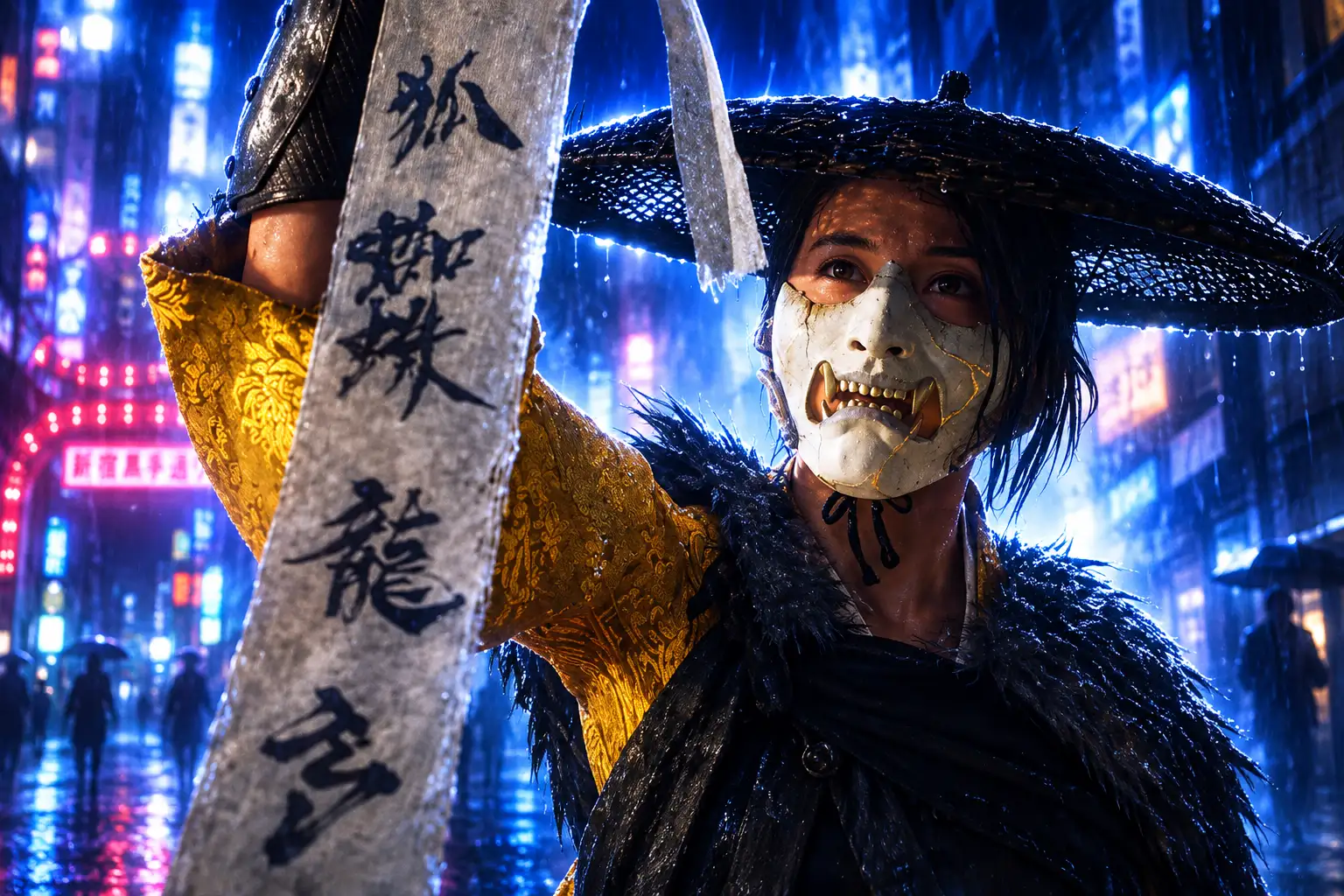
What QSSR Changes in Marvel’s Wolverine
Insomniac’s update 1.002, which landed 16 days after Wolverine launched on September 15, 2026, turns QSSR on by default on PS5. The studio’s notes also fix UI, Photo Mode, crash, and accessibility bugs, but the upscaler is the change you can see from the sofa.
Fitzgerald said the pass adds pixel-level clarity in Madripoor’s streets and Shinjuku’s alleys, the dense sets that used to smear first. Console-tech analyst Richard Leadbetter, who spent about six hours with the two patched games, called the Wolverine lift exceptional on image quality, with a steadier picture, more detail, cleaner sub-pixel edges, and less junk in moving leaves.
WHAT CHANGED IN THE WOLVERINE IMAGE
- Steadier frames: Temporal stability is substantially improved versus the stock upscaler.
- Finer detail: Resolved texture and edge information rises, especially in busy city scenes.
- Sub-pixel edges: Thin lines and distant geometry hold together instead of crawling.
- Moving foliage: Leaf shimmer and breakup drop, the artefact Leadbetter flagged as much reduced.
Sony’s own comparison clip for the game is a close-up with QSSR on, and the extra bite in materials is obvious even in a compressed stream. Fitzgerald’s line about a taste of the Pro is doing marketing work, and it is also the honest ceiling: this is the base kit borrowing a trick, not matching the Pro’s output.
QSSR adds more pixel-level clarity and stability to our environments, bringing out extra detail amidst the busy streets of Madripoor, the dense alleyways of Shinjuku, and many other areas across Logan’s epic journey. It’s a perfect companion to the launch of Marvel’s Wolverine, and it brings a great taste of the PS5 Pro experience to our players on PS5.
Mike Fitzgerald, Head of Technology, Insomniac Games
Ghost of Yōtei Started From a Cleaner Picture
Sucker Punch had less room to look like a miracle. Ghost of Yōtei already presented a decent image on base hardware, and Leadbetter found a smaller step once QSSR was in. Backgrounds lose some blur, cloth and grass clean up, and the gain is real without being a different game.
Jasmin Patry, lead rendering engineer at Sucker Punch, went further than a sharpness boast. She said the pass resolves fine detail in characters and spaces with a level of temporal stability the PS5 console had not been able to hold until now, which is a polite way of saying older upscalers still crawled.
QSSR excels at resolving the fine details in our characters and environments and does so with a level of temporal stability that hasn’t been possible on the PS5 console until now. We’ve long wished that all PS5 players could experience the incredible image quality that PSSR brings to PS5 Pro, and QSSR is a positive step towards that goal!
Jasmin Patry, Lead Rendering Engineer, Sucker Punch Productions
Patry’s last clause matters more than the first. The studio still wants every PS5 owner to see what PSSR does on Pro, and QSSR is a step, not the destination. Side-by-side clips from players land in the same place Leadbetter did: Wolverine shows the louder before-and-after, Yōtei shows a polish pass on a picture that was already in good shape.
300 TOPS Remain Exclusive to PS5 Pro
Craig did not pretend the gap had closed. The Pro, he said, has 300 TOPS of dedicated hardware for this job and can sit further along the cost-versus-quality curve. QSSR runs mainly on FP16 math on the base GPU, with packed math instructions to keep the pipeline full, because that chip never received the Pro’s INT8 path.
Leadbetter put the same fact in plainer terms after the hands-on: the Pro still delivers a higher upscaled output and a higher internal render, and a big divide remains between QSSR on standard PS5 and PSSR on Pro. On Pro, studios almost uniformly target 4K and pull the internal resolution around underneath it. On PS5 they have to pick intermediate and final presentation targets per mode, which is why 1440p is the output that makes sense for the lighter net.
QSSR VERSUS PSSR ON PAPER
| Piece | QSSR on PS5 | PSSR on PS5 Pro |
|---|---|---|
| Sony’s label | New performance tier | Gold standard |
| Hardware path | FP16 on the standard GPU | 300 TOPS dedicated, INT8 |
| Natural output | 1440p | 4K |
| Measured pass | 1.5ms to 1.8ms at 1440p; 4.4ms at 2160p | About 2ms to 4K |
| First QSSR titles | Wolverine 1.002 and Ghost of Yōtei, patched October 1, 2026 | Pro library since November 7, 2024 |
The Pro still has the heavier GPU Sony quoted in 2024, with 67% more compute units, 28% faster memory, and up to 45% faster rendering, plus ray tracing that can run at double, and at times triple, the base rate. QSSR does not touch those columns. It only reconstructs the frame the weaker chip already drew.
How Much Frame Time Does QSSR Cost?
Leadbetter timed a Wolverine cutscene in performance mode, uncapped, with variable refresh. QSSR was slower than Insomniac’s own upscaler by 1.5ms to 1.8ms when it took an 864p image to 1440p, an 8-10fps hit in that unlocked test. In the normal 60Hz performance mode, dynamic resolution drops the internal grid to pay for the net, so the output frame rate stays in the same band while the picture improves.
QSSR FRAME-TIME HITS
- 1440p path: 1.5ms to 1.8ms over Insomniac’s upscaler, 864p in to 1440p out.
- Uncapped gap: 8-10fps in that Wolverine cutscene, before dynamic resolution steps in.
- 2160p path: 4.4ms in fidelity mode, a much heavier pass on the same machine.
- Pro comparison: PSSR spends about 2ms upscaling to 4K on dedicated silicon.
The 2160p figure is why Sony’s engineers talk about flexibility instead of a single 4K target. Craig, who had not been shown Leadbetter’s numbers, still agreed that 4K is more expensive on base hardware and that 1440p is the natural place to land. Plenty of PS5 games were already reconstructing to that range with weaker filters. The 4.4ms 2160p pass is the version you feel as a tax; the 1440p pass is the one developers can budget.
QSSR Matched FSR 3 Speed in One Uncapped Test
Ghost of Yōtei’s performance mode, unlocked with variable refresh, is the friendlier data point. QSSR ran almost identically to the game’s stock FSR 3 path, which means Sucker Punch did not have to donate a pile of milliseconds to swap filters. It is one title, and the input and output resolutions still need a wider sample, but a house net that keeps FSR 3’s pace while cleaning edges is the offer studios wanted on this GPU.
That stock path used AMD FSR temporal upscaling tools, the open reconstruction stack most PS5 games leaned on when they could not afford a custom filter. Leadbetter’s view is that QSSR should beat TAA, Unreal Engine TSR, and FSR 3 on stability, which is the complaint that has followed this generation’s 720p-class internals when they are stretched to 1440p or 2160p.
Craig said the hard choice was simply where to land on the cost curve so developers could afford the pass and still beat standard TAA. None of these reconstructors is free. The win is that Sony now owns a first-party option on an AMD box that used to default to AMD’s own temporal scaler, and it did that without waiting for a new SKU.
Studios Can Add QSSR in a Few Days
The library is not a system toggle. Games have to ship a patch, and Sony is offering QSSR broadly rather than flipping it on from the dashboard. For any title that already supports PSSR on Pro, Craig called QSSR a drop-in after a few days of retuning, including streaming so higher-quality texture mips stay resident. Retrofits of older games are, in his words, relatively easy and low risk. The work he is actually excited about is future games authored with both QSSR and PSSR in mind.
WHAT STUDIOS GET FROM THE LIBRARY
- Drop-in path: Games that already ship PSSR can add QSSR with a few days of tuning.
- No dashboard override: Support is per title, not a system-wide switch like some Pro image options.
- Output choice: Teams pick render, intermediate, and final targets per graphics mode instead of always aiming at 4K.
- Old-game risk: Easy on paper does not mean a 2021 release will be patched; new productions are the safer bet.
Leadbetter noted that it will be Rockstar’s call whether Grand Theft Auto 6 uses either net, even though the tools now exist. That is the next place this argument gets tested, and it is not a promise. For the two games that already shipped the patch, the picture on a standard PS5 is sharper than it was on September 30, and the Pro still has the dedicated silicon, the 4K target, and the gold-standard label Sony is not ready to share.
Craig’s own summary is the one that will age better than any sofa verdict: it is good to still be improving PS5 this far into the generation, and the Pro remains free to pick a much more generous spot on that curve. QSSR is the cheaper machine finally getting the net Sony once filed under impossible, at a cost measured in milliseconds and a quality gap that has not gone away.

Final Fantasy Resonance Turns a Dead Gacha Into HD-2D

PHP2Shell Forced Sites Offline While Exploits Stalled

Kindle+ Folds AI Audiobooks Into the Page-Read Fund

Chip Stocks Fall as the Bond Rally Cheapens AI Spend

Comcast’s Record Odyssey Quarter Doubles as the Exit

Microsoft 365 Auth Fault Took Down Exchange and Teams

Xbox Caps Game Pass Cloud Gaming at 15 Hours

OpenClaw 2.0 Ships a Team Workplace With Host-Trust Defaults

OpenAI Unveils GPT-6 Astra With a Critical Cyber Label

Diesel Breaks Its Record as the White House Claims Credit
-
 NEWS2 months ago
Microsoft 365 Auth Fault Took Down Exchange and Teams
-
 GAMING2 months ago
Xbox Caps Game Pass Cloud Gaming at 15 Hours
-
 NEWS2 months ago
OpenAI Unveils GPT-6 Astra With a Critical Cyber Label
-
 NEWS2 months ago
OpenClaw 2.0 Ships a Team Workplace With Host-Trust Defaults
-
 BUSINESS2 months ago
Diesel Breaks Its Record as the White House Claims Credit
-

 LIFESTYLE2 months ago
Squishy Dumpling Toys Recalled After Hiding Illegal Water Beads
-

 BUSINESS2 months ago
ChargePoint Stock Rally Prices Wilmer’s Three-Year Cash Plan
-

 AUTO2 months ago
Tesla Puts Its Wheel-Free Cybercab on Austin Streets