
NEWS
Spotify’s Family QR Check Can Lock You Out for a Year
Spotify is asking some Premium Family members to scan a QR code in person within 7 days, and a missed scan bars Family and Duo plans for 12 months.

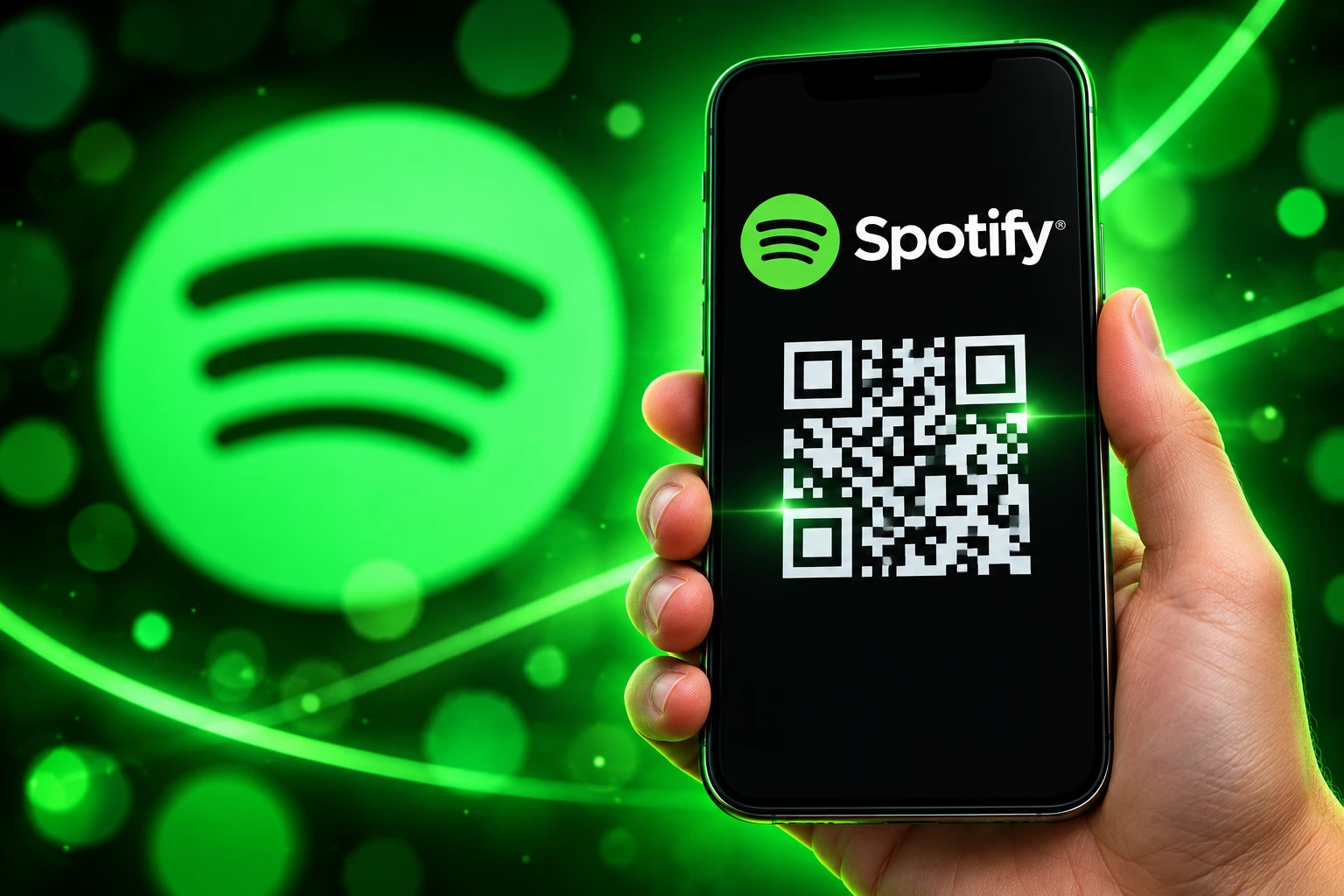
Spotify is asking some Premium Family members to scan a rotating QR code with the plan manager, in person, within 7 days of a notification. Miss that window and the member cannot join a different Family or Duo plan for 12 months.
The code refreshes every few seconds, so a screenshot goes stale. Users have already finished the scan over a video call with a second phone. The penalty still hits anyone who never opens the prompt.
A Seven-Day Clock on a Rotating Code
Spotify’s support article on Family address checks now includes a QR step for some Premium Family members. It is a proximity test dressed as a household check. Two phones have to be in the same place, both on the latest mobile app, and the member has 7 days after the prompt.
The company has not said how it picks who gets asked, or how often the prompt returns. The page only says it “may ask some” members to prove they live with the plan manager by scanning a code.
HOW THE SCAN IS SUPPOSED TO WORK
- Manager’s phone: The plan manager opens the QR code under profile picture, then Your Premium, then Manage.
- Member’s camera: The plan member scans that code with their own phone camera.
- Same place: Both people need to be in the same place to finish the scan, and it only runs in the mobile app.
Troubleshooting on the same page tells people to update both apps, check the time and date, and restart Spotify if the scan fails. It also says to scan the code in person, because it changes every few seconds. That kills a still screenshot unless someone is extremely fast. It does not require GPS, a mailing form, or a photo of a utility bill.
Miss the Scan and Shared Plans Lock for 12 Months
The QR bullets are short, and they are the part that stings. If a member misses the window or cannot finish the check, Spotify says they cannot join a different Family or Duo plan for 12 months. They can pick another plan on the Premium site, including an Individual subscription.
The older address section on that page is more specific about what happens to the current seat. If Spotify cannot confirm an invited member’s address, it emails them. They get 7 days to enter a full address. Fail that, or ignore the email, and the account loses Family access and switches to the free version. That member can join the same Family or Duo plan again, but cannot join any other Family or Duo plan for 12 months from the date the check failed.
The QR section never repeats the “join the same plan again” sentence. It also never uses the word free. It points people at other paid plans and closes the door on a different Family or Duo plan for a year. User reports of missed QR scans describe the same drop to the free tier that the address rules already spell out. The 12-month bar is the part Spotify writes in both places.
A separate Family-plan note says members can only switch plans once every 12 months. A missed QR check can stack on top of that. Someone who gets pushed off Family may be stuck on whatever they pick next, with shared plans off the table until the ban runs out.
Spotify Still Says It Does Not Track Location
The in-person QR code scan rules sit on the same article as the address form. Directly above the QR steps, Spotify tells members it is not watching where they go.
We don’t track your location. We only check your address to verify.
Spotify, Address and verification for Family plan
The QR flow does not ask for a street. It asks for two phones in one room. That is a location test by another name, run in a 7-day burst instead of a live map pin. Spotify still will not say which accounts get the prompt. Early user posts describe it showing up more often when a member is not in the same place as the manager, which is exactly the group a household rule is meant to catch, and also the group that cannot walk down the hall to scan.
The US Family marketing page makes the split even louder. Family plan members must live at the same address to join. They can listen anywhere, on any device, once they are on the plan. Verification is the part that has to happen at home, on two phones, inside 7 days.
Workarounds Start With a Second Phone
Because the code refreshes, a photo of the manager’s screen is a weak plan. A live picture of that screen is not. Users have already completed the scan by putting the manager’s phone on a video call and pointing a second phone at the picture. Spotify’s own note that the code changes every few seconds is what makes the still image fail. A call keeps feeding a fresh code.
That gap is the joke at the center of the rollout. People who already share a Family plan across cities have a 7-day errand and a spare device. People who actually live together, but are traveling, at school, or in a hospital, have to get two bodies and two updated apps into one room before the clock runs out. The determined share survives a rotating QR code. The missed notification does not.
Forum posts from October 19, 2026, treated the prompt as a chore with a nasty timer, not as a lock that cannot be picked. The louder reaction on October 20 was simpler: ask the person who pays, or stop sharing before the window closes. Nobody needed a new leak to see the shape. Spotify published the 12-month bar itself.
The 2018 GPS Test Gave Way to Address Forms
Spotify has been trying to make “same address” mean something for years. Family has always been sold as a household discount, and friends have always used it as a group rate. The QR code is a new trigger on an old penalty.
HOW SPOTIFY HAS CHECKED THE HOUSE
- September 2018: Spotify emails some Family subscribers asking them to confirm location with GPS. The test draws complaints from families that do not all sleep under one roof, and Spotify ends it.
- September 2019: New Family terms require a home address at signup and say Spotify may ask for re-verification from time to time, using address search rather than a live GPS pin.
- January 15, 2026: Spotify tells Premium subscribers in the United States that it is updating prices and points them to the public plans page.
- October 19, 2026: Users start posting in-app QR prompts, and Spotify’s support page documents the in-person scan, the 7-day clock, and the 12-month bar on a different Family or Duo plan.
Netflix took the other fork. On May 23, 2023, it started charging for extra members outside one US household instead of locking people out of its shared tiers for 12 months. Spotify is still trying to make Family mean one roof. It is using a timer and a ban, not an add-on seat.
Address checks never really went away. Members still enter a full address when they join, when the manager moves, and when Spotify cannot confirm the file. The QR code is the new hammer for the cases where a typed address is not enough.
Who Gets Cut Off When Nobody Is Home?
A 7-day in-person scan is easy if everyone is on the couch. It is a trap if the plan is honest and the bodies are not. Spotify still sells Family as a plan for people who live together, and plenty of real households fail that test for a week at a time.
WHERE A 7-DAY SCAN FALLS APART
- School: A student on a parent’s Family plan is already at a different address for the term, which is the first group that cannot walk into the kitchen and scan.
- Work trips: A partner or adult child who is gone for 8 days of the window misses the only in-person chance the prompt allows.
- Split homes: Parents who share kids across two addresses can match a form and still fail a same-room scan.
- Quiet prompts: Anyone who swipes past in-app alerts, or who does not open Spotify for a week, burns the same 7 days as a person who is sharing with friends in another city.
Student plans exist as a solo off-ramp for people in school, with their own check. That does not help a parent who is the plan manager, or a kid who is not eligible. Duo is also a same-address product, and the QR miss bars that too. The person who fails the scan cannot hop to a partner’s Duo plan as a consolation prize.
The plan manager is the bottleneck. Only that person can open the code. If they are traveling, asleep on another schedule, or not watching their own Premium tab, every member with a prompt is on hold. Spotify’s Family help page still says the manager is the only person who signs up and pays, and the only person who can add or remove people.
Family Costs $21.99. Individual Costs $12.99
The money is why the scan exists. Spotify’s US Family page still sells up to 6 Premium accounts for $21.99 a month to people under one roof. Spotify’s US Premium page lists Individual at $12.99 a month and Duo at $18.99 for two people at the same address. Fill Family and the seat cost is about $3.67. Six separate Individual plans would be $77.94, which is $55.95 more. Two Individual plans are $25.98, so Duo still saves $6.99 if there are only two of you.
WHAT THE US PLANS COST IF THE SCAN FAILS
| Plan | Monthly price | Accounts | Same-address rule | After a missed Family QR check |
|---|---|---|---|---|
| Premium Family | $21.99 | Up to 6 | Yes | A different Family plan is blocked for 12 months |
| Premium Duo | $18.99 | 2 | Yes | Blocked as a destination for 12 months |
| Premium Individual | $12.99 | 1 | No | Still available on the Premium site |
The manager keeps paying $21.99 even if a seat goes empty. Removing a member does not shrink the bill. The person who misses the QR window is the one who has to buy Individual, sit on the free tier, or wait 12 months to join someone else’s household plan. Spotify gets either another $12.99, or a free user whose shared discount just disappeared.
That is why the rotating code can be leaky and still do the job. A video call can satisfy the scan. A quiet week cannot. The Family page still says you can listen anywhere. The check that keeps the discount has to happen in one room, on two phones, before the 7 days run out.

Final Fantasy Resonance Turns a Dead Gacha Into HD-2D

PHP2Shell Forced Sites Offline While Exploits Stalled

Kindle+ Folds AI Audiobooks Into the Page-Read Fund

Chip Stocks Fall as the Bond Rally Cheapens AI Spend

Comcast’s Record Odyssey Quarter Doubles as the Exit

Microsoft 365 Auth Fault Took Down Exchange and Teams

Xbox Caps Game Pass Cloud Gaming at 15 Hours

OpenClaw 2.0 Ships a Team Workplace With Host-Trust Defaults

OpenAI Unveils GPT-6 Astra With a Critical Cyber Label

Diesel Breaks Its Record as the White House Claims Credit
-
 NEWS2 months ago
Microsoft 365 Auth Fault Took Down Exchange and Teams
-
 GAMING2 months ago
Xbox Caps Game Pass Cloud Gaming at 15 Hours
-
 NEWS2 months ago
OpenAI Unveils GPT-6 Astra With a Critical Cyber Label
-
 NEWS2 months ago
OpenClaw 2.0 Ships a Team Workplace With Host-Trust Defaults
-
 BUSINESS2 months ago
Diesel Breaks Its Record as the White House Claims Credit
-

 LIFESTYLE2 months ago
Squishy Dumpling Toys Recalled After Hiding Illegal Water Beads
-

 BUSINESS2 months ago
ChargePoint Stock Rally Prices Wilmer’s Three-Year Cash Plan
-

 AUTO2 months ago
Tesla Puts Its Wheel-Free Cybercab on Austin Streets