
NEWS
Apple’s Welcome Home Hub Leaves the Doors to LG
Apple’s October 13 Welcome Home launch centers on HomeView, but LG will brand the lock, doorbell, thermostat and cameras that actually sit on a house.

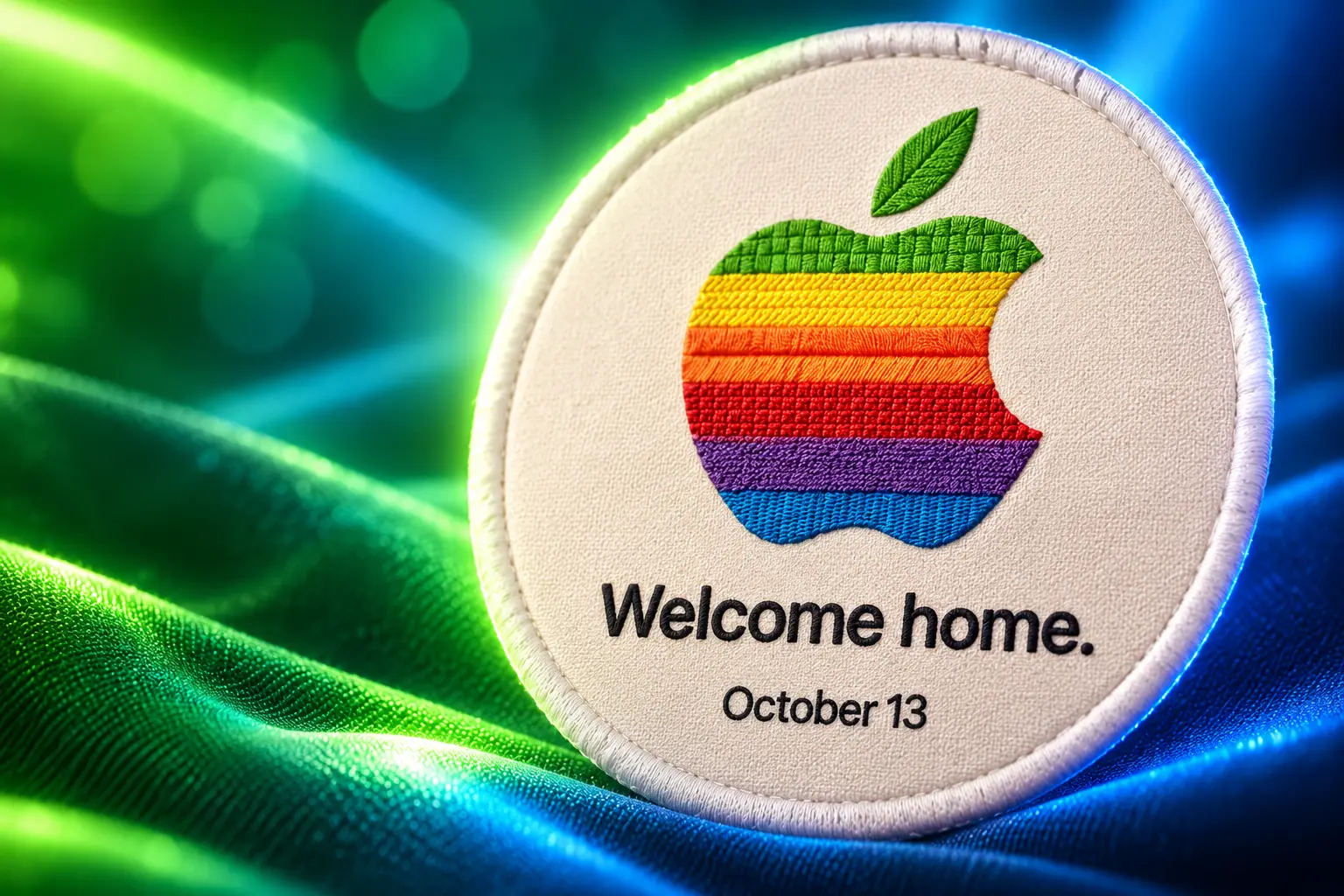
Apple is set to unveil a smart home hub, a new Apple TV 4K, and a HomePod mini refresh at a New York event on October 13. The tagline is Welcome Home. The devices that actually sit on a door, a porch, and a furnace are expected to say LG.
Invited press and creators are due at Apple’s Tribeca building at 9 a.m. Eastern for hands-on time, with a video and press releases timed to that hour. Apple has confirmed the date and the slogan. It has not confirmed product names, prices, or ship dates.
Welcome Home Opens in New York Without a Keynote
Greg Joswiak, Apple’s senior vice president of worldwide marketing, posted the invite on October 8 with two words and a date. There is no Apple Park stage show. The format matches a quieter “Apple Experience”: a taped presentation, a Newsroom drop, and a room in Tribeca where people can pick up the hardware.
Welcome home. October 13. pic.twitter.com/ChelGSDOTI
— Greg Joswiak (@gregjoz) October 8, 2026
John Ternus became chief executive on September 1. His first major launch was the iPhone Duo on September 9. Welcome Home is the second, and it is the first one aimed at rooms rather than pockets. Mark Gurman, who covers Apple, wrote that the October 13 unveiling is about protecting the iPhone as much as outfitting a house.
WHAT WE KNOW
- The date: Apple confirmed an October 13 launch tagged Welcome Home, with a 9 a.m. Eastern experience in Tribeca.
- The format: Joswiak’s post points to a video and press materials, not a full keynote at Apple Park.
- The CEO: Ternus took over on September 1 and has already shipped the iPhone Duo.
WHAT IS UNCONFIRMED
- The name: HomeView is Gurman’s name for the hub; Apple has not used it in public.
- The prices: Reporting puts the hub around $350, the mini at $129, and the new Apple TV at $199 or more.
- The catalog: LG-branded locks, cameras, and a thermostat are in U.S. filings, but Apple has not shown them.
That split is the launch. Apple gets a screen, a speaker, and a set-top box it can sell under its own logo. The parts of a house that get drilled into wood and drywall sit with a partner.
A 6-Inch Screen With No App Store
Gurman says the hub will be called HomeView because Apple wants people to look at it from across a room and talk to Siri, not treat it like a small iPad. A name such as HomePad would have implied apps and a tablet session. The point of this product, as he put it, is voice first, with touch as a backup.
The hardware in that reporting is a 6-inch square display on a metal speaker base, or a flatter wall plate. The tabletop model is described with a short arm for tilt, in space gray, silver, starlight, and pink. The wall model is limited to space gray and silver. Inside: an A18 chip and 8GB of RAM, the same class of silicon that shipped in iPhone 16. Power is USB-C. There is no battery.
HOMEVIEW AS REPORTED
- The chip: A standard A18 with 8GB of RAM, enough for Siri AI and Apple Intelligence on the hub.
- The body: A tabletop speaker base in four finishes, plus a wall plate in two, both built around a 6-inch square screen.
- The software: Apple apps such as Safari, News, Music, Calendar, Weather, Messages, FaceTime, Photos, and Mail, with clock faces and widgets in an idle mode close to iPhone StandBy.
- The catch on apps: Gurman says the hub will not have an App Store for third-party downloads.
A presence sensor and a camera are expected to pick up who is in the room and switch the layout, using a Face ID-style check before personal mail or messages appear. Widgets from a nearby iPhone may land on the screen. Multiple hubs in one house would share music and intercom. Sound on the tabletop model is said to beat the HomePod mini.
That is a family appliance, not a developer platform. If the reporting holds, HomeView is a terminal for Apple’s own services and for accessories Apple has blessed. Third-party apps stay on the phone. The reported price is about $350, a dollar above the current full-size HomePod, for a smaller screen than Amazon and Google have sold for years as kitchen displays.
The Lock, Doorbell, and Thermostat Say LG
The “Apple Home Collection” in Gurman’s account is the part of the house Apple is not putting its logo on. LG Electronics is expected to make, brand, and support a wired video doorbell, a smart deadbolt, a thermostat, a temperature sensor, an indoor plug-in camera, an outdoor plug-in camera, and a floodlight camera. Schneider Electric is named for the European market. Apple’s role is design, features, and engineering oversight, the same pattern it used when LG built UltraFine 4K and 5K monitors for Macs.
U.S. filings already list those seven names. Apple does not appear in the paperwork. Labels point to Hyundai HT Global’s factory in Vietnam. LG asked the FCC to keep photos and finer specs confidential into early 2027, and the accessories are not expected in stores for at least a few more months after October 13.
THE SEVEN LG SKUS IN FILINGS
- LG Video Doorbell Wired: A fixed doorbell, not a battery puck, meant to live on a chime circuit.
- LG Smart Deadbolt Lock: Graphite and silver interiors, four AA batteries, Bluetooth, Thread, NFC, and ultra-wideband, models TMCDD15G and TMCDD15S.
- LG Smart Thermostat: Round puck, model TMCTAW5W, 24-volt AC, Wi-Fi, Bluetooth, Thread, and a 60 GHz radar that can sense presence.
- LG Temperature Sensor: Coin-cell puck, model TMST2A6W, Thread and Bluetooth, magnetic back, temperature and humidity.
- LG Indoor Cam Plug-In: LG’s first indoor plug-in camera in nearly a decade, per the filing trail.
- LG Outdoor Cam Plug-In: A weather-side camera in a category LG has not retailed widely in North America.
- LG Floodlight Cam: A porch light with a camera, the last of the seven names in the FCC and UL records.
The lock is the tell. In March, the FCC’s Office of Engineering and Technology asked for comment on LG’s request to certify a smart door lock with a UWB radio in the 6-10 GHz band, docket ET 26-57. LG’s own description is blunt: Bluetooth checks the phone, then a UWB ranging session at the door decides whether the person is close enough to unlock. Early interface lists add a keypad that rotates open, tap-to-unlock, a door-left alarm, and two mechanical keys. That is an iPhone feature grafted onto an LG deadbolt, with LG on the hook for returns and support.
Several of the radios are Thread and Matter, so the same lock should work outside Apple’s app. That is the trade. Apple gets a catalog without running a lock factory. LG gets a path into Apple homes. Buyers get a doorbell that does not say Apple on the clamshell, and a wait measured in months, not days.
October 30 Comes First for Speakers and TV
The two products Apple already sells in this category are the ones that can ship first. Reporting puts a new HomePod mini and a new Apple TV 4K in stores on Friday, October 30, 17 days after the Tribeca event. Both keep their current shells. The work is inside.
THE THREE APPLE DEVICES, AS REPORTED
| Device | Chip | Memory | Reported ship window |
|---|---|---|---|
| HomeView hub | A18 | 8GB | Mid-November |
| HomePod mini | S10, plus N1 | Not stated | October 30 |
| Apple TV 4K (4th gen) | A19, plus N1 | 8GB | October 30 |
Gurman listed the chips in a single post: HomeView on a standard A18, Apple TV on a standard A19 up from the A15 in the current box, HomePod mini on an S10 up from the S5. The S10 is the Watch Series 10 chip. The N1 is Apple’s networking die for Wi-Fi 7, Bluetooth 6, and Thread, expected in both the mini and the TV.
The mini’s colors in that account are midnight, green, white, blue, and pink. Apple lifted the current mini from $99 to $129 in June 2026, and the new one is expected to stay at $129. Siri AI on the mini is still expected to lean on a nearby iPhone or iPad for the heavy work, with conversations saved back to the phone. That is a faster speaker that still needs the handset Gurman says this launch is meant to protect.
The Apple TV 4K keeps the black box. The A19 and 8GB of RAM are there for Siri AI and for games, including ray tracing. A new Siri Remote is expected with a speaker so it can chirp when lost. Apple raised the current model to $199 in June; the new one is expected to start there or higher. Built-in microphones on the box itself remain a rumor. Code pointers to four full-size HomePods as a surround set with Apple TV have shown up in software, but that feature has not been shown.
Why the Hub Waits Until Mid-November
Nothing in this lineup is expected to be a buy-it-on-October-13 product. Pre-orders may open with the Newsroom posts. The mini and the TV then land on October 30. HomeView, the device the event is built around, is expected in mid-November, about a month after the unveiling. Gurman has said that timing still held as of his October 11 note.
A hub that recognizes faces, serves widgets, and runs Siri AI is a software project as much as a speaker. The 2025 version of this product was held while Siri AI slipped. Siri AI only reached iPhones in September, still with a beta tag. Shipping the mini and the TV first lets Apple put the new assistant in rooms that already have a HomePod or a set-top box, then follow with the screen.
THE HOME CALENDAR
- 2014: Apple launches HomeKit, a platform that never matched Amazon or Google on device count.
- October 13, 2020: Apple introduces the original HomePod mini, a 3.3-inch S5 speaker at $99.
- November 2022: The current Apple TV 4K ships; it is still the box in stores four years later.
- September 1, 2026: John Ternus becomes CEO, then launches the iPhone Duo eight days later.
- September 2026: Siri AI arrives on iPhone, the missing piece the hub was waiting on.
- October 8, 2026: Joswiak posts Welcome Home for October 13.
- October 30, 2026: New HomePod mini and Apple TV 4K are expected in stores.
- Mid-November 2026: HomeView is expected to ship; LG’s accessories trail by months.
The mini’s original launch date is not a coincidence of the calendar. Apple put the HomePod mini on October 13, 2020, six years to the day before Welcome Home. Bob Borchers, then vice president of worldwide product marketing, called it the smart speaker for anyone with an Apple device, with Siri that could tell household members apart. The new mini is the first proper upgrade of that product. The hub is the screen that product never had.
Siri AI Reaches Rooms Apple Left Behind
Amazon and Google have sold voice displays for years. Their best trick, in a lot of kitchens, is still a digital photo frame that also shows a doorbell. Apple is last of the three to put a generative assistant in the home. Alexa Plus and Gemini for Home both stumbled on the same problem: a house is multi-user, messy, and wired into locks and heat. An agent that guesses wrong is not a bad email. It is an unlocked door.
Apple spent a decade losing the smart home. Now it has a plan to compete: HomeView, a new Apple TV and HomePod mini, and LG-built accessories. Tuesday’s unveiling is about protecting the iPhone as much as outfitting your house.
Mark Gurman, Apple reporter, on X
The A18 in HomeView is last year’s phone chip, not the A19 going into the TV. That is a fair objection if the pitch is on-device Siri. It is less strange if the hub is meant to stay in Apple’s control, talk to the iPhone, and leave heavy work on a silicon cadence Apple already ships by the tens of millions. The mini, as reported, still needs a nearby AI-capable device. The 2022 Apple TV, stuck on an A15, will not get this assistant in the same way.
Camera intelligence already has a price. iOS 27’s Home app summaries for a single HomeKit camera sit behind a $9.99 iCloud+ plan, or $59.99 for five cameras. A hub that watches a room and an LG porch cam that talks to Siri will run into the same Apple Intelligence usage limits that already meter those plans. The family screen is also a family bill.
Ternus Built the Home Launch Around the iPhone
HomeKit’s original sin was a short list of gadgets and a long certification. Apple later rebuilt the Home app around Matter and Thread, which is why an LG lock can be Matter-certified and still sit in an Apple Home Collection. The company cannot make every thermostat. It can make sure the thermostat talks to Siri and to the phone in someone’s pocket.
That is why the hidden party in Welcome Home is not a rival speaker brand. It is LG on the deadbolt, Schneider in Europe, and the iPhone that still does the identifying, the paying, and a share of the AI. Apple keeps the screen, the speaker, and the TV. The partner keeps manufacturing, warranty, and the logo on the part of the house that fails in the rain.
Apple has its own AI camera and sensor still pointed at 2027, separate from LG’s set, and a longer-term hub on a robotic arm in the rumor file. Those are not October 13 products. The products in the Tribeca room are a 6-inch voice display with no App Store, a mini that waited six years for an S10, and a set-top box that waited four years for an A19. The lock, the doorbell, and the thermostat will not be in that room.

Final Fantasy Resonance Turns a Dead Gacha Into HD-2D

PHP2Shell Forced Sites Offline While Exploits Stalled

Kindle+ Folds AI Audiobooks Into the Page-Read Fund

Chip Stocks Fall as the Bond Rally Cheapens AI Spend

Comcast’s Record Odyssey Quarter Doubles as the Exit

Microsoft 365 Auth Fault Took Down Exchange and Teams

Xbox Caps Game Pass Cloud Gaming at 15 Hours

OpenClaw 2.0 Ships a Team Workplace With Host-Trust Defaults

OpenAI Unveils GPT-6 Astra With a Critical Cyber Label

Diesel Breaks Its Record as the White House Claims Credit
-
 NEWS2 months ago
Microsoft 365 Auth Fault Took Down Exchange and Teams
-
 GAMING2 months ago
Xbox Caps Game Pass Cloud Gaming at 15 Hours
-
 NEWS2 months ago
OpenAI Unveils GPT-6 Astra With a Critical Cyber Label
-
 NEWS2 months ago
OpenClaw 2.0 Ships a Team Workplace With Host-Trust Defaults
-
 BUSINESS2 months ago
Diesel Breaks Its Record as the White House Claims Credit
-

 LIFESTYLE2 months ago
Squishy Dumpling Toys Recalled After Hiding Illegal Water Beads
-

 BUSINESS2 months ago
ChargePoint Stock Rally Prices Wilmer’s Three-Year Cash Plan
-

 AUTO2 months ago
Tesla Puts Its Wheel-Free Cybercab on Austin Streets