
BUSINESS
Clarity Act Dies in Senate Ethics Fight Over Trump Crypto
The Senate’s 49-50 Clarity Act defeat was an ethics fight over Trump family crypto, and leveraged traders paid $669.71 million.

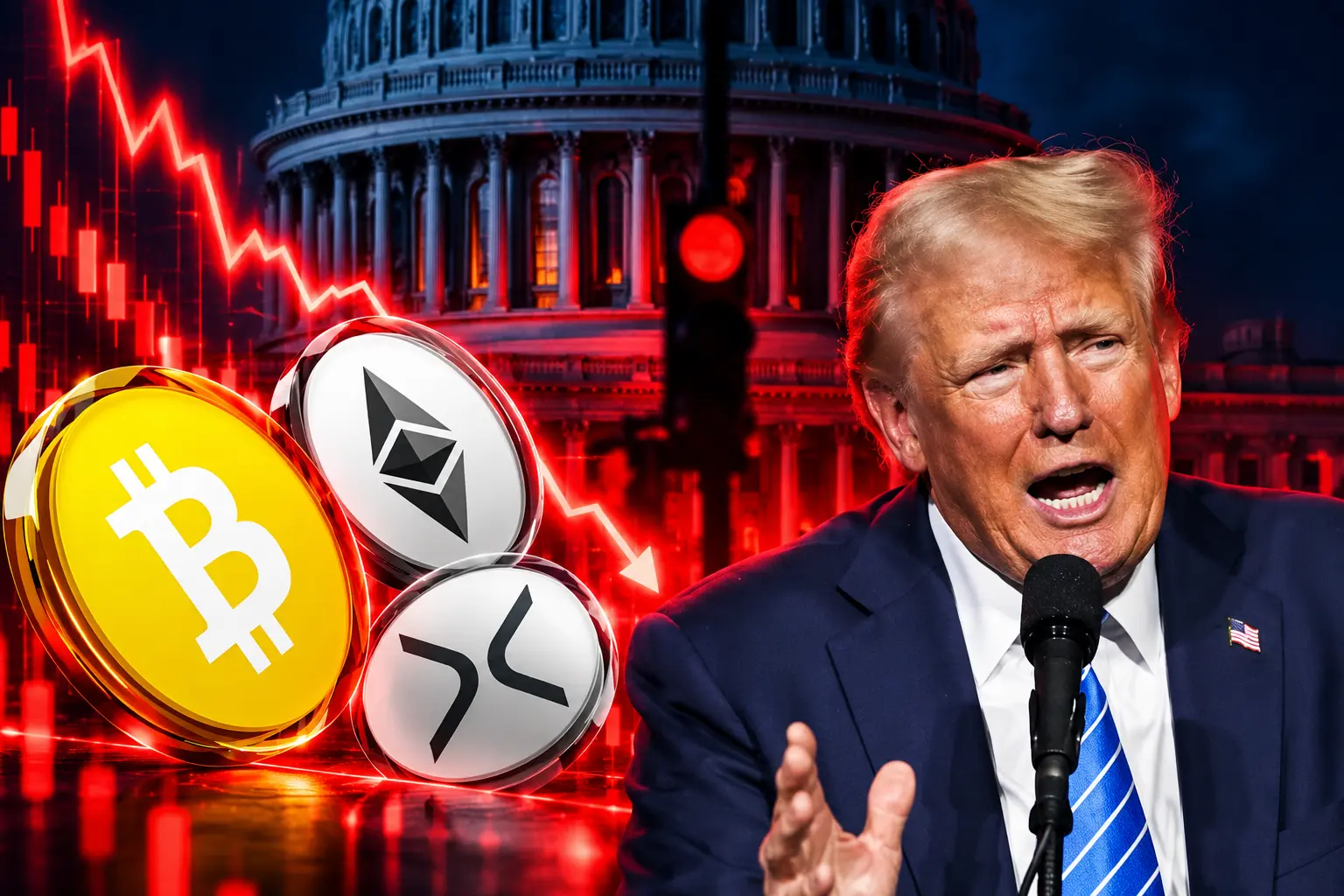
The Senate blocked the Clarity Act on September 15, 2026, on a 49-50 vote, 11 short of the 60 needed to open debate. Bitcoin traded near $75,976.10, down 3.7 percent, while ether fell 5.2 percent to $2,404.20 and XRP dropped 7.3 percent to $1.31.
The dump followed a year of talks. The fight that ended them was ethics language on President Donald Trump’s family crypto income, which financial disclosures put at $1.4 billion in 2025.
Senate Cloture Failed 49-50 on H.R. 3633
This was not a vote on the bill itself. Senators were asked only whether to invoke cloture on the motion to proceed to H.R. 3633, the Digital Asset Market Clarity Act, and they refused. Voting began at 2:18 p.m. Eastern and the 49-50 result on the Senate floor log was announced at 3:00 p.m., with Senator Chris Coons of Delaware not voting.
Every yea came from a Republican. Four Republicans voted no: Susan Collins of Maine, Josh Hawley of Missouri, Jerry Moran of Kansas, and Thom Tillis of North Carolina. Tillis voted no so he could file a motion to reconsider at 3:01 p.m. Both independents, Angus King of Maine and Bernie Sanders of Vermont, voted nay. No Democrat voted to take the bill up.
Not invoked, 49-50: Motion to invoke cloture on the motion to proceed to Cal. #423, H.R.3633, Clarity Act.
— Senate Cloakroom (@SenateCloakroom) September 15, 2026
THE 49-50 CLOTURE TALLY
| Bloc | Seats | Yea | Nay | Not voting |
|---|---|---|---|---|
| Republicans | 53 | 49 | 4 | 0 |
| Democrats | 45 | 0 | 44 | 1 |
| Independents | 2 | 0 | 2 | 0 |
| Total | 100 | 49 | 50 | 1 |
Sixty was the number whether 99 senators voted or 100. If every Republican had voted yes, the tally would still have been 7 short. The four GOP nos made the score look messier. They did not change the binding fact: Democrats had to be bought, and they were not.
What the Clarity Act Would Have Changed
Rep. French Hill, an Arkansas Republican, introduced H.R. 3633 on May 29, 2025. The House passed it 294-134 in July 2025. The Senate Banking Committee advanced a version 15-9 in May 2026. The Congressional Research Service summary on Congress.gov says the bill would establish a regulatory framework for digital commodities, meaning digital assets that rely on a blockchain for their value.
Most spot trading in those assets would move to the Commodity Futures Trading Commission, which would register digital commodity exchanges, brokers, and dealers. The Securities and Exchange Commission would keep watch over tokens sold as investment contracts. A token could start life as a security and later trade as a digital commodity once its chain met a “mature blockchain” test. Platforms would fall under the Bank Secrecy Act for anti-money-laundering rules.
The Senate text released September 14 also tried to settle two fights that had nothing to do with bitcoin’s chart. It gave the Treasury secretary a circuit-breaker against deposit flight tied to payment stablecoins, a demand from banks that fear yield-bearing tokens. It added ethics language that, sponsors said, tracked a proposal from Tillis and Senator Ruben Gallego, a Democrat from Arizona, including a role for state attorneys general. Majority Leader John Thune said more than 50 million Americans use cryptocurrency and wanted the Senate to “take yes for an answer.”
Ethics Rules Never Satisfied the Democrats
That yes was never coming on the ethics page. Democrats spent months arguing that a law writing crypto’s federal rules should not let the people who run those agencies keep collecting from the industry. Trump’s 2025 disclosures showed about $1.4 billion in crypto-related income, including a memecoin business and World Liberty Financial, the family crypto firm that issues the USD1 stablecoin.
Republicans moved twice. Trump first agreed to bar himself and his wife from issuing the kind of meme coins they launched as he prepared to return to office. The September 14 draft went further. It would bar the president, vice president, members of Congress, federal judges, and their spouses from issuing or sponsoring digital assets while in office, require them to sell a “significant financial interest” or put it in a blind trust, and let state attorneys general help enforce the rules instead of leaving that solely to a Justice Department the president appoints.
Senator Cynthia Lummis of Wyoming, who led the talks, said the final draft included 126 substantive changes requested by Democrats and that Trump had “voluntarily agreed to unprecedented ethics restrictions.” She told colleagues a no vote meant opposing limits on politicians’ personal crypto bets. Democrats still called the text a loophole machine. Children were not treated like spouses. A blind trust is not a sale. And the Justice Department would still decide whether to go after the president.
Senator Angela Alsobrooks of Maryland, a lead Democratic negotiator, told reporters before the vote that the remaining issue was ethics, specifically divestment. Senator Raphael Warnock of Georgia said Republicans did not want to fix the ethical issues. Senator Elissa Slotkin of Michigan said the ethics provisions were “simply too thin.” Senator Richard Blumenthal of Connecticut called the rules a “charade” and a “sham.” On the floor before the roll call, Senator Elizabeth Warren of Massachusetts tied the bill to Trump’s crypto income.
This bill will turbocharge Donald Trump’s unprecedented corruption.
Elizabeth Warren, Senator, Senate floor, September 15, 2026
Warren also called the new ethics text “a tiny little fig leaf” written so Trump would “never, ever be held accountable under the law.” Lummis dismissed a Democratic counteroffer that landed the night before as “not real.” After the vote she went further.
This afternoon, Senate Democrats proved they were never truly serious about protecting consumers and preserving American leadership. I sat at the table with Senate Democrats working in good faith to get this done while they played games.
For over a year, they presented demands…
— Senator Cynthia Lummis (@SenLummis) September 15, 2026
The other hidden party in the room was state enforcement. The day before the vote, New York Attorney General Letitia James led 17 other attorneys general in warning that the bill could weaken state fraud cases. Republicans had already added a state-AG role on ethics. James’s letter was about fraud power, not Trump’s memecoin, and it gave Democrats one more reason to stay off the bill.
Why Four Republicans Voted No
Party math still required Democrats. The GOP nos still matter, because they show the bill was leaking on more than one seam.
THE FOUR REPUBLICAN NO VOTES
- Thom Tillis: Voted no as a procedure so a senator on the winning side could move to reconsider, which he did one minute after the result.
- Josh Hawley: Had already opposed the bill over stablecoin rewards that look like bank deposits and compete for community-bank funding.
- Susan Collins: Voted no on the merits with Hawley and Moran, and did not join leadership’s post-vote line that Democrats alone killed the bill.
- Jerry Moran: Also voted no on the merits. Kansas banks are a core constituency for the deposit-flight fight that Treasury’s new circuit-breaker was meant to close.
On the merits, the Republican conference was 50 for and three against, with Tillis parked on the prevailing side for a rerun. That rerun still needs Democratic votes. Gillibrand had spent years drafting crypto market rules with Lummis, then voted no with the rest of her caucus. The price of those votes was never the CFTC-SEC split. It was whether Trump’s children, his coins, and his blind trust would be treated as a conflict or as a detail.
Leveraged Longs Lost $571.64 Million Overnight
CoinGlass recorded $669.71 million in crypto liquidations over 24 hours as the vote landed, including $571.64 million in longs and $98.06 million in shorts. Some 116,199 traders were closed out. Bitcoin-related liquidations were about $231.63 million and ether-related liquidations about $220.77 million. A later CoinGlass cut of the same window put bitcoin longs and ether longs near $190 million each, with XRP longs near $30 million and Solana longs near $22 million.
VOTE-DAY PRICES ON THE MAJORS
| Asset | Price | 24-hour move |
|---|---|---|
| Bitcoin | $75,976.10 | -3.7% |
| Ether | $2,404.20 | -5.2% |
| XRP | $1.31 | -7.3% |
XRP led the slide even though Ripple already has a 2023 court ruling that XRP is not a security and a March joint SEC-CFTC reading that names it a digital commodity. The token was still the one traders used as a high-beta bet on Washington. Coinbase fell nearly 9 percent to $174.42 and Circle dropped more than 9 percent to $88.26. On September 16, bitcoin held near $75,834 on CoinGecko and XRP near $1.30, about 10 percent below the prior day’s level in some Asian-hour prints.
THE 24-HOUR LIQUIDATION SPLIT
- Total wiped: $669.71 million across exchanges, per CoinGlass.
- Longs versus shorts: $571.64 million of bullish bets against $98.06 million of shorts.
- Traders closed: 116,199 accounts, the heaviest long flush since August 22.
- Prediction market: Polymarket cut the odds the bill becomes law this year to 6.5 percent from 29.5 percent on Monday.
The flush was a positioning error. Longs had been built on the idea that a procedural vote with a 60-vote bar would clear after a weekend rewrite. The Senate’s own seats never added up that way. Overleveraged traders got closed out for betting on an outcome the roll call could not produce. Bitcoin stayed inside its recent range near $76,000. The impatient paid. Spot holders who were not geared 20-to-1 did not vanish with them.
Ripple Chief Executive Brad Garlinghouse said, “This one stings.” Binance co-founder Changpeng Zhao said setbacks are part of the process and that stablecoin yield work continues even without new statute. Capital did not leave the asset class so much as it rotated off a Washington headline.
Agencies Are Already Drafting Their Own Rules
H.R. 3633 is still Calendar No. 423. Losing cloture does not pull a bill off the calendar. Thune can file another cloture motion if he finds votes, or he can use Tillis’s reconsideration. Congress is due to leave Washington in September ahead of the November midterms. A lame-duck try is possible and ugly. A new Congress in January 2027 resets the clock.
HOW H.R. 3633 GOT TO A 49-50 WALL
- May 29, 2025: Hill introduces the Digital Asset Market Clarity Act in the House.
- July 2025: The House passes H.R. 3633 by 294-134.
- May 2026: Senate Banking advances its version 15-9.
- August 8, 2026: A unanimous-consent deal sets up the cloture test on the motion to proceed.
- August 2026: CFTC Chair Michael S. Selig tells the agency’s Innovation Advisory Committee that staff should start exploring crypto market-structure rules under existing powers if Congress stalls.
- September 14, 2026: Lummis, Senate Agriculture Chair John Boozman, and Senate Banking Chair Tim Scott release the final 126-change draft, including Tillis-Gallego ethics language.
- September 15, 2026: Cloture fails 49-50. Tillis moves to reconsider at 3:01 p.m.
Selig’s August instruction is now the live path. The CFTC can write spot-market rules for digital commodities without a statute, and those rules are easier for a later White House to unwind than an act of Congress. The SEC can keep running its own digital-asset work. The Clarity Act was supposed to lock the split into law after the GENIUS Act set stablecoin rules in 2025. That lock did not close.
The people with the most money on the ethics page were not the 116,199 traders CoinGlass counted. They were a president whose family coins and World Liberty Financial stake sat inside the industry the bill would police, plus the Democrats who would not vote for a market-structure law that left those holdings in a trust. H.R. 3633 remains on the calendar. The next cloture attempt, if it comes, will have to buy votes that Tuesday’s ethics text did not.
Disclaimer: This article is news reporting and analysis of a Senate vote and related market moves. It is for information only and is not investment advice, trading advice, or a recommendation to buy, sell, or hold bitcoin, ether, XRP, or any other digital asset or related stock. Readers should consult a licensed financial adviser or other qualified professional before making any investment decision. Prices, liquidation totals, bill status, and political positions reflect the sources cited as of September 16, 2026, and can change quickly.

Liberty Parks MotoGP on Formula 1’s Austin Stage

The Salary Cap Fight That Can Freeze Baseball’s TV Payday

The 2027 Mercedes GLE and GLS Keep Alabama Busy

Margaret Hamilton Dies at 90 With a Harder Fight Unfinished

Unity Parks Its Engine Inside Google’s Prompt Games

Microsoft 365 Auth Fault Took Down Exchange and Teams

Diesel Breaks Its Record as the White House Claims Credit

Xbox Caps Game Pass Cloud Gaming at 15 Hours

Squishy Dumpling Toys Recalled After Hiding Illegal Water Beads

IFA 2026’s Weird Gadgets Are Building a Sensor Home
-
 NEWS2 months ago
Microsoft 365 Auth Fault Took Down Exchange and Teams
-
 GAMING2 months ago
Xbox Caps Game Pass Cloud Gaming at 15 Hours
-
 BUSINESS2 months ago
Diesel Breaks Its Record as the White House Claims Credit
-

 NEWS2 months ago
OpenAI Unveils GPT-6 Astra With a Critical Cyber Label
-

 AUTO2 months ago
Tesla Puts Its Wheel-Free Cybercab on Austin Streets
-

 NEWS2 months ago
OpenClaw 2.0 Ships a Team Workplace With Host-Trust Defaults
-

 NEWS2 months ago
Sony and Warner Sue Anthropic Over Torrented Song Lyrics
-
 LIFESTYLE2 months ago
Squishy Dumpling Toys Recalled After Hiding Illegal Water Beads