
NEWS
The Navier-Stokes Proof That Outran Its Human Guides
OpenAI posted a Navier-Stokes proof and left the $1 million on the table, while the humans who opened the trail fight over credit and pay.

On September 8, 2026, OpenAI said about 10,000 AI agents had produced a proof of a 90-year-old fluid problem and that it would not claim the $1 million prize. Cornell mathematician Steven Strogatz, 67, started to cry when he talked through what that week had done to the questions he has loved for a lifetime.
The prize is still sitting at the Clay Mathematics Institute. The people who opened the only trail that mattered are arguing about credit. And the mathematicians who spent their lives on these questions are already asking who will pay them if a lab can finish the climb in a long weekend.
OpenAI Posted a Proof and Left the Prize on the Table
OpenAI’s research note says an internal model, which it calls significantly more capable than GPT-6 Astra, produced an analytical proof plus a Lean formalization that a smooth three-dimensional fluid at rest, under a smooth force, can develop a singularity in finite time while its energy stays finite. The company says that establishes statements C and D in the official Clay formulation of the Navier-Stokes existence and smoothness problem.
The construction is a vortex that spirals inward and stretches, in the company’s image, like spaghetti. Speed in the core grows without bound. Total energy does not. OpenAI dates the equations to Navier and Stokes in the nineteenth century, and the modern smoothness question to Jean Leray’s 1934 work. Clay put the problem on its list of seven Millennium Prize Problems in 2000, each with a $1 million purse.
Training on the new internal model began on August 28. On September 1, after rumors that two Millennium problems had been resolved, the lab launched agents on the remaining ones. The group that hit Navier-Stokes involved on the order of 10,000 concurrent agents. They reached a resolution on Saturday, September 5, about 88 hours after the first agents launched. Lean formalization took another 17 hours through GPT-6 Astra, finishing on September 6.
OpenAI also said it does not intend to claim the Millennium Prize. Venkat Chandrasekaran, speaking for the company on a press call, said a customer who wanted to run the same problem would pay around $15 million. The million-dollar Clay purse was never the point. The point was to show the pace of the next model.
THE OPENAI RUN IN FIGURES
- The swarm: On the order of 10,000 concurrent agents worked on Navier-Stokes, after nearly 100 agents spent about 50 hours on unforced Euler.
- The clock: About 88 hours to the resolution on September 5, then 17 hours of Lean checking through GPT-6 Astra.
- The tokens: About 2.7 million messages and 130 billion output tokens on Navier-Stokes, out of 4.9 million messages and 300 billion output tokens across every problem attempted.
- The prize: OpenAI says it will not claim the $1 million.
The company posted the claim the same day on its own account, with the same 88-hour, 10,000-agent outline and a still of the inward spiral.
We’re sharing a solution to the Navier-Stokes Millennium Prize Problem, one of the deepest problems at the frontier of mathematics.
The proof was produced by a group of agents, using an OpenAI next-generation model significantly more capable than GPT-6 Astra.
The problem… pic.twitter.com/8zol3BPTL4
— OpenAI (@OpenAI) September 8, 2026
Strogatz, who is not an OpenAI researcher and does not work on this equation, called the Navier-Stokes singularity an arcane question of essentially no interest to a working engineer in civil work or aerodynamics. He called the announcement a marketing device, and said it might be worth a trillion dollars for OpenAI to show it is better than Anthropic. The science can be thrilling, he said, and still be a billboard.
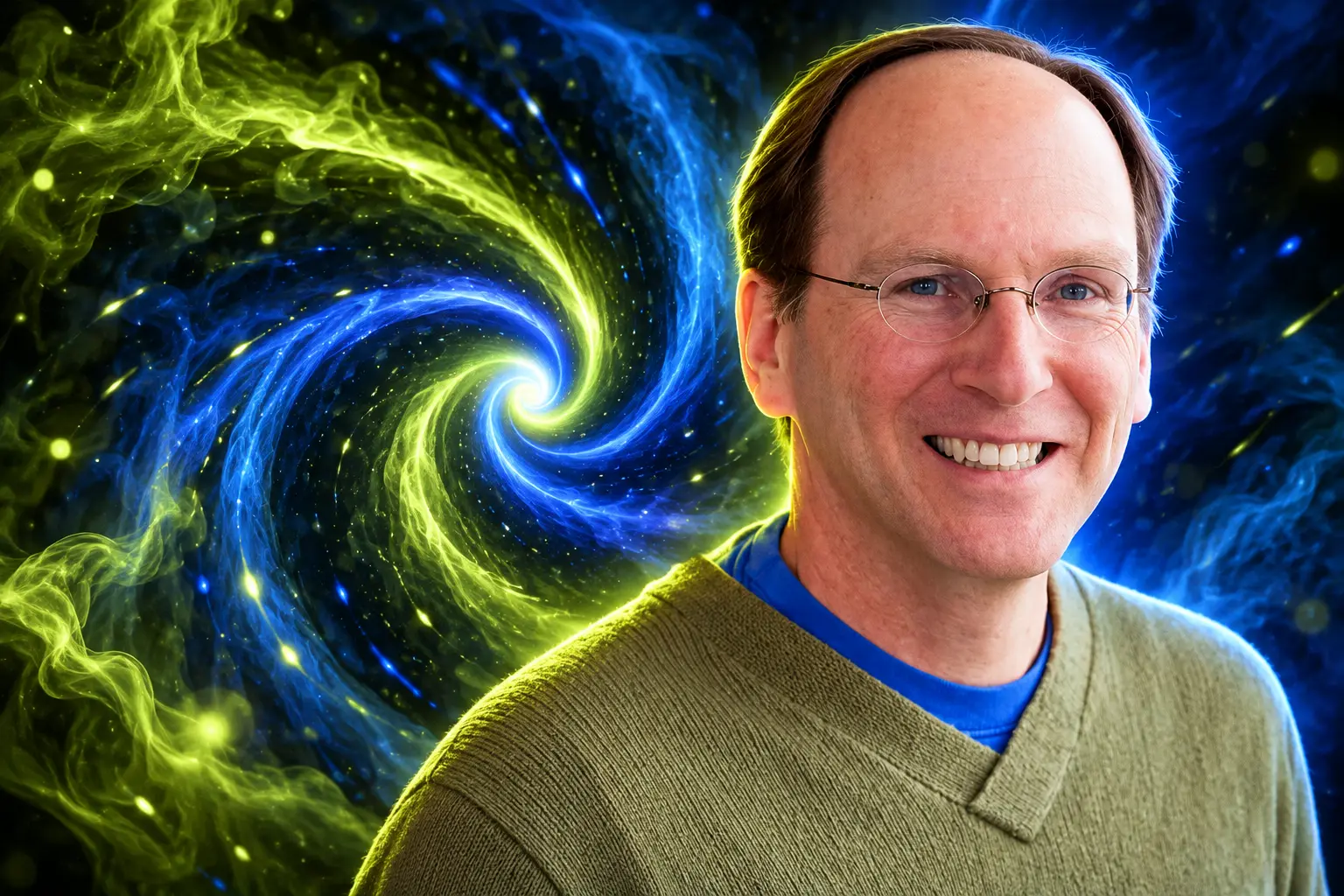
The Spanish Route Almost Nobody Else Was On
The method behind the blowup did not appear from a blank prompt. It builds on a program led by Diego Córdoba of the Institute for Mathematical Sciences in Madrid and Luis Martínez-Zoroa of CUNEF University. Martínez-Zoroa’s 2021 dissertation developed analytic techniques that did not lean on computers. By 2023 the pair had shown singularities in a version of the Euler equations with a messy forcing function. That path, with smooth forcing, is the one almost nobody else in the field was walking.
Charles Fefferman of Princeton University, who wrote Clay’s official description of the Navier-Stokes problem, called Córdoba and Martínez-Zoroa the heroes of the story. Tristan Buckmaster, a professor at New York University’s Courant Institute and a past Clay Research Award winner, wrote that Martínez-Zoroa deserves a Fields Medal.
Córdoba and Martínez-Zoroa Opened the Door
Buckmaster spent about a year on that same program with Levent Alpöge, a mathematician at Anthropic. In the days around OpenAI’s announcement they posted Lean-checked blowup proofs for related equations, including forced Euler, the Boussinesq system, and the incompressible porous medium equation. Those are serious problems. They are not Clay’s Navier-Stokes statement. Buckmaster has said they were on the trail and that he thinks they would have gotten there. He has also said that nobody knows.
Buckmaster’s Calls With OpenAI
Buckmaster’s account of the first week of September is the part the labs cannot file under math. He says he emailed an OpenAI mathematician on September 3 to head off rumors, stressing that the project was a personal collaboration with no backing from Anthropic or NYU. He says that on Sunday, September 6, Sébastien Bubeck of OpenAI joined a call, without Alpöge, and described a roughly 100-page internal proof of forced Navier-Stokes blowup.
Buckmaster says he was offered two publication plans, including one in which he alone would write up OpenAI’s Navier-Stokes result and Alpöge would be left off because he works at Anthropic. He says he refused, and that when he said he would go public, the reply was “Why would you ruin your career?” He also says he asked whether the pair’s private Codex sessions had entered training, was told the model does not look up user data, and got no clear answer on training. He has written that he has not seen OpenAI’s proof and is not accusing anyone of theft. He is stating what he was told, and when.
OpenAI’s write-up says its effort began on September 1 after a rumor later tied to Alpöge and Buckmaster, that its researchers and agents did not see the pair’s work before it was public, and that no specific user data was accessed to solve the problem. A September 10 update says an investigation found Buckmaster’s Codex prompts over the prior two months could not have influenced the system, including through training. Bubeck has denied trying to strip Alpöge from authorship of the pair’s own papers, and has said a line about Alpöge’s employer was about who could sign an OpenAI write-up. The two stories do not meet.
THE EIGHT DAYS THAT BROKE THE TRAIL
- August 28, 2026: OpenAI begins training a new internal model it later says is far ahead of GPT-6 Astra on math.
- September 1, 2026: After rumors that two Millennium problems have fallen, OpenAI launches coordinating agents on the rest.
- September 4, 2026: Anthropic posts a complete Lean formalization of Fermat’s Last Theorem, produced in 11 days.
- September 5, 2026: OpenAI’s Navier-Stokes group arrives at a resolution, about 88 hours after launch.
- September 6, 2026: Lean verification finishes. Buckmaster says the disputed calls with Bubeck happen the same day.
- September 8, 2026: OpenAI publishes the proof and says it will not claim the prize.
- September 10, 2026: OpenAI posts its investigation note on Codex and concurrent work.
- September 11, 2026: Clay says the problem appears settled and that its own process will not be rushed.
If a small group spends a year proving that one obscure route is the live one, and the mere fact that the route is live can summon on the order of 10,000 agents, then the scarce human work is no longer the last page of the proof. It is the taste that picked the door. That is a rotten deal for anyone who still publishes in the open, and a gift for any lab that can read a rumor and rent a swarm.
Clay Still Has a Two-Year Clock
This has not moved the money. Clay’s revised prize rules, adopted on September 26, 2018, say the institute does not take direct submissions. Before it will even consider a solution, at least two years must have passed since publication in a qualifying outlet, and the result must have general acceptance in the global mathematics community. Poincaré is the only Millennium problem Clay has paid out, and that was in 2010, years after Grigori Perelman’s preprints.
WHAT WE KNOW
- The posting: OpenAI has released a write-up and a Lean formalization aimed at Clay statements C and D, and says it will not claim the $1 million.
- The human trail: Córdoba and Martínez-Zoroa opened the blowup strategy; Buckmaster and Alpöge posted Lean-checked results on nearby forced equations.
- The institute: Clay still lists Navier-Stokes as active and has not started a prize review.
WHAT IS UNCONFIRMED
- The verdict: Independent mathematicians have not finished digesting the argument, and Clay has not named a qualifying publication.
- The data: OpenAI says Codex prompts could not have influenced the run; Buckmaster says he never got a straight answer on training while the calls were happening.
- The names: If a prize is ever paid, Clay can still weigh how much the result depends on earlier papers, including the Madrid work.
On September 11, Clay said it shares the excitement of a community looking at an apparent settlement, and that it hopes new human understanding will follow as the innovations are picked apart. It also said the process is deliberately unhurried. Eighty-eight hours is not that process. Two years is.
Eleven Days for Fermat’s Last Theorem
Navier-Stokes was not the only blow of the month. On September 4, Anthropic posted what it called the first complete computer-checked proof of Fermat’s Last Theorem. This is not a new proof of the 1637 claim. It is a Lean rendering of the existing argument, following the Darmon, Diamond, and Taylor exposition of the Wiles and Taylor-Wiles strategy, the same mountain Kevin Buzzard’s group at Imperial College London had expected to formalize over years.
Claude, working largely on its own for 11 days under Anthropic researcher Tianyi Peng, wrote 13 million lines of Lean and proved 30,300 intermediate theorems, using 29,500 of them in the finished argument. The artifact is more than five times the size of Mathlib, the main community library it builds on. The run used about six billion output tokens from an internal model Anthropic describes as roughly comparable to Claude Fable 5.1. Lean checked the result against its three standard axioms. A comparator confirmed the statement matches Mathlib’s own wording of the theorem.
Andrew Wiles published the first correct proof in May 1995, in 129 pages, after a gap in the 1993 lectures took a year to repair. Buzzard, after compiling Anthropic’s repository, called the autoformalization extraordinary and said such tools will lighten refereeing and help check LLM-written mathematics. He also noted that a formalized proof should not replace a write-up a human can read. That last clause is the whole fight in miniature.
In August, OpenAI had already said an internal version of Astra produced results on 10 long-open problems in mathematics and theoretical computer science, with Lean certificates. Strogatz told interviewers that 2026 will be remembered as either an annus mirabilis or an annus horribilis for mathematics, because so much has happened. The Fermat dump and the Navier-Stokes swarm landed nine days apart.
THREE RESULTS IN TEN DAYS
| Result | Who posted it | Time to finish | What it is |
|---|---|---|---|
| Fermat’s Last Theorem in Lean | Claude, under Tianyi Peng at Anthropic | 11 days; 13 million lines; 29,500 theorems used | Machine-checked formalization of an old human proof, posted September 4 |
| Navier-Stokes blowup, statements C and D | OpenAI internal model, on the order of 10,000 agents | 88 hours, plus 17 hours of Lean | Posted September 8; Clay has not begun its two-year review |
| Forced Euler and nearby blowups | Tristan Buckmaster and Levent Alpöge | About a year of human-AI work, then Lean checks | Related equations, not Clay’s Navier-Stokes statement |
Formalization is the part of this wave that even anxious mathematicians can like, because it turns a 129-page argument into something a kernel can reject. Novel blowups are different. They answer questions people still wanted to live with, and they arrive as lab press notes.
Why Strogatz Called 2026 Mirabilis or Horribilis
Strogatz cowrote Big Math: The Hidden Codes That Run Our World with Alex Townsend, an associate professor of mathematics at Cornell. Little, Brown and Company has it for November 10, 2026, at 304 pages. The book is about linear algebra at the scale of Netflix, medical imaging, and machine learning, and about what happens when that machinery slips beyond the people who built it. The interview in his attic was supposed to be about that worry. Then the week arrived on his doorstep.
I think the year 2026 is going to be remembered as either an annus mirabilis or annus horribilis for mathematics because so much has happened. You will not be able to compete without AI in the future if you want to do breakthrough math.
Steven Strogatz, professor of mathematics, Cornell University
Townsend has already used ChatGPT to help crack a decades-old numerical linear algebra problem. He and a coauthor have said that without the tools, the volume of work and the cost-reward ratio would have been too high to attempt. He also walked into that attic and described a different feeling, at the peak of a 15-year research career.
I actually feel kind of upset that I’ve dedicated 15 years of my life to research mathematics, and at a point in my career where I’m very productive and at my peak strength as a mathematician, that peak skill is no longer there. Something is able to surpass me. Before, it was so exciting because you’re world-class, doing great research, pushing back the frontier of knowledge, and now I don’t feel like I’m the one at the frontier of knowledge. I’m the one with an AI agent, which feels very different actually. And I feel totally threatened by it.
Alex Townsend, associate professor of mathematics, Cornell University
Strogatz compared the moment to a horror movie in which systems that are not well understood creep closer. He also said the movie is not over. Instinctively, he said, he is really terrified. He is 67, and he is honest enough to flag the ugly version of that fear: the wish that people who did not put in a lifetime of training would stay out. He also called the other side reasonable. If the tools let more people into the subject, that is a kind of democracy. The ivory-tower complaint is that it is gross. Both can be true in the same attic.
Human Understanding Now Trails the Proof
On September 13, Scott Armstrong, a mathematician at NYU’s Courant Institute and at CNRS, wrote that OpenAI’s construction is a huge contribution to the field, that PDE analysts will need longer than a week and perhaps less than a month to understand it well, and that some of them will then rewrite it so others can follow. Until now, he wrote, proofs like this emerged after human understanding. From now on, human understanding will typically lag the proofs, which will first be written by machines. The understanding, he argued, will still follow closely behind.
That lag is the job Strogatz still assigns to people. He calls it proof digestion: explaining a machine argument in terms human beings can understand and appreciate. Right now the best digestion still comes from human experts. He suspects that will be the last stand for a little while, and that machines will surpass it too. A field that only lists what is known, without anyone left who can say why the list is interesting, is not teaching mathematics. It is stocking a warehouse.
Taste is the other remainder. You can do infinitely many things in math, Strogatz said, and only some of them will be interesting to human beings. Machines have shown no sign of aesthetic judgment that resonates with us. He does not see why they could not train on those questions later. Applied math, because it is messy and tied to the real world, will resist longer. Economics, international relations, and sociology, in his view, stay safer for a while. Pure math is the first room to go.
Who Pays Mathematicians After the Machines Climb First
People who were thrilled to be first up the mountain lose that motive if the machines always get there first. Strogatz’s answer to himself is the tennis answer. He does not play at Wimbledon, and he still plays. Chess engines already win, and people still love chess. Mathematics could become a beautiful game that humans are second-rate at and still enjoy. That future, he said, has a blunt payroll clause. If all that work is being done by AI, there is no need to put money into human mathematicians doing that kind of work. Unless someone stops it, that is a very possible path.
WHAT STILL LOOKS LIKE HUMAN WORK
- Picking the door: Córdoba and Martínez-Zoroa’s strategy, and Buckmaster and Alpöge’s year on smooth forcing, were the scarce map. The swarm followed the map.
- Digesting the proof: Armstrong’s rewrite, Strogatz’s translators, Buzzard’s insistence on a human-readable account beside the Lean file.
- Guarding the prize: Clay’s two-year clock, a qualifying journal, and a community that has to live with the argument before anyone is paid.
Strogatz called pure math the first battleground for losing human understanding, with stakes that are luckily still low, and asked whether mathematicians are the canary for what the rest of humanity will face. In the attic the honors still hang on the wall. Townsend is at his peak and feels replaceable. OpenAI’s vortex is on the internet, Clay’s million is untouched, and the people who opened the Spanish route are arguing about a Sunday call. The movie, as Strogatz said, is not at the end.

Liberty Parks MotoGP on Formula 1’s Austin Stage

The Salary Cap Fight That Can Freeze Baseball’s TV Payday

The 2027 Mercedes GLE and GLS Keep Alabama Busy

Margaret Hamilton Dies at 90 With a Harder Fight Unfinished

Unity Parks Its Engine Inside Google’s Prompt Games

Microsoft 365 Auth Fault Took Down Exchange and Teams

Diesel Breaks Its Record as the White House Claims Credit

Xbox Caps Game Pass Cloud Gaming at 15 Hours

Squishy Dumpling Toys Recalled After Hiding Illegal Water Beads

IFA 2026’s Weird Gadgets Are Building a Sensor Home
-
 NEWS2 months ago
Microsoft 365 Auth Fault Took Down Exchange and Teams
-
 GAMING2 months ago
Xbox Caps Game Pass Cloud Gaming at 15 Hours
-
 BUSINESS2 months ago
Diesel Breaks Its Record as the White House Claims Credit
-

 AUTO2 months ago
Tesla Puts Its Wheel-Free Cybercab on Austin Streets
-

 NEWS2 months ago
OpenClaw 2.0 Ships a Team Workplace With Host-Trust Defaults
-
 NEWS2 months ago
Sony and Warner Sue Anthropic Over Torrented Song Lyrics
-
 LIFESTYLE2 months ago
Squishy Dumpling Toys Recalled After Hiding Illegal Water Beads
-

 BUSINESS2 months ago
ChargePoint Stock Rally Prices Wilmer’s Three-Year Cash Plan