
NEWS
Lunar Potatoes Match Earth Yields Only With Worm Compost
Potatoes in simulated lunar soil matched Earth yields at Oregon State, but only with 30 percent worm compost and added fertilizer.

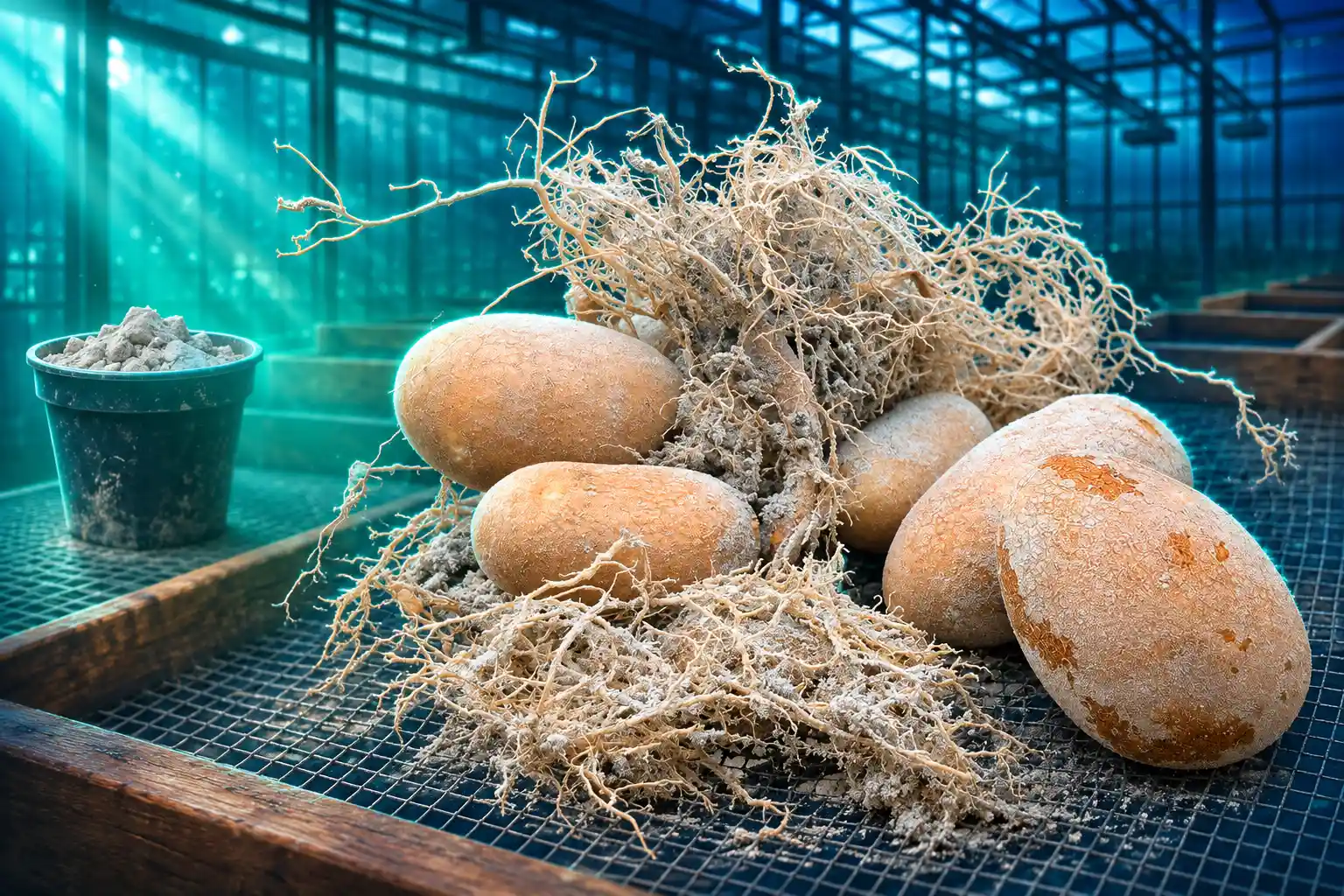
Potatoes grown in simulated lunar soil matched Earth yields in an Oregon greenhouse, but only after 30 percent of each pot was worm compost. NASA-funded researchers at Oregon State University published the result on November 19, 2026, in npj Microgravity.
Without that compost, the plants were stunted, with barely any roots. Every pot still received a slow-release nitrogen fertilizer the Moon cannot supply.
A Third of the Pot Was Worm Compost
Aymeric Goyer, a potato researcher in Oregon State’s Department of Botany and Plant Pathology, led the work with postdoctoral researcher David Handy. Their paper on the growth and molecular responses of potato tested Modoc, an early red-skinned, white-flesh variety, in five lunar regolith simulants mixed with vermicompost, the dark material left when earthworms break down food scraps and plant waste.
“We found that potatoes can complete their entire life cycle in simulated lunar soil when supplemented with organic matter,” Goyer said in Oregon State’s Corvallis greenhouse trial account. Mini-tubers from CSS Farms in Colorado City, Colorado, went into 8.89 by 7.62 centimeter pots holding about 300 cubic centimeters of mix on August 2, 2024. The team harvested on October 15, 2024, at 74 days after planting, in a greenhouse held at 22 C by day and 18 C by night and watered with 40 milliliters of reverse-osmosis water.
The first trial used LMS-1E, a mare (basaltic plain) simulant from Exolith Lab in Orlando, blended at 0, 15, and 30 percent vermicompost by volume. The Earth control was Adkins-series sandy soil from Hermiston, Oregon, a district known for the world’s highest potato yields, mixed at the same ratios. Six pots started in each treatment; some plants never came up, so living replicates ran from 3 to 6.
THE COMPOST RATIOS THAT CHANGED THE CROP
| Vermicompost share | Substrate | What the plants did |
|---|---|---|
| 0 percent | 100 percent LMS-1E | Severe stunting, barely any roots, little tuber set |
| 5 percent | All five simulants | Some roots and tubers; every simulant still cut yield versus Earth soil |
| 15 percent | LMS-1E blend | Partial recovery only |
| 30 percent | 70 percent LMS-1E | Growth and tuber yield matching Hermiston Adkins soil |
Goyer said plants in unamended simulant produced almost no roots or tubers, and that a 5 percent mix was enough for some roots and tubers to appear. The Earth-matching harvest sat at the 30 percent line, in that first LMS-1E trial. Oregon State posted video of the pots the same day the paper came out.
One small spud for science, one giant leap for mankind. 🥔
New #OSUResearch found that potatoes grown in simulated lunar soil achieved Earth-like yields and maintained their nutritional quality, supporting future lunar agriculture research.
Learn more: https://t.co/uwjMDbttTk pic.twitter.com/D4czvut6bK
— Oregon State University (@OregonState) November 19, 2026
The Mix Still Needed Fertilizer From Earth
Lunar regolith contains no nitrogen. Goyer put the constraint in one line: “Lunar regolith does not contain any nitrogen, so no crop would grow without supplementing it.” Vermicompost from Earthworm Castings in Green Bay, Wisconsin, is listed at 0.5 percent total nitrogen, most of it locked. At a 15 percent compost rate the team estimated only about 0.018 grams of plant-available nitrogen per 300 cubic centimeter pot. A field potato plant is typically fed about 5.6 grams of nitrogen in a season, or about 200 kilograms per hectare.
So every treatment, including the Hermiston soil, received Osmocote Plus 15-9-12 slow-release fertilizer at 5.68 cubic centimeters per 1,000 cubic centimeters of substrate. The point was to stop nitrogen hunger from masking whatever else the simulant was doing to the roots. The paper also notes that the simulants look short of phosphorus and potassium and heavy on iron, magnesium, manganese, and calcium, and that phosphorus can be tied up when iron, aluminum, and calcium are that abundant.
The 30 percent compost result is a real yield match under those rules. It is also a match that still leans on a bagged fertilizer and a worm product shipped from Wisconsin. A first lunar crop would have to bring both, or invent a way to make them on site.
Highland Dust Was the Hardest Soil
Because the Moon’s surface is not one dirt, the second trial ran Modoc in five simulants at only 5 percent compost. Two stand in for dark mare basalt. Three stand in for the brighter highlands. All five still reduced canopy size and tuber yield relative to the Earth control.
THE FIVE POWDERS IN THE POTS
| Simulant | Terrain | Source | How Modoc fared |
|---|---|---|---|
| LMS-1E | Mare | Exolith Lab | Used in the 30 percent trial that matched Hermiston soil; pure LMS-1E left plants with barely any roots |
| JSC-1A | Mare | NASA Johnson Space Center Simulant Development Lab | NASA reference simulant; yield still below Earth soil at 5 percent compost |
| LHS-1E | Highlands | Exolith Lab | Yield still below Earth soil at 5 percent compost |
| OPRH4W30 | Highlands | NASA | Yield still below Earth soil at 5 percent compost |
| NUW-LHT-5M | Highlands | NASA | Worst of the set: shoots appeared about 24 days after planting, versus 4 to 8 days in the others; only 3 of 5 plants made tubers |
In 100 percent LMS-1E the authors suspect copper toxicity, because leaves and tubers from those plants accumulated more copper. Each simulant also flipped a different pattern of leaf genes, so the stress is not one generic “moon dust” effect. A greenhouse on the lunar south pole would be dealing with highland chemistry, not with the mare blend that hit Earth yields at 30 percent compost.
Glycoalkaloids Did Not Spike in the Tubers
Oregon State said the potatoes are safe to eat and kept their nutritional quality. The paper is more careful on metals. Copper, zinc, and aluminum were modestly elevated in tubers from some lunar-simulant treatments, “warranting continued monitoring in future studies.” Tuber metabolite profiles otherwise sat close to the Hermiston controls.
Potatoes make solanine and chaconine, glycoalkaloid toxins that can rise when plants are stressed and that are often tied to green flesh under the skin. Those levels did not increase by a statistically significant margin in the simulant-grown tubers. Handy’s reading of the compost’s other job is that it binds the metals before roots take them up.
We believe the compost helps balance some of the toxicity we see in lunar regolith by reducing plant exposure to harmful compounds.
David Handy, postdoctoral researcher, Oregon State University
Goyer said the group had tested the tubers but had not tasted them. Even the Earth-soil pots, in these small containers, yielded potatoes of about 10 grams. That is a chemistry result, not a meal.
Apollo Dust Grew Plants, Then Stressed Them
None of the Oregon pots held actual lunar soil. Apollo samples are too scarce for 300 cubic centimeter potato trials, so the field has spent a decade on simulants and a few grams of the real thing in tiny Arabidopsis pots.
MOON DIRT ON EARTH, 2014 TO 2026
- August 27, 2014: Wieger Wamelink and colleagues at Wageningen University & Research publish an early crop trial on moon and Mars simulants, showing that several species can germinate and grow for 50 days without added nutrients, with moon simulant lagging Mars simulant and a poor river soil.
- October 2019: A later Wageningen round mixes in organic matter and a nutrient solution meant to stand in for human waste; nine of ten crops yield edible parts, spinach being the miss, and moon-simulant biomass still trails Earth and Mars mixes.
- May 12, 2022: University of Florida researchers Robert Ferl and Anna-Lisa Paul report Arabidopsis grown in real Apollo lunar soil from Apollo 11, 12, and 17, about a gram per plant. Every seed sprouted by day 2. After day 6 the lunar-soil plants lagged the volcanic-ash control, with stunted roots and a salt-and-metal stress signature in their RNA. They were harvested at day 20, before flowering.
- August 2, 2024: The Oregon State team plants Modoc mini-tubers in the five simulants plus Hermiston soil.
- October 15, 2024: Harvest at 74 days after planting, after tuber set is confirmed.
- November 19, 2026: npj Microgravity publishes the potato paper as volume 12, article 100, with NASA support. Coauthors include Anika Loeffler, Medora Knudson, Sydney Campbell, Pankaj Jaiswal, and Jeffrey Anderson.
The through-line is blunt. Plants will germinate in this material. They do not thrive in it until someone adds the organic fraction the Moon never made.
Why Researchers Picked Potatoes for the Moon
Goyer’s case for potatoes is caloric density plus a diet people will actually finish. “Potatoes provide more calories per land area than many other crops,” he said. “They are nutritious, they provide more potassium than a banana, are rich in vitamin C, have good proteins, and they have a high satiety index.” Modoc was chosen as a high-yielding, early variety with colored skin, which the authors treat as a plus for crew appeal. The plants are also clones, so a lunar greenhouse would not have to wait on seed.
A follow-on paper will compare 10 potato varieties in the same simulants, looking for types that take the stress better than Modoc. Handy has already pointed the work back at Earth, arguing that methods invented to farm poor, metal-heavy dust could help grow food in inner cities and desert towns that now depend on shipments, and could help clean contaminated soils.
Other labs are not waiting on potatoes alone. Goyer noted parallel work on tomatoes, lettuce, and legumes such as alfalfa, and a chickpea-and-vermicompost study that came out in March. NASA’s own crop path is wider than regolith pots.
Waste Has to Arrive Before the Harvest
Oregon State’s pitch is that crews could fly a starter charge of vermicompost, then rebuild it from food scraps and inedible plant mass so later seasons import less dirt from Earth. That loop is the real machine. The Moon supplies basalt and anorthosite. It does not supply humus. Until a habitat can turn waste into a 30 percent organic fraction, and until it can replace the nitrogen in that Osmocote charge, the “lunar soil” in these pots is still a majority of Earth biology by function if not by volume.
WHAT A LUNAR POTATO BED STILL HAS TO SOLVE
- Nitrogen: The simulants have none; the 15 percent compost rate supplied only about 0.018 grams of available nitrogen per pot, so the trial added Osmocote Plus 15-9-12 to every treatment.
- Organic starter: Yields matched Hermiston soil only at 30 percent vermicompost in LMS-1E; 5 percent was not enough across the five powders.
- Which dirt: Highland simulant NUW-LHT-5M delayed emergence to about 24 days and left 2 of 5 plants without tubers, a problem for south-polar base plans that sit on highland terrain.
- Untried conditions: The Corvallis greenhouse had Earth gravity, Earth air, natural light, and no lunar radiation; NASA’s planned LEAF run on Artemis III is the first crop test meant for that surface environment.
WHAT WE KNOW
- The yield match: At 30 percent vermicompost, Modoc in LMS-1E matched Adkins soil from Hermiston in this pot trial.
- The failure mode: Pure simulant left plants stunted, and copper built up in leaves and tubers of the 100 percent LMS-1E plants.
- The toxins: Solanine and chaconine did not rise by a statistically significant amount.
WHAT IS UNCONFIRMED
- Real lunar soil: No potato in this study grew in Apollo sample; simulants omit some agglutinate and nanophase-iron behavior of the real dust.
- A tasting: The team has not eaten the tubers; metals were modestly higher in some treatments.
- One-sixth gravity: Earthworms and potato roots have not run this recipe at lunar g, or through a 14-day lunar night.
NASA space crops work, including planned LEAF, still lists hydroponics and aeroponics beside any hope of turning local regolith into a growth medium or a fertilizer source. If a third of the bed has to be compost, and the rest still needs imported nitrogen, a soilless trough may be the lighter first farm. The Oregon pots show the cheaper path is possible once the waste loop exists. They also show that loop is the harvest.
Goyer’s plants finished a life cycle in a Corvallis greenhouse in 74 days, in dust designed to mimic the Moon, after someone mixed in worms’ leftovers and a commercial fertilizer. The next paper will say which of 10 varieties likes that mix best. No one has grown these potatoes on the Moon.
Frequently Asked Questions
Can Potatoes Grow in Real Moon Dirt?
This study did not use real lunar soil. Apollo samples are held in tiny lots, and the 2022 University of Florida trial that did use them grew Arabidopsis, not potatoes, in about a gram of Apollo 11, 12, or 17 soil per plant, with a daily nutrient solution. Oregon State used five commercially made simulants because those can fill 300 cubic centimeter pots. Genuine lunar regolith also carries agglutinates, glassy particles with nanophase iron that simulants only partly copy, so a later test in returned Artemis samples would still be a different experiment.
What Is Vermicompost in This Experiment?
The team bought vermicompost from Earthworm Castings in Green Bay, Wisconsin, to stand in for recycled plant waste in a closed habitat. In the 15 and 30 percent blends they kept a 5 percent slice of the compost unsterilized so a living microbial load stayed in the pot, then made up the rest with autoclaved compost. Typical composting worms are red wigglers (Eisenia fetida), a species other labs have already shown can ingest lunar highland simulant in Earth-gravity trials.
Are Potatoes Grown in Lunar Simulant Safe to Eat?
Oregon State says they are. The paper reports no statistically significant rise in the potato toxins solanine and chaconine, and says tuber chemistry otherwise tracked Earth-grown Modoc, while also flagging modestly higher copper, zinc, and aluminum in some treatments. The researchers have not tasted the tubers, which weighed about 10 grams even in the Hermiston soil, so the safety claim is a lab panel, not a lunch.
Why Did the Team Test Five Lunar Simulants?
Mare basalts and highland anorthosites differ in glass, metal, and grain, and NASA’s candidate landing zones sit near the south pole, on highland material. OPRH4W30 was included because it is formulated to resemble that polar regolith. JSC-1A is NASA’s long-running reference mare simulant. NUW-LHT-5M was added for highland glass chemistry that the authors judge closer to the real highlands than OPRH4W30, and it was the slowest, stingiest substrate in the 5 percent compost trial.

The Strip Bojangles That Charged $100 for 10 Minutes

The Security Fixes Took Microsoft and the NSA Offline

iOS 27 Finally Shrinks the Giant iPhone Lock Screen Clock

AirPods Pro 3 Are $179 Again, Below Last Year’s Cut

Dragon Returns ISS Samples Only It Can Bring Home

Microsoft 365 Auth Fault Took Down Exchange and Teams

OpenClaw 2.0 Ships a Team Workplace With Host-Trust Defaults

Xbox Caps Game Pass Cloud Gaming at 15 Hours

OpenAI Unveils GPT-6 Astra With a Critical Cyber Label

Squishy Dumpling Toys Recalled After Hiding Illegal Water Beads
-
 NEWS3 months ago
Microsoft 365 Auth Fault Took Down Exchange and Teams
-
 NEWS3 months ago
OpenClaw 2.0 Ships a Team Workplace With Host-Trust Defaults
-
 GAMING3 months ago
Xbox Caps Game Pass Cloud Gaming at 15 Hours
-
 NEWS3 months ago
OpenAI Unveils GPT-6 Astra With a Critical Cyber Label
-
 LIFESTYLE3 months ago
Squishy Dumpling Toys Recalled After Hiding Illegal Water Beads
-

 BUSINESS3 months ago
Diesel Breaks Its Record as the White House Claims Credit
-

 NEWS3 months ago
IFA 2026’s Weird Gadgets Are Building a Sensor Home
-

 BUSINESS3 months ago
ChargePoint Stock Rally Prices Wilmer’s Three-Year Cash Plan