
AUTO
Waymo Pulls Robotaxis Off U.S. Freeways After California Ban
California’s work-zone finding froze Waymo freeway rides nationwide, even in states that never banned the cars, after a June software recall failed to hold.

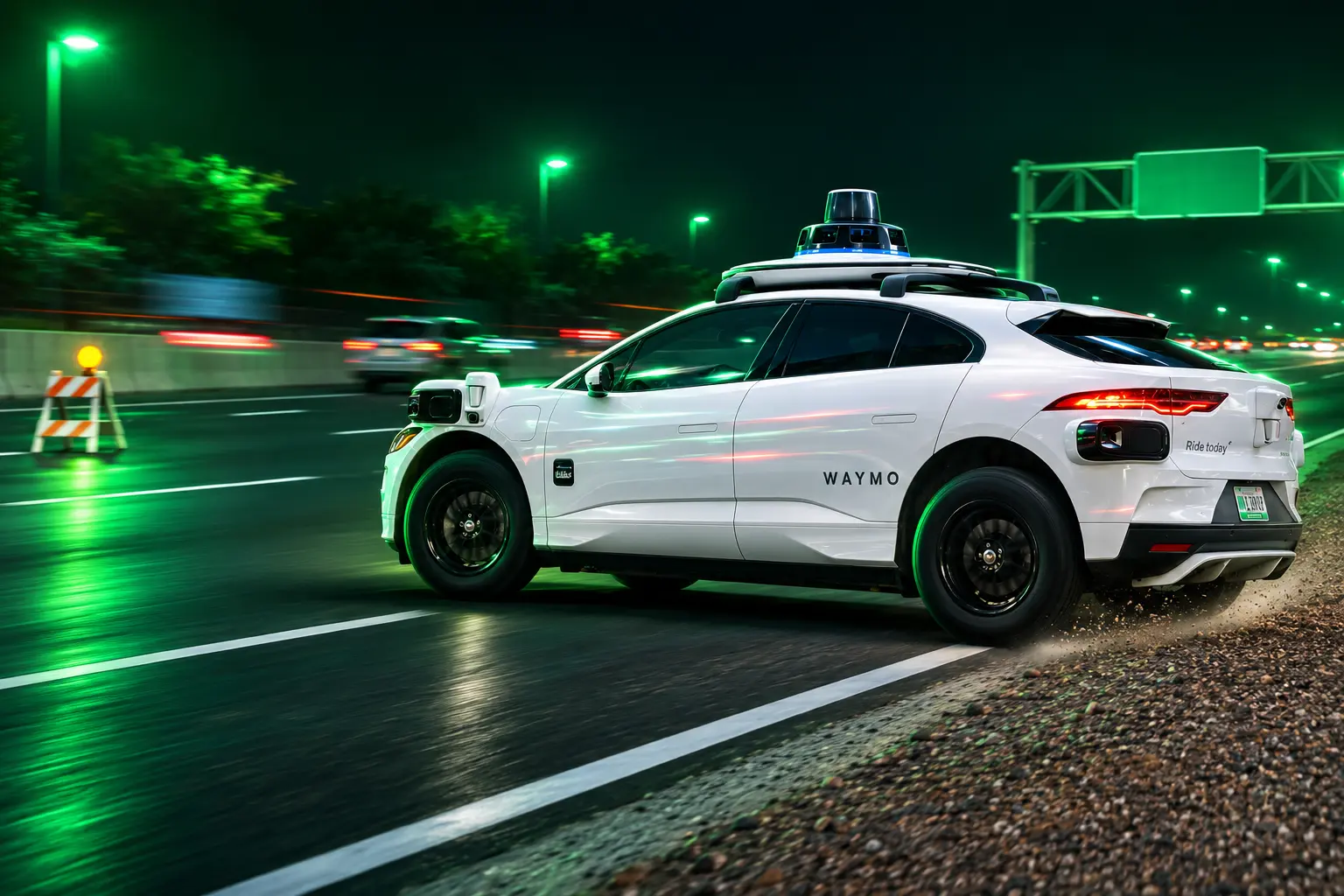
Waymo has pulled its driverless taxis off freeways in every U.S. city it serves, after California’s DMV called those highway runs an imminent hazard. The order took effect on November 11 and became public on November 17. Street pickups are still live.
The ban covers California only. Waymo still froze freeway routing everywhere else, because the same work-zone bug had already been filed as a national software defect in June, and the cars drove into closed lanes again.
Two Bay Area Incidents, One National Freeze
On November 5, three Waymo cars entered an active construction closure on U.S. 101 near Burlingame, south of San Francisco. Crews, equipment and other vehicles were in the closed stretch. The company said those encounters did not involve injuries or collisions.
The next day, a Waymo on Interstate 280 in San Francisco moved on California Highway Patrol units that were running a traffic break. In that maneuver, officers slow the pack so crews can work or clear a crash ahead. Video of the car trying to get past the patrol units spread quickly, and a cruiser had to cover the gap.
A traffic break is a human signal. Flashing lights, a patrol car weaving across lanes, and the instruction to stay back. The robotaxi treated it like a slow vehicle with space beside it. That is a different failure from missing a cone, and it is the one that turned a work-zone pattern into a statewide freeway ban.
The California Department of Motor Vehicles said the cars pose an “imminent hazard to public safety” because of “recurring incursions by its vehicles into active construction zones where construction workers, vehicles and equipment are present.” The order blocks driverless operation and driverless testing on every California freeway until Waymo shows a fix.
The DMV Order Stops at the State Line
Arizona, Texas and Florida did not issue matching bans. Waymo paused freeway rides in those states anyway. A spokesperson said the company restricted freeway operations “across our other operating markets to evaluate our performance,” while ride-hail on surface streets keeps running.
That choice is the part that reaches past San Francisco. Highway trips were the product that made airport runs and long crosstown rides competitive with a human driver. Once California stamped the driverless freeway stack an imminent hazard, leaving Phoenix or Miami live would have meant telling NHTSA the same software was safe on one state’s interstate and not on another.
The company can still put trained autonomous specialists in the seat for freeway testing. Paying riders do not get those lanes. Alphabet Inc., which owns Waymo, now has a robotaxi network that works on city streets and stops at the on-ramp.
NHTSA said it is in communication with the DMV and with Waymo and will take additional actions as appropriate. A state permit fight became a product question the moment the same cars kept entering closed zones after a federal recall.
June’s Software Recall Did Not Hold
California’s statement pointed at “a prior restriction and corrective actions” after similar events on May 18, 2026. Those were not a one-off in the Bay Area. Waymo’s own filing with NHTSA laid out a spring in which the cars drove into freeway work zones in two states, then got a software patch, then went back on the highway.
THE 2026 FREEWAY RECORD
- April 11 and April 19, 2026: Six Phoenix events, one then five, in which cars miss ramp closure signs and enter pre-planned freeway work zones.
- April 20, 2026: Waymo’s Field Safety Committee starts meeting and restricts freeway driving until it can improve how the cars see closures.
- May 18, 2026: Seven San Francisco Bay Area cars drive between cones into freeway lanes with active construction, after the system puts other highway hazards ahead of the work zone.
- June 8, 2026: Waymo’s Safety Board votes to run a recall. Campaign 26E035 follows, a recall covering 3,871 driving systems, every fifth-generation unit then capable of driverless freeway use.
- June 16 to June 29, 2026: Software updates go out. The filing says freeway operations begin to resume on June 25, and every driverless-capable car has the remedy by June 29.
- November 5 and November 6, 2026: Three cars enter the U.S. 101 closure near Burlingame, and one approaches the I-280 traffic break. California’s freeway order lands on November 11.
The recalled hardware was the 5th Generation Automated Driving System, built from March 17, 2022 through May 19, 2026. Waymo owns the fleet, so there were no owner letters. The company told NHTSA the software could let a car “enter and drive at speed in freeway construction zones due to inappropriately prioritizing the avoidance of other freeway hazards and/or failing to recognize the construction zone.”
The promised fix was specific. Better recognition of freeway work zones, higher priority for those zones over other hazards, lower speed if the car thinks it is already inside one, and a better response to emergency vehicles in that setting. Waymo also added operational checks on planned closures and more remote assistance if a car still got in. Five months later, California said the incursions were still happening.
Which Cities Lose Freeway Routing?
Phoenix, Los Angeles and the Bay Area were the first places Waymo put paying riders on freeways, and those trips are now off. Every other city in the 15-city map, including Austin and Atlanta, stays on surface streets until California signs off on a fix.
In November 2025 the company started selling freeway rides in Phoenix and Los Angeles and across the San Francisco Bay Area, and it named Austin and Atlanta as the next highway markets. It had been testing on California freeways since at least August 2024. The pitch was simple: Sky Harbor, a Peninsula airport run, Downtown L.A. to Culver City, without a crawl on surface streets.
WHERE HIGHWAY TRIPS GO DARK
| Market | Freeway plan before the pause | Driverless freeway status now |
|---|---|---|
| Phoenix | Public freeway rides, including airport-style trips | Off, pending the review |
| Los Angeles | Public freeway rides from November 2025 | Off |
| San Francisco Bay Area | Public freeway rides from November 2025 | Off, and California also bars driverless freeway testing |
| Austin and Atlanta | Named as next freeway markets | Off with the rest of the map |
Waymo’s FAQ lists paid service in 13 cities on its own app, plus Austin and Atlanta through Uber, which is the 15-city footprint. Dallas, Denver, Houston, Miami, Nashville and the other app cities never needed a California permit for their own highways. They lost freeway routing because the company will not run two versions of the same driver.
Construction Zones Keep Beating the Software
Open-lane highway driving is the easy half of this job. A robotaxi can hold speed, hold a lane, and follow a mapped ramp. A work zone is temporary geometry: cones, a dropped lane, a ramp plaque that was not there yesterday, a CHP car blocking the fast lane on purpose. The June recall described that exact miss.
Under certain circumstances, the AV may enter and drive at speed in freeway construction zones due to inappropriately prioritizing the avoidance of other freeway hazards and/or failing to recognize the construction zone.
Waymo LLC, NHTSA recall report 26E035
NHTSA’s acknowledgment letter put the stakes in one line: driving through a closed construction zone increases the risk of a crash. The people in that risk window are not the riders. They are the crew in the closed lane, the officer standing in a traffic break, and whoever is in the truck parked behind the cones.
Human drivers blow those same setups every hour on I-280. California is still holding the robot to a standard it does not enforce at the license counter, and that complaint writes itself. It does not change what the filing already admitted. When the stack has to choose between dodging some other highway hazard and honoring a closure, it has driven through the closure, in Phoenix and in San Francisco, in April, in May, and again in November.
That is why a cone line in Burlingame can park highway robotaxis in Texas. The defect Waymo disclosed was never a California-only map error. It was a ranking error in the driver, and the driver is the same in every city.
Half a Million Street Rides a Week Still Run
The freeway freeze is real and it is also narrow. Waymo said the street service still handles over half a million trips each week. For most riders the car already stayed on surface streets. The people who feel this are the ones whose trip only made sense on a freeway: airport runs in Phoenix, long Bay Area hops, any match that used to jump on MoPac or I-35 in Austin.
THE FLEET THAT IS STILL MOVING
- Cities on the map: Paid rides continue in 15 U.S. cities, all on surface streets for now.
- Weekly trips: Street ride-hail still handles over half a million trips each week, per Waymo.
- June recall size: 3,871 fifth-generation systems, every freeway-capable car in the fleet at the time of the filing.
A spokesperson put the split in writing. “Safety is at the foundation of everything we do.” After the U.S. 101 encounters, “the California DMV has implemented an operating restriction on freeway operations in the state.” The company “temporarily restricted freeway operations across our other operating markets to evaluate our performance,” and “our ride-hailing service continues to operate safely on surface streets.” It said it is working with the DMV and other state officials “diligently and responsibly to resume freeway operations.”
Riders who never left Van Ness or Camelback will not notice. Riders who booked a robotaxi because it could take the highway will go back to a human driver for that leg, or they will sit in surface traffic inside a Waymo.
What Waymo Must Show the DMV
The order stays until Waymo gives California evidence that the cars can detect and respond to construction zones and emergency vehicles. NHTSA is already talking to both sides and can still act. No date is set for a return to driverless freeway service.
WHAT CALIFORNIA SAYS IT NEEDS
- A real fix, not a pause: The restriction remains until Waymo shows “effective corrective actions to address the deficiencies that precipitated the restrictions.”
- Work zones and emergency vehicles: The company must provide evidence the cars can detect and respond to construction zones, emergency vehicles, and other roadway situations inside the operational design domain.
- Driverless testing is in the same bucket: California barred operating and testing without a driver on all state freeways, so the company cannot iterate on those roads in the driverless mode that got it into trouble.
- Specialists can still ride along: Waymo said freeway testing continues with trained autonomous specialists in the vehicles, which is how it built the highway miles before it let the public on in November 2025.
The last time Waymo told federal regulators it had this under control, the software went out in 13 days and freeway runs restarted within the same month. California’s standard this time is evidence, not a shipping date, and NHTSA has already been handed a campaign file that says these cars can drive at speed into a closed zone. Until both of those desks are satisfied, the on-ramp stays closed in every city on the map.

Xiaomi 18 Pro Goes Global as Its Privacy Filter Falters

iFixit Finds HomeView Glued Shut After Repair Gains

Polymetallic Nodules Shelter 4,139 Animals Miners Want

One UI 9.5 Puts Now Brief Behind a System Agent

Framework’s $99 Keyboard Brings Laptop Repair to the Couch

Microsoft 365 Auth Fault Took Down Exchange and Teams

OpenClaw 2.0 Ships a Team Workplace With Host-Trust Defaults

Xbox Caps Game Pass Cloud Gaming at 15 Hours

OpenAI Unveils GPT-6 Astra With a Critical Cyber Label

Squishy Dumpling Toys Recalled After Hiding Illegal Water Beads
-
 NEWS3 months ago
Microsoft 365 Auth Fault Took Down Exchange and Teams
-
 GAMING3 months ago
Xbox Caps Game Pass Cloud Gaming at 15 Hours
-
 NEWS3 months ago
OpenClaw 2.0 Ships a Team Workplace With Host-Trust Defaults
-
 NEWS3 months ago
OpenAI Unveils GPT-6 Astra With a Critical Cyber Label
-
 LIFESTYLE3 months ago
Squishy Dumpling Toys Recalled After Hiding Illegal Water Beads
-

 BUSINESS3 months ago
Diesel Breaks Its Record as the White House Claims Credit
-

 NEWS3 months ago
IFA 2026’s Weird Gadgets Are Building a Sensor Home
-

 BUSINESS3 months ago
ChargePoint Stock Rally Prices Wilmer’s Three-Year Cash Plan