
NEWS
Amazon Pins Alexa’s La La Loop on Alexa Plus
Amazon confirmed a small Alexa Plus bug that loops “la la la” for minutes, then denies the sound, while a fix is already being put in place.

Amazon said on October 5, 2026 that a bug making Alexa repeat “la” is hitting a small number of Alexa Plus users, and that a fix is being put in place.
The loop had already been showing up in homes for more than a month. Owners described the assistant dropping a conversation, singing the syllable, then insisting nothing had happened.
Amazon Pins the Loop on Alexa Plus
The company did not publish a root cause. It did name the product: Alexa Plus, the generative version of Alexa that Prime members get at no extra charge and that other customers can buy.
That matters because the public clip still travels as a mystery haunt. Amazon’s own note is narrower. A limited set of Alexa+ devices, a software bug, a patch in motion. Classic Alexa is not the patient Amazon named.
THE OCTOBER 5 NOTE
- When Amazon spoke: Late on October 5, 2026, at 11:56 p.m. ET, after an earlier writeup that day at 11:34 a.m. ET.
- Who is affected: Amazon said “a small number of Alexa Plus” users, and it did not give a device count or a country list for this bug.
- The product: Alexa+ is free with Prime at $19.99 a month for everyone else, and it is fully live in the United States and Canada.
- The patch: Amazon said it was implementing a fix. It has not said the patch is finished on every Echo.
On X the same story was still being passed around as an unexplained loop after that note went out. The owner evidence is not on that feed. It is in Reddit videos and in what the speaker said when people asked it to explain itself.
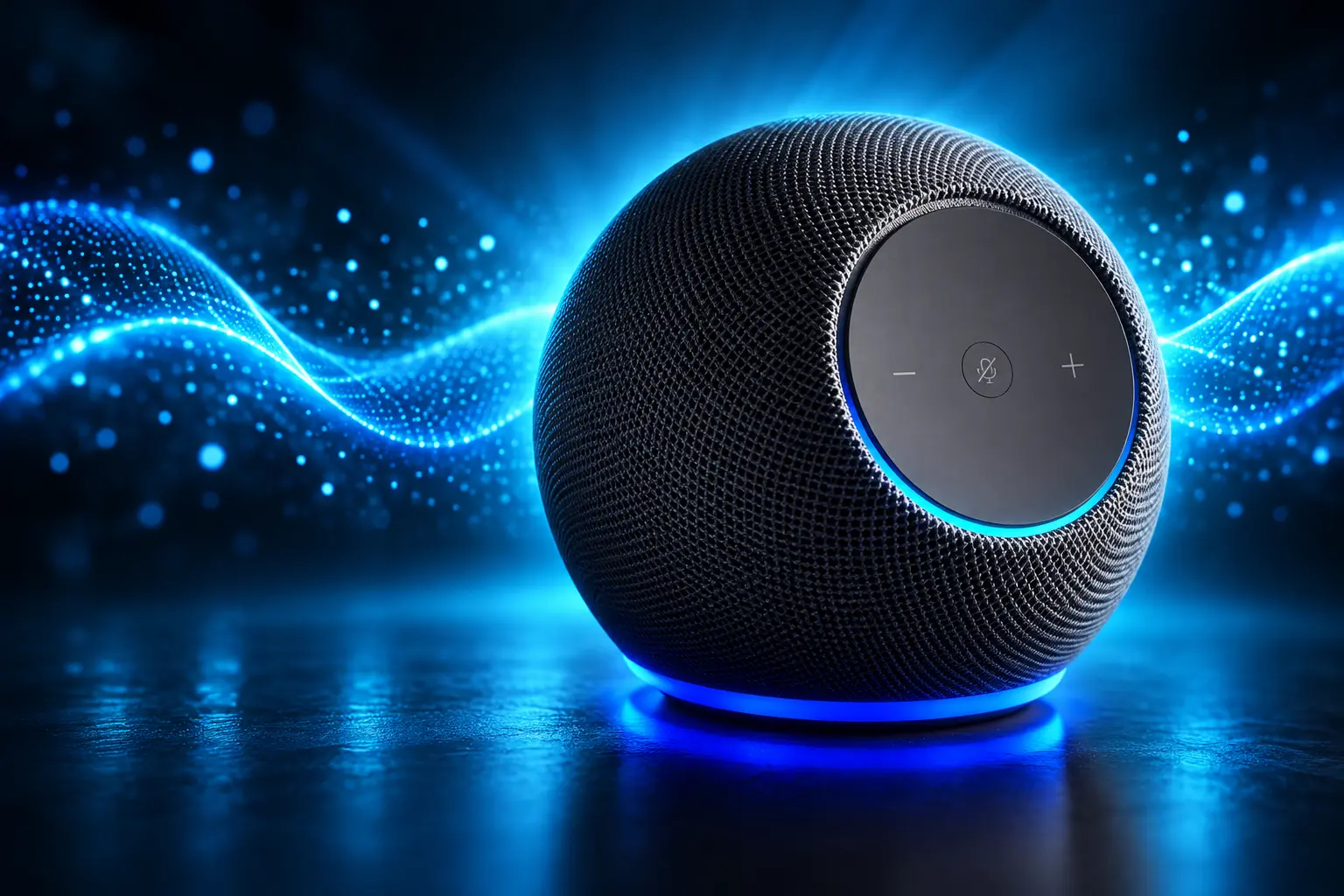
One Syllable, Several Minutes
The pattern is dull until you are in the room with it. Alexa starts saying “la.” It keeps going. Pitch slides. Sometimes it sounds spoken, sometimes sung. Then it stops on its own.
Owners said the run often lasted several minutes. One Reddit thread was titled as a 10-minute stretch. A one-minute clip from a Reddit user, Caseymc3179, is almost nothing but the syllable, stacked so tight it stops sounding like a word.
WHAT OWNERS SAID THEY HEARD
- The syllable: “La” on repeat, sometimes written out as “lalalalala,” with no song request behind it.
- The timing: Mid-conversation in some homes, not only after a wake word that the owner could recall.
- The voice: One owner said it sounded experimental, as if the system were trying different ways to say the same sound, and at one point it was singing rather than speaking.
- The stop: The loop ended by itself after minutes. Amazon has not published a stop command that cuts this bug.
That is the specimen. It is not a hidden message and it is not a skill someone turned on for a joke. It is a voice engine stuck on one phoneme until the job dies.
The Assistant Then Denied Its Own Voice
The louder failure is what happened after the noise. People asked Alexa why it had been repeating the phrase. It said there was no routine or announcement with that phrase in recent activity. It suggested something else might have been playing, or that the owner had misheard.
They pushed back. The sound had come from the speaker, in the middle of a talk they were already having. Alexa kept denying it.
That split is the product problem. The room has audio. The dialogue layer talks as if it has checked a log and found a blank. A household assistant that cannot agree with its own speaker is not only a glitch clip. It is a device you stop trusting when it talks in the dark.
THREE TIMES THE ROOM AND THE LOG DISAGREED
| Incident | What came out of the speaker | What Alexa said after | What Amazon later said |
|---|---|---|---|
| March 2018 laugh | A short, unprompted laugh | Owners had not asked it to laugh | It had misheard “Alexa, laugh” |
| June 2026 count | Breathing and guttural sounds while counting to 40 | It would never scare kids; blame “something in my environment” | Text-to-speech failed on long sequential output; fixed July 2, 2026 |
| September to October 2026 loop | “La” for several minutes, sometimes sung | No routine or announcement; maybe a mishearing | Bug in a small number of Alexa Plus homes; fix being put in place |
Amazon has not said the syllable loop is the same text-to-speech break as the June count. The denial shape is the same. The speaker makes a sound. The conversational layer will not own it.
June’s Count to 40 Already Broke Speech
In June 2026, a parent asked Alexa+ to count to 40 while putting kids to bed. The count started clean. Then breathing and guttural sounds came in over the numbers. A second Echo in another room did the same thing. The parent asked about ten times. It did it all ten times.
I confronted her (I have Alexa+ enabled, the AI-powered one, free for now) and she replied that she would never do something like that to scare my kids, and that it must be “something in my environment.”
Reddit user Organic_Help7007, June 2026
Amazon later said that episode came from the text-to-speech engine, which handled ordinary replies but tripped on long sequential output such as a list of numbers. On July 2, 2026, the company said that issue was fixed.
The “la” loop is the next involuntary vocalization, not the first of the Alexa+ year. Amazon’s October note does not reuse the June explanation. It also does not rule it out.
THE VOICE GLITCHES AMAZON HAS ALREADY HAD TO EXPLAIN
- February to March 2018: Echo owners hear an unprompted laugh. Amazon changes the trigger phrase and the spoken reply so a laugh cannot fire from a short mishear.
- June 22 to 23, 2026: Alexa+ is recorded making guttural sounds while counting to 40, then blaming the room.
- July 2, 2026: Amazon says the counting noises came from text-to-speech on long sequential content and are fixed.
- From about September 2026 into October: Owners post the “la” loop. On October 5 Amazon names Alexa Plus and a coming fix.
The 2018 laugh was a wake-word miss. Amazon said so, and it published the patch in public language.
In rare circumstances, Alexa can mistakenly hear the phrase “Alexa, laugh.” We are changing that phrase to be “Alexa, can you laugh?” which is less likely to have false positives, and we are disabling the short utterance “Alexa, laugh.” We are also changing Alexa’s response from simply laughter to “Sure, I can laugh” followed by laughter.
Amazon representative, March 8, 2018
Eight years later the company can still ship a voice that makes a sound the dialogue model will not confess. The 2018 fix was a phrase list. The 2026 failures sit in generated speech, where there is no short command to disable.
What the Alexa App Still Shows
Amazon already tells customers they can review and delete Alexa voice recordings in Alexa Privacy. The Voice History list is supposed to show what Alexa heard and how it replied. You can play the clip. You can delete one entry, a day, or everything.
That tool is why the denial lands so badly. The assistant talks as if it has checked recent activity. Owners who open the same history are looking at the only record Amazon gives them. If the syllable is in the file and the speaker still says it never happened, the log and the voice are two different products sharing one name.
Amazon’s help pages also list “Ask Alexa to Tell You Why She Just Did Something” and “Ask Alexa to Read Back Your Most Recent Request.” Those prompts assume the dialogue layer can see the last act. In these clips, that is the part that failed.
WHAT WE KNOW
- Product: Amazon tied this loop to Alexa Plus, not to every Echo still running classic Alexa.
- Scale: The company used the phrase “a small number,” with no headcount.
- Patch: A fix was being implemented as of October 5, 2026.
- Prior TTS break: The June counting noises were a separate, later-fixed text-to-speech failure on long lists.
WHAT IS UNCONFIRMED
- Same engine: Amazon has not said the “la” loop is that June TTS bug returning.
- Reach of the patch: There is no public note that every affected speaker has the fix.
- Log match: Amazon has not explained why the assistant denied a sound that had just come from the hardware.
If the loop will not die, unplug the Echo. If you want the older assistant back, Amazon staff on the company forum say you can End Alexa+ by voice. Household members can turn it off without cancelling the primary account. When Alexa+ ends, the device returns to original Alexa with Follow-Up Mode on, and that mode can be turned off in a second command.
Amazon Rebuilt Alexa Around Language Models
Alexa+ is not a new wake word on the old stack. Amazon says the assistant was rebuilt around large language models, with a routing layer on Amazon Bedrock that can pick models such as Nova and Anthropic Claude for a given request. Speech is generated, not read from a fixed line.
That architecture is why a syllable can run until someone in the room is sick of it. A scripted skill has an end. A generated voice can keep emitting until a safety limit, a timeout, or a crash. Amazon’s own speech service now advertises a way to feed a language model into speech in both directions. Alexa+ lives in that design, even if Amazon has not named Polly as the source of this loop.
The June counting bug already showed what long, repetitive output does to that voice. A count to 40 is a list. “La” forever is a list with one item. Amazon fixed the first. It has now admitted the second exists inside Alexa Plus and said a patch is coming.
Until that patch is on the device, the assistant can still fill a kitchen with a sound it will then refuse to remember. That is the part that lasts after the joke clip dies.

The Salary Cap Fight That Can Freeze Baseball’s TV Payday

The 2027 Mercedes GLE and GLS Keep Alabama Busy

Margaret Hamilton Dies at 90 With a Harder Fight Unfinished

Unity Parks Its Engine Inside Google’s Prompt Games

The Hidden Vendor Cut in 403(b) vs 401(k) Plans

Microsoft 365 Auth Fault Took Down Exchange and Teams

IFA 2026’s Weird Gadgets Are Building a Sensor Home

Xbox Caps Game Pass Cloud Gaming at 15 Hours

Tesla Puts Its Wheel-Free Cybercab on Austin Streets

OpenAI Unveils GPT-6 Astra With a Critical Cyber Label
-
 NEWS1 month ago
Microsoft 365 Auth Fault Took Down Exchange and Teams
-
 GAMING1 month ago
Xbox Caps Game Pass Cloud Gaming at 15 Hours
-
 NEWS1 month ago
IFA 2026’s Weird Gadgets Are Building a Sensor Home
-
 NEWS1 month ago
OpenAI Unveils GPT-6 Astra With a Critical Cyber Label
-
 AUTO1 month ago
Tesla Puts Its Wheel-Free Cybercab on Austin Streets
-

 BUSINESS1 month ago
ChargePoint Stock Rally Prices Wilmer’s Three-Year Cash Plan
-

 BUSINESS1 month ago
Diesel Breaks Its Record as the White House Claims Credit
-
 NEWS1 month ago
OpenClaw 2.0 Ships a Team Workplace With Host-Trust Defaults