
NEWS
NASA Funds Starliner Again Because Dragon Is Being Retired
NASA will fly Boeing Starliner empty in December 2026 or January 2027 and spend $359 million more, because SpaceX plans to retire Crew Dragon.

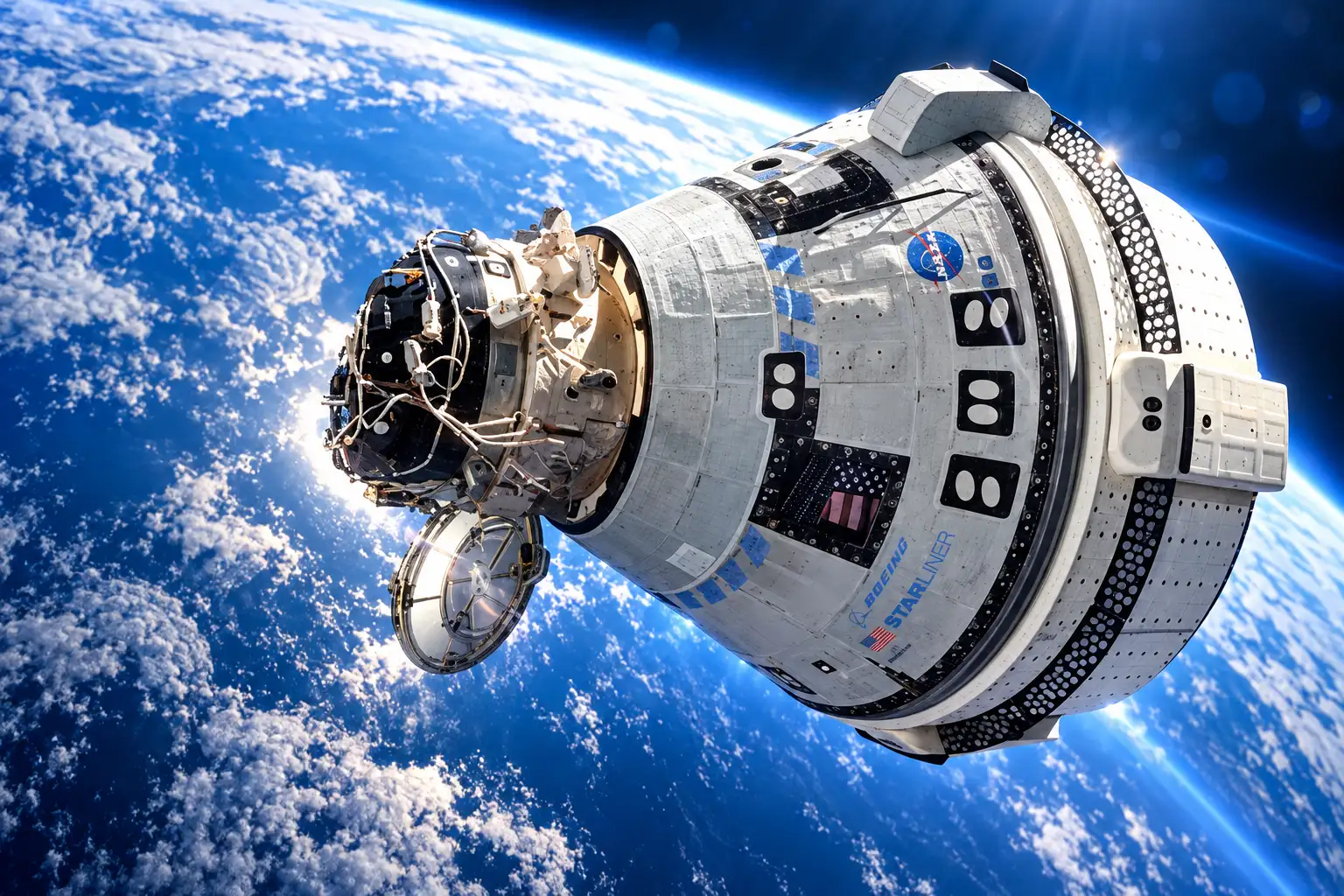
NASA will spend $359 million more on Boeing’s Starliner and send the capsule to the space station without a crew in December 2026 or January 2027. Crewed flight is planned for 2028.
The money is meant to rebuild thrusters that overheated in 2024 and to help certify a new rocket after Atlas V. NASA is doing this because SpaceX intends to retire Crew Dragon, the only U.S. crew ship that now flies on a regular schedule.
$359 Million Buys Thrusters, Valves, and a New Rocket
NASA Administrator Jared Isaacman and Boeing briefed reporters at Kennedy Space Center on September 28, 2026. Dana Weigel, manager of NASA’s Low Earth Orbit Program, put the new bill at $359 million. That sum covers a rebuild of Starliner’s reaction-control thrusters and work to human-rate United Launch Alliance’s Vulcan rocket.
The agency also intends to exercise options for fifth and sixth Starliner flights to and from the International Space Station. In 2025 it had cut Boeing’s ordered flights from six to four and lowered that contract’s value to $3.7 billion. The spare is being put back on the books.
NASA has been committed to having multiple crew transportation options since the beginning of the Commercial Crew Program. We have worked closely with Boeing to address the issues identified on previous Starliner flights, and we intend to see this vehicle return to flight in support of the International Space Station and future commercial destinations.
Jared Isaacman, NASA administrator, Sept. 28, 2026, NASA news release
Starliner-1 is an engineering run, not a crew rotation. NASA will use it to check thermal changes on the service module, gather qualification data, and hunt leftover risk. After that flight, Boeing still has to finish a thruster-valve redesign before anyone boards Starliner-2.
Isaacman said the current plan is to return astronauts on Starliner-2 by 2028. NASA astronaut Warren “Woody” Hoburg, a Crew-6 veteran, will command that mission. Other crew names have not been released.
NASA Paid Extra in 2014 for a Spare That Never Certified
After the space shuttle stopped flying in 2011, NASA bought seats on Russia’s Soyuz. The inspector general counted 68 Soyuz seats from 2006 through 2024, worth more than $3.6 billion. Commercial Crew was the way out of that line: pay two U.S. firms, get two dissimilar capsules, and stop depending on one vehicle, or one country.
On September 16, 2014, NASA awarded firm-fixed-price Commercial Crew Transportation Capability contracts of $2.6 billion to SpaceX and $4.2 billion to Boeing. Boeing got the larger check. SpaceX certified Crew Dragon in 2020 and has carried station crews ever since. Boeing has not obtained human-rating for Starliner after two uncrewed orbital tests and one crewed test later judged a serious mishap.
THE 2014 CREW CONTRACTS
| Provider | 2014 award | Human-rating | Crewed station flights |
|---|---|---|---|
| SpaceX | $2.6 billion | Certified in 2020 | Regular rotations, including Crew-13 on October 1, 2026 |
| Boeing | $4.2 billion | Not certified | One 2024 test; crew came home on Dragon |
The NASA Office of Inspector General, in a June 30, 2026 audit, said the agency has invested more than $9.8 billion since 2014 to restore U.S. crew flights. About $8.7 billion sat on the two capability contracts as of April 2026, with $1.1 billion in related program funds. SpaceX’s contract had grown to $4.9 billion by then, mostly because NASA bought more missions that actually flew.
Auditors said NASA was overconfident in Boeing’s heritage hardware and accepted unrealistic test dates. They questioned $127.9 million in Starliner-3 payments authorized early, on top of $43 million questioned in a 2019 review. NASA had already spent $17 million to pull SpaceX flights forward to cover the hole Starliner left. Boeing’s design, development, testing, and evaluation costs grew about 14 percent, or $269.4 million, to meet extra NASA requirements. SpaceX’s comparable growth was about 11 percent, or $126.8 million.
A Sunset for Falcon and Dragon
Isaacman said aloud what NASA had been treating as a planning fact. “I do not think it’s a secret that SpaceX intends to sunset older platforms like Falcon and Dragon as they concentrate on their next-generation capability, Starship,” he told reporters on September 28, 2026.
Weigel put the same point in program language. “It’s always been the Commercial Crew Program’s goal to have two crew transportation providers to ensure commercial access to low Earth orbit,” she said. “As SpaceX has publicly stated, the Dragon and the Falcon won’t be around forever.”
SpaceX has agreed to support the station through 2030 and has already taken orders through Crew-17. It has told firms building private stations, including Axiom Space, Voyager Space, and Vast Space, that they cannot book Crew Dragon rides for those habitats. It has also told NASA it is not building Starship as a routine Earth-orbit crew ferry right now. Four people ride Dragon. Starship could carry many more, but ascent, entry, and NASA crew clearance for that vehicle are not the company’s LEO priority.
NASA cannot order SpaceX to keep a product line open. Crew Dragon was a service contract, not a nationalized airline, and the company has already flown far more NASA crew missions than the original six it was required to fly. Starlink now supplies most of its revenue. The factories it wants next are for Starship, a shift that also drives SpaceX’s path toward a public listing.
NASA’s Commercial Crew Program was built to give America multiple ways to put astronauts into orbit.
Dragon has been an extraordinary success, and we want Starliner to become another reliable option.
Boeing and NASA have worked through the findings from Crew Flight Test, and… pic.twitter.com/vWCuRmchRs
— NASA Administrator Jared Isaacman (@NASAAdmin) September 28, 2026
On October 1, 2026, SpaceX launched Crew-13 from Cape Canaveral at 11:10 a.m. local time. NASA astronauts Jessica Watkins and Luke Delaney flew with Canadian astronaut Joshua Kutryk and Roscosmos cosmonaut Sergey Teteryatnikov. That is the working taxi, still on the pad, while NASA writes a check to stand up the spare.
WHERE THE PLANS DIVERGE
- Isaacman: Commercial Crew was built for multiple U.S. crew options, and Starliner should become another reliable one for the station and later commercial destinations.
- Inspector general: Helium leaks and propulsion failures were still unresolved as of March 2026, and NASA had no firm date for human-rating.
- SpaceX: Falcon and Dragon are older platforms to be parked as Starship takes the load, including after the station’s planned 2030 close.
A second provider that cannot fly is not the insurance NASA paid for in 2014. It is a slide. If Dragon parks on schedule and Starliner is late, the United States is back to a single string, this time of its own making.
What Broke on Starliner’s Only Crewed Flight
NASA astronauts Barry “Butch” Wilmore and Sunita Williams, both now retired from the agency, launched on Starliner on June 5, 2024. The Crew Flight Test was sold as about a 10-day run to the station. Helium leaks and thruster failures showed up on the way in. They docked. They did not come home on that ship.
Five aft-facing service-module reaction-control thrusters failed during rendezvous, and Wilmore had to fly part of the approach by hand. NASA later let Starliner leave the station without the crew, about three months after launch. Wilmore and Williams stayed on the station and landed on a Crew Dragon on March 18, 2025. The short test lasted 286 days.
NASA did not classify the flight as a Type A mishap, its most severe category, until February 2026, 21 months after the mission. The inspector general noted that Type A is the same designation used for the Challenger and Columbia shuttle disasters. A Program Investigation Team then listed 61 recommendations after the 2024 test.
THE 2024 FAILURES
- Service-module thrusters: Five units failed as Teflon poppets in propellant valves pushed out of shape and restricted flow in heat the hardware had not been qualified for.
- Helium leaks: Pressurization plumbing leaked throughout the propulsion system.
- Crew-module thruster: One unit failed on the uncrewed descent, stripping redundancy in a critical system.
- Deorbit path: Reviewers found the design lacked the required backup for the burn that drops the ship out of orbit.
NASA and Boeing say the service-module trouble came from the thermal environment plus features baked into the design. For Starliner-1, Boeing has made thermal changes that NASA will score in flight. The two sides also agreed on a further valve redesign, aimed at poppet-seal extrusion, before crewed flights resume.
Six Atlas Rockets Stand Between Starliner and Vulcan
Starliner has always ridden United Launch Alliance’s Atlas V. That rocket is out of production. Six Atlas V vehicles remain, and they are reserved for Starliner. NASA will work with Boeing and ULA to certify Vulcan after Atlas V’s last flight.
ULA said as much the same afternoon. The company wrote that it is already working toward Starliner-1 and wants to certify Vulcan for human spaceflight with Boeing and NASA. “We are committed to being a long-term launch provider of human spaceflight capability to low Earth orbit,” ULA added.
That stacks two clearance jobs. Starliner still has to prove its thrusters. Vulcan still has to be rated to carry people. The $359 million is supposed to help both. If either job slips, the sixth Atlas V does not create a 2030s airline. It creates a short stack of leftover boosters under a capsule that has not yet brought astronauts home.
Starliner-1 Will Fly Empty Before Anyone Boards Again
Boeing Space said the uncrewed mission is planned for the December 2026 and January 2027 window, with hardware changes and extra people aimed at human-spaceflight clearance. “These changes support the spacecraft as a long-term provider of crewed missions to low Earth orbit,” the company wrote from its @BoeingSpace account, posting a July 2026 hangar photo of the Starliner-1 vehicle in work.
Weigel said the point of that flight is to stress the propulsion system, not to check a box. Controllers will run on-orbit demonstrations, push the thrusters, and fly with stricter performance limits near the station. Data from that run, plus the later valve redesign, is what NASA will use to decide whether Starliner-2 can carry people.
Isaacman followed the briefing on his own account. “We are going to watch and gather data on everything,” he wrote. “No doubt we will learn more, especially with the intent to stress certain components of the prop system.” He said NASA expects to learn from the partial fixes on Starliner-1 “and I am sure from unexpected developments as well.”
HARDWARE DUE BEFORE CREW
- For Starliner-1: Thermal changes on the service module, then a cargo-and-test docking with thrusters worked hard on orbit.
- Before Starliner-2: A new thruster-valve design, new crew-module thrusters, new batteries, and small parachute changes.
- Also in the kit: Replacement valves in all 12 crew-module maneuvering thrusters, erosion protections, and a faster flight-data recorder.
THE NEAR CALENDAR
- February 2026: NASA classifies the Crew Flight Test as a Type A mishap and releases the investigation findings.
- June 30, 2026: The inspector general reports unresolved helium and propulsion problems as of March 2026 and questions early Starliner-3 payments.
- September 28, 2026: NASA adds $359 million, restores later flight options, and names Hoburg to Starliner-2.
- October 1, 2026: SpaceX launches Crew-13 on Dragon, the line that still rotates station crews.
- December 2026 or January 2027: Uncrewed Starliner-1 is due to dock and stress the thrusters.
- 2028: NASA’s current plan is to fly astronauts on Starliner-2.
The station itself is slated to come down around 2030. Private habitats are supposed to follow. Those stations will need a ride. Right now the only American crew ship with a cadence is the one SpaceX wants to park, and the only other American crew ship on contract has not completed a crewed mission.
Woody Hoburg Draws a 2028 Command
Hoburg flew to the station in 2023 on SpaceX’s Crew-6. Isaacman said he knows the Starliner vehicle and has the administrator’s “complete confidence.” Naming a commander two years out is how NASA shows it expects the empty flight to work. It is not the same as a ticket.
Starliner-1 is due in December 2026 or January 2027. Crew-13 is already headed to the station on a Dragon.

Liberty Parks MotoGP on Formula 1’s Austin Stage

The Salary Cap Fight That Can Freeze Baseball’s TV Payday

The 2027 Mercedes GLE and GLS Keep Alabama Busy

Margaret Hamilton Dies at 90 With a Harder Fight Unfinished

Unity Parks Its Engine Inside Google’s Prompt Games

Microsoft 365 Auth Fault Took Down Exchange and Teams

Diesel Breaks Its Record as the White House Claims Credit

Xbox Caps Game Pass Cloud Gaming at 15 Hours

IFA 2026’s Weird Gadgets Are Building a Sensor Home

Tesla Puts Its Wheel-Free Cybercab on Austin Streets
-
 NEWS2 months ago
Microsoft 365 Auth Fault Took Down Exchange and Teams
-
 GAMING2 months ago
Xbox Caps Game Pass Cloud Gaming at 15 Hours
-
 BUSINESS2 months ago
Diesel Breaks Its Record as the White House Claims Credit
-
 AUTO2 months ago
Tesla Puts Its Wheel-Free Cybercab on Austin Streets
-
 NEWS2 months ago
IFA 2026’s Weird Gadgets Are Building a Sensor Home
-

 NEWS2 months ago
OpenAI Unveils GPT-6 Astra With a Critical Cyber Label
-

 NEWS2 months ago
OpenClaw 2.0 Ships a Team Workplace With Host-Trust Defaults
-

 NEWS2 months ago
Sony and Warner Sue Anthropic Over Torrented Song Lyrics