
NEWS
Judi Dench Names GoldenEye as Eagles Breed South
Judi Dench named GoldenEye as southern Scotland’s golden eagles topped 50, with four translocated-line fledglings showing the model England now wants to copy.

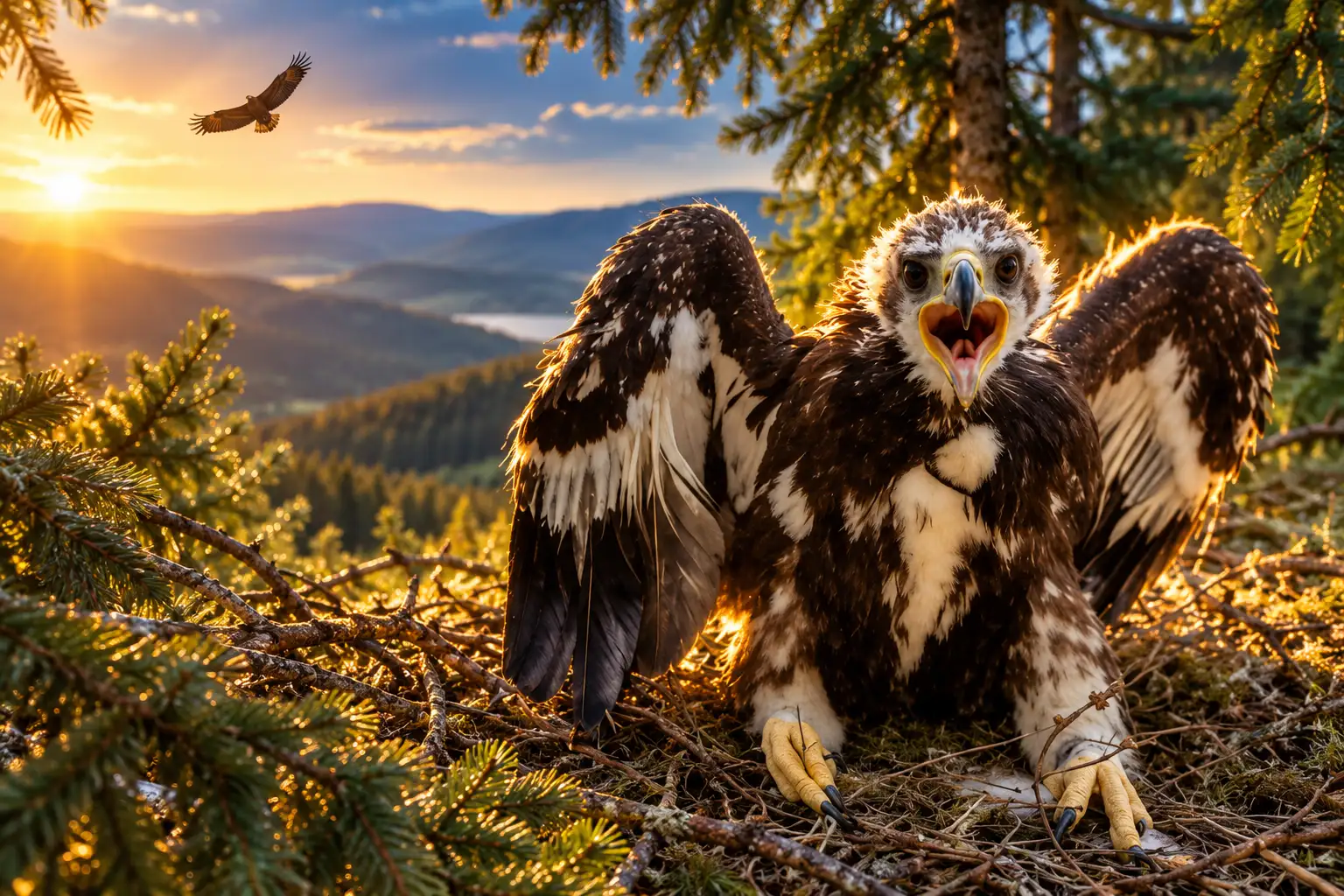
Southern Scotland’s golden eagle flock has climbed above 50 birds, and Dame Judi Dench has named one of summer 2026’s five fledglings GoldenEye. Four of those chicks hatched from nests tied to eagles moved south by the South of Scotland Golden Eagle Project, now run by the charity Restoring Upland Nature.
That second generation is the fact England is already buying. The same charity is leading a northern England recovery brief with Forestry England, after Defra put extra money behind a possible release of young birds from 2027.
Four of Five Fledglings Come From Moved Bloodlines
The 2026 season produced five fledged chicks across Dumfries and Galloway and the Scottish Borders. Four came from nests that included birds translocated from stronger Highland stocks. The fifth came from an established local pair with no project parent.
GoldenEye is the chick Dench named, a nod to her role as the first female M in the James Bond film of the same name. His father, Shine, was moved south in 2021. His mother, Amelia, fledged that same year from the last original golden eagle nest still left in the Scottish Borders. Project chiefs say the chick is the grandchild of a 36-year-old male that fledged in Galloway in 1990 and is the oldest known living wild golden eagle in Europe.
Many years ago, as the first female M, I instructed James Bond to ‘find GoldenEye’ and here he is.
Dame Judi Dench, naming the 2026 fledgling
She called the recovery a real triumph over adversity and wished the bird a long life soaring in southern skies. Actor Sam Heughan, co-owner of the Galloway Distillery, named another fledgling Sassy after his Sassenach whisky. Sassy left a nest near Moffat. His mother, Emma, was translocated in 2021. His father, Keith, is a local bird that hatched in Galloway in 2018. The same pair produced Princeling in 2025, the first chick to fledge from a translocated eagle’s nest, named by Sir David Attenborough.
Heughan said it was a great honour to name a bird that stands for hope for the species in the south of Scotland, and that he hoped Sassy might even fly over the Galloway Distillery.
THE 2026 FLEDGLINGS
- GoldenEye: Named by Dame Judi Dench; father Shine moved in 2021, mother Amelia from the last original Borders nest.
- Sassy: Named by Sam Heughan; Emma (moved 2021) and Keith (Galloway 2018), younger brother of Princeling.
- Beaky Jr: First chick from a translocated pair on a managed grouse moor; mother Beaky moved in 2018, father Skan in 2019.
- N47: Mother Dora moved in 2022 from a Perthshire grouse moor; later treated at a Scottish SPCA hospital for a rare bacterial infection.
- Local pair chick: The only 2026 fledgling with no translocated parent.
Dr Cat Barlow, chief executive of Restoring Upland Nature, said seeing four young birds fledge from the nests of eagles the project had moved south was a hugely significant milestone in restoring the species to southern skies.
Why Highland Birds Did Not Colonise the South
Golden eagles were once common across southern Scotland as top predators. Changes in land use and long persecution cut them to a handful of pairs. Numbers rose across much of the rest of Scotland, but that growth stopped at the Central Belt. Birds from the stronger northern stocks were reluctant to move south, and the isolated pairs in the Borders and Dumfries and Galloway were at risk of disappearing in the same way the species vanished from England and Wales.
NatureScot’s last national survey found 508 breeding pairs in 2015, enough for the country as a whole to pass a favourable-status target. The same agency still lists illegal killing in the eastern Highlands, poor prey in parts of the west, and a lack of young birds reaching the Southern Uplands as the reasons the recovery is uneven. Police have treated some tagged losses in the south as suspected persecution. The 2026 brood does not wipe that record out. It does show that, where birds are left alone and prey is there, moved eagles will settle and breed.
Custom Aviaries, Then a Hatch Left Open
This was framed as reinforcement, not a full reintroduction. A few golden eagles had clung on in the south, unlike earlier work with white-tailed eagles, ospreys and red kites. Guided by the Scottish Code for Conservation Translocations, the team first judged whether the ground could hold a larger flock. That work said the south could support up to 16 breeding pairs. NatureScot then licensed a five-year translocation.
Donor chicks came from Highland and Islands eyries, with specialist vets on the collection. Teams took birds only from only nests with two chicks, leaving one young eagle in its home territory. The birds were five to eight weeks old, already feathered and able to feed from food put out for them. Each carried a satellite tag and a colour ring readable in the field.
HOW THE SOUTH WAS RESTOCKED
- Early summer 2018: First eaglets arrive at custom aviaries in the Southern Uplands and spend about two months there before release into the Moffat Hills.
- 2019 to 2023: Further juvenile translocations, plus a licensed trial of sub-adult birds aged between six months and three years.
- Through each first winter: Carrion is put out in view of the aviaries so the young birds stay south.
- 2025: Princeling fledges, the first chick from a translocated eagle’s nest, named by Sir David Attenborough.
- Summer 2026: Five chicks fledge, four of them from nests tied to moved birds, and the flock is reported at more than 50.
Restoring Upland Nature says 28 juvenile golden eagles came south from the Highlands and another 18 sub-adults were moved in the trial, 46 birds in all. Hatches on the aviaries were opened and the eagles left of their own accord. Historic eyrie sites were built up for later breeding attempts. Original partners included the Southern Uplands Partnership, Scottish Land and Estates, RSPB Scotland, NatureScot, Scottish Forestry and the Buccleuch Group, after more than 11 years of groundwork before the first 2018 release.
Beaky Jr on a Working Grouse Moor
One 2026 chick sits at the centre of the land-use argument that will follow the birds into England. Beaky Jr is the first young eagle to fledge from a translocated pair on a managed grouse moor in the southern uplands. His mother was moved from the Highlands in 2018. His father followed in 2019. Restoring Upland Nature says the moor’s gamekeepers played a vital role and will give the bird its proper name later.
N47 carries grouse-moor blood too. His mother, Dora, was translocated in 2022 from keepered ground in the Perthshire hills and had been named by a primary school. After fledging he was taken to a Scottish SPCA hospital with what the project described as an incredibly rare bacterial infection. Staff hoped he would recover enough to fly again.
Individuals from all walks of life, including many who live and work in the landscapes they share with golden eagles such as gamekeepers, farmers and forestry workers, have responded positively to the project and played an important part in its success.
Michael Clarke, chairman, Restoring Upland Nature
That is the piece of the Scotland story that is hardest to copy. Persecution on driven grouse ground is still named by raptor workers as a brake on eagles in the central and eastern Highlands. In the south, a keepered moor has now fledged a project chick. England’s consultation will have to live in that tension, not around it.
Southern Scotland Now Holds More Than 50 Eagles
Restoring Upland Nature now reports more than 50 individual golden eagles in the south, the highest number recorded there in 300 years. They occupy 18 active ranges. The project began with 3 nesting pairs. Around 80% of the translocated birds are still alive and living in the region, a survival rate that is separate from this summer’s four-of-five brood split.
Eighteen occupied ranges already sit above the pre-move estimate of 16 possible breeding pairs. Occupied ranges are not the same as proven breeding pairs, and the charity notes the count can change by the month. New territories still have to prove they can raise young. The 2026 four-from-moved-nests season is the first clear sign that some of them can.
SOUTHERN SCOTLAND GOLDEN EAGLES
| Measure | When the project began | Reported in 2026 |
|---|---|---|
| Nesting pairs or ranges | 3 nesting pairs | 18 active ranges |
| Individual birds | A handful of isolated birds | More than 50 |
| Young fledged in-year | A failing remnant | 5 chicks, 4 from moved bloodlines |
| Translocated birds still alive | Not yet released | Around 80% |
Satellite tags show the recovery is already leaking across the border. More than 25 translocated eagles were recorded south of the Scotland-England line at least once between 2020 and 2026, with some staying up to six weeks before heading north again. In 2025, project staff confirmed birds in Northumberland and further afield. It is still too early to say whether any will settle.
Eight English Upland Zones Are on the List
On 12 April 2026, Environment Secretary Emma Reynolds approved £1 million of extra funding to explore bringing golden eagles back to England. The last resident bird died in the Lake District in 2016. Its mate had died 12 years earlier. Government papers say the species was once widespread, mentioned more than 40 times by Shakespeare, and was all but wiped out in the Victorian era, more than 150 years ago. A golden eagle has a 2-metre wingspan and takes rabbits, hares, birds and carrion.
Restoring Upland Nature will lead the English work with Forestry England, copying the southern Scotland method of talking first to keepers, farmers, foresters and estates. Reynolds said the government would work with partners and communities to make the golden eagle a feature of English landscapes again. Forestry England chief executive Mike Seddon said the extra Defra money would let the partners take time to build support among local people, landowners and land managers.
Golden eagles are coming back to England 🦅
Environment Secretary @EmmaforWycombe has approved an additional £1m of funding to explore a reintroduction programme for one of our most iconic birds.
Read more: https://t.co/5HZwSR776R
🎥: Restoring Upland Nature pic.twitter.com/N76wNucEZT
— Defra UK (@DefraGovUK) April 12, 2026
A Forestry England study, done with Forest Research and Natural Research, found England can hold golden eagles again. It named eight areas of ecological potential.
THE EIGHT RECOVERY ZONES
- The Cheviots: The most likely first path south from the Scottish flock.
- North Pennines: A core upland block once birds clear the Cheviots.
- Lake District: Home of England’s last resident pair.
- Yorkshire Dales: A further step south and east through northern hills.
- Bowland: Already visited by tagged birds from the Scottish project.
- South Pennines: Listed as suitable ground if the northern zones fill.
- North York Moors: An eastern upland option in the same study.
- The South West: The only zone well outside northern England.
Forestry England’s research says Scottish birds could be seen across northern England within 10 years, but breeding would take longer. A planned reintroduction of juveniles aged six to eight weeks could start as early as 2027, and only after consultation. Any release, the agency says, would wait on studies and on strong support from the people who live and work on that ground. Barlow said the English brief was a chance to copy the southern Scotland approach, listen first, and make sure recovery works for the people who manage the hills.
The celebrity names will travel. The test that matters for the English uplands is the quieter one already on the ground in the Borders: moved birds have paired, a grouse moor has fledged a project chick, and more than 50 golden eagles now hold 18 ranges in a landscape that had three nesting pairs when the aviaries first opened.
Frequently Asked Questions
Why Were Golden Eagles Moved to Southern Scotland?
Northern stocks were not topping up the south on their own, because the Central Belt and lowlands act as a barrier to young birds dispersing. The south still had a remnant, so the work was designed as reinforcement of an existing population rather than a from-scratch reintroduction of the kind used for white-tailed eagles, ospreys and red kites.
How Were Donor Eaglets Chosen and Released?
Chicks were taken at five to eight weeks from Highland nests that already held two young, so one sibling stayed behind, then housed for about two months in confidential aviaries. After release, feeding sites in view of those aviaries were stocked with carrion through the first winter, and old eyrie ledges were rebuilt to invite later nesting.
When Did England Lose Its Last Resident Golden Eagle?
The last resident died in the Lake District in 2016, after its mate had died 12 years earlier. England’s breeding population had already been destroyed in the Victorian era, more than 150 years before the current recovery brief, which is why the Forestry England study treats a helping hand as a live option beside slow natural spread from Scotland.
Could Golden Eagles Return to England Without Being Released?
Yes, in principle. Tagged Scottish birds have already crossed the border, and the Cheviots are listed as the most likely path. Forestry England says a fully natural return that leads to breeding and then to expansion across the north could still take decades, which is the reason a carefully planned release is on the table as a way to shorten that wait.
What Do Golden Eagles Eat in These Uplands?
Diet shifts with ground and prey, but the birds take rabbits, hares, birds and carrion, and in the Highlands they also help hold down foxes and crows. That mix is why land managers in both southern Scotland and the proposed English zones keep asking how a breeding pair would sit alongside sheep, grouse and forestry, and why the Scotland project put keepers and farmers in the room before the first hatch was opened.

Final Fantasy Resonance Turns a Dead Gacha Into HD-2D

PHP2Shell Forced Sites Offline While Exploits Stalled

Kindle+ Folds AI Audiobooks Into the Page-Read Fund

Chip Stocks Fall as the Bond Rally Cheapens AI Spend

Comcast’s Record Odyssey Quarter Doubles as the Exit

Microsoft 365 Auth Fault Took Down Exchange and Teams

Xbox Caps Game Pass Cloud Gaming at 15 Hours

OpenClaw 2.0 Ships a Team Workplace With Host-Trust Defaults

OpenAI Unveils GPT-6 Astra With a Critical Cyber Label

Diesel Breaks Its Record as the White House Claims Credit
-
 NEWS2 months ago
Microsoft 365 Auth Fault Took Down Exchange and Teams
-
 GAMING2 months ago
Xbox Caps Game Pass Cloud Gaming at 15 Hours
-
 NEWS2 months ago
OpenAI Unveils GPT-6 Astra With a Critical Cyber Label
-
 NEWS2 months ago
OpenClaw 2.0 Ships a Team Workplace With Host-Trust Defaults
-
 BUSINESS2 months ago
Diesel Breaks Its Record as the White House Claims Credit
-

 LIFESTYLE2 months ago
Squishy Dumpling Toys Recalled After Hiding Illegal Water Beads
-

 BUSINESS2 months ago
ChargePoint Stock Rally Prices Wilmer’s Three-Year Cash Plan
-

 AUTO2 months ago
Tesla Puts Its Wheel-Free Cybercab on Austin Streets