
BUSINESS
A Diesel Ban Would Park America’s Shortage in Mexico
US consumer sentiment slipped again in September as diesel hit $6.50 a gallon, and a threatened export ban would shift that shortage onto Mexico and Europe.

US consumer sentiment slipped again in September as fuel costs climbed, and the White House answered with a threatened diesel export ban. The University of Michigan’s Surveys of Consumers said the September final print fell less than four index points from August’s 51.7, the lowest reading in four months and 15% below January. Year-ahead inflation expectations jumped to 4.6% from 4.0%, the highest since June and well above the 3.4% reading in February before the Iran war began.
That is the domestic political problem. The policy reply, a clamp on diesel leaving US ports, would try to manufacture a cheaper gallon before November by parking the shortage with the customers who already buy the fuel, first Mexico, then a winter-short Europe.
Fuel Prices Dragged Sentiment Back Down
Joanne Hsu, director of the Michigan survey, has spent 2026 watching kitchen-table prices, not the stock market, set the mood. The May final print of 44.8 sat just below the June 2022 trough after Strait of Hormuz disruptions lifted gasoline, and even June’s rebound to 49.5 left the index 13% below February and nearly 20% below a year earlier. For a third straight month in June, more than half of respondents named high prices as a weight on their own finances.
THE MICHIGAN PRINTS
- May 2026: The index hit 44.8, just under the June 2022 trough, as Hormuz supply shocks lifted pump prices.
- June 2026: A final reading of 49.5 still left sentiment 13% below February, before the Iran conflict began.
- August 2026: The official final print was 51.7, with current conditions at 51.9 and expectations at 51.5.
- September 2026: The final survey, released September 25, fell less than four points from August, the lowest in four months and 15% below January.
The September interviews split along party lines in a way that should worry anyone counting on a late bounce. After large declines that month, Republican sentiment stood 20% below January; Democrats were down 13% over the same stretch. Views of current and year-ahead personal finances both weakened about 10%, and the short-run outlook for business conditions dropped on renewed worry that elevated fuel prices and trade fights would pass through to the rest of the economy. Long-run inflation expectations ticked up to 3.4%, ending three months at 3.3% and remaining above the 2.8% to 3.2% band seen through 2024.
Jobs figures have been weaker than expected, and a Federal Reserve governor said on September 28 that AI-related demand would add inflationary pressure in the months ahead. Hsu’s June interviews already had a taste of that split: the share of consumers who brought up AI unprompted rose from 2% a year earlier to about 11%, and those who mentioned it scored about 10 points lower on the expectations index than those who did not. A much larger 25% volunteered comments about tariffs.
What a U.S. Diesel Ban Would Cost Abroad
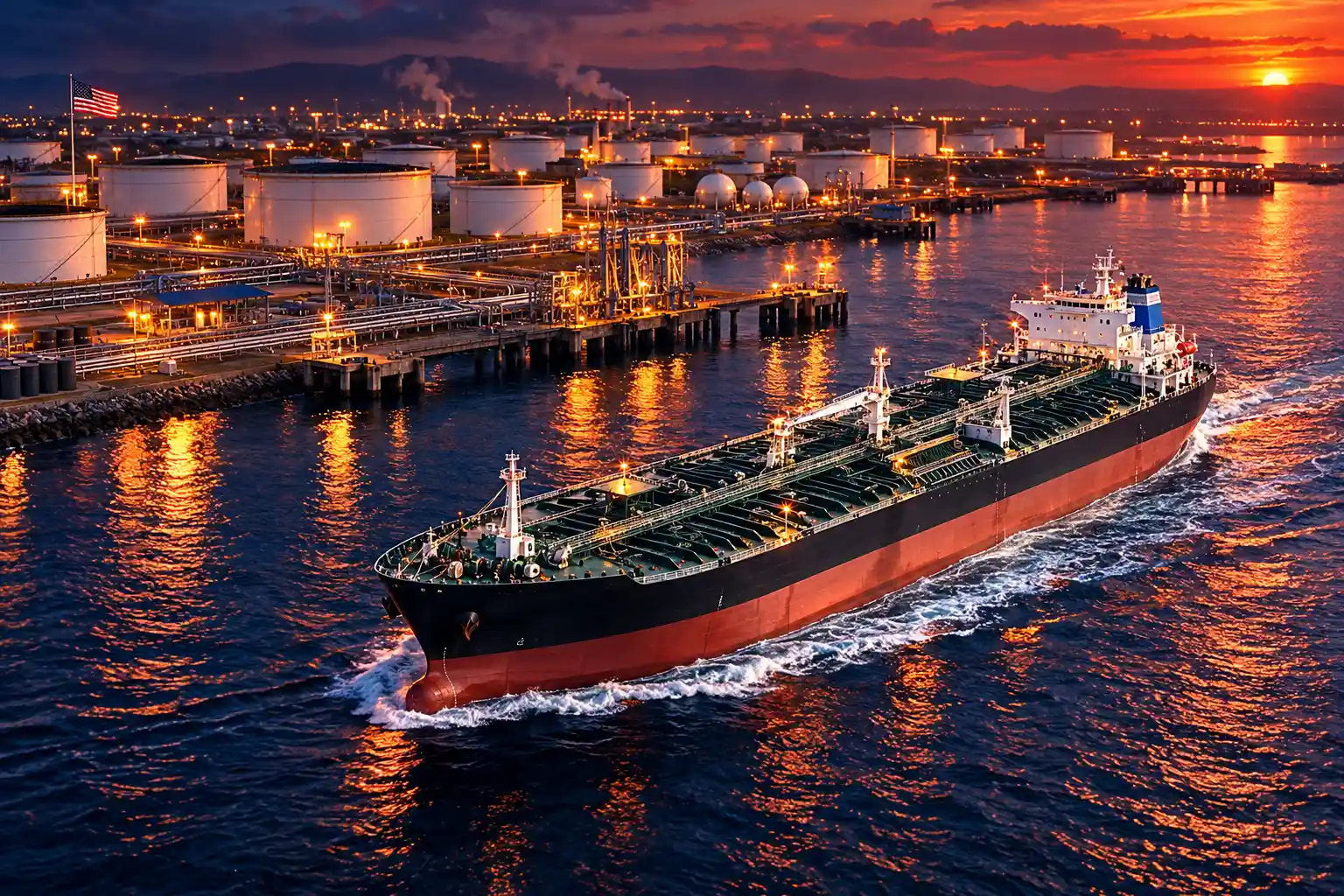
A US diesel export ban would, in the first weeks, do what its backers want at home. Goldman Sachs, in a September 26 note, said each week of a full ban would knock about 25 cents off average US retail diesel, just under 4% from the current $6.50 a gallon, as long as storage tanks still had room. The bank called restrictions, including quotas, a very plausible outcome, though not its base case. The same note said each week of a ban would lift European wholesale diesel by about $3 a barrel, just under 2%, before any release from Europe’s own emergency stocks, which Goldman said might offset about half of that move.
GOLDMAN’S PER-WEEK BAN MATH
| Market | While US tanks have room | Once diesel storage fills |
|---|---|---|
| US retail diesel | About -25 cents a gallon each week, just under 4% off $6.50 | The cheap-diesel phase ends as refiners face pressure to cut runs |
| US retail gasoline | Little immediate relief, because the three fuels are made together | About +30 cents a gallon each extra week of the ban |
| Europe wholesale diesel | About +$3 a barrel each week, just under 2% | Strategic diesel releases might offset about half of that increase |
The longer the clamp lasts, the more it stops being a diesel story. Diesel, gasoline, and jet fuel come largely from the same barrel, so a glut of diesel that cannot leave the country eventually pushes refiners to cut total output. Goldman said that once tanks are full, each extra week would put about 30 cents a gallon of upward pressure on US retail gasoline, and that after a ban was lifted, US diesel would reconnect with prices elsewhere, rising at home and easing abroad.
Daan Struyven, Goldman’s co-head of global commodities research, put the mechanism in one line on television.
All the things equal, lower diesel prices would incentivize refiners to reduce their production. And because gasoline and diesel are usually produced together as a bundle with some flexibility, it would likely reduce the availability of gasoline.
Daan Struyven, co-head of global commodities research, Goldman Sachs, on Bloomberg Television
A former Bush administration economic adviser, speaking about the broader White House push to swat down individual prices, said the Biden years already tried this kind of price-by-price intervention and that it does not solve the economic problem. A Council on Foreign Relations expert said a more lasting turnaround is simply not something anyone can do in a month.
Mexico’s 220,000 Barrels a Day
If Washington closes the dock, the first buyer in line is not a swing refinery in Europe. It is Mexico. In 2025, US distillate exports to Mexico averaged about 220,000 barrels a day of distillate, 17% of the total and more than any other country, even after an 18% drop from 2024, according to the US Energy Information Administration. Distillate, chiefly diesel, is the largest US transportation-fuel export by volume and the third-largest petroleum export after crude oil and propane. Mexico was also the top destination for US gasoline and a leading taker of jet fuel.
WHERE 2025 DISTILLATE EXPORTS WENT
- Mexico: About 220,000 barrels a day, 17% of US distillate exports and the largest single destination, down 48,000 barrels a day from 2024.
- Chile: The second-largest destination, with volumes up about 16,000 barrels a day, or 15%, from 2024.
- Brazil: 103,000 barrels a day, more than double 2024 but far below the nearly 200,000 barrels a day averaged in 2019.
- Netherlands: 98,000 barrels a day, up 5,000 barrels a day, the most since 2015, as Europe kept taking more US diesel than it did before 2022.
- United Kingdom: A record 89,000 barrels a day, above the 86,000 barrels a day record set in 2024.
The 2026 flow has not faded. EIA’s monthly ultra-low-sulfur shipments to Mexico reached 283,000 barrels a day in June. Banco Base, using EIA export figures of about 220,000 barrels a day in the first half of 2026 against Pemex output of 270,000 barrels a day, put the US share of that combined supply at nearly 45%. Separate energy-ministry accounting has put US barrels at more than 40% of Mexican diesel demand, and about 97% of the diesel Mexico does import already comes from the United States. The peak was worse: in 2021 the US share of Mexican diesel needs hit 70%.
President Claudia Sheinbaum has said the Olmeca refinery at Dos Bocas makes the country self-sufficient in diesel. The export meters disagree. Francisco Barnés de Castro, a former Mexican energy deputy, said that if the United States limited shipments, Mexico would have reserves for less than a week and should lock in cargoes, raise storage, and add suppliers, including Canada. Alejandro Montufar, chief executive of the fuel consultancy PetroIntelligence, described what a cutoff would look like on the ground.
An interruption of U.S. exports would force Mexico to replace part of supply through purchases from other markets, with longer transit times and higher logistical costs. A prolonged interruption could cause supply disruptions and price increases, with additional effects on transport, productive activity and inflation.
Alejandro Montufar, CEO, PetroIntelligence
Europe Goes Into Winter Short of Diesel
Europe is the other hidden ledger. Distillate exports to the continent stayed stronger in 2025 than they were before 2022, after the EU ban on Russian distillate imports in December 2022 rerouted trade and sent discounted Russian barrels toward Brazil instead. The United Kingdom’s record 89,000 barrels a day and the Netherlands’ 98,000 barrels a day are what that rerouting looks like in a shipping table. European energy ministers were due to meet on September 30 already fearing shortfalls of natural gas and diesel ahead of winter, with tanker curbs through the Strait of Hormuz having left gas stocks lower than the usual summer refill, and with Asia bidding for the same cargoes.
A US export ban would land on that thin cushion. Goldman’s $3-a-barrel weekly lift is the clean number; the bank also said emergency diesel releases in Europe might cancel about half of it. One analyst has warned that European politicians may come to see dependence on US energy not only as diversification but as a specific political risk. El Niño, which has been hard on much of the globe, is the thin offset some experts cite, because it could raise European renewable output and trim gas demand. That does not fill a diesel tank in October.
The United States is the world’s largest diesel producer and exporter. Total US exports of gasoline, diesel, and jet fuel averaged 2.4 million barrels a day in 2025, about the same as 2024, and distillate accounted for more than half of that stream and for the entire annual decline, a drop of 28,000 barrels a day, or 2%, that still left volumes below 2019. Those are not spare barrels. They are the release valve that keeps a US diesel price tied to the world price rather than to a sealed-off domestic glut.
Goldman Sees Gasoline Rising After Tanks Fill
The coalition for a ban is real, and it is not sitting in Mexico City or Rotterdam. On September 20, Senator Chuck Grassley of Iowa pointed at a local pump price of $6.57 a gallon and asked why President Donald Trump would not embargo diesel exports the way presidents in the 1970s embargoed farm products when food prices ran hot. High diesel prices, he wrote, are killing farm income.
W diesel $6.57 in Iowa why doesn’t Pres Trump put an embargo on diesel exports like presidents in the 70s put embargoes on ag products bc food prices were inflated. High diesel prices ARE KILLING FARMERS INCOME #cornwatch #soybeanwatch
— Chuck Grassley (@ChuckGrassley) September 20, 2026
That is the political logic of a clamp: keep the extra distillate at home, knock 25 cents a week off the trucker’s ticket, and hope the November ballot is kinder. Trump has reiterated the threat as a way to tame soaring domestic prices. The same arithmetic that cheers an Iowa farmer is the one Struyven flagged. A short diesel dip that fills tanks and then forces refiners to cut runs does not stay a diesel dip. It becomes a gasoline and jet-fuel problem, which is the last thing a household survey already obsessed with pump prices needs to see.
The 30-year Treasury yield briefly hit its highest level since 2002 as traders put a 90% chance on a Fed rate hike by year-end, and the 10-year yield on September 28 returned to highs not seen since 2007, with oil, sticky inflation expectations, and heavy government borrowing all in the mix. An S&P Global Ratings analyst said the energy-price shock could continue through 2027. Inflation data due September 30 was set to feed that argument either way. None of those market prices move because a dock is closed for a news cycle.
$5,000 Checks Meet a Bond Market Already Moving
The diesel threat is only one tool in a pre-election kit. The White House has also used bond buybacks and promises of $5,000 checks to try to staunch the economic bleeding before November. Those are transfers and balance-sheet operations. They do not add diesel molecules, and they do not reverse a Michigan index that, on Hsu’s own accounting, is still being dragged by prices people pay every week.
THE PRE-NOVEMBER TOOLKIT
- Diesel export clamp: A proposed ban, with a 90-day pause among the versions discussed, aimed at record domestic fuel prices and at the $6.50 to $6.57 gallon now showing up in models and in Iowa.
- $5,000 checks: Promised household payments that can lift cash in a month and still leave the fuel bill, and the sentiment survey, on the old path.
- Treasury buybacks: Bond operations meant to steady a market that has already pushed long yields to levels last seen in 2002 and 2007.
Mexico would have to chase replacement barrels on longer routes. Europe would walk into winter bidding against Asia for cargoes that no longer sail from the Gulf Coast. US refiners, if the clamp lasted past the first full tanks, would have reason to cut the whole slate, diesel, gasoline, and jet together. Households filling up in Iowa would get the first-week discount Grassley wants, then the gasoline blowback Goldman mapped, while a Fed already talking about AI demand as an extra inflation source kept the hike odds high. The midterm calendar is November. The survey’s next prints will land on the same fuel prices the ban is trying to hide, unless the barrels stay in the system instead of being locked in a tank.

Final Fantasy Resonance Turns a Dead Gacha Into HD-2D

PHP2Shell Forced Sites Offline While Exploits Stalled

Kindle+ Folds AI Audiobooks Into the Page-Read Fund

Chip Stocks Fall as the Bond Rally Cheapens AI Spend

Comcast’s Record Odyssey Quarter Doubles as the Exit

Microsoft 365 Auth Fault Took Down Exchange and Teams

Xbox Caps Game Pass Cloud Gaming at 15 Hours

OpenClaw 2.0 Ships a Team Workplace With Host-Trust Defaults

OpenAI Unveils GPT-6 Astra With a Critical Cyber Label

Diesel Breaks Its Record as the White House Claims Credit
-
 NEWS2 months ago
Microsoft 365 Auth Fault Took Down Exchange and Teams
-
 GAMING2 months ago
Xbox Caps Game Pass Cloud Gaming at 15 Hours
-
 NEWS2 months ago
OpenAI Unveils GPT-6 Astra With a Critical Cyber Label
-
 NEWS2 months ago
OpenClaw 2.0 Ships a Team Workplace With Host-Trust Defaults
-
 BUSINESS2 months ago
Diesel Breaks Its Record as the White House Claims Credit
-

 LIFESTYLE2 months ago
Squishy Dumpling Toys Recalled After Hiding Illegal Water Beads
-

 BUSINESS2 months ago
ChargePoint Stock Rally Prices Wilmer’s Three-Year Cash Plan
-

 AUTO2 months ago
Tesla Puts Its Wheel-Free Cybercab on Austin Streets