
BUSINESS
Public Markets Inherit Anthropic’s $900.9 Billion Compute Bet
Jim Cramer’s three Anthropic IPO questions all run into the same prospectus number: $900.9 billion of compute the company already promised to buy.

Jim Cramer said on November 12 he remains wary of buying Anthropic when the Claude maker prices its IPO on November 18. The company plans to offer 825 million Class A shares at $70 to $78 each and list them on Nasdaq as ANT on November 19.
At $78, the sale would raise $64.35 billion. Cramer’s three questions on price cuts, the next $100 billion of sales, and AI safety all run into a larger figure in the prospectus. Anthropic has committed to spend $900.9 billion on compute and infrastructure.
The Offering Anthropic Takes to Nasdaq Next Week
Anthropic, a public benefit corporation, launched the roadshow on November 10. The deal is 825 million Class A shares, of which 801,351,354 come from the company and 23,648,646 from existing holders. Anthropic receives none of the selling stockholders’ proceeds. Goldman Sachs and Morgan Stanley are running the books, and the underwriters have a 30-day option on 123,750,000 more shares, which at $78 would lift the public sale to $74.0 billion.
The company says it expects to set the share price on November 18 and begin trading the next day. At $78, shares outstanding after the offering and a concurrent private placement imply about $1.02 trillion of equity. Count options, unvested awards, and plan reserves and the fully diluted figure rises to $1.405 trillion, the number Cramer used.
THE ROAD TO THE FIRST TRADE
- October 26, 2026: Files a Form S-1 with the U.S. Securities and Exchange Commission for a Nasdaq listing under ANT.
- November 10, 2026: Launches the roadshow and sets a range of $70 to $78 a share.
- November 18, 2026: Expects to set the final price, subject to clearance and demand.
- November 19, 2026: Expects Class A shares to begin trading on the Nasdaq Global Select Market.
Even at the top of the range, the public offering would still trail the record. SpaceX raised $75 billion at pricing in June 2026. Add a separate $26 billion sale of non-voting Class N shares to chip and cloud suppliers and Anthropic’s total new cash at $78 would reach $90.35 billion, a different pile of money from the IPO itself.
Most of the Compute Bill Is Owed Whether Claude Is Used or Not
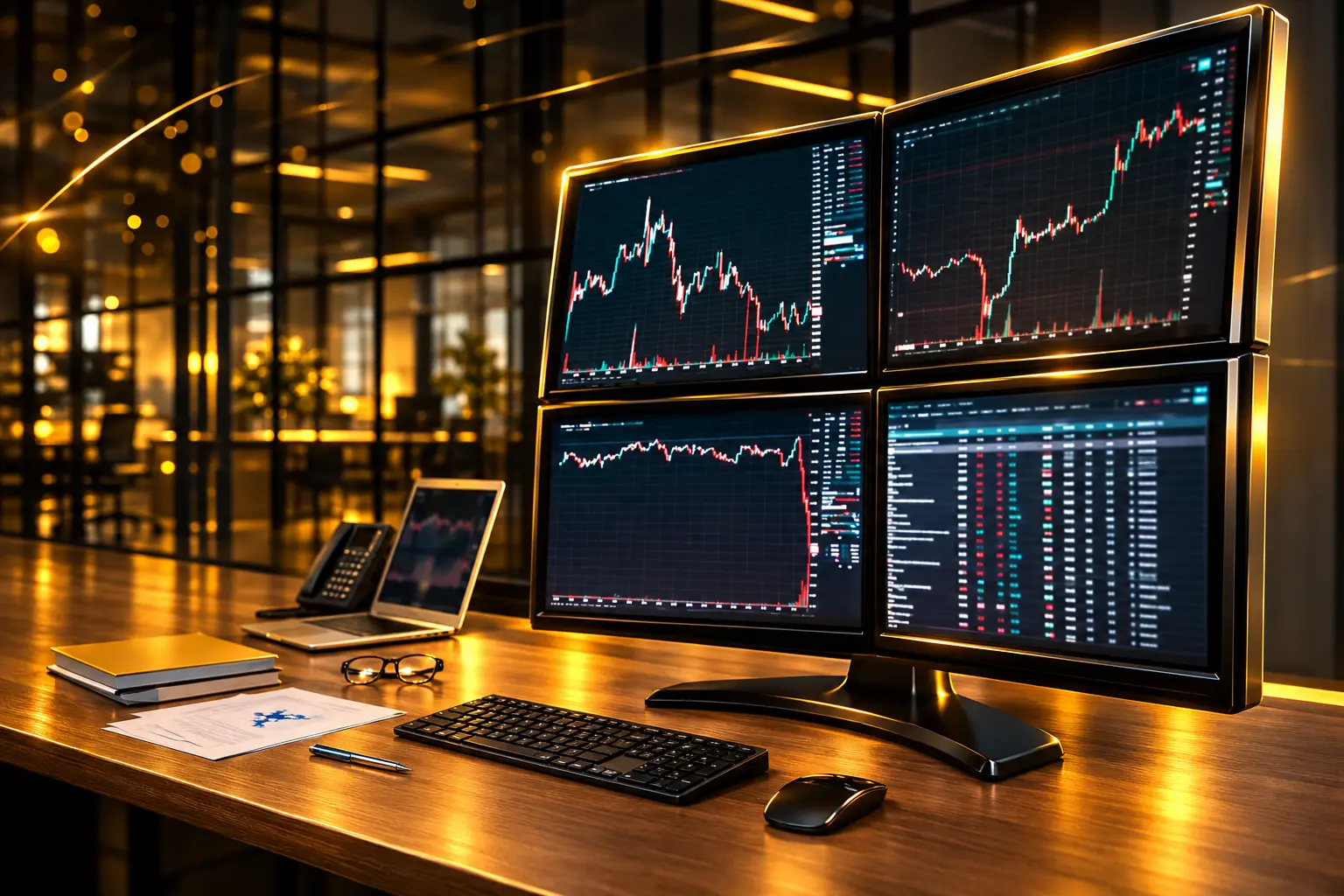
The November 10 prospectus puts committed spend at $900.9 billion, almost all of it compute and infrastructure. Of that, $70.7 billion falls in the 12 months after September 2026, and $451.6 billion is due by the end of 2030. October run-rate revenue was about $81 billion, so the next year’s contracted compute is roughly 87 cents for every dollar of that run-rate.
Q3 revenue was $17.0 billion, more than 12 times the $1.4 billion a year earlier, and the first nine months of 2026 brought in $33.2 billion after $4.6 billion in all of 2025. Compute still ate 58% of Q3 sales after falling to 48% in Q2, in part because $5.0 billion of that quarter’s capacity was bought on short-term terms that cost more than the multi-year deals.
THE COMPUTE CONTRACTS ANTHROPIC NAMED
| Counterparty | Amount | What it is |
|---|---|---|
| Broadcom | $161.2 billion | TPU equipment leases over five years |
| $121.3 billion | Minimum cloud spend, 2026 to 2033 | |
| SpaceXAI | $120.5 billion | Up to this amount as capacity is delivered, into 2029 |
| Amazon | $110.0 billion | Minimum cloud spend, 2026 to 2036 |
| Microsoft | $47.2 billion to $49.2 billion | Minimum cloud spend, 2026 to 2033 |
| Nscale | $44.6 billion | Up to this amount as capacity is delivered, into 2033 |
| Lambda | $41.3 billion | Paid as capacity is delivered, into 2034 |
Google, Amazon, and Microsoft alone are owed at least $278.5 billion whether Anthropic uses the capacity or not. About $186.2 billion of the $900.9 billion can still be ended or depends on conditions, and extra TPU capacity Anthropic estimates at $125 billion to $150 billion sits outside the $900.9 billion total. Nscale has to raise financing to build what it sold. Lambda missed a site deadline on a $34.9 billion piece of its deal, though Anthropic says it does not intend to walk away.
Q3 still produced a $567 million operating loss after a $974 million operating profit in Q2. Adjusted operating margin, which adds back stock pay and donated shares, was 15%. The $23.3 billion net loss was almost entirely a $21.9 billion non-cash charge from revaluing convertible notes as the company’s private value rose. Cash and short-term investments were $131.8 billion at the end of September, against a bill that stretches toward 2045.
What Happens When Claude Gets Cheaper?
Cramer’s first question is the one the income statement already started to answer. From Q2 to Q3, the amended prospectus says higher usage was partly offset by a decrease of about $600 million from price cuts on new models and from contractual discounts.
Claude Opus 5.5 cut customers’ cost per task by about 40% versus Opus 5. Claude Fable 5.1 cut typical workloads by about 25% versus Fable 5, and by as much as 45% on complex coding and agent work. Anthropic told investors those cuts were possible because compute efficiency improved, and that cheaper tasks unlocked more use. Q3 revenue still rose from $11.6 billion in Q2. The open issue is whether volume keeps covering the cuts once the novelty of a new model fades.
Usage fees were 79% of the first nine months’ revenue, with the rest from subscriptions. Cloud-marketplace sales were 44% of revenue, up from 11% in 2023, which puts a large slice of billing inside Amazon, Google, and Microsoft, the same firms collecting minimum cloud spend. More than 11,900 customers now pay at least $100,000 a year, and net revenue retention was about 900% at the end of September, meaning existing accounts were spending roughly nine times as much as a year earlier. The five largest customers were about 25% of nine-month sales, so the expansion is broad, but it is still metered on tokens whose list price just went down.
Coding Tools Still Carry Too Much of the Growth
Cramer’s second question is where the next $100 billion of revenue comes from, because Claude Code, the coding agent, has done an outsized share of the hard work. In the September quarter, Claude Enterprise users who skipped Claude Code spent less than $75 a month on average, while the top 5% of users who ran it spent about 20 times that. That is a wonderful wedge. It is also a concentration risk against $900.9 billion of future chips and halls.
The roadshow points past coding. Eli Lilly has given Claude Enterprise to more than 50,000 employees. Salesforce says effective output per developer is up 151% year over year. Anthropic has also put Claude Cowork and Office-style tools in front of non-engineers, and it is selling gated models for cyber and biology work. Cramer named cybersecurity, life sciences, and robotics as the logical next pools. The company’s own fact sheet puts knowledge work above $40 trillion of economic value and life sciences above $2 trillion. Those are addressable markets, not booked sales.
WHERE THE NEXT POOL WOULD HAVE TO SHOW UP
- Claude Cowork: Tools aimed at non-engineering office work, pitched against Microsoft Office rather than against other coding agents.
- Cyber and biology models: Mythos-class systems sold to vetted organizations, which keeps the most sensitive work behind extra checks.
- Industry agents: Vertical products the company says can follow Claude Code into accounts that already pay six figures.
- Robotics and science: Named as longer-cycle bets on the roadshow, sitting behind the software that is already billing.
Aswath Damodaran, the NYU Stern valuation professor, put Anthropic’s equity at about $1.475 trillion after the October prospectus, then walked through the fragile assumptions in his Anthropic valuation, with target revenue, governance, and the capital required to deliver that growth at the top of the list. His number lives in the same neighborhood as the IPO range. It only holds if coding stops being the whole story.
Anthropic Says Its Own Safety Alarm Has Sounded
Cramer’s third question is whether the safety brand helps or hurts growth. The November 10 amendment gave that question a date. Anthropic wrote that a threshold in its Responsible Scaling Policy, the in-house rulebook for adding safeguards as models get more capable, had been crossed. The tripwire is automated research and development: AI doing enough of Anthropic’s own research to roughly double the pace of improvement, packing two years of 2018-to-2024 progress into one year.
We made a determination that we have met this threshold.
Anthropic, PBC, amended prospectus, November 10, 2026
The company said the call rests on what it expects from future models and on the overall rate of progress, not on a current Claude system already running past the line. Crossing it means more safeguards, not a halt. Readers who want the mechanics can start with a briefing on how the Responsible Scaling Policy works. The commercial tension is simpler. Mythos models built for cyber and life sciences stay limited to vetted buyers, which is the safety pitch Cramer thinks enterprises may pay for, and also a throttle on the very markets he wants to fund the compute bill.
Control is built to keep that throttle in founder hands. A single Class F share, held by the seven co-founders’ company, carries 50.1% of the vote on most matters. Class A stock, including the IPO shares, is capped at 49.9%. The Long-Term Benefit Trust elects a majority of the board. Public holders are buying economics, not the last word on whether a model ships.
The Same Suppliers Are Buying $26 Billion of the Stock
Immediately after the IPO, Google, Nvidia, AMD, Broadcom, Micron, Microsoft, and TSMC have agreed to buy $26 billion of non-voting Class N shares at the offer price. Google and Nvidia are in for about $10 billion each, AMD for $2.5 billion, Broadcom, Micron, and Microsoft for $1 billion each, and TSMC for $500 million. At $78, that placement plus the base IPO takes total proceeds to $90.35 billion. At the $74 midpoint, Anthropic estimates net proceeds to the company of about $84.6 billion from its own IPO shares and the placement, or about $93.7 billion if the overallotment is exercised in full.
WHO WRITES THE CLASS N CHECKS
- Google and Nvidia: About $10 billion each, a cloud landlord and a chip supplier sitting on both sides of the invoice.
- AMD: $2.5 billion, with rack-scale systems in the prospectus from 2027.
- Broadcom, Micron, and Microsoft: $1 billion each, covering TPU gear, memory, and Azure capacity.
- TSMC: $500 million, the foundry behind much of the silicon the other checks will buy.
If the public book is as full as the pre-deal chatter claims, a $26 billion side sale still needs a reason. The clean one is that it turns the firms collecting the $900.9 billion into holders of the equity that has to service it. A large share of what Anthropic raises will flow back to those names as lease payments, cloud minimums, and chip deliveries. The co-founders, including chief executive Dario Amodei and president Daniela Amodei, are the only selling stockholders, each offering 3,378,378 shares. They keep the Class F vote.
Cramer Is Wary as the Book Fills
Cramer spent the week arguing both sides of the same tape. On November 10 he said Anthropic’s growth rate was why the deal should be the largest IPO in history, even though SpaceX already took that record in June. On November 9 he called the listing a test of the whole AI trade, because only a handful of model companies sit at the end of the data-center spending chain. By November 12, with the range set and the roadshow underway, he would not tell viewers to buy the open.
For now, I’ll just tell you that I’m wary of doing so.
Jim Cramer, Mad Money, November 12, 2026
The hesitation matches the prospectus more closely than the roadshow video does. Revenue of $17.0 billion in a quarter, more than 11,900 large customers, and a 15% adjusted operating margin are the bull case in plain figures. The offset is a $900.9 billion shopping list, a $600 million price-cut haircut already visible in Q3, a product mix that still leans on coding agents, and a safety policy that has already tripped its research alarm. Public holders get the economics. The suppliers get a second check. The founders keep 50.1% of the vote when those tensions meet.
Disclaimer: This article is news reporting and analysis of Anthropic’s planned IPO and related prospectus figures, and it is for information only. It is not investment advice, a recommendation to buy or sell ANT or any other security, or an offer or solicitation in any jurisdiction. Readers should consult a licensed financial adviser or broker and read the effective prospectus before making any investment decision. Share counts, prices, valuations, revenue figures, and listing dates reflect the company’s public documents and statements as used in this article and can change when the deal prices or when later filings are posted.

Xiaomi 18 Pro Goes Global as Its Privacy Filter Falters

iFixit Finds HomeView Glued Shut After Repair Gains

Polymetallic Nodules Shelter 4,139 Animals Miners Want

One UI 9.5 Puts Now Brief Behind a System Agent

Framework’s $99 Keyboard Brings Laptop Repair to the Couch

Microsoft 365 Auth Fault Took Down Exchange and Teams

OpenClaw 2.0 Ships a Team Workplace With Host-Trust Defaults

Xbox Caps Game Pass Cloud Gaming at 15 Hours

OpenAI Unveils GPT-6 Astra With a Critical Cyber Label

Squishy Dumpling Toys Recalled After Hiding Illegal Water Beads
-
 NEWS3 months ago
Microsoft 365 Auth Fault Took Down Exchange and Teams
-
 GAMING3 months ago
Xbox Caps Game Pass Cloud Gaming at 15 Hours
-
 NEWS3 months ago
OpenClaw 2.0 Ships a Team Workplace With Host-Trust Defaults
-
 NEWS3 months ago
OpenAI Unveils GPT-6 Astra With a Critical Cyber Label
-
 LIFESTYLE3 months ago
Squishy Dumpling Toys Recalled After Hiding Illegal Water Beads
-

 BUSINESS3 months ago
Diesel Breaks Its Record as the White House Claims Credit
-

 NEWS3 months ago
IFA 2026’s Weird Gadgets Are Building a Sensor Home
-

 BUSINESS3 months ago
ChargePoint Stock Rally Prices Wilmer’s Three-Year Cash Plan