
BUSINESS
Jimmy Tata Asks the RBI to List Tata Sons
Jimmy Tata has asked the RBI to list Tata Sons and to block any split, saying public charitable trusts are being used as a family control block.

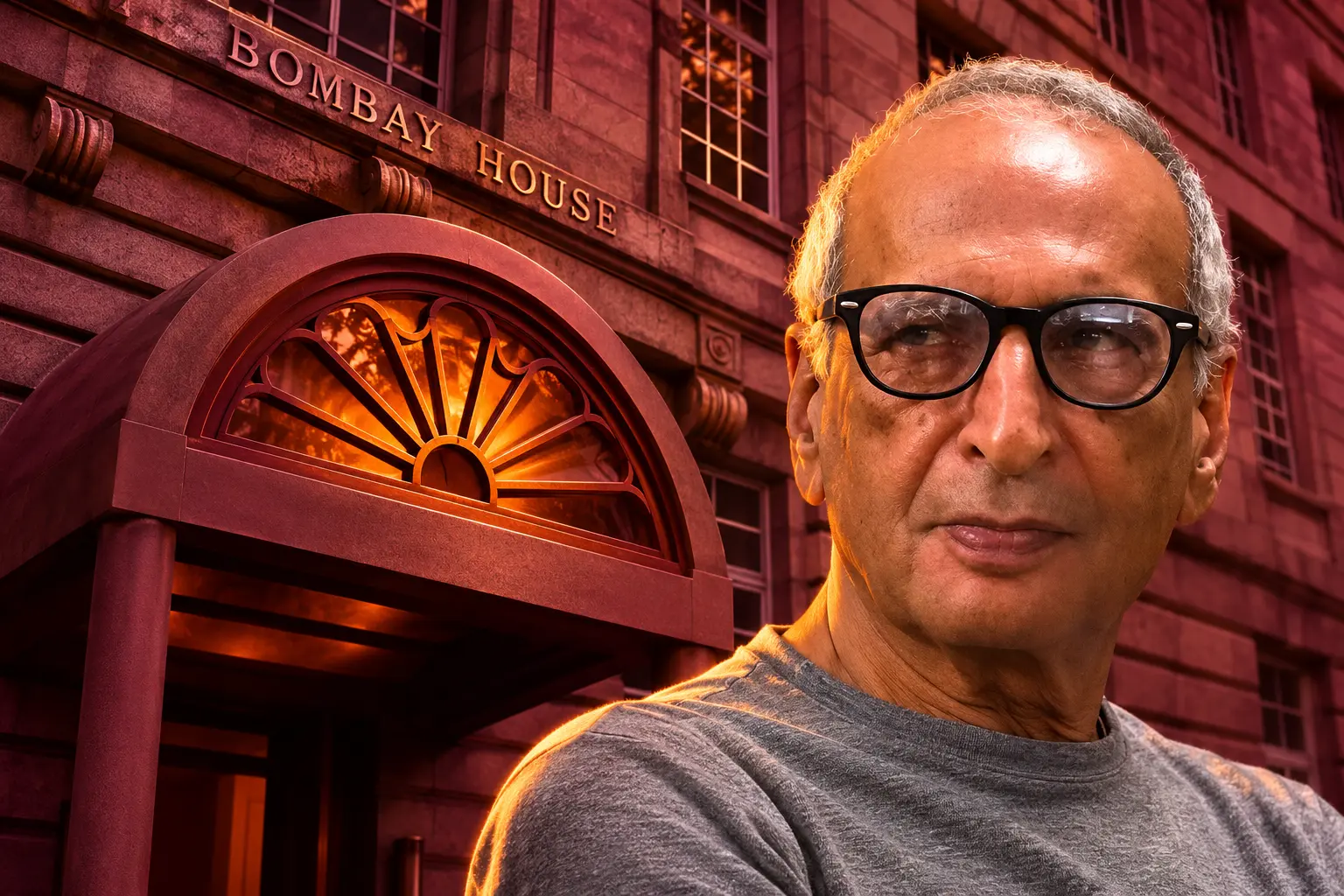
Jimmy N Tata has backed a mandatory listing of Tata Sons and asked the Reserve Bank of India to stop any split designed to keep the holding company private. The 86-year-old trustee, Ratan Tata’s younger brother and a 0.81 per cent shareholder, put that demand in a signed statement after years of staying out of group fights.
He is not arguing as a large owner. He is asking the central bank, the Maharashtra Charity Commissioner and the government to treat Tata Trusts as public charities that cannot be turned into a family hold on Tata Sons.
Jimmy Tata Asks the Regulator to Force a Listing
Jimmy, a lifetime trustee of Sir Ratan Tata Trust since 1989, lives in a modest Pune flat and rarely attends trust meetings. His signed note, shared after a talk with a senior trustee, is the first time he has taken a public line on the fight inside the group.
He called a stock-market listing of Tata Sons, already required by the RBI, “all the more critical.” He said Tata Sons “benefited immensely when Tata Consultancy Services was taken public under Ratan Tata,” and he wants the same sunlight on the holding company.
Listing would dismantle the pervasive culture of secrecy, impose statutory accountability, and necessitate rewriting the onerous Articles of Association (AoA) to restore the pre-1989 separation between business operations and welfare trusts.
Jimmy N Tata, lifetime trustee, Sir Ratan Tata Trust, in a signed statement
He asked the RBI to set strict listing timelines and to bar any breakup of Tata Sons meant to slip under the regulator’s tests. He also asked the government and the Charity Commissioner “to protect the original objects of the trusts for the people of India.” Tata Trusts vice-chairman Vijay Singh has since described that position in public, including the warning against a split built only to stay private.
Who Owns Tata Sons, and Who Speaks for the Trusts?
Tata Trusts hold about 66 per cent of Tata Sons. Those shares sit in public charitable trusts, not in any one Tata’s personal name. Jimmy’s point is that trustees are custodians of bodies that can never be wound up, unlike a private family trust, and that packing those boards with relatives confers control “at no consideration whatsoever.”
WHO HOLDS TATA SONS
| Holder | Stake | What it is |
|---|---|---|
| Tata philanthropic trusts | about 66% | Public charities; majority vote |
| Sir Dorabji Tata Trust | 27.98% | Largest single trust |
| Sir Ratan Tata Trust | 23.56% | Frozen since May 15, 2026 |
| Shapoorji Pallonji Group | 18.37% | Sterling and Cyrus vehicles; wants cash |
| Seven listed Tata companies | 11.92% | As of March 31, 2026 |
| Noel Tata | 1% | Trusts chairman; individual |
| Jimmy N Tata | 0.81% | 3,262 shares; individual |
Sir Dorabji Tata Trust and Sir Ratan Tata Trust together hold 51.54 per cent, enough on their own to dominate ordinary votes if they can speak. Other Tata charities, including JRD Tata Trust at 4.01 per cent, fill the rest of the 66 per cent block. The Shapoorji Pallonji Group, through Sterling Investment Corporation and Cyrus Investments, has pushed for a listing as a way to raise cash, and a Rs 25,000 crore liquidity plan is on the table for the next Tata Sons board.
Jimmy owns far less than Noel. His weight is the lifetime SRTT seat and the claim that public trusts, once filled with the chairman’s family, become a “back-door takeover of Tata Sons.” He named an older trustee tradition of people such as Nani Palkhivala, Gautam Sarabhai, Homi Sethna and Homi Bhabha, and said more than one family member on a given trust is “entirely inappropriate.”
The RBI Already Closed the Private-Company Route
Tata Sons is not a listed company, and it has spent two years trying to stay that way. The RBI first put it in the upper layer of non-banking financial companies in September 2022, a tag that brings a three-year listing window. That window ended on September 30, 2025, with no float.
The company repaid its borrowings, became debt-free, and on March 28, 2024 asked to give up its core investment company certificate. On August 6, 2026 the RBI still named Tata Sons Private Limited as a core investment company on the 2026-27 upper-layer list, ninth on the roster, while noting the deregistration request was under examination. Tata Capital, on the same list, had already listed in October 2025.
A June 24, 2026 amendment set an upper-layer test of Rs 1 lakh crore in assets and still spoke of a listing duty for that layer. Tata Sons’ assets were Rs 2.01 lakh crore on March 31, 2026, just over twice that line. In a letter dated September 11, 2026, the RBI said the surrender request “cannot be acceded to” and told the company to comply with upper-layer rules.
THE LISTING CLOCK
- September 2022: RBI places Tata Sons in the NBFC upper layer, with three years to list.
- March 28, 2024: Tata Sons asks to surrender its core investment company certificate after clearing debt.
- September 30, 2025: The listing deadline passes with the company still private.
- August 6, 2026: Tata Sons remains on the upper-layer list, without prejudice to the pending request.
- September 11, 2026: RBI refuses deregistration and tells the firm to comply, including listing.
- September 28, 2026: Tata Trusts propose folding Tata Electronics Systems Solutions and Tata Consulting Engineers into Tata Sons so the company would be neither an NBFC nor a CIC.
- October 23, 2026: Governor Sanjay Malhotra restates that an upper-layer CIC with access to funds must list.
Asked whether a reorganisation to avoid listing would pass, Malhotra said he would not speak about a named firm, then set out the test anyway. “As long as it’s an NBFC within our definition, it’s a CIC, it has access to funds, direct or indirect, it’s required to be registered. And if it is in the upper layer, then it is required to list,” he said at the NDTV World Summit. He added that such holding companies “sit on top of group companies,” can use those balance sheets, and that “the funds of the public, whether it is banks, whether it is through corporate bonds and other means, are at risk.”
That is the public interest Jimmy is trying to hitch to his trustee argument. The RBI is not refereeing a family quarrel. It is treating Tata Sons as a system-size investment company whose group firms already raise public money.
Noel Tata Says Public Owners Would Change the Tata Way
Noel Tata, chairman of Tata Trusts, a nominee director on the Tata Sons board and a 1 per cent shareholder, has spent the same months arguing the opposite. On November 14 at the HT Leadership Summit he said a float would alter the group’s method of working if tens of thousands of new owners arrived.
My worry is that listing, which is what some people are proposing, will change the Tata way. And one day, if we have 30,000-40,000 shareholders, profit may take precedence over philanthropy.
Noel Tata, chairman, Tata Trusts, at the HT Leadership Summit 2026
He has also said “a listing will destroy its character,” and that “the owner cannot die, the owner cannot be bought and the owner cannot retire.” In his telling, 66 per cent of Tata Sons’ profits already fund charitable work, “charity owns commerce,” and Tata Trusts will “play a constructive role with regulators” to keep that model. He has asked why anyone would tinker with a structure that, in his words, has delivered value for 150 years.
On September 28 the Trusts put a concrete alternative in writing. Merge two operating firms into Tata Sons, they said, and the reorganised company “would neither be a non-banking financial company (NBFC) nor a core investment company (CIC).” They want the Tata Sons board to seek a no-objection from the RBI. Jimmy called any move “by Noel Tata to break up Tata Sons into smaller entities to evade the RBI’s threshold requirements for listing” deeply damaging, contrary to public and shareholder interests, and done “solely to preserve secrecy, avoid scrutiny, and maintain unchecked personal power.”
Vice-chairmen Venu Srinivasan and Vijay Singh have argued that listing and charitable work can sit together, pointing to foundation-owned firms elsewhere. The Shapoorji Pallonji side has called a listing “a social and moral imperative.” Noel still wants the November 26 board to look at the merger route and at the Rs 25,000 crore cash plan for that 18.37 per cent block.
A 4-1 Board Vote Ran Into a 2013 Veto
The same fight has attached itself to N Chandrasekaran’s job. His current term as executive chairman of Tata Sons ends on February 20, 2027. On August 12 he told the board he would not offer himself for another term, and the Trusts accepted that the next day. On September 17 the Tata Sons board still voted 4-1 to give him five more years and to move toward a listing. Noel cast the only no.
Jimmy sided with the majority. “JRD Tata valued and nurtured his key operating star performers (including Sumant Moolgaonkar, Darbari Seth, Xerxes Desai, and Rusi Modi), whereas the present leadership fails to support its proven star performer,” he said. He credited Chandrasekaran with pulling group companies out of heavy debt and with bumper dividends to shareholders, including Tata Sons. He said Noel then “sought to block him arbitrarily by invoking the onerous veto provisions in the amended Articles of Association without providing any justification or accountability,” even after “overwhelming support” on the board and what Jimmy called a unanimous Tata Trusts resolution.
Noel has not treated that board day as closed. He has demanded audio and video of the September 17 meeting, questioned the filing of the reappointment with the corporate-affairs ministry, and put a legal opinion from former Chief Justice D Y Chandrachud before the board in support of the Trusts’ reading of the articles. On October 25 he and Chandrasekaran met in private. The next day Noel sent a fresh letter. Chandrasekaran has treated listing as an RBI requirement rather than a choice the chairman can unmake.
Jimmy locates the veto itself in a rewrite of the articles around 2013-2014, while Ratan Tata still led the group. Before 1989, he said, the articles “strictly separated the welfare trusts from the commercial business operations of Tata Sons, ensuring the Trusts had no operational management role.” The later changes, in his account, gave the Tata Trusts chairman “unnatural, dictatorial veto powers and the right to place directors, thereby subverting the collective authority of the rest of the board.” A listing, he argues, would force those articles to be rewritten. Conversion from a private company and a change in the articles still need a special resolution of members, so the RBI order and the shareholder vote are not the same switch.
Family Seats on the Trust Boards
The trustee roster is where Jimmy’s public-trust claim becomes a headcount. He said the trusts “are being filled with family members of the present Tata Trusts chairman,” securing control “that was never the settlors’ intention.” Neville Tata, Noel’s son, sits on Sir Dorabji Tata Trust but not on Sir Ratan Tata Trust. Leah and Maya, Neville’s sisters, sit on other trust boards. Jimmy said Venu Srinivasan was targeted because he “opposed induction of Noel’s son into SRTT.”
On September 16, 2026, Sir Dorabji Tata Trust circulated Circular Resolution No. 107, which sought to stop Srinivasan, as the joint SRTT-SDTT nominee on the Tata Sons board, from voting on the listing. Srinivasan called that an attempt to concentrate power in a smaller group of trustees and, with Vijay Singh, later asked the Charity Commissioner to look at Noel’s lifetime seat, his chairmanship, Neville’s induction, and the trusts’ role in Tata Sons’ commercial affairs. Noel and Neville have filed caveats so no court order issues without them being heard.
Jimmy also attacked uneven tenure rules, saying time limits on some trustees, with exemptions for others, “has compromised trustee independence and concentrated authority, enabling the marginalisation or removal of trustees who dissent.” The Maharashtra Public Trusts Act already tells every trustee to apply trust funds to the objects of the trust with the care of an ordinary prudent person. A 2025 amendment, in force from September 1, 2025, caps lifetime or perpetual trustees at one-fourth of a board. SRTT has three lifetime trustees, Noel Tata, Jimmy N Tata and Jehangir HC Jehangir, which is more than that cap on any plausible board size. Venu Srinivasan’s SRTT term runs to December 2026 unless it is renewed.
WHAT JIMMY TATA WANTS ENFORCED
- Listing clock: The RBI should set firm dates and not allow Tata Sons to be broken into smaller pieces to duck the upper-layer tests.
- Public objects: The government and the Charity Commissioner should protect the original purposes of the trusts for the people of India.
- One relative: No more than one family member should sit on a given trust, because extra seats confer ownership of the Tata Sons block without paying for it.
- Old articles: A listing should force a rewrite of the articles so welfare trusts are again kept out of operating control, as they were before 1989.
On May 15, 2026 the Charity Commissioner barred SRTT from meeting or taking decisions while an inspector’s inquiry under the Act proceeds. The freeze has now run six months. Tata Trusts said the amendment is prospective and does not touch lifetime appointments made before September 1, 2025. SRTT has told the charity office that the May 15 order has tied its hands on other replies. Hearings are listed for December 3.
November 26 Cannot Unfreeze Sir Ratan Tata Trust
The Tata Sons board is due to meet on November 26. Noel wants that agenda to include the operating-company merger, the Rs 25,000 crore Shapoorji Pallonji cash plan, and his objections to the September 17 minutes. Sir Dorabji Tata Trust is expected to meet on November 21. The Registrar of Companies has given Tata Sons until the end of the year to hold its delayed annual meeting, after the August 18 annual general meeting was adjourned for want of a quorum because frozen SRTT could not join Sir Dorabji Tata Trust in naming a representative.
WHAT WE KNOW
- RBI position: The September 11 letter refused deregistration, and the governor has said an upper-layer CIC with access to funds, direct or indirect, must list.
- Board arithmetic: On September 17 the Tata Sons board voted 4-1 for Chandrasekaran’s third term and backed a listing path, with Noel the dissenting vote.
- SRTT freeze: The May 15 order still stops Sir Ratan Tata Trust from meeting, which is why the holding company’s shareholder voice is incomplete.
WHAT IS UNCONFIRMED
- Merger dodge: Tata Sons has not formally sent the September 28 TESS and TCE plan to the RBI, and Malhotra’s test still turns on whether the company remains a CIC with access to funds.
- Chandra’s term: Noel still treats the reappointment as unsettled and has asked for the September 17 recordings; the term on paper still ends on February 20, 2027.
- Trust roster: The inspector’s report on SRTT’s lifetime seats has not been issued, and the Charity Commissioner has not ruled on the Sir Dorabji Tata Trust complaints.
A public split among trustees, aired while Sir Ratan Tata Trust cannot convene, leaves less room for a quiet deal in the ten days before the board sits. Jimmy’s 0.81 per cent does not move Tata Sons. A lifetime seat on a frozen public trust that holds 23.56 per cent, plus an RBI letter that already refused the private-company exit, does. The signed statement now sits with trustees who cannot meet, and with a central bank that has already said a core investment company in the upper layer is required to list.

Xiaomi 18 Pro Goes Global as Its Privacy Filter Falters

iFixit Finds HomeView Glued Shut After Repair Gains

Polymetallic Nodules Shelter 4,139 Animals Miners Want

One UI 9.5 Puts Now Brief Behind a System Agent

Framework’s $99 Keyboard Brings Laptop Repair to the Couch

Microsoft 365 Auth Fault Took Down Exchange and Teams

OpenClaw 2.0 Ships a Team Workplace With Host-Trust Defaults

Xbox Caps Game Pass Cloud Gaming at 15 Hours

OpenAI Unveils GPT-6 Astra With a Critical Cyber Label

Squishy Dumpling Toys Recalled After Hiding Illegal Water Beads
-
 NEWS3 months ago
Microsoft 365 Auth Fault Took Down Exchange and Teams
-
 GAMING3 months ago
Xbox Caps Game Pass Cloud Gaming at 15 Hours
-
 NEWS3 months ago
OpenClaw 2.0 Ships a Team Workplace With Host-Trust Defaults
-
 NEWS3 months ago
OpenAI Unveils GPT-6 Astra With a Critical Cyber Label
-
 LIFESTYLE3 months ago
Squishy Dumpling Toys Recalled After Hiding Illegal Water Beads
-

 BUSINESS3 months ago
Diesel Breaks Its Record as the White House Claims Credit
-

 NEWS3 months ago
IFA 2026’s Weird Gadgets Are Building a Sensor Home
-

 BUSINESS3 months ago
ChargePoint Stock Rally Prices Wilmer’s Three-Year Cash Plan