
NEWS
Xiaomi 18 Pro Goes Global as Its Privacy Filter Falters
Xiaomi’s 18 Pro reaches Europe with a 4,000-nit rear screen, a leaky privacy filter, dual 200MP Leica cameras, and a smaller battery than China got.

Xiaomi put the 18 Pro on sale globally on November 17, pairing a 4,000-nit rear screen with a privacy filter that still leaks from the side.
The same phones cut 1,000mAh and 1,450mAh off the China batteries, and start at €1,399 in Europe.
The Back Screen Is the Feature Testers Kept Using
Xiaomi spent years treating a second screen as a China-only trick. The 18 Pro and 18 Pro Max are the first time that idea has a real software list attached, and the first Paris units made that list feel less like a stunt than the privacy mode sitting on the front.
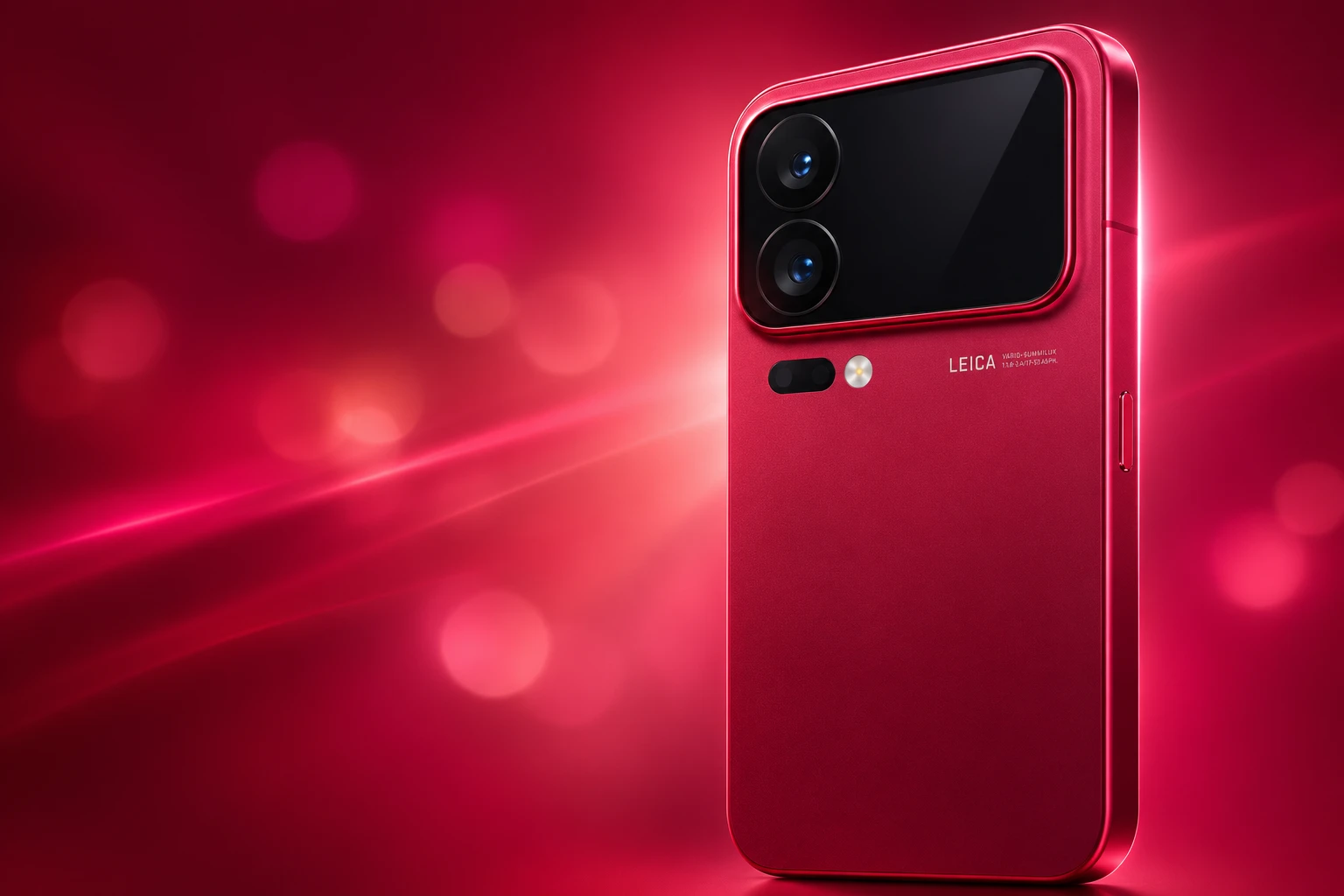
The rear panel is a 2.7-inch M11 LTPO AMOLED on the Pro and a 2.9-inch panel on the Pro Max, both 1-120Hz with the same 4,000-nit peak as the main screen. Resolution is 912 x 596 on the smaller phone and 976 x 596 on the Max. Gorilla Glass Victus 2 covers the camera island. Xiaomi founder and CEO Lei Jun put the pitch in one line in early November.
The back of your phone just got interesting.
Meet the innovative Back Display on Xiaomi 18 Pro Series.
See your calls, music, and directions at a glance. Take selfies with the rear cameras. And with GenAI apps, a simple prompt can turn an idea into a useful app.How would you… pic.twitter.com/iyYAv0qM87
— Lei Jun (@leijun) November 10, 2026
Xu Fei, vice president and chief marketing officer of Xiaomi Group, showed the GenAI path in a short clip: three plain descriptions became three Back Display apps. Xiaomi also ships more than 50 ready-made templates, from timers to tiny games. The generated tools are not full Android apps. They cannot reach the internet, other apps, or personal data.
WHAT THE REAR PANEL ACTUALLY RUNS
- Selfies and vlogs: The small screen is a viewfinder for the 200MP main and tele cameras, with a teleprompter mode, and it can jump to the ultrawide when it sees three people.
- Pinned stuff: Text, screenshots, QR codes, and boarding passes can sit on the glass so you do not flip the phone.
- Live apps: Google Maps can show the next turn, while Spotify and YouTube Music put artwork and playback on the back. Xiaomi Weather is in that set too.
- Talk and translate: An interpreter can put each side of a chat on a different screen, with 29 languages on the global software and some of them offline.
Gemini Live is on Xiaomi’s slide deck for the rear panel, though support depends on the market, and at least one early unit in Western Europe could not get it running. The uses people named first, when Xiaomi asked publicly what they would do with the back glass, were a better selfie and a photo pinned next to the lenses. Maps and prompt-built mini-apps are the extra, not the instinct.
Xiaomi’s Privacy Display Still Leaks From the Side
On stage, Xiaomi was careful not to call this a Samsung copy. HyperRGB 2.0 is a full RGB layout on a new M11 panel, with a green emitter Xiaomi says is 20% more efficient than the M10 generation, and the company claims higher resolution and brightness than the Galaxy S26 Ultra. The S26 Ultra’s main panel is rated at 2,600 nits. Both Xiaomi phones list 4,000 nits peak, 12-bit color, BT.2020, HDR10+, Dolby Vision, and TÜV Rheinland Triple Eye Care with 2160Hz PWM dimming. The front glass is Xiaomi Shield Glass 3.0. Bezels are 0.99 mm, down from 1.18 mm on the previous generation.
The privacy hardware sits in that same stack. Standard pixels and privacy pixels are mixed 1:1. The privacy set has tiny baffles that throw light mostly forward. Turn the mode on, and the wide-angle pixels go dark. Xiaomi says brightness can fall to about 1% past 60 degrees, and a Privacy Notice trick uses the front camera to buzz you if someone is within about a metre, looking from up to ±30°. A side AI button toggles the mode. You can pin it to apps, notifications, floating windows, and split-screen, or tie it to places such as an airport.
Built directly into the display hardware, the technology allows standard screen pixels to be switched off, while dedicated privacy pixels with a narrower viewing angle stay lit, limiting visibility from the sides.
Xiaomi, 18 Pro series global launch
Daniel Schmidt, who handled a Velvet Red Pro Max in Paris, found that a person in the next seat can still make out the contents. He called the protection considerably less effective than the Galaxy S26 Ultra’s, which limits how much help it is on a train. Xiaomi’s own copy already warns that content can remain visible at some angles. In September, Chinese tester Ice Universe went further and called the panel Xiaomi’s biggest mistake of the year, arguing that side-angle brightness, color, and viewing stability looked worse than the 17 Ultra even with privacy off.
Europe Pays More for a Smaller Battery
The global phones are not the September China phones with a new language pack. Capacity, silicon content, and wired charging all move, and the euro prices sit well above the China list. China’s 18 Pro uses a 7,000mAh silicon-carbon cell in China with 32% silicon. The global Pro is rated at 6,000mAh typical with 28% silicon. The Max falls from 8,500mAh to 7,050mAh.
CHINA SKU VERSUS GLOBAL SKU
| Model | China battery | Global battery | China silicon | Global silicon | China wired | Global wired |
|---|---|---|---|---|---|---|
| Xiaomi 18 Pro | 7,000mAh | 6,000mAh | 32% | 28% | 100W | 90W |
| Xiaomi 18 Pro Max | 8,500mAh | 7,050mAh | 32% | 28% | 100W | 100W |
Both global phones keep 50W wireless charging. The Max pack is a dual-cell silicon-carbon design at 4.56 volts. USB Power Delivery with PPS is supported at up to 100W on that model, so a strong third-party brick can stand in for Xiaomi’s own charger. Several official sheets list no charger in the box; Singapore’s sheet is one of the exceptions, so the local page is the one that counts. Reverse wired and wireless charging are on the spec list, at 27W on the wired reverse path.
China pricing started at CNY 5,999 for the Pro and CNY 6,999 for the Pro Max, about $895 and $1,044 at the China launch. Europe starts at €1,399 (about $1,538) for the Pro 12GB/256GB and €1,599 (about $1,758) for the Pro 12GB/512GB and the Max 12GB/256GB. The Max 12GB/512GB is €1,799. A 16GB/1TB Max is listed at €2,099 and is not selling yet. Some shops bundle the official silicone magnetic case (€39) and a Magnetic Remote Stand (€69) that works as a MagSafe-style grip, shutter, and scroller.
Two 200MP Leica Cameras Share One Island
The camera deck is the same on both sizes, with one imaging asterisk on the Max. A 200MP Light Fusion 960L sensor (a 1/1.28-inch SmartSens SCC90XS) sits behind a Leica Summilux lens at 23mm and f/1.67, with optical stabilisation Xiaomi rates at seven stops. Sixteen pixels bin into a 12.5MP shot with a 2.44µm effective pixel. Next to it is a 200MP Samsung HP5 periscope, 1/1.56-inch, 75mm (3.2x), f/2.4, with a 12cm close focus so the tele can do macro. A 50MP ultrawide at 17mm, f/2.4, and 102 degrees fills the third slot, on a 1/2.88-inch OmniVision OV51D. The front camera is 50MP. All three rear lenses carry Leica colour modes.
Those two 200MP chips are huge next to the Galaxy S26 Ultra’s 3x and 5x teles, which use 1/3.94-inch and 1/2.52-inch sensors. Xiaomi still lays them under flat glass, with no lens humps sticking out of the island. The Max main camera adds LOFIC, extra charge buckets that Xiaomi rates at 16.2 stops of dynamic range for supported photo and video modes. That trick does not run with the full 200MP mode, and the smaller Pro does not get it at all.
Schmidt’s first Paris frames, shot in grey November light, kept autumn colour from blowing out and held both Christmas LEDs and dark background structure in night shots, though a street lamp produced ghosting and one scene lost contrast to veiling glare. Close-ups of glassware showed tight texture and a shallow falloff that needed a careful focus point. Video tops out at 8K30 and 4K120 on the two 200MP cameras. Qualcomm’s Extreme chip can do 8K60 and 4K240, and Xiaomi is not using those modes.
What the Xiaomi 18 Pro Max Adds Over the Pro
The Max is the 6.9-inch phone with the faster chip, the LOFIC main camera, a three-speaker setup, a deeper IP68 test, and the 7,050mAh cell. The Pro is the 6.4-inch phone on the standard Snapdragon 8 Elite Gen 6, with 6,000mAh and 90W wired charging. Both run HyperOS 4 on Android 17, ship with three months of Google AI Pro and 5TB of Google Cloud storage, and use a 3D IceLoop cooling stack around a 2nm Snapdragon.
PRO VERSUS PRO MAX, GLOBAL
| Spec | Xiaomi 18 Pro | Xiaomi 18 Pro Max |
|---|---|---|
| Main screen | 6.4-inch, 2436 x 1120 | 6.9-inch, 2624 x 1208 |
| Rear screen | 2.7-inch, 912 x 596 | 2.9-inch, 976 x 596 |
| Chip | Snapdragon 8 Elite Gen 6 | Snapdragon 8 Elite Extreme Gen 6 |
| Main camera extra | No LOFIC | LOFIC, 16.2 stops |
| Battery (typical) | 6,000mAh | 7,050mAh |
| Wired charging | 90W | 100W |
| IP68 test | 1.5m for 30 min | 6m for 30 min |
| Weight | 198g (203g Cosmic Blue) | 229g (234g Cosmic Blue) |
Qualcomm bills the Extreme platform as the first mobile CPU to hit 5 GHz, with a 13% CPU gain, a 44% GPU gain, 40% better GPU efficiency, and a Hexagon NPU it says is 35% faster. The standard Elite chip, which lands in the smaller Pro, is the calmer sibling: a 10% CPU gain, 37 percent better power efficiency, a 35% GPU gain, and a 14% NPU bump. Xiaomi says the Pro Max scores over 5 million on AnTuTu. The Max unit Schmidt held measured 163.39 x 77.6 x 8.39 mm in Velvet Red; Cosmic Blue is a touch thicker at 8.47 mm. The back is fiberglass. Both phones have an ultrasonic in-display fingerprint reader, UWB, Wi-Fi 7, Bluetooth 6.0, dual SIM plus eSIM, and an infrared blaster.
A Rear Screen Skipped Europe Once Already
Xiaomi has been here before, and it left Europe out. The last global phone with a rear screen was the Mi 11 Ultra in 2021, and that window was a 1.1-inch strip for a clock, a notification, and a tiny selfie preview. Last year’s 17 Pro and 17 Pro Max grew the panel into something you could actually use, then never left China. The 18 series is the second try, and the software list (Maps, Spotify, YouTube Music, GenAI apps) is the part Xiaomi did not have in 2021.
HOW THE REAR SCREEN GOT TO PARIS
- 2021: Mi 11 Ultra ships globally with a 1.1-inch rear strip beside the cameras.
- 2025: Xiaomi 17 Pro and 17 Pro Max bring a much larger rear panel, then stay in China.
- September 23, 2026: Xiaomi 18 Pro and 18 Pro Max launch in China with dual 200MP Leica cameras, HyperRGB privacy pixels, and the 7,000mAh / 8,500mAh packs.
- November 17, 2026: The same names go on sale after a November 17 launch event in Paris, with the smaller global batteries and euro pricing.
- November 18, 2026: Xiaomi UK lists the phones as available. Hong Kong holds a local launch at 12:00. Australia sells the series on mi.com/au from 1:00am.
There was still no US product page on launch week. The other 18-series flagship already on sale is the Xiaomi 18 Fold with an in-house 3nm chip, so the slab Pros are the Qualcomm half of the family, not a second XRING phone. Colors are Black, White, Cosmic Blue, and Velvet Red on both sizes.
EUROPE LAUNCH TICKET
- Pro start: €1,399 for 12GB RAM and 256GB, HyperOS 4, Android 17.
- Max start: €1,599 for 12GB and 256GB, Extreme chip, 2.9-inch rear panel.
- Still coming: 16GB/1TB Pro Max at €2,099. No US listing.
Schmidt’s Pro Max still showed its screen to the person in the next seat. The back panel, at least, had somewhere to put a boarding pass. Xiaomi UK already had the page set to available on November 18, and the 16GB/1TB Max is still a line on a price list, not a phone you can buy.

Xiaomi 18 Pro Goes Global as Its Privacy Filter Falters

iFixit Finds HomeView Glued Shut After Repair Gains

Polymetallic Nodules Shelter 4,139 Animals Miners Want

One UI 9.5 Puts Now Brief Behind a System Agent

Framework’s $99 Keyboard Brings Laptop Repair to the Couch

Microsoft 365 Auth Fault Took Down Exchange and Teams

OpenClaw 2.0 Ships a Team Workplace With Host-Trust Defaults

Xbox Caps Game Pass Cloud Gaming at 15 Hours

OpenAI Unveils GPT-6 Astra With a Critical Cyber Label

Squishy Dumpling Toys Recalled After Hiding Illegal Water Beads
-
 NEWS3 months ago
Microsoft 365 Auth Fault Took Down Exchange and Teams
-
 GAMING3 months ago
Xbox Caps Game Pass Cloud Gaming at 15 Hours
-
 NEWS3 months ago
OpenClaw 2.0 Ships a Team Workplace With Host-Trust Defaults
-
 NEWS3 months ago
OpenAI Unveils GPT-6 Astra With a Critical Cyber Label
-
 LIFESTYLE3 months ago
Squishy Dumpling Toys Recalled After Hiding Illegal Water Beads
-

 BUSINESS3 months ago
Diesel Breaks Its Record as the White House Claims Credit
-

 NEWS3 months ago
IFA 2026’s Weird Gadgets Are Building a Sensor Home
-

 BUSINESS3 months ago
ChargePoint Stock Rally Prices Wilmer’s Three-Year Cash Plan